
A newly transplanted eggplant may develop dozens of neat tiny holes in its leaves almost overnight. Often the cause is an adult flea beetle: a very small dark or patterned beetle that jumps when disturbed. University of Maryland and UC IPM both emphasize that small eggplant plants are much more vulnerable than established ones. Damage alone does not tell you whether spraying is justified, and a late cover may trap beetles beneath it. This guide shows how to recognize beetles and shot-hole feeding, erect a hoop-supported barrier before attack, scout young plants and reserve any pesticide decision for a confirmed pest, local threshold and current labeled use.
Recognize Shot Holes on Young Eggplant Leaves
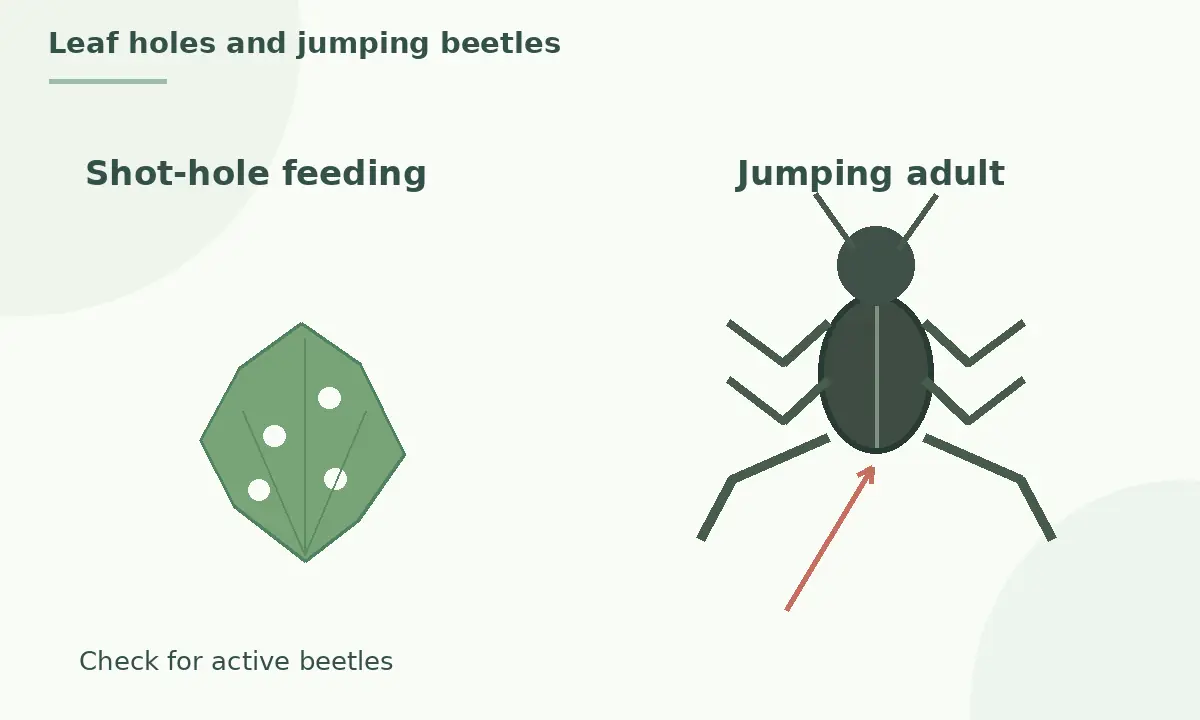
Flea beetle adults bite or scrape small areas from foliage, leaving tiny round pits or holes that resemble buckshot. A heavily attacked seedling may have a lace-like leaf surface, while older eggplant can tolerate more scattered feeding. Look on the youngest leaves and the undersides of foliage during calm cooler parts of the day. Do not conclude that every circular hole is due to flea beetles: wind damage, other chewing insects and leaf disease may produce superficially similar injury. Confirmation requires seeing the insects or consistent active feeding. Note whether damage is fresh and expanding rather than counting only old scars. Our walkthrough on how to spot flea beetle damage on eggplant and protect young plants sets out each step.
Identify the Tiny Adults That Jump
UC IPM describes several eggplant flea beetle species. Some are only about 2 mm long and nearly black; other species are brown or patterned. Their enlarged hind legs power a sudden jump when a leaf is disturbed. Use a hand lens and hold a light tray below a leaf if needed to catch a quick glimpse. They are not the much larger striped or spotted cucumber beetles, and patterns vary between flea beetle species. The insect’s size, dark shiny body, jumping movement and closely associated leaf pits together provide better evidence than color alone. Take a close photo for local Extension if identification is uncertain.
Prioritize Protection Before and Right After Planting
UC IPM identifies the month after transplanting as the greatest risk period for eggplant. Transplant stocky healthy seedlings only when soil and nighttime temperatures are suitable for a warm-season crop. Avoid setting out stressed, rootbound or chilled plants that cannot replace damaged foliage. Examine both the transplants and nearby weeds before you plant: a protective cover works best when no flea beetles are already inside. Prepare the barrier structure and fasteners before digging planting holes so you do not leave seedlings exposed while looking for materials. Fast root establishment is part of protection but cannot replace scouting. If you want the full process, read how to recognize flea beetles on radishes and protect young seedlings.
Suspend Floating Row Cover Above the Leaves
Maryland Extension specifically recommends draping the cover over hoops rather than letting it rest on eggplant foliage. Insert flexible hoops on both sides of the planting row, stretch an appropriate insect-exclusion cover over them and secure every edge against soil or board fasteners. Check that the cover stays clear of growing shoot tips and does not rub in wind. If adults were present in the soil or on plants before covering, they may continue feeding inside. Lift the material briefly for inspection and weed control, then reseal it carefully. Monitor heat accumulation and ventilation in warm sunny weather.
Remove or Adjust Covers for Flower Pollination
Eggplant flowers can set fruit through self-pollination, often assisted by vibration or insects, but a fully sealed cover can prevent pollinator visits and complicate tending plants. Maryland Extension advises protecting young plants until flowering begins. At that stage, decide whether to remove or adjust the barrier while continuing to scout beetles. Do not leave fabric tightly wrapped around expanding branches and flowers. In hot climates, some forms of row cover can overheat or abrade leaves; choose season-appropriate material and inspect conditions beneath it. Exclusion is a timed early-growth tool, not a set-and-forget method for an entire summer.
Scout Beetles and Damage at Consistent Intervals
Check new transplants every few days and record the average number of live adult beetles per plant along with signs of fresh leaf feeding. Minnesota Extension provides field thresholds that vary with eggplant height: roughly two beetles per plant on plants under three inches, four on plants three to six inches and eight on larger plants. These are regional decision aids, not automatic home-garden prescriptions. If your site differs substantially, ask local Extension before treating. Plants recovering with vigorous new leaves despite a few old holes may not need intervention. Look especially along the edges of a bed where insects enter first.
Distinguish Small Seedling Loss From Cosmetic Damage
A young plant with a few tiny leaves may lose much of its photosynthetic surface to repeated beetle feeding; later the same number of holes may have far less impact on vigor. Look at new growth, growing-point health and whether a transplant is still expanding. UC IPM notes older plants are generally more tolerant. Do not apply products to every plant simply because several have scarred leaves. For plants severely stunted soon after planting, evaluate root health, cold stress and irrigation too. Multiple problems can overlap. If injury is localized, focus scouting and nonchemical measures there rather than blanket-treatment of the entire garden. If you want the full process, read how to identify cucumber beetles and protect young cucurbit plants.

Reduce Nearby Shelter and Reinfestation Paths
Flea beetles can overwinter in plant debris and vegetation around a site. Keep dense weeds down, remove crop debris with clear pest problems and rotate susceptible crops if garden space allows. Do not convert this guidance into stripping every flower border of useful beneficial-insect habitat. A tidy protected planting row and regular scouting are sufficient for many small gardens. Moving eggplant to the opposite end of a very small bed may have limited effect because adult beetles jump or fly. Be realistic about the scope of cultural controls: they reduce favorable conditions but cannot guarantee a garden with zero beetles. Our guide “Flea Beetles in Vegetable Gardens” adds more detail on this.
Consider Products Only After Confirming Need
When injury is worsening and local thresholds justify action, consult your state Extension’s current recommendations and the actual pesticide label for eggplant and flea beetles. Some repellents or registered insecticides may be options, but efficacy varies, and pesticides may harm beneficial insects. Never improvise a soap or oil concentration or assume a product approved for a different vegetable is allowed on eggplant. Follow personal protection, preharvest interval, pollinator restrictions and repeat-application limits. A product described as organic still requires its label to be followed. Barrier covers, careful monitoring and growing healthy transplants should be the first decisions in this guide.
Use a Four-Observation Garden Log
Photograph a leaf when the first shot holes appear, look for an actual jumping adult, count beetles on several plants and note when growth begins recovering. Also record the date covers were installed and removed. This shows whether a barrier prevented injury or went on too late. After seedlings establish, look for healthy new leaves rather than expecting old damaged leaves to become smooth. The next planting may benefit more from earlier supported cover placement than from a different spray. Share clear photos and crop-stage details with your local Extension if symptoms become confusing or pest counts rise quickly.

Related Guides
- Eggplant Gardening: Warm-Soil Decisions, Flea Beetles, and Harvest
- When to Harvest Eggplant: Glossy Skin, Firm Flesh, and a Clean Cut
- How to Grow White Eggplant and Pick Glossy Tender Fruits
- Spider Mites on Tomato Plants: Confirm the Pest Before Taking Action
- Tomato Hornworm: Identify the Caterpillar and Choose an IPM Response
How We Research and Verify Garden Recommendations
For this guide we reviewed the specifically cited university Extension, research garden and specialist horticultural resources and compared recommendations for the identified species, growing stage and climate constraints. Sources were checked October 24, 2026. We separated observed or published guidance from universal promises, cross-checked potentially harmful details and documented where local Extension advice is required. The drawings teach botanical structure and actions; they are not photographs of a controlled trial. VegWin has not personally tested every method across all climates.
Sources and Editorial Disclosure
Sources checked October 24, 2026: University of Maryland Extension — Maryland Extension: jumping adults, shot holes, covers held off eggplant and early protection.; University of California IPM — UC IPM: specific eggplant flea beetles, jumping hind legs, seedling vulnerability and monitoring.; University of Minnesota Extension — Minnesota Extension: eggplant thresholds, supported row cover and scouting.; University of Wisconsin Extension — Wisconsin Extension: monitoring, beetle life cycle, crop thresholds and prevention.. These organizations do not endorse this publication.
Disclosure: No paid product recommendation, sponsor, or affiliate arrangement was verified for this guide. See the VegWin affiliate disclosure. Use locally appropriate guidance and follow the applicable product label if a product is discussed.
Adult flea beetles often make shot holes, but confirm live beetles before deciding the cause.
Yes. Their enlarged hind legs allow small adults to jump quickly when disturbed.
No. Suspend it on hoops and secure edges, as recommended by Maryland Extension.
Usually not: established plants tolerate more feeding, so monitor plant vigor and adult counts.
No. Follow current labeled uses and local Extension guidance; homemade concentrations are not verified.