
An eggplant can look impressively large yet already be past its best eating stage. Most gardeners want an immature, tender fruit, not a fully mature seed crop. The most reliable clues are the normal color of your variety, glossy skin, a firm but slightly yielding feel and a healthy calyx. A fixed number of inches cannot describe every long Asian, round or standard oval cultivar. Inspect the fruit, then cut the stem instead of twisting it from the plant.
Start With the Mature Size for Your Particular Cultivar
Before harvesting, look at the seed packet, plant tag or cultivar description. A small, narrow Asian eggplant is not supposed to become the size of a large globe type. Some varieties are green, striped, white or lavender even at their preferred eating stage, so a purple-only rule fails. Check several fruits on the same plant and note the shape and size at which their skins remain bright and shiny. Mature size for a seed-producing fruit is not necessarily the best culinary picking size. Harvesting slightly young is usually preferable to leaving fruit until the skin dulls and seeds harden.
Look for Smooth Glossy Skin Before It Dulls
The University of Minnesota Extension recommends picking when fruit remains firm and shiny. Healthy fruit normally has a smooth, reflective surface with color typical of its cultivar. Dullness, a bronze cast or browning can signal that a fruit has stayed on the plant too long. Dust, irrigation marks and reflected light can confuse this check, so gently wipe a small area if necessary and combine appearance with a touch test. Minor surface scarring alone does not prove poor eating quality. A shiny fruit that is still very small may simply need more growing time.
Use Gentle Thumb Pressure Without Bruising
Illinois Extension describes a practical touch test: properly sized eggplant gives slightly under a thumb and springs back, while extremely hard flesh may still be immature and a lasting dent may indicate overmaturity. Support the fruit in the palm and apply light pressure rather than squeezing it. Evaluate the result together with the skin and expected shape. Hot weather, irrigation stress and a particular cultivar can affect feel, so do not make a harvest decision from firmness alone. Handle fruit like something that bruises easily, not like a hard winter squash. Never press hard enough to leave a visible injury.

Find the Fruit Stem and Keep the Calyx Attached
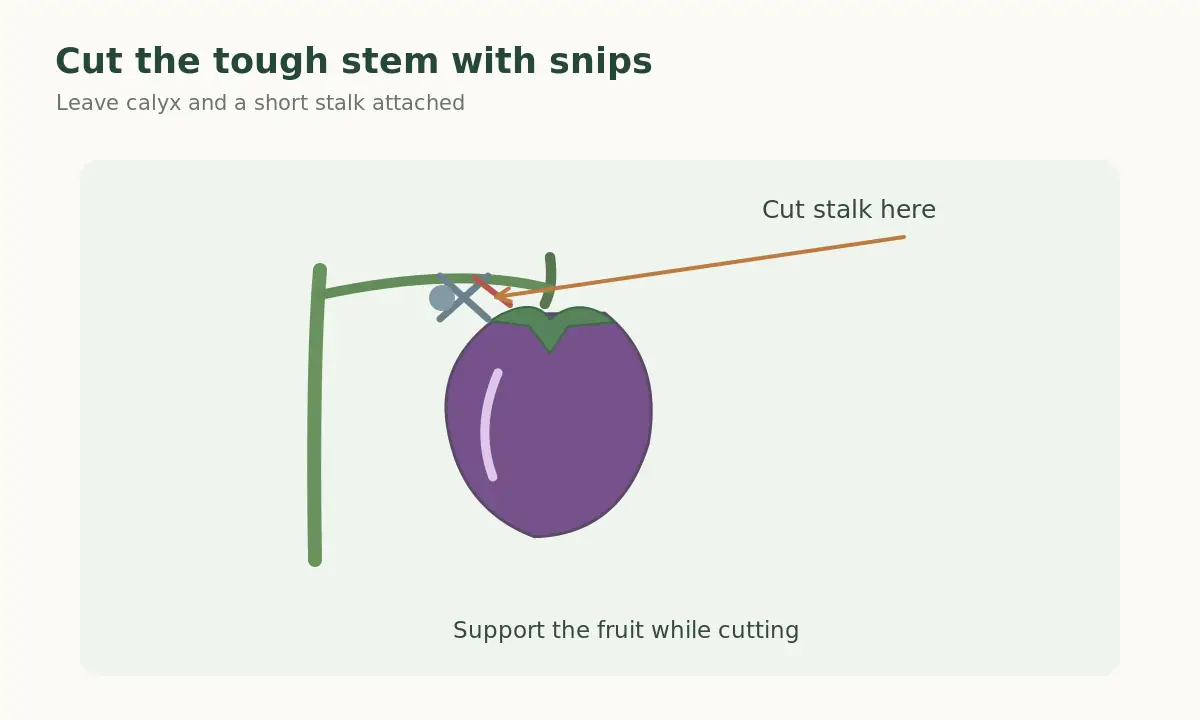
Eggplant fruit hangs from a tough stalk above the green, often lobed calyx. Some cultivars have sharp prickles on the calyx and stem. Wear gloves if needed, use clean pruners or sturdy snips, support the fruit with your other hand and cut through the stalk slightly above the calyx. Leave a short piece of stem with the harvested eggplant. Twisting, yanking or levering fruit against the branch may break tender shoots or remove nearby flowers. A clean cutting action protects later harvests as well as the quality of the fruit you are carrying indoors.
Check Plants Regularly During Warm Weather
Eggplant can enlarge quickly once weather is warm and plants are bearing. Walk the bed frequently rather than scheduling one large harvest at the end of a month. Inspect fruit hidden under broad leaves, including smaller fruits on lower branches. Pick suitable fruits before their surface begins to lose its shine; prompt harvesting may encourage the plant to keep flowering and setting fruit, assuming conditions remain favorable. When nights turn chilly, fruit quality and plant health can decline. Use the local weather forecast and cultivar characteristics rather than treating USDA hardiness zones as a calendar for summer fruit. For the basics, see our guide: When to Harvest Tomatillos.
Distinguish Overmaturity From Insect or Weather Damage
A dull, hard-seeded fruit may simply have been left too long, but external holes, sunken spots, rot or widespread discoloration call for a different inspection. Check the calyx, skin and nearby leaves for feeding, disease or sunscald before attributing every mark to maturity. Fruit with soft rot or extensive damage is not a good keeper. Likewise, slow growth during a cold spell does not automatically mean a fruit is ready. Compare questionable specimens with a healthy eggplant on the same plant and follow regional Extension guidance if symptoms point toward a pest or disease rather than an ordinary harvest decision.
Treat White and Striped Eggplants by Texture Too
Color is an especially unreliable universal cue for white, pale-green, bicolor or striped cultivars. Their correct eating stage is judged by normal cultivar appearance, skin sheen, size and gentle spring-back. Some white fruit can yellow as it ages, but exact color transitions differ. When uncertain, cut a correctly sized sample and inspect its interior for firm, tender flesh and undeveloped soft seeds. Large, hardened seeds and spongy texture are evidence that you waited too long. Record what the best harvested sample looked like, so the remaining fruit can be judged without making repeated destructive tests.
Handle and Store Harvested Eggplant Carefully
Keep freshly cut fruit shaded and handle it gently; bruised skin deteriorates faster. Eggplant is sensitive to chilling, so a refrigerator is not an ideal long-term storage solution. Minnesota Extension notes quality loss after prolonged exposure to temperatures below roughly 50°F, including skin pitting and flesh discoloration. Plan to cook harvested fruit soon, and use short, cautious refrigeration only where necessary. Clean the tool after damaged or diseased fruit rather than moving contamination from one plant to another. Do not assume that a beautifully glossy eggplant will remain that way for weeks after harvest.
Decide Whether to Keep the Plant Producing
If the plant is vigorous and the season has time left, keep healthy leaves, branches and developing flowers intact during harvesting. Picking fruit does not require pruning half the canopy. Continue regular irrigation, inspect insects under leaves and avoid unnecessary injury to the main stem. An eggplant with a few ripe fruits and many small flowers can still produce if night temperatures stay suitable. Near season end, prioritize already well-developed, good-quality fruit rather than hoping a very small late flower will mature before frost. Keep your next harvest date based on growth and weather, not arbitrary weekly quotas.

Keep a Three-Clue Harvest Record
For your first good fruit of a new cultivar, write down approximate length or width, the distinctive skin color and sheen, and whether gentle pressure springs back. Compare this record with the next picking rather than relying on pictures of unrelated supermarket varieties. If your harvest tastes tough or has pronounced mature seeds, pick subsequent fruit a little earlier. If it was undersized but tender, decide whether a slightly longer wait would improve usable yield. This simple feedback loop is more trustworthy than declaring every eggplant ripe at exactly the same length regardless of cultivar or growing conditions. For the basics, see our guide: When to Harvest Cantaloupe.
Related Guides
- How to Grow White Eggplant and Pick Glossy Tender Fruits
- Eggplant Gardening: Warm-Soil Decisions, Flea Beetles, and Harvest
- How to Spot Flea Beetle Damage on Eggplant and Protect Young Plants
- When to Pick White Eggplants Before Glossy Skin Turns Dull and Seedy
How We Research and Check the Recommendations
Our editorial process compared the plant-specific recommendations in university Cooperative Extension publications with general horticultural guidance, including information about growth stage, climatic limitations and safe handling. Claims were checked on October 23, 2026. Plant species, cultivars, exposure, regional climate, and local regulations can change the best action. This guide is educational, not a substitute for advice from a regional Extension specialist or a laboratory diagnosis.
Sources Used and Editorial Disclosure
Sources consulted and checked: extension.umn.edu: Glossy skin, firm flesh, pruning-shear harvesting and continued production. extension.illinois.edu: Thumb-pressure test, varied cultivar sizes, prickly calyx and quality decline. extension.umn.edu: Harvest before dulling and avoid prolonged cold storage.
Disclosure: No paid brand placement, approved affiliate recommendation or product sponsorship is claimed in this article. See the VegWin affiliate disclosure. Explanatory illustrations show typical plant structures and methods; follow plant-specific labels and current local guidance when making irreversible cuts or applying garden treatments.
No. White, green and striped cultivars can be ready at their normal color; combine size, sheen and firmness.
Loss of gloss often indicates overmaturity, especially with spongy flesh or hardened seeds.
No. Support it and cut the stalk with clean pruners, leaving the calyx and a short stem attached.
Yes, many varieties are tender when picked smaller than their maximum size. Check the cultivar and texture.
Use them promptly; they are chilling-sensitive and prolonged refrigerator storage can damage quality.