
Green beans are usually harvested as immature pods, and successful timing differs from growing shell beans or dry beans. Two gardeners can plant the same crop and need very different plans: one may want compact bush plants for several concentrated harvests; another may have room for a tall support and prefer repeated picking from climbing pole beans. University of Maryland Extension distinguishes these habits, their seed-starting needs and their harvest windows. This guide uses those differences to build a practical home-garden decision path.
Choose Bush, Pole, or Half-Runner Beans for Your Space
Bush snap beans have a compact habit and typically deliver a relatively concentrated harvest, making them convenient in an accessible bed. Pole beans climb and require substantial sturdy support; Maryland Extension notes that many pole varieties produce over a longer period and can yield well in less ground space, though vertical structure and light access are essential. Half-runner types occupy a middle ground and may benefit from support. Do not confuse bean growth habit with pod color: yellow, green and purple-podded snap beans can occur in different categories.
Decide whether you can install and reach a tall trellis safely before choosing a pole cultivar. A narrow balcony with strong wind may not suit a top-heavy structure, while a backyard frame could use vertical space efficiently. Consider whether you want one larger flush for meal planning or frequent small harvests. Read the actual cultivar packet for adaptation and habit rather than assuming that every green-bean packet grows the same way. For a step-by-step method, see how to grow Malabar spinach on a trellis for summer harvests.
Wait for Suitable Soil and Frost Conditions
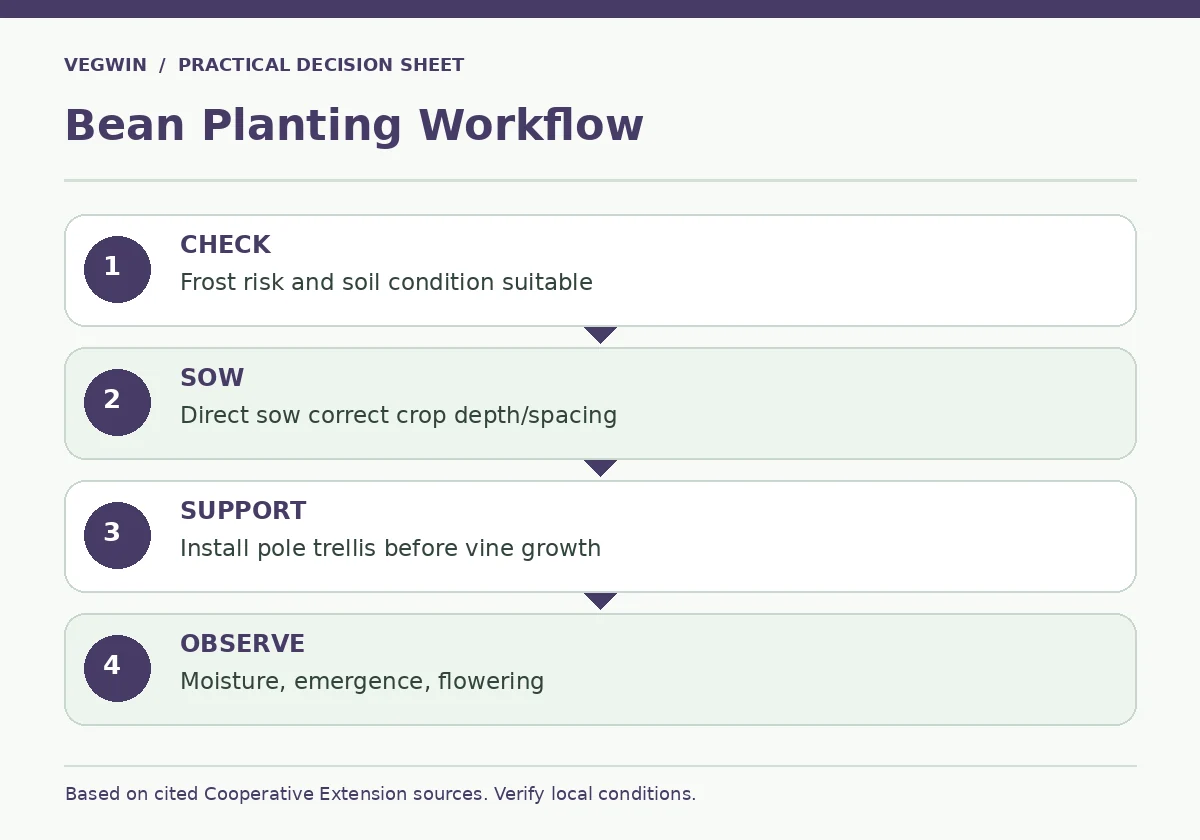
Common snap beans are tender annuals; frost can injure them. Maryland Extension recommends direct sowing after the danger of frost has passed and warns that cold spring soils increase the chances of seed problems. Germinating seed needs suitable soil conditions and moisture, not simply a warm daytime air temperature. Starting bean plants indoors is often unnecessary and can create transplant disturbance; direct sowing is the standard home-garden method for most snap beans.
Check the seed-zone soil with local Extension guidance and a relevant seed packet. Do not place seed into a waterlogged bed to beat a printed calendar. If an unusually cold spell is forecast after sowing, be prepared to delay additional sowings rather than guessing that a particular rain will warm the soil. A successful sowing log records the seed source, weather, soil condition and emergence rather than just the date.

Sow for Good Emergence and Airflow
Choose a sunny site with workable, draining soil and prepare a clear seedbed. Use the spacing and depth on the actual cultivar packet and check a regional Extension crop profile for your system. Maryland Extension provides different row and in-row layouts for bush and pole beans; these field-oriented dimensions may need adaptation for a narrow raised bed or a trellis path. Avoid crowding simply because seedlings look small at first. Space also creates access for picking and reduces persistently damp foliage.
Water the planting zone enough to support steady germination while avoiding puddles and crusting. Protect tender seedlings if birds or other animals are pulling them, using methods that do not trap excessive heat. Weed cautiously during establishment to avoid damaging shallow roots. When several seeds fail to emerge, investigate cold wet soil, seed quality and predation before replanting the whole row with a different fertilizer.
| Your situation | Choose | What to check |
|---|---|---|
| Small bed, no tall frame | Bush snap beans | Access and space for concentrated picking |
| Good vertical support | Pole snap beans | Sturdy anchors and regular harvest |
| Cold wet spring bed | Delay direct sowing | Seed-zone temperature and drainage |
| Pods showing bulging seeds | Harvest stage has passed for snaps | Pick younger pods next round |
Provide Support That Can Hold a Mature Pole Crop
Pole beans require a support already installed by the time vines begin to climb. Maryland Extension describes strong trellis structures and emphasizes that poles or tripods need sufficient height and storm resistance for the type. Choose a structure you can reach without unstable climbing or standing inside the bed. A low decorative wire ring may suit a small ornamental vine but not a vigorous pole-bean planting.
Train young runners gently toward the support rather than tying stems so tightly that they cannot expand. Keep the trellis from shading sun-loving neighboring crops unnecessarily. Inspect support anchors after severe weather; a falling structure can damage plants and create a hazard. If using bush beans, you may not need vertical support at all, although individual heavily laden stems can sometimes benefit from simple restraint.
Avoid Overfeeding and Manage Root-Zone Water
Beans are legumes capable of partnering with nitrogen-fixing bacteria under suitable conditions. Maryland Extension notes that excess nitrogen can delay flowering, so automatically applying a high-nitrogen fertilizer can backfire. Fertility choices still depend on soil analysis and crop needs; new sites may differ in the activity of compatible microorganisms. Follow regional advice rather than claiming beans never need nutrients.
Keep the root zone reasonably moist during establishment and pod development, especially through dry periods, while protecting drainage. Rather than following an invented number of watering minutes, inspect the soil within the crop’s active rooting area. Mulch can help moderate moisture and suppress competing weeds without smothering stems. When flowers or young pods drop, check water stress, temperature and pollination conditions before assuming nutrient deficiency or reaching for a spray.
Harvest Snap Beans Before Seeds Bulge
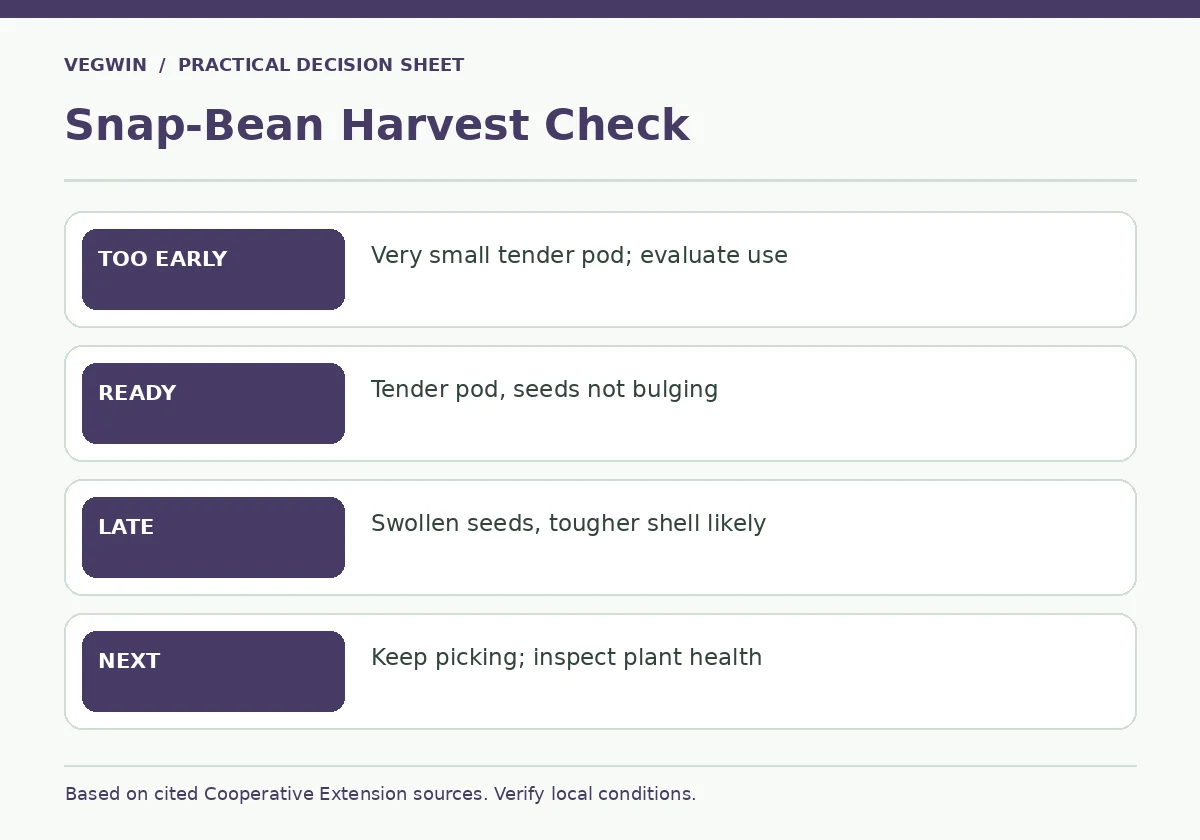
Green snap beans are picked while pods are immature and tender; Maryland Extension describes a stage when seeds have not expanded enough to make pods bulge noticeably. Pick a representative pod and examine texture rather than deciding solely by length or color. A mature-looking pod left too long can become fibrous and produce enlarged seeds; this is appropriate if you are deliberately growing dry beans, but not the usual goal for tender snap beans. Our guide to growing scarlet runner beans adds more detail on this.
Check plants frequently when they begin producing, since usable pod size can change quickly in good growing weather. Gently support vines while picking to avoid tearing them off the frame. For pole types, inspect shaded sections of the trellis as well as its exposed front. Frequent harvesting often helps keep production moving; for bush beans, plan a fresh sowing when appropriate rather than expecting an endless harvest from old plants.
Identify Leaf and Pod Problems Before Acting
Yellowing leaves, damaged pods and poor stand establishment have different causes. Examine whether a symptom occurs on new or older leaves, whether leaves have spots, whether insects are present and whether damage followed a stressful weather event. Maryland Extension lists several possible bean problems, including bacterial and fungal leaf diseases, mites and herbicide injury. Identifying the organism or environmental cause is essential before control decisions.
Start with cultural IPM: healthy seed, reasonable spacing, clean handling, suitable irrigation and removing badly affected debris according to local advice. Do not apply homemade pesticide mixtures or treat an unidentified leaf spot with an arbitrary fungicide. If damage spreads, photograph symptoms and contact a local Extension diagnostic service. Any pesticide decision must rely on the currently applicable label and regional regulation, not a generic online treatment schedule.
Related Guides
- How to Direct Sow Bush Green Beans Without Building a Trellis
- How to Grow Rattlesnake Pole Beans and Pick Purple-Streaked Pods
- How to Identify Bean Leaf Beetles on Snap Beans and Limit Damage
- How to Identify Potato Leafhoppers and Hopperburn on Snap Beans
How We Research and Apply These Recommendations
This guide was written from research-based public university Cooperative Extension recommendations, with specific source claims checked on October 20, 2026. The diagrams are original editorial syntheses, not measurements from a VegWin field trial. Regional conditions, cultivar properties, product instructions, soil testing and current local rules can change the right action. No private product testing, guaranteed yields, controlled field experiments or verified on-site WordPress article inventory are claimed. Treat crop- and location-specific recommendations from your county Extension as the final local reference.
Live URL and canonical inventory still require final editor review.
Sources reviewed on October 20, 2026: Maryland Extension (bush/pole habits, direct sowing, frost sensitivity, supports and harvest cues); Minnesota Extension (bean crop selection, cultivation and regional differences). Recommendations may be revised; recheck the institutional sources before manual publication.
This guide contains no affiliate links. We checked sources including affiliate disclosure page.
Choose bush for a compact crop and concentrated picking; pole beans can yield over a longer period but need dependable vertical support.
Common snap beans are frost tender. Follow local frost risk and suitable soil conditions; do not use a USDA zone as a sowing date.
Not necessarily. Excess nitrogen can delay flowering. Test soil and use crop-specific advice.
Harvest pods while still tender and before the seeds swell enough to bulge strongly inside the pod.
Identify the cause first; watering stress, pathogens, chemical injury and insects can look different. Ask local Extension if the diagnosis is uncertain.