
A snap bean leaf that curls, turns yellow along its margin and develops brown brittle areas may be reacting to a very small insect. Potato leafhoppers and closely related green Empoasca species feed by piercing leaf tissues; damage called hopperburn may progress before an obvious swarm is noticed. Yet drought stress, spray drift and nutrient imbalances can produce superficially similar signs. The strongest first step is to check leaf undersides for the fast-moving insects while examining how damage appears across the plant. This guide shows what to look for and how to reduce uncertainty before taking action. It is a scouting and prevention guide, not a prescription for an unverified pesticide treatment.
Start With the Bean Leaves Most Likely to Show Injury
Snap beans have compound leaves with three leaflets once the seedling has developed beyond its first simple leaves. Hopperburn may begin as curling or cupping and a pale yellow band near the leaflet edges, progressing to tan or brown tissue. Virginia Tech Extension notes that beans can show crinkling, bronzing, reduced growth and shoot damage. Scout plants from the edge and middle of a planting; symptoms can vary with growth stage and insect movement. Look for a pattern over several plants instead of declaring one curled leaf diagnostic. Record recent hot, dry weather, fertilizer changes and nearby spraying because those clues may explain stress without leafhoppers.
Recognize Small Wedge-Shaped Green Adults
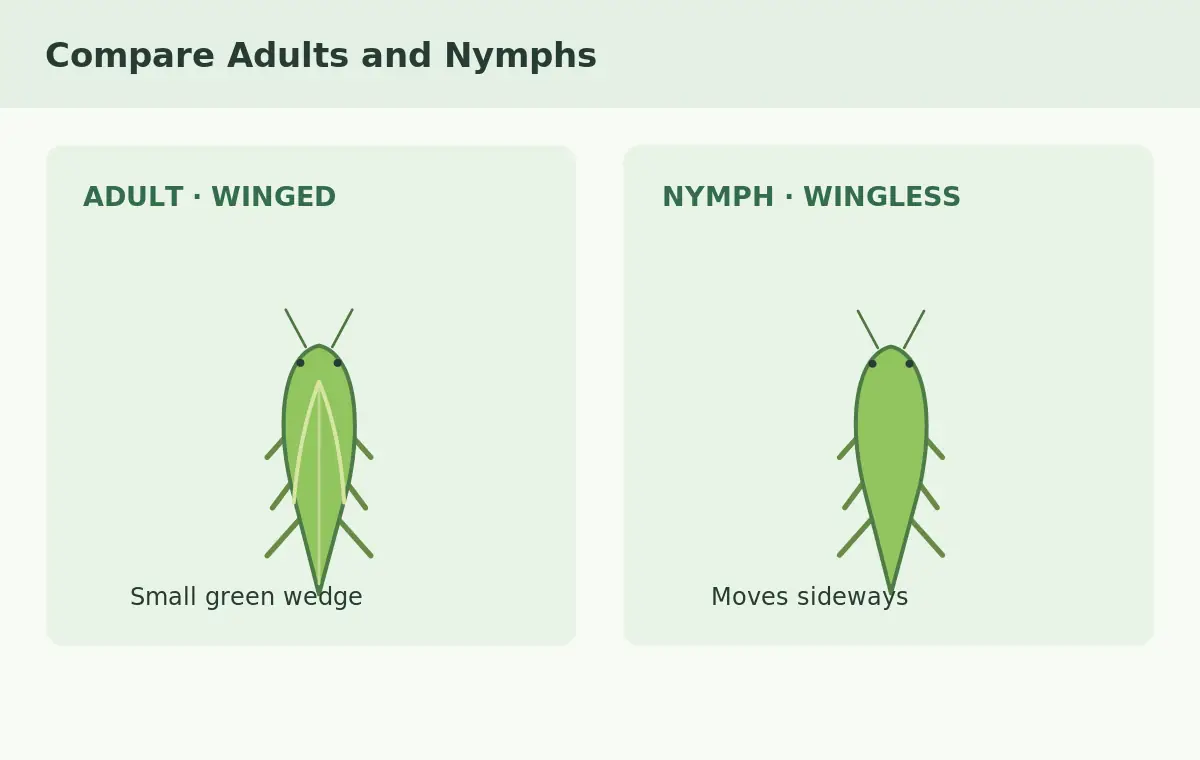
Potato leafhopper adults are tiny pale yellow-green or bright green insects with a narrow wedge-like body, broader near the head and tapering toward the rear. UC IPM lists related Empoasca leafhoppers at about one-eighth inch long. They may fly abruptly when foliage is brushed, making them difficult to photograph. They are not plump pear-shaped aphids, and they do not resemble the much larger shield-shaped stink bug. Gently shake a suspect branch over a light tray or examine a leaflet closely instead of crushing every insect seen. Distinguishing exact Empoasca species can require specialist expertise, so avoid pretending a drawing guarantees species-level identification.
Look Under Leaves for Sideways-Moving Nymphs
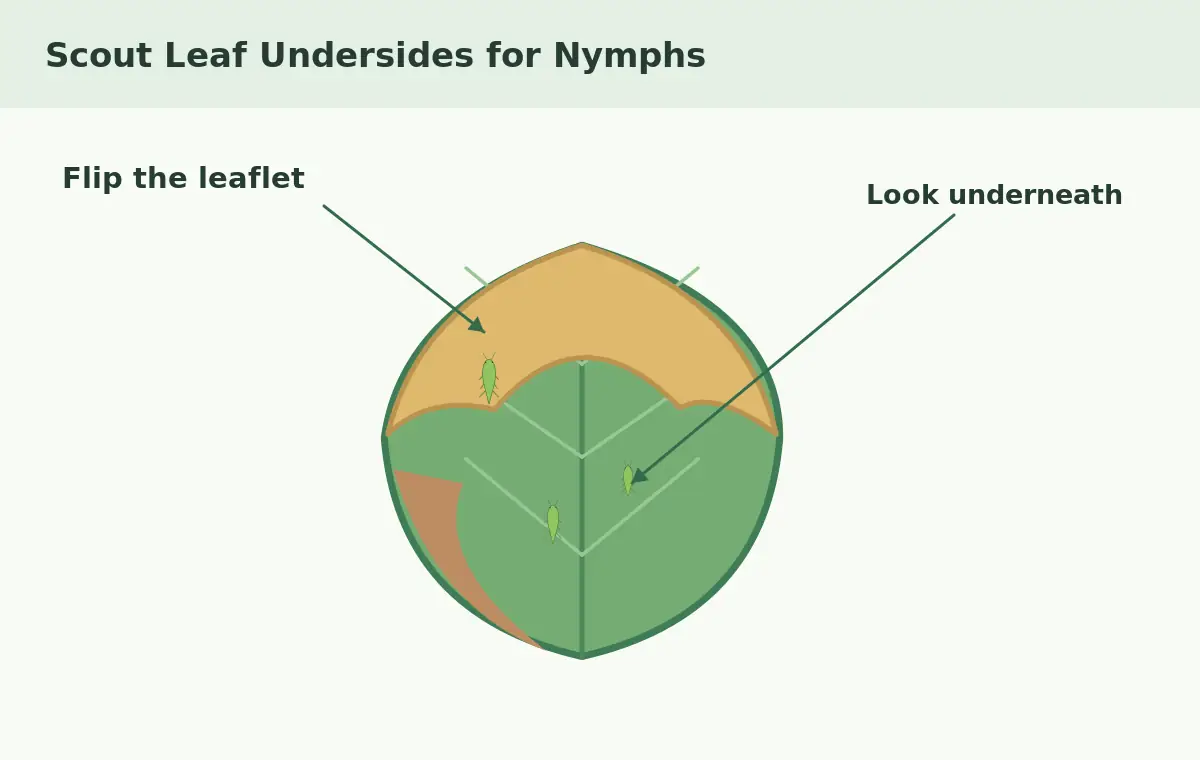
Wingless immature leafhoppers are also green and wedge-shaped, often smaller and harder to notice than adults. A telling behavior is their rapid movement sideways or backward when disturbed. UC IPM describes nymphs and adults as primarily occupying leaf undersides. Hold a leaflet flat, flip it gently and watch for a few seconds with a magnifier. A nymph can disappear behind a vein before you begin counting. Unlike aphid colonies, leafhoppers often do not remain in a packed stationary cluster. Multiple nymphs over successive inspections provide stronger evidence of an established population than one unidentified adult flying through the vegetable bed.
Connect Feeding to the Pattern Called Hopperburn
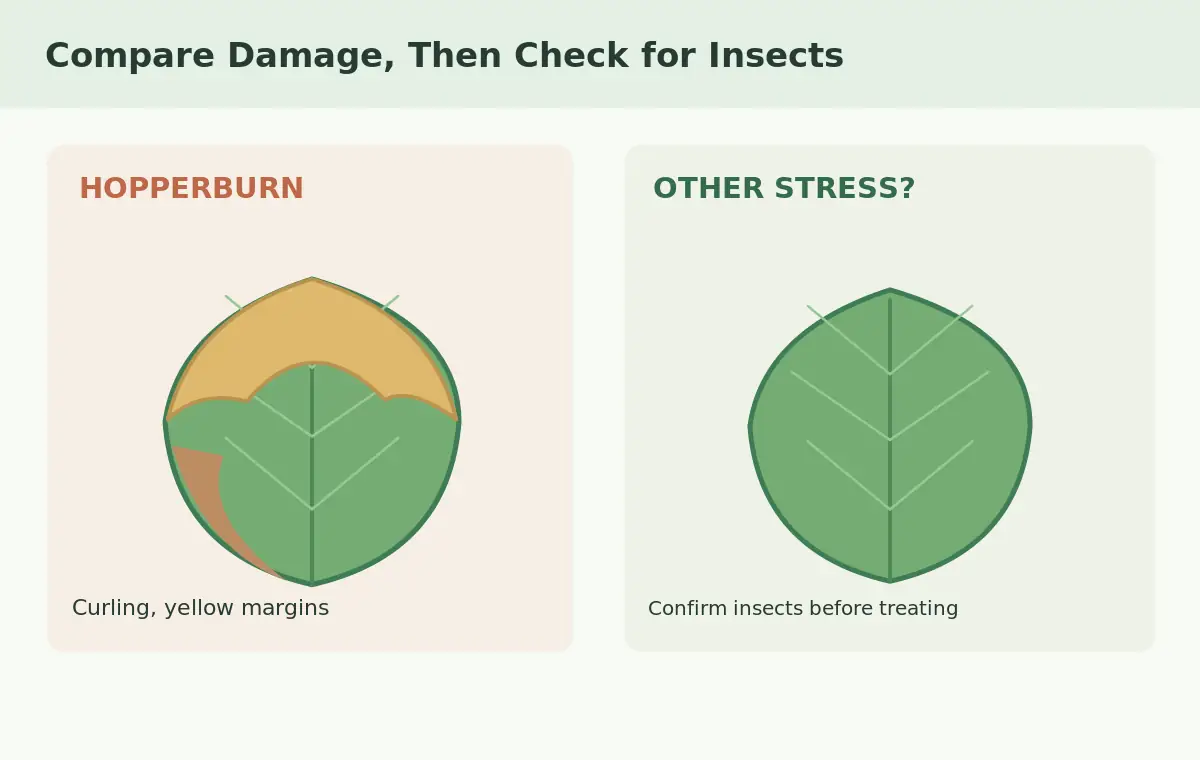
Leafhoppers feed with piercing-sucking mouthparts and produce more than a simple hole in the leaf. Feeding can disrupt plant tissue, producing pale margins, cupping and eventually brown dry areas. UConn Extension describes the progression from leaf curling and yellowing to tissue death, sometimes rapidly under heavy feeding. The yellow edge is part of a larger pattern, not a uniquely specific stamp. Damage already present will not return to green when insects leave. Monitor fresh leaves after a management change to judge whether injury is slowing. Avoid removing every slightly discolored bean leaflet, since the plant needs healthy photosynthetic area to support flowers and pods.
Distinguish Insects From Dry Soil and Spray Injury
Drought-stressed beans may wilt broadly during afternoon heat and recover after watering, whereas hopperburn often includes localized marginal yellowing or bronzing with leaf cupping. Nutrient disorders can create more systematic chlorosis, and herbicide drift may twist new growth in irregular ways. These patterns overlap. The safest working diagnosis pairs symptoms with direct observation of leafhoppers on affected plants. Check soil moisture, irrigation coverage, recent wind-driven herbicide work and whether healthy new shoots are appearing. If damage is severe without visible pests, bring whole-plant photos and representative leaf samples to a local Extension office instead of declaring every yellow border an insect problem.
Scout Early in the Bean Growth Cycle
Virginia Tech and university IPM guides explain that leafhopper injury can reduce vigor and yield before heavy visible symptoms appear. Young beans are especially sensitive to loss of functional leaf area. Inspect the underside of representative leaves regularly as soon as vigorous new growth begins. Mark a few plants and compare live insects and the newest expanding leaves over time. Take notes on whether the same plant is improving or whether injury is advancing into fresh foliage. During warm or dry conditions, consider more frequent checks because both plant stress and insect injury may intensify. A quick glance across the top of the canopy is not enough to rule out nymphs underneath.
Use Covers and Garden Hygiene Thoughtfully
In a small garden, a properly fitted lightweight row cover installed before pests arrive can limit colonization of susceptible young plants. Secure edges so insects cannot readily walk underneath, but remember that beans require suitable access for pollinators when a particular crop and flowering situation makes that necessary. Avoid leaving already infested foliage sealed under a cover. Weed management and monitoring near adjacent host crops may help identify local insect activity, but no garden can be made insect-proof. Consider whether nearby alfalfa or other vegetation is being cut when adult migrants could be arriving. Do not assume a single companion flower will reliably repel potato leafhoppers.
Protect Beneficial Arthropods While Diagnosing
Lady beetles, lacewings, spiders and other natural enemies may occur in a bean patch, although their presence alone is not proof that an infestation is controlled. Avoid broad, unnecessary sprays that may disrupt the garden’s insect community. Check plant recovery and fresh nymph numbers before choosing interventions. If a pesticide is being considered, consult your state Extension guidance for this specific crop and pest and use only products legally labeled for the crop, the location and the application method. No universal recipe, homemade mixture or invented dose is appropriate. In some situations, removing an isolated badly infested early plant may be less disruptive than treating every bed indiscriminately.
Interpret Thresholds With the Right Crop and Region
Economic treatment thresholds from commercial bean operations are based on field scouting methods, growth stage, crop value and local pest pressure; they are not automatically universal for five backyard plants. UC IPM provides crop-specific monitoring and treatment guidance, while other Extension publications use different sampling units. A gardener can still borrow the central principle: compare insect numbers with plant stage and fresh injury, rather than acting on one occasional insect. If damage is expanding quickly, seek local advice that accounts for your cultivar and whether it is a snap bean, dry bean or lima bean. Keep records of scouting and any action for later evaluation.
Judge Success by New Leaves and Pod Set
Old hopperburn lesions will remain dry and discolored. The meaningful outcome is that fresh growth is greener, less curled and able to support flowering and pod formation. Reinspect the same sample plants weekly, looking at new and older leaflets separately. If fresh symptoms continue but you cannot find insects, do not keep escalating an insect treatment without diagnosis. Look again at irrigation, root health, drift history and other sucking pests. Under severe stress the plant may remain stunted even after leafhoppers decline, so recovery can be incomplete. Clear identification and consistent observation provide better decisions than reacting to every spot with a spray.
Authoritative Sources and Further Reading
Source materials consulted for these recommendations: ext.vt.edu garden guidance (Virginia Tech Extension details leafhopper appearance, host plants, curling bean leaves and common symptom confusion.). ipm.ucanr.edu garden guidance (UC IPM describes green wedge-shaped Empoasca adults and nymphs, sideways movement and hopperburn of bean leaves.). extension.uconn.edu garden guidance (UConn Extension explains leaf-edge discoloration, cupping and the distinction from drought-like damage.).
Related Guides
- How to Identify Bean Leaf Beetles on Snap Beans and Limit Damage
- Growing Green Beans: Bush or Pole, Planting, Picking, and Problems
- How to Direct Sow Bush Green Beans Without Building a Trellis
- How to Grow Rattlesnake Pole Beans and Pick Purple-Streaked Pods
How We Research Plant-Care Instructions
We compared the exact plant and practical action against the named university Extension and IPM references, reviewed species and growth-stage differences, checked illustrated plant structures, and avoided unsupported pesticide doses or universal climate calendars. Sources checked October 27, 2026. Topics were screened against available B097–B124 titles and targeted site searches; the earlier B001–B096 production archive remains unavailable for comprehensive comparison.
Safety, Climate and Editorial Disclosures
Advice is educational, without a claimed paid product partnership. Conditions differ by cultivar, climate and site. Keep food and tool safety in mind, and use an appropriate local diagnostic service for uncertain problems. See the site’s affiliate disclosure for its general policies. No pesticide rates or product endorsements are implied.
Leaflets may curl or cup, with yellowing or bronzing at margins followed by brown, brittle tissue.
They commonly feed on leaf undersides and may run sideways quickly when disturbed.
No. Leafhoppers are small wedge-shaped insects that move rapidly, while aphids are usually more rounded and can form stationary colonies.
No. Monitor the newest leaves and plant growth to judge whether further injury is being prevented.
No. Check for insects and other causes, then follow locally appropriate IPM and crop-specific labels if any treatment is considered.