
How to Recognize Powdery Mildew on Zucchini Versus Natural Leaf Markings starts with the living plant, not a one-size-fits-all calendar. Look for the exact stem, leaf, root or symptom before using scissors, moving soil or changing how you care for the crop. The practical checkpoints below draw on named University Extension, RHS and IPM resources as relevant. Weather, cultivar, stage of growth and regional conditions may require a different schedule; a clear observation is safer than an assumed date. Use the diagrams as learning aids and check the real growing points on your own plant.
Begin With the Pattern, Not the Color Alone
Zucchini leaves can show pale silver-gray markings as part of their normal variety pattern. A gardener who treats every light patch as fungus may waste effort and injure an otherwise healthy plant. Powdery mildew, by contrast, creates whitish colonies that spread across the leaf surface, often becoming powderlike and irregular. Look closely before acting: are pale marks repeated in a neat pattern on many healthy leaves, or are new spots expanding unevenly across individual leaves? The University of Minnesota and UC IPM describe true powdery growth as the important disease sign. Color by itself is only a starting clue, not a diagnosis.
Recognize Natural Silvering Along Leaf Veins
Several zucchini and summer squash cultivars have stable pale or silvered areas associated with leaf veins or repeating geometric patterns. The leaf between marks may remain firm, green and productive. Such markings often appear on new leaves as they unfurl and do not turn into a removable white coating. Compare several leaves on the same plant and check whether the light areas line up in a similar way. If a pattern appears consistently from the moment the leaf opens and does not expand into powdery islands, normal varietal color is a plausible explanation. Seek cultivar photos or a local diagnosis when uncertain.
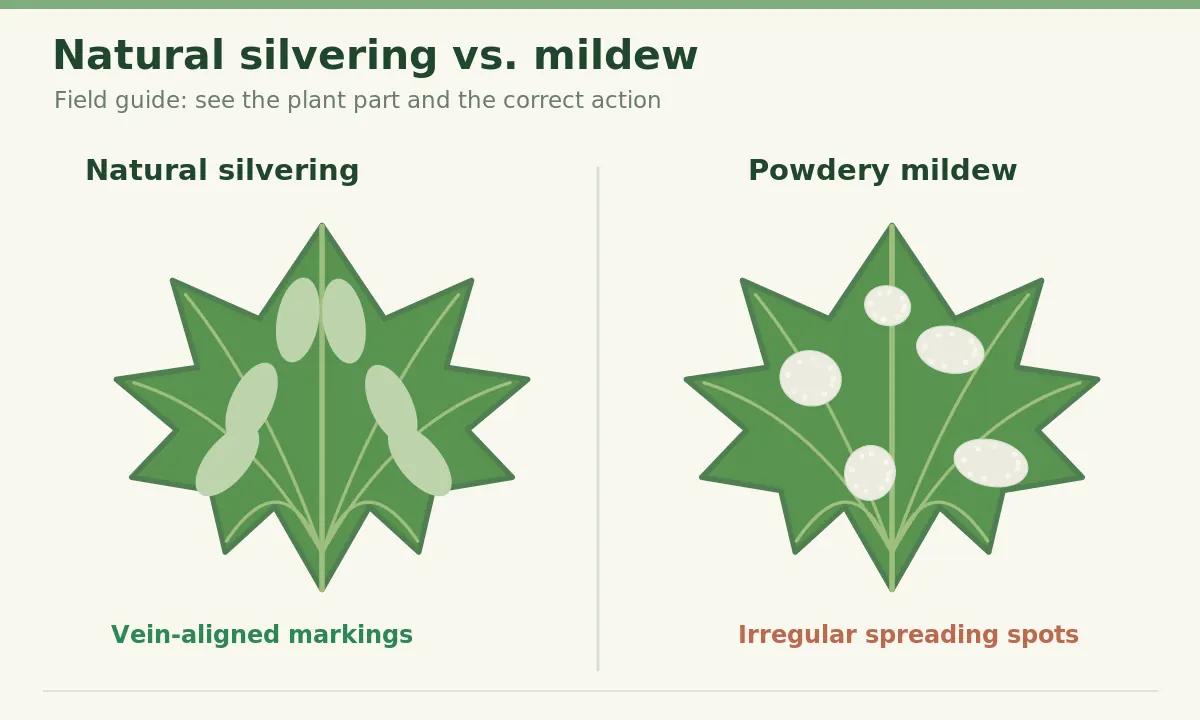
Locate the First Powdery Spots on Older Leaves
Cucurbit powdery mildew commonly becomes visible as individual pale yellow areas or white colonies, often beginning on older foliage. University of Minnesota Extension notes that white powdery patches may form on both upper and lower leaf surfaces and quickly merge into larger areas. Inspect a leaf flat in natural light without rubbing it aggressively, then lift the edge and examine its underside. Old leaves nearer dense, shaded parts of the plant may show clearer symptoms than fresh tips. Photograph the same leaf over several days to see whether the boundaries enlarge. Expanding irregular growth is a stronger clue than one unchanged pale vein marking.
Check Both Leaf Surfaces and the Leaf Stalk
Do not diagnose only from a quick view of the top canopy. Powdery mildew may appear below zucchini leaves and on petioles or stems. Carefully tilt a leaf without snapping its long stalk. Look for fine white fungal growth that extends across the green surface, including areas between veins. A powdery appearance may look dusty, but rubbing or brushing plants to test it can disperse spores; visual inspection and photos are enough to guide a preliminary decision. Where spots are angular and yellow but lack the powdery growth, other disorders such as downy mildew may require different investigation. Consider the whole pattern and any weather history.
Separate Mildew From Water Spots and Injury
A dried irrigation splash may leave mineral residue; insect feeding can create silvered patches; nutrient stress may yellow a leaf. None of these automatically equals powdery mildew. White fungal colonies usually look irregular, enlarge over time and can spread to additional leaves. If leaves show sharply angular yellow areas defined by veins, seek guidance on downy mildew rather than assuming the two diseases are interchangeable. Also check for actual insects on the undersides of marked leaves. Diagnosis should use the leaf surface, spread over time, associated symptoms and the plant variety. When ambiguity remains, a local Extension diagnostic service can evaluate a sample or photograph.
Improve Airflow Without Damaging the Crown
University of Minnesota recommends spacing, staking where suitable and weed control to improve air movement around cucurbits. In an established zucchini bed, clear competing weeds and avoid allowing multiple large plants to choke one another. Do not strip most of the green foliage in an attempt to cure a disease; zucchini fruits rely on photosynthesis, and bare fruit can sunscald. Remove only badly affected leaves when consistent with local disease guidance, using clean tools and avoiding unnecessary wounds. The aim is better light and circulation within an otherwise functioning canopy. Preventive space at planting is easier than correcting severe crowding late in summer.
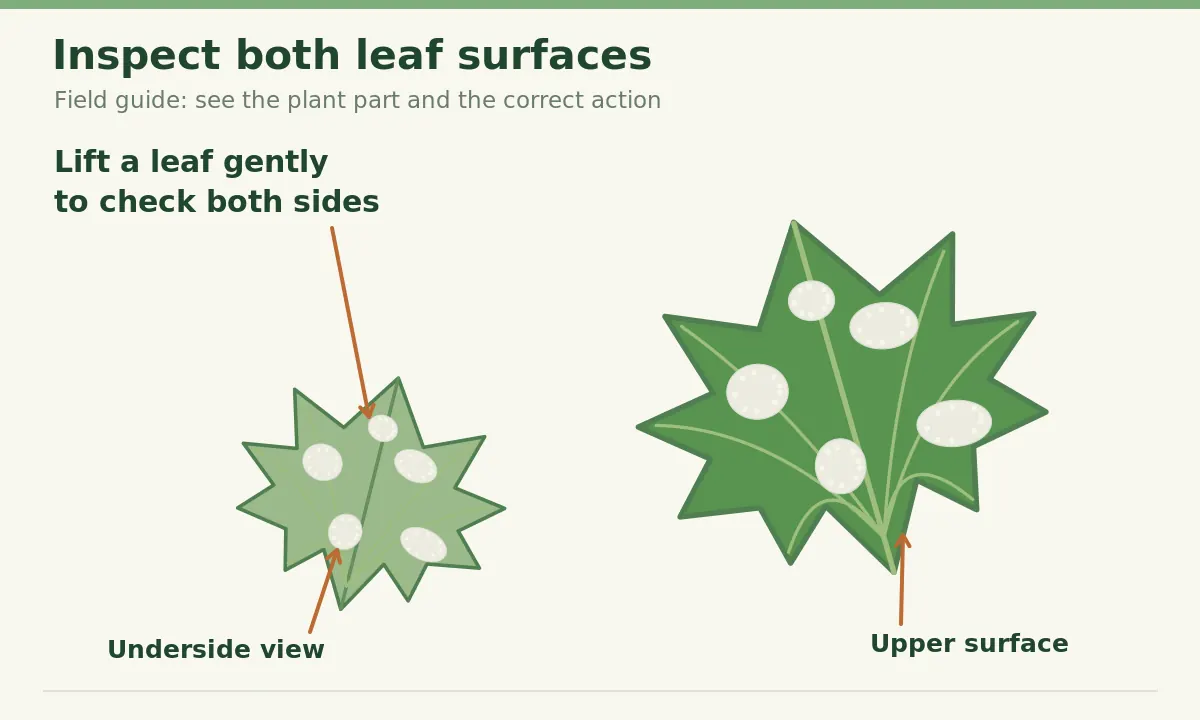
Understand Why Dry Weather Can Still Spread Spores
The name powdery mildew sometimes creates the false impression that standing water must cover a leaf for infection. UC IPM explains that these fungi can infect without free water on the leaf surface, and spores are carried by air. Moderate temperatures and high humidity can favor disease development, even during spells when rain is scarce. Overhead irrigation and prolonged wet canopies may complicate other diseases, but simply withholding water from zucchini roots is not an appropriate control. Keep the crop adequately watered at the soil level where practical and concentrate on canopy conditions, crop vigor and verified diagnosis rather than attempting to starve the disease by drought-stressing the plant.
Evaluate Plant Age and Crop Impact
A few late-season powdery spots on old leaves are not the same emergency as a rapidly spreading infection on a young plant that has barely started setting fruit. If powdery mildew covers much foliage, the plant may weaken, fruit yield can decline and exposed squash may develop sunscald. Check whether newer leaves are still green, flowers and fruit are developing, and the lesion area is increasing. Consider the time remaining in your growing season and whether the plant is otherwise productive. Avoid promising that a heavily damaged old leaf will become green again after any treatment; most management aims to protect healthier tissue and remaining yield.
Use Resistant Varieties and Sanitation Next Season
When powdery mildew repeatedly affects a bed, consider a zucchini or summer squash variety advertised with relevant disease resistance. Resistance may limit damage without guaranteeing immunity, and race differences can influence performance. Remove heavily diseased crop debris as appropriate when the planting ends, manage weeds and give the next crop enough room for airflow. Rotate plantings as advised locally, but do not rely on rotation alone because airborne spores can arrive from elsewhere. Keep a record of cultivar and first symptom date; that information makes variety comparisons meaningful. Prevention begins before powder appears on the first leaf.
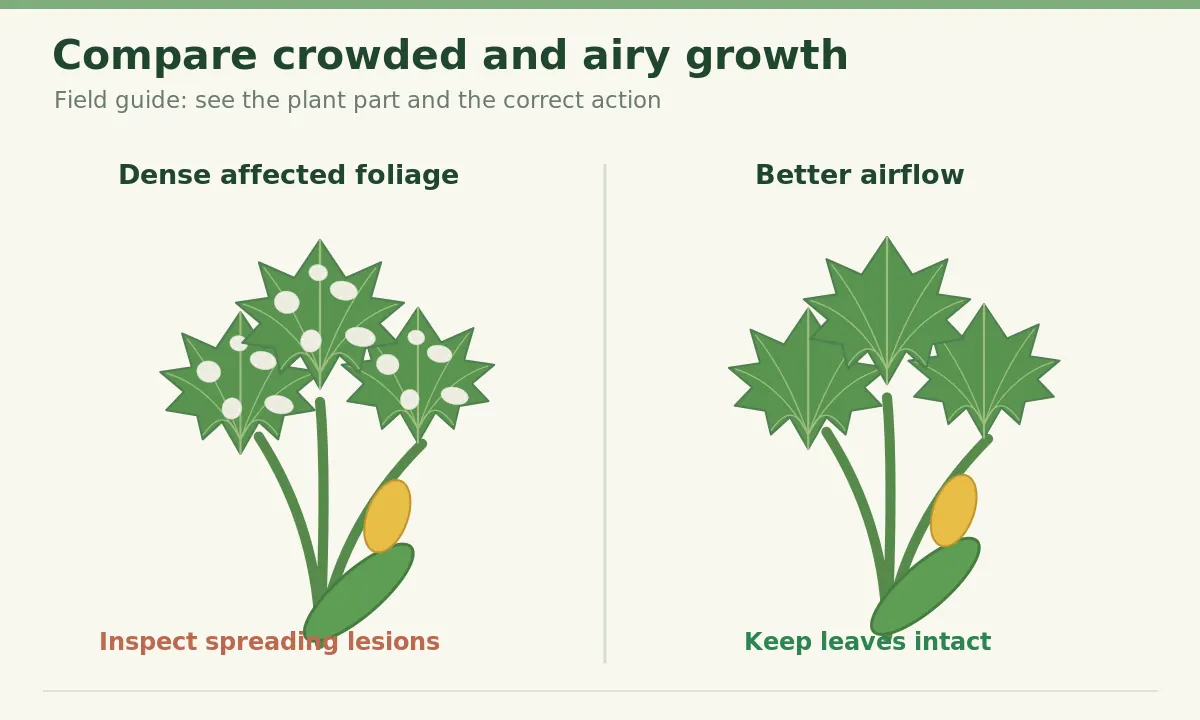
Handle Fungicides as a Crop-Specific Decision
For persistent severe mildew, consult a Cooperative Extension or UC IPM specialist about options currently registered for edible squash in your location. A chemical approved for ornamentals may not be labeled for zucchini, and even a familiar ingredient can injure a sensitive cultivar or become unsafe under unsuitable heat. Never invent a household mixture, application rate or harvesting interval. UC IPM guidance lists crop-specific considerations and resistance concerns; actual product labels control use, timing, protection requirements and preharvest intervals. Cultural improvement and accurate identification remain the starting point. This guide does not recommend a particular spray or promise that one treatment will reverse existing damage.
Make a Four-Clue Diagnosis Before Responding
First, compare several leaves for an orderly repeatable silver pattern. Second, inspect both sides of an older leaf for isolated irregular white colonies. Third, photograph the same patch and look for enlargement or new colonies. Fourth, check overall plant vigor, nearby crowding and weather. If markings are stable, regularly distributed and the plant is healthy, monitor rather than panic. If powdery colonies spread, improve airflow and obtain regionally suitable IPM advice. The important distinction is not white versus green; it is living fungal growth versus an inherent feature of the zucchini cultivar’s leaf surface.
Related Guides
- How to Find Squash Bug Eggs and Protect Zucchini Before Wilt
- Growing Zucchini: Pollination, Fast Harvests, and Problem Diagnosis
- When to Harvest Zucchini and Cut the Fruit Without Damaging the Vine
How We Research and Verify Plant Advice
Sources checked on 2026-10-26 (including University of Maryland Extension on natural zucchini leaf variation): extension.umn.edu; ipm.ucanr.edu; ipm.ucanr.edu. We reviewed each institution’s plant identification, correct growth stage and relevant cultural recommendations before adapting them into an independently written step-by-step guide. Where sources are region-specific, their calendar details are not applied universally. Pictures use simplified teaching shapes and should be compared with living specimens; they are not a substitute for laboratory disease diagnosis or local climate guidance. The relevant advice is paraphrased rather than reproduced.
Safety and Independent Editorial Disclosure
This independently prepared educational article does not claim sponsorship or affiliate approval. Our category reading links are informational, not product endorsements. See the VegWin affiliate disclosure. Clean sharp tools before cutting plants, protect hands from thorns and blades, and keep cut plant material away from children and pets where appropriate. Use only locally registered plant treatments labeled for the actual crop, and observe the product label. Do not rely on unsupervised home remedies or unverified harvest-safety promises.
No. Some squash cultivars naturally have stable silvered leaf patterns, often associated with veins.
White powderlike colonies appear in irregular patches and can expand across upper or lower leaf surfaces.
Yes. These fungi do not require standing water on the leaf to establish infection.
No. Excessive leaf removal can weaken plants and expose fruit to sunscald; start with diagnosis and improved airflow.
Do not use unverified mixtures. Seek regionally registered options and follow the exact edible-crop product label if treatment is warranted.