
Bokashi turns food scraps into fermented material in a sealed bucket, but that material is not the finished, stable compost gardeners normally spread around crops. That distinction determines every important decision: what container to use, what smells signal a problem, and where the contents should go when fermentation ends. This guide is a practical handoff plan from countertop scrap collection to a separate finishing stage in soil or an existing compost system. Washington State University Extension describes the product as acidic pre-compost, and University of Vermont Extension likewise distinguishes fermentation from ordinary decomposition. Neither method excuses ignoring pests, drainage, or food hygiene.
Decide whether bokashi fits the scraps and garden space
Choose bokashi when the central problem is collecting relatively small amounts of household organic waste without operating an exposed compost heap every day. The sealed fermentation stage may suit a household with room for a bucket but little room for turning a pile. It does not remove the need for a place to finish the material. Before purchasing anything, identify an existing compost bin or a part of the garden where a covered, undisturbed finishing stage is possible. If neither exists, the bucket can simply move an unresolved disposal problem to a later date.
The name composting can be confusing here. Conventional compost organisms break material down in a managed aerobic process; bokashi cultures ferment it under a low-oxygen environment. Scraps may retain their recognizable appearance even after the fermentation stage. That is not automatic failure. The important distinction is whether the material has undergone the intended fermentation without uncontrolled putrefaction, and whether it will be buried or composted further rather than placed immediately against edible leaves or roots. Compare this workflow with vermicomposting or municipal organics collection before deciding it is easier.
Assemble a sealed container with a real finishing plan
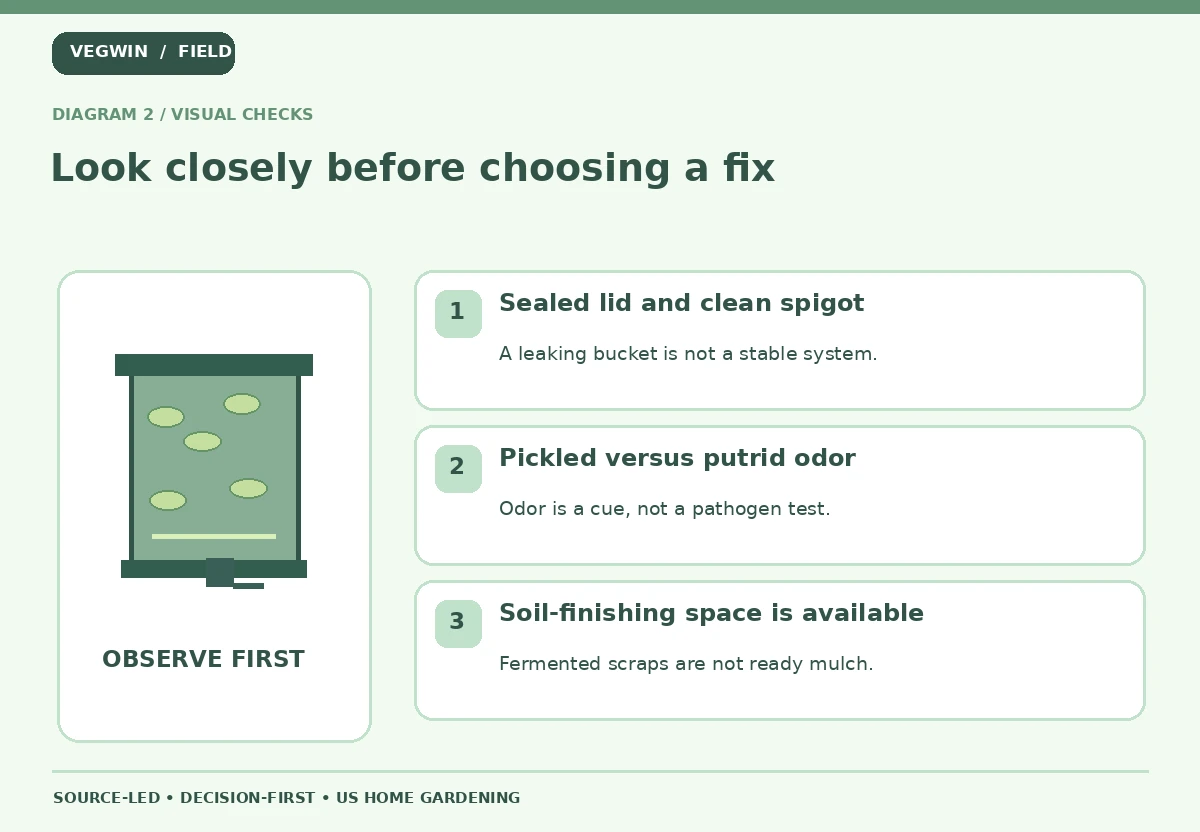
A purpose-made bucket is designed to seal while allowing accumulated liquid to be collected or drained. An improvised container still needs an effective lid and a sensible way of handling moisture without leaks. Position it away from food preparation surfaces and out of reach of pets or children; keep a separate scoop for the inoculated bran. Follow the actual bran or kit manufacturer’s directions for use, because cultures and container designs differ. Do not infer a universal amount of bran per layer from a diagram or a marketing claim.
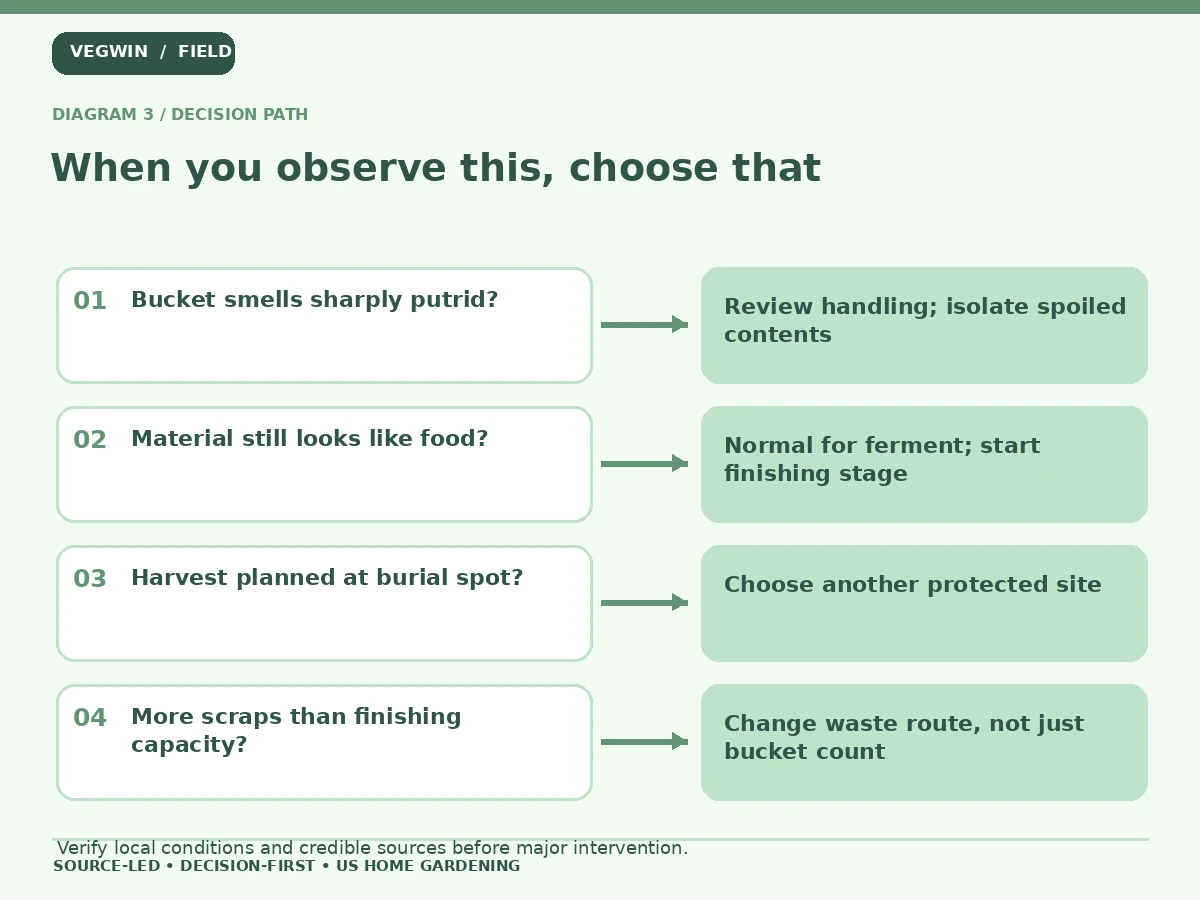
Write the finishing destination on the lid before loading scraps. A household using a conventional compost pile can reserve space for the fermented contents; a household using soil burial needs a site that can be kept away from immediate harvest and disturbance. Digging beside actively harvested roots or leafy vegetables is a poor place to experiment with acidic, unfinished material. Consider access during wet or frozen weather, the possibility of attracting animals, and local rules for food-waste handling. Bokashi is not a substitute for a tested process that makes mixed food waste safe for direct contact with produce.

Load scraps while limiting air and excess moisture
Collect appropriately sized scraps in a separate kitchen caddy, drain free liquid where practical, and transfer them to the bucket without leaving the lid open for long periods. Distribute the inoculated medium in accordance with the product instructions, compress the contents gently when recommended, and reseal the lid. The objective is consistent fermentation, not an open compost heap that must be repeatedly turned. Avoid turning and stirring merely to see what is happening; that introduces oxygen into a system intended to operate sealed.
Although some Extension guides discuss fermentation of cooked foods, dairy, and meat, do not assume that any mixture has become microbiologically safe, pathogen-free, or suitable for direct soil contact around an edible harvest. Where the destination is a vegetable bed, a conservative approach is to start with vegetable and fruit scraps and route higher-risk animal wastes according to local organics guidance. Do not use a household bokashi bucket to process pet waste. Record the filling date, especially when multiple buckets are in rotation; an unlabeled bin makes it difficult to separate filling, fermentation, and finishing phases.
Recognize normal fermentation without guessing from color
Fermented scraps may have a tangy or pickled smell and may remain visibly intact. That can be normal. A severe putrid odor, persistent leakage, or unexplained growth accompanied by a distinctly rotten smell calls for closer attention to how well the lid seals, how the material was loaded, and the instructions from the bran manufacturer. Visible surface changes alone cannot establish pathogen safety. Avoid breathing closely over a questionable container; handle suspect contents carefully and consult local waste-disposal advice when the bucket has obviously spoiled.
Manage accumulated liquid as a separate waste stream. Its composition varies with the food scraps and process, and the absence of a foul odor is not an assurance that it is safe to spray onto vegetables. Extension articles may describe diluted leachate as a soil input, but this guide does not provide a universal dilution, fertilization claim, or recommendation to apply it to edible foliage. A conservative grower can follow local municipal disposal directions rather than dosing crops with an untested liquid. Clean spills promptly, keep the spigot functional, and never let a container leak into a kitchen cabinet.
Finish the acidic pre-compost before vegetable planting
Once the manufacturer-specified fermentation period is complete, decide where the material will finish decomposing. WSU Extension states that bokashi ferment is acidic pre-compost and must be mixed with soil or added to a conventional composting system. This is a second biological stage, not a decorative mulch layer. Protect it with sufficient soil or mature compost material to discourage animal disturbance and keep it out of immediate contact with edible tissues. There is no universally reliable calendar for final stabilization: temperature, moisture, feedstock, and biology all change the rate.
Do not plant a sensitive seed directly into a pocket of freshly fermented material simply because the bucket cycle is over. If space is limited, a dedicated covered soil-finishing container may be more practical than repeated digging. Observe whether recognizable waste has broken down, whether the medium has returned to a normal earthy smell, and whether the finished blend behaves like the surrounding growing medium. Do not use an arbitrary home germination test as proof of food safety. For harvest areas with short planting intervals, mature compost from a trusted source may be the more predictable amendment. For more detail, our guide “Compost Tea for Gardens” looks at what it may do, what it cannot, and safety.
| Observation | Likely decision | Safer next action |
|---|---|---|
| Tangy smell; scraps intact | Fermentation may be proceeding | Finish in soil or compost; do not use as mulch |
| Persistent putrid smell | Sealing or feedstock problem | Check instructions and containment; avoid edible beds |
| Leachate collecting in base | Separate liquid waste issue | Handle under product and local disposal guidance |
| No place to finish material | System capacity bottleneck | Choose another waste-handling system |
Compare method failures with practical alternatives
If the bucket smells foul repeatedly, look first at the seal, the actual fermentation product instructions, water handling, and how often the lid is opened. If the finished material draws animals, the burial or containment step is failing even if fermentation appeared successful. Also, if you produce more scraps than your finishing area can accept, adding more buckets does not fix the bottleneck. These decisions should be made before the next load. Track a full cycle from scraps to stable finishing material rather than praising a fast first stage.
For garden soil, bokashi is one possible path among many. Maryland Extension’s compost overview explains how aerobic piles, bins, tumblers, worms, and trench composting involve different labor, space, and time tradeoffs. A household already maintaining a balanced compost pile may not gain much from another container. Conversely, someone unable to maintain a bulky pile may value sealed temporary collection, provided they have a responsible finishing destination. Select a method based on disposal capacity, odor management, finished-soil needs, and sanitation, not claims that fermentation alone creates immediately usable fertilizer.
Related Guides
- Garden Composting for Beginners: Balance Materials and Fix Pile Problems
- How to Improve Sandy Garden Soil With Compost, Mulch, and Better Watering
- How to Use a Compost Tumbler Without Making a Wet, Matted Batch
- How to Use Spent Mushroom Compost Without Harming Sensitive Plants
- How to Start a Worm Compost Bin Without Odors or Flies
How We Research and Verify the Advice
Research review, October 20, 2026: extension.wsu.edu — Bokashi fermentation, sealed container maintenance and the need to finish acidic pre-compost.; www.uvm.edu — Bokashi is fermentation rather than conventional finished compost and needs soil or compost finishing.; www.extension.umd.edu — Tradeoffs among composting systems, pest containment and the role of mature compost.. This review cannot guarantee the absence of an unpublished or renamed WordPress page because an authenticated live page list was not available. Current local Extension identification, climate and soil conditions take precedence over generic suggestions; ask a qualified local specialist when injury or unsafe materials are in doubt.
Disclosure: No sponsorship, confirmed affiliate approval, paid link, or product partnership is claimed here. These informational links are to university and public educational sources. Read the VegWin affiliate disclosure for site policy; accessibility of that internal page could not be independently confirmed during this review. No pesticide rates, universal fertilizer dosing, or assumptions about annual crop dates are provided. This material is a draft for editorial review, not a claim that the article has been published.
Frequently Asked Questions
No. The fermented contents remain pre-compost and require a separate soil or traditional compost finishing stage.
Bokashi ferments rather than fully decomposes scraps, so recognizable texture can remain after a normal fermentation stage.
No automatic recommendation is justified. Leachate varies in composition; do not apply it to edible foliage or invent a dilution.
Do not make that safety claim. Follow local organics disposal guidance and keep unfinished material away from edible harvests.
Check whether the lid seals, how moisture is managed, and the product instructions; dispose of spoiled material responsibly if fermentation fails.