
Compost tea is a water-based extract or brew made from compost. Gardeners sometimes apply it to soil or leaves hoping to add microbes, nutrients, or disease protection. The idea is plausible enough to study, but it is not the same as proof that any bucket of dark liquid makes plants healthier. Results depend on the original compost, the brewing method, the crop, and the goal; safety also matters because microbial ingredients can multiply organisms you do not want near food. A safer decision begins with the problem you are trying to solve. The following guide weighs compost tea against straightforward uses of finished compost and flags the situations where homemade liquid is an unnecessary exposure risk.
Define compost tea before assessing the claims
The term covers several practices. A quick extract may involve soaking mature compost in water and separating liquid from solids. Actively aerated compost tea uses equipment to move air through the liquid. Other brews are left relatively still for longer. Some recipes add molasses, kelp, fish products, or other microbial foods. These are not interchangeable products with a standard nutrient analysis or a guaranteed population of beneficial organisms. Cloudiness or an earthy smell does not prove that a brew is safe or beneficial. If a grower cannot tell what compost went into the batch, whether manure was included, or how the bucket was sanitized, claims about the finished liquid deserve particular skepticism. Start by treating all batches as biologically variable.
Separate compost’s soil benefits from tea claims
Finished, stable compost used as a soil amendment adds organic material that can improve soil structure and water handling. A strained liquid tea generally does not supply comparable quantities of that solid organic matter. It may carry soluble materials and microorganisms, but their numbers and effects are not reliably measured in a home bucket. Applying liquid is not equivalent to rebuilding soil organic matter. If the goal is to loosen heavy soil over time, raise organic matter, or mulch the surface, a sensible application of finished compost is usually a clearer intervention. If a nutrient deficiency is suspected, a soil test and targeted fertility advice are better guides than the color of a homemade extract.
Examine disease suppression claims critically
Some controlled studies show suppression of particular plant diseases from certain compost tea treatments, yet others find no dependable protection. A review published in Applied Soil Ecology in September 2026 analyzed 39 studies from 2010–2025 and emphasized large differences among crops, pathogens, and methods. That is not a license to claim all compost teas are ineffective, nor evidence that a household recipe will reliably replace an established disease-management program. LSU AgCenter Extension cautions that many marketed garden benefits lack strong support. Diagnose the disease, choose suitable cultivars, correct site problems, and follow local integrated pest management guidance. Do not use an unregistered homemade brew as a promised pesticide or disease cure.

Understand how added ingredients increase hazards
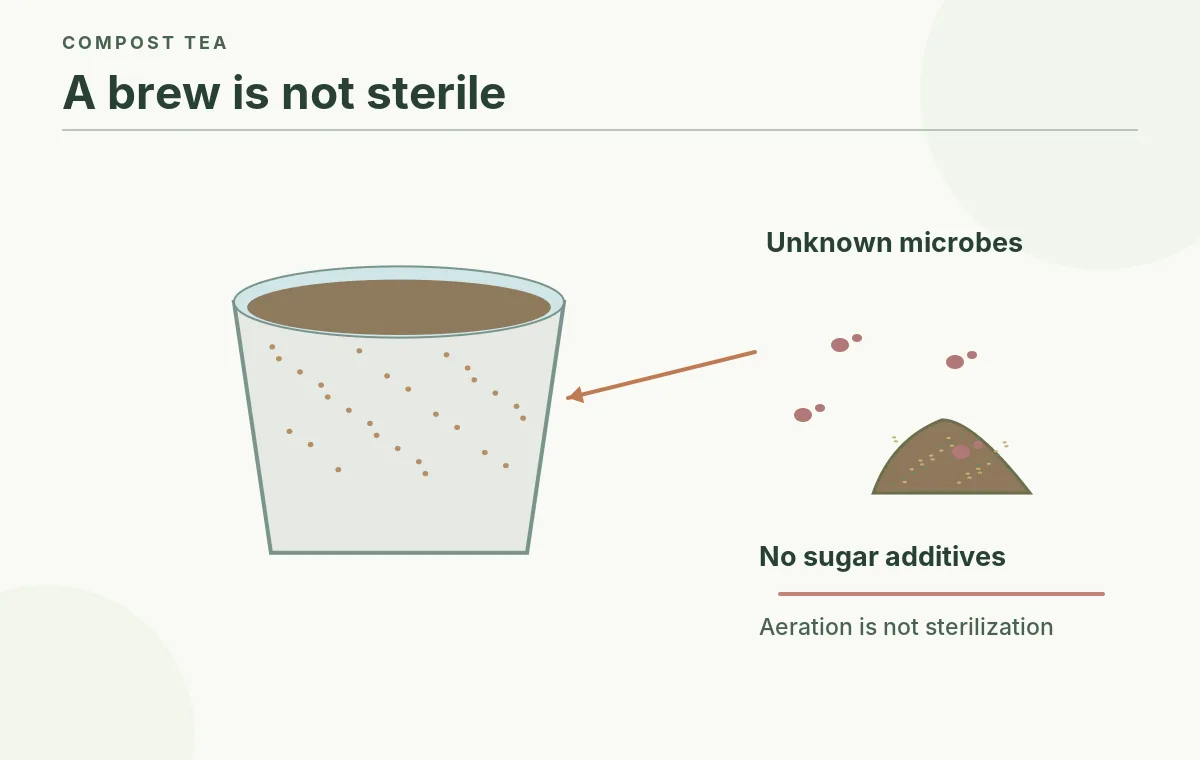
Microbes need nutrients to multiply. That includes microbes gardeners want, but also potential human pathogens if they enter the materials. USDA Agricultural Research Service work found that commercial additives in experimental compost tea could promote the growth of very small starting populations of Salmonella or E. coli. This concern is especially important when compost contains animal manure or the origin of inputs is uncertain. A pump that adds oxygen is not a sterilizer; vigorous bubbling does not certify that a brew is pathogen-free. Similarly, sweet additives should never be treated as an automatic improvement. Without validated feedstocks and testing, a home gardener cannot safely infer what organisms are in the liquid from appearance, smell, or bubbling.
Keep homemade liquid away from edible leaves
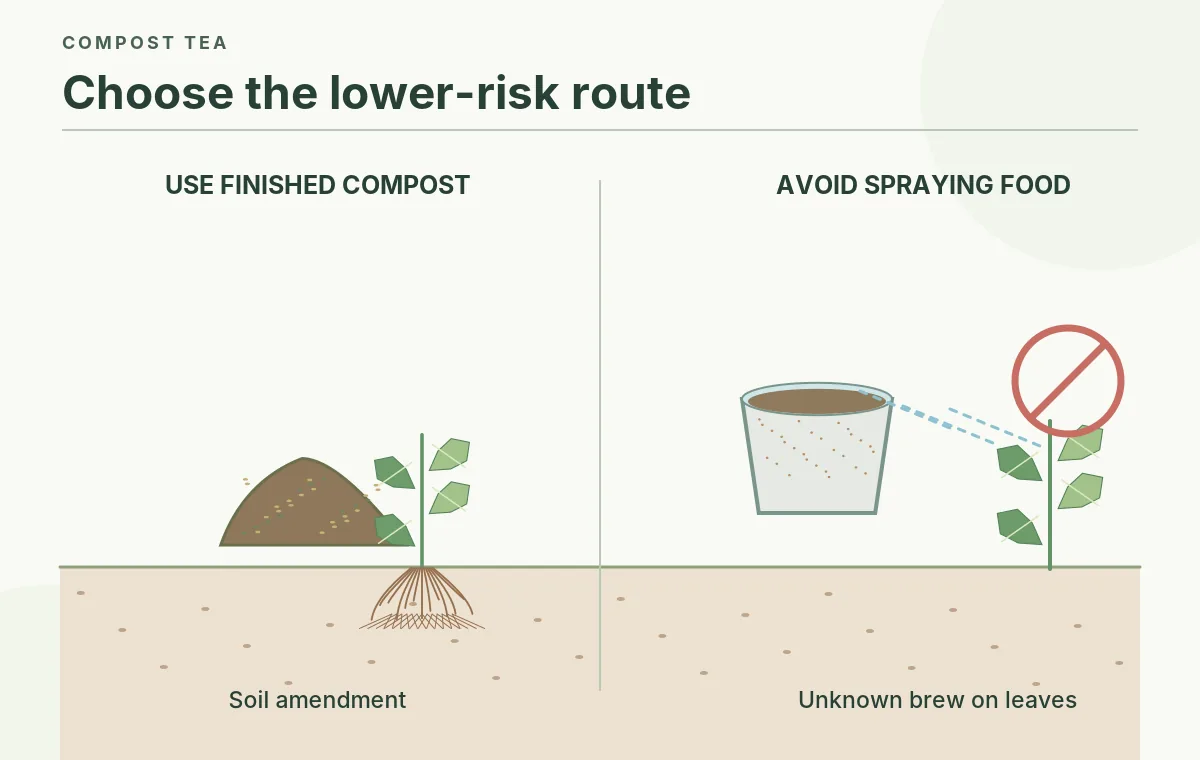
The conservative home-garden practice is not to spray untested homemade compost tea on salad greens, herbs, berries, or other edible portions of plants. Aerosolized droplets can contact produce, tools, clothing, and nearby harvest baskets. The risk is not eliminated by calling the liquid organic. USDA organic-program guidance includes rules and documentation when compost or tea comes from animal-origin materials; commercial certification requirements are not a do-it-yourself safety guarantee. Handwashing and rinsing produce are important habits but do not turn an unsafe treatment into a safe one. If your priority is edible crop soil health, use properly finished compost in ways consistent with local Extension recommendations instead of wetting the harvest with an uncertain brew.
Avoid treating compost tea as fertilizer
Nutrient levels in compost tea depend on feedstock, dilution, steeping, and handling. Two dark-looking buckets can have very different chemistry. A plant may respond to some soluble nutrients, but guessing a nitrogen or phosphorus dose from color is not agronomically sound. Repeated applications also create labor and expense without assurance of improved yield. Use a soil test to identify a real fertility limitation, then follow crop-specific nutrient guidance. Adding more compost tea to a yellow plant may mask a waterlogging problem, pest injury, or root disease. A nutrient solution with a clearly specified analysis is a different category of product and should not be confused with an improvised microbial extract.
Compare practical options for a garden goal
For general soil improvement, favor mature compost applied to the bed rather than extracting a small part of it into water. For moisture management, use appropriate mulch and irrigation adjustments. As for a named foliar disease, first confirm the diagnosis and review resistant cultivars, spacing, leaf-wetness management, and any legally labeled options. For microbial research, distinguish a controlled trial using characterized materials from anecdotal photographs of greener leaves. This goal-first approach helps avoid buying pumps, sugary additives, and containers before identifying a benefit. It also makes the potential harm clearer: a liquid placed on edible tissue has a different exposure route from finished compost incorporated into soil well before harvest.
Recognize hygiene limits if handling a brew
Some gardeners still experiment with teas in ornamental beds. Use clean equipment, a known source of finished compost, and water of appropriate quality; keep buckets away from kitchen utensils, drinking water, children, and pets. Do not use raw manure or food scraps as a shortcut, and do not assume fermentation makes inputs hygienic. Avoid breathing droplets or splashing exposed skin; wash hands and clean equipment after handling. These precautions reduce avoidable exposure but do not validate an unknown liquid for spraying on produce. Because reliable pathogen testing is outside most households, this guide deliberately does not provide a sugary additive recipe or a time-and-temperature formula falsely presented as universally safe.
Watch for a false choice between tea and pesticides
Compost tea is often promoted as a chemical-free alternative to plant protection, but the relevant comparison is not simply whether a product has a natural label. Healthy plants start with the right site, adequate spacing, appropriate watering, clean planting material, and a correct problem diagnosis. Specific microbial biological controls are researched products with defined organisms and use instructions, unlike an unpredictable mix from a home bucket. If insects or disease are actually damaging plants, contact your local Cooperative Extension or consult tested integrated pest management information. Follow the label for any registered pesticide; do not substitute an unlabeled homemade liquid and assume it is effective or safe because it smells like soil.
Decide whether a compost tea experiment is worthwhile
Ask four questions before doing anything: What measurable problem am I addressing? Which evidence applies to this crop and disease or nutrient need? Can I control and verify the safety of the ingredients? Is there a simpler, proven alternative? In most home vegetable plots, adding properly finished compost to the soil, using a soil test, and improving irrigation are more defensible priorities. If you are researching tea effects on nonedible ornamentals, keep a small untreated comparison and record observable results across more than one day; personal observation cannot establish a general disease-control claim. Keep the experiment separate from food crops and from any promise of pathogen-free liquid. The absence of an obvious bad smell is not a test result.
Related Guides
- Garden Composting for Beginners: Balance Materials and Fix Pile Problems
- How to Compost Grass Clippings Without a Wet, Smelly Pile
- How to Tell When Homemade Compost Is Finished Before You Use It
- How to Use a Compost Tumbler Without Making a Wet, Matted Batch
- How to Start a Worm Compost Bin Without Odors or Flies
How We Research and Check Recommendations
Research checked October 23, 2026. We compared species-specific or safety guidance from the institutional sources listed below, cross-checked planting or action timing against plant biology, and distinguished evidence from reasonable garden practice. The information is for home gardening, not a site inspection or substitute for local soil tests, plant diagnosis, or food-safety rules. Local climate, cultivars, and current Extension recommendations can change the appropriate decision.
Sources reviewed: LSU AgCenter Extension (Evidence gaps, preparation claims, and home-use food safety concerns.); USDA Agricultural Research Service (Added microbial food can amplify harmful bacteria in compost tea.); USDA Agricultural Marketing Service (Organic production context and restrictions for compost tea from manure.); Applied Soil Ecology review, 2026 (Disease-suppression findings vary with feedstocks, methods, crop, and pathogen.). This article does not claim a sponsorship, compensation, product endorsement, or verified affiliate relationship. Review our affiliate disclosure for site-wide policy.
Frequently Asked Questions
No homemade compost tea recipe has consistently demonstrated reliable control across garden crops. Use confirmed diagnosis and appropriate IPM guidance.
No. Pumping air does not sterilize the liquid or guarantee removal of harmful microbes.
A conservative home-garden approach is to avoid untested homemade compost tea on edible plant parts because of possible pathogen exposure.
No. Finished compost supplies solid organic matter to soil; a liquid extract does not replace those structural benefits.
Do not assume additives are safer or better. USDA ARS research found that microbial nutrient additives can encourage harmful bacteria if present.