
A squash plant that collapses in midsummer does not automatically have a squash vine borer. The useful diagnosis is narrower: look for frass, entry holes, and damage inside the lower stem of a susceptible squash or pumpkin. The adult is a day-flying clearwing moth, while the destructive stage is a larva hidden in the vine. University of Minnesota and Maryland Extension explain the insect’s life cycle and ways to reduce losses. This article provides an inspection-and-prevention decision chart rather than a pesticide recipe. Regional moth-flight dates vary, and no single treatment is appropriate without confirming the insect and crop.
Separate vine borer damage from ordinary wilting
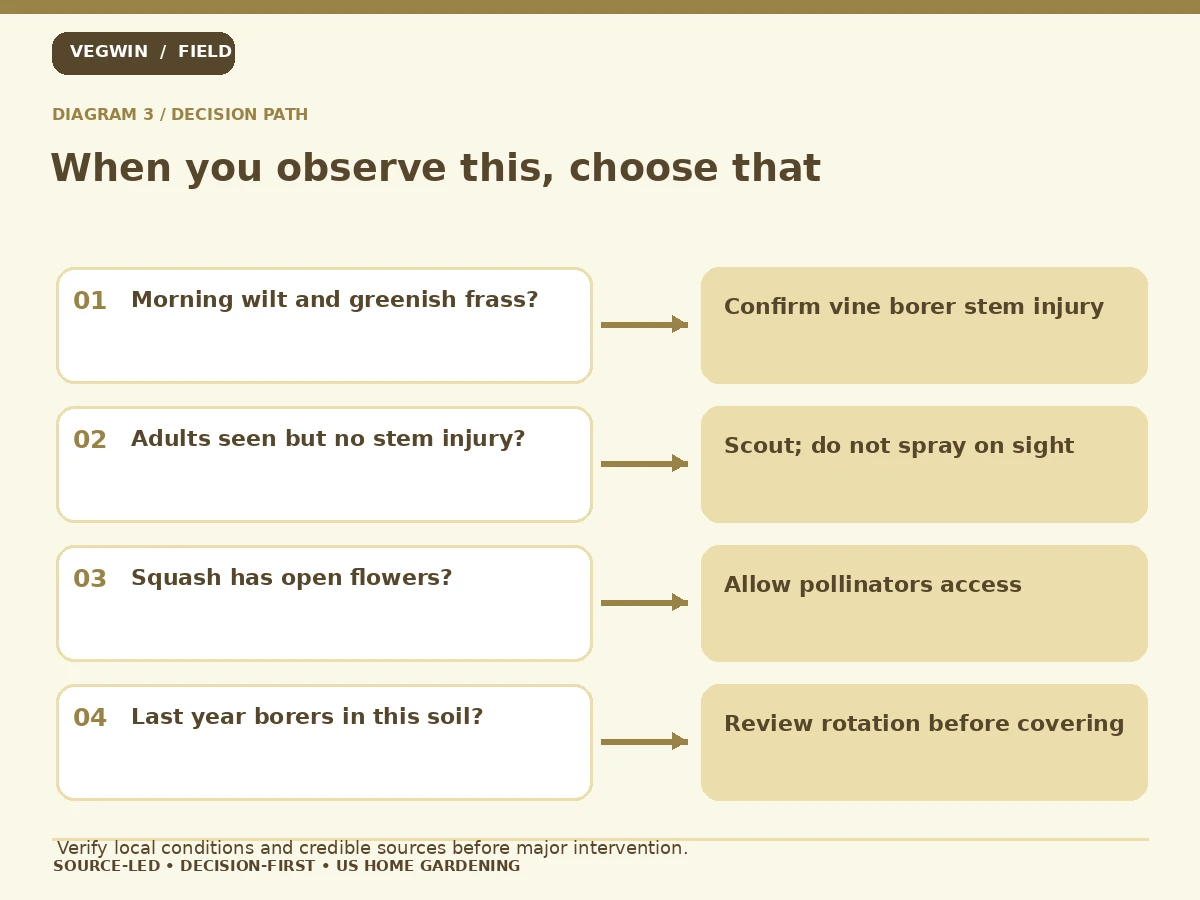
Start with the pattern of wilt. Heat-stressed squash leaves can droop in intense afternoon sun and recover after temperatures fall. A borer attack may first cause daytime wilt too, but a plant that remains wilted in the morning deserves immediate inspection. Look where a thick stem joins the base, not just at leaves. An entry hole, softening stem, and moist sawdust-like excrement called frass support the diagnosis. If these signs are absent, do not cut the vine open merely because someone on a gardening forum called the symptoms vine borer. For a step-by-step method, see how to identify iris borers early and protect bearded iris rhizomes.
Other problems can interfere with water movement, including damaged roots, saturated soils, and bacterial wilt associated with a different insect. The organism matters: squash bugs feed on leaves and stems, cucumber beetles may transmit bacterial wilt, and vine borer larvae tunnel internally. Treatments or prevention aimed at one do not automatically address the others. Note whether a single runner wilted or the entire plant collapsed, examine nearby plants, and compare what you find with Extension images. If uncertainty remains, submit a specimen or clear photographs to a local diagnostic service before taking destructive action. If you want the full process, read how to identify squash vine borer damage before cutting a vine.
Identify moth eggs larvae and damaged stems
The adult squash vine borer is a moth that can resemble a wasp and is active in daylight. Female moths place eggs individually on susceptible stems near the base. Larvae hatch, enter the stem, and feed internally, eventually producing holes and expelled frass. The distinctive sawdust-like residue is a stronger clue than yellow leaves alone. Use good light to inspect the first section of each stem and the soil immediately around its base. A recent egg and a deeply established larva represent different stages and require different decisions.
The most susceptible crops include many summer squashes and pumpkins. University of Minnesota Extension notes that some crops such as butternut squash are generally less susceptible, while cucumber, melon, and watermelon are usually not attacked. Less susceptible does not mean immune in every region or season. Check crop species carefully, and do not assume the borer’s behavior is identical in every state. Adult flight and egg laying can differ by locality and by year. A local Extension pest alert is more useful for timing than copying a date from an unrelated climate.
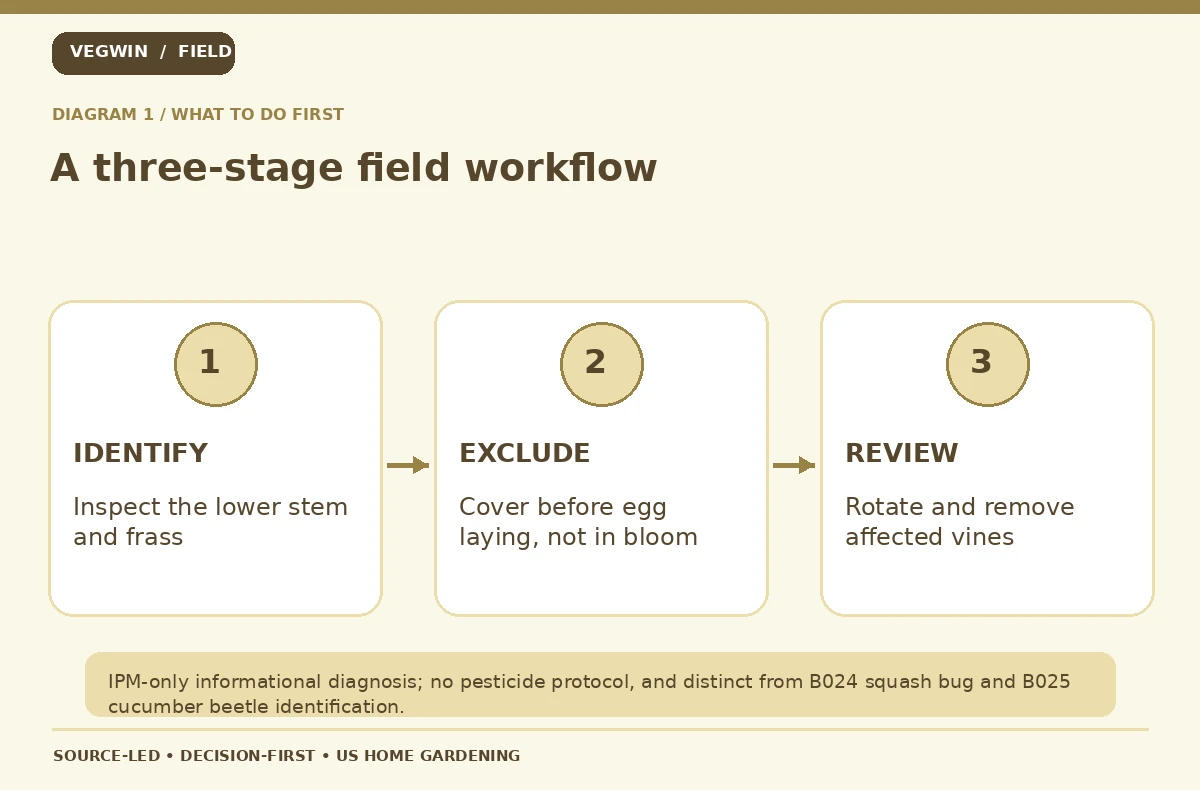
Begin inspection before a squash plant collapses
Visit susceptible plantings regularly during locally reported moth activity. Inspect the bases of several plants, the underside and sides of stems where eggs may be present, and any new patches of wilting. Record the observation date and plant variety. If you find an egg, consult a trusted identification image before removing it; avoid crushing useful insects by guesswork. If frass is present, note where it emerges and whether the affected vine is still growing. Taking a simple photograph each visit helps distinguish fresh injury from old scars.
A monitoring trap can show that adult moths are flying, but it is not a guarantee that every captured insect is a squash vine borer. Minnesota Extension cautions that related species may appear in pheromone traps and that a trap threshold for home gardeners is not established. Treat a trap as a prompt to inspect stems, not an instruction to apply a product. Do not use any chemical simply because one moth is seen. Identification, the crop’s flowering status, and the insect’s developmental stage determine what options are relevant.
Use row covers while protecting pollination
A tightly secured row cover can exclude egg-laying moths from vulnerable plants before and during adult activity. The timing must be adapted to local monitoring rather than automatically tied to a national date. Covers also exclude insect pollinators, however, so plants that require pollination must be uncovered at flowering or managed with an appropriate verified pollination strategy. A cover left closed over blooming squash may prevent fruits from developing even while it protects stems from moths. Check for overheating and wind damage under a cover as well. If you want the full process, read how to prevent squash vine borers before they enter stems.
There is a second important exception: do not install a cover over a bed where borers from last year’s squash may already be overwintering in the soil. Adult moths emerging beneath that cover can be trapped with the plants rather than excluded. Rotation to a separate location and prompt removal of damaged vines can reduce that risk, although moving a bed a short distance is not an absolute barrier to flying insects. Iowa State and Minnesota Extension discuss this tradeoff explicitly. Keep a simple bed-location record so next spring’s covering decision does not depend on memory.

Decide what to do when internal feeding is confirmed
If a plant is already severely wilted and the stem is badly destroyed, recovery may be unlikely. Some Extension sources discuss carefully opening an infested stem to remove a larva and mounding soil over wounded sections, but this is an invasive salvage method that risks further damage and is not appropriate for every plant. It is optional, not a routine remedy. Consider the plant’s condition, whether healthy nodes can root, and whether an undamaged younger planting can still produce within your local frost-free window. A grower who is unsure of the pest should prioritize diagnosis over surgery.
Do not rely on a foliar spray to reach a larva already sheltered inside a thick stem. If an insecticide is ever considered, only a current label that explicitly permits the crop, target pest, application method, and local legal use can guide it; this article supplies no product recommendation or dose. Remove exhausted vines with obvious infestation according to local disposal advice so larvae are less likely to complete development in garden soil. Keep crop residue out of any area where it could simply reintroduce the problem. Clean cutting tools when moving between plants with possible diseases. Our guide to seedling damping-off goes into more detail.
| Finding | What it suggests | Next step |
|---|---|---|
| Midday wilt; plant recovers overnight | Water or heat stress also possible | Check root moisture and repeat observation |
| Morning wilt, base hole, sawdust-like frass | Borer injury strongly indicated | Confirm visually; assess affected plant |
| Many adults but stems intact | Egg-laying risk; damage not confirmed | Inspect stems, eggs and flower stage |
| Old infested site planned for row cover | Pupae may be in soil | Avoid trapping emerging moths with crop |
Build next season's prevention around the lifecycle
A resilient plan starts with crop choice and planting-site history. Consider less susceptible crops where vine borers have caused severe loss, and note which varieties performed better in your own garden without labeling them universally resistant. Rotate away from the worst-affected area when space allows. If your Extension service documents one peak adult flight, a carefully timed later summer squash planting may avoid the worst egg-laying period; this tactic depends on climate and enough remaining days to harvest. It is not transferable to every region or long-season pumpkin variety.
Use the last walk-through of the season to record where wilt occurred, whether eggs or frass were actually found, and what barrier management was practical while flowers needed pollinators. Those notes are more useful than repeating untested companion-planting promises. A yellowing leaf is a prompt to inspect, not proof of a borer, and a row cover is a barrier with tradeoffs, not permanent armor. This page’s unique purpose is the sequence from symptom to confirmed stem injury to prevention timed around plant flowering, rather than a general overview of squash care.
Related Guides
- How to Identify Squash Bugs and Check Eggs Before Control
- Powdery Mildew on Squash: Confirm Leaf Symptoms and Slow Spread
- How to Start Pattypan Squash Seeds in Warm Soil for Bush Plants
- When to Harvest Patty Pan Squash for Tender Scalloped Fruits
- Cucumber Beetles: Identify the Pest and Prevent Wilt Risk Early
How We Research and Verify the Advice
Research review, October 20, 2026: extension.umn.edu — Adult identification, egg and larva biology, host susceptibility, scouting and exclusion caveats.; www.extension.umd.edu — Frass and stem entry diagnosis, host plants, removal and prevention.; yardandgarden.extension.iastate.edu — Row cover removal for flower pollination, crop rotation and second-planting limits.. This review cannot guarantee the absence of an unpublished or renamed WordPress page because an authenticated live page list was not available. Current local Extension identification, climate and soil conditions take precedence over generic suggestions; ask a qualified local specialist when injury or unsafe materials are in doubt.
Disclosure: No sponsorship, confirmed affiliate approval, paid link, or product partnership is claimed here. These informational links are to university and public educational sources. Read the VegWin affiliate disclosure for site policy; accessibility of that internal page could not be independently confirmed during this review. No pesticide rates, universal fertilizer dosing, or assumptions about annual crop dates are provided. This material is a draft for editorial review, not a claim that the article has been published.
They mainly attack squash and pumpkins; cucumber and melon are rarely attacked, so check other causes first.
Moist greenish or orange frass near a stem entry hole is a strong sign of larval feeding inside.
Not without a verified pollination plan; covers also exclude insect pollinators needed for fruit development.
Not blindly. Borers may overwinter in soil and emerge under the row cover; consult Extension and rotate when possible.
Do not assume so. Confirm the stage and follow current crop- and pest-specific labels if a treatment is considered at all.