
“Mushroom compost” often means spent mushroom substrate, the growing material left after commercial mushroom harvests. It is rich in organic material, but the label does not guarantee that the product is a low-salt, finished compost suitable for every seedbed or flowerpot. The right question is not simply whether this amendment is organic. It is how the material was made, how long it has weathered, and what kind of roots will meet it.
Penn State Extension explains that fresh spent substrate can contain salts that trouble sensitive plants, while weathering changes its properties. Oregon State Extension recommends reading compost analyses, particularly electrical conductivity, rather than assuming all brown, crumbly amendments behave alike. This guide gives a practical receiving and placement checklist, not a one-size-fits-all application rate.
Know what you are bringing home before amending soil
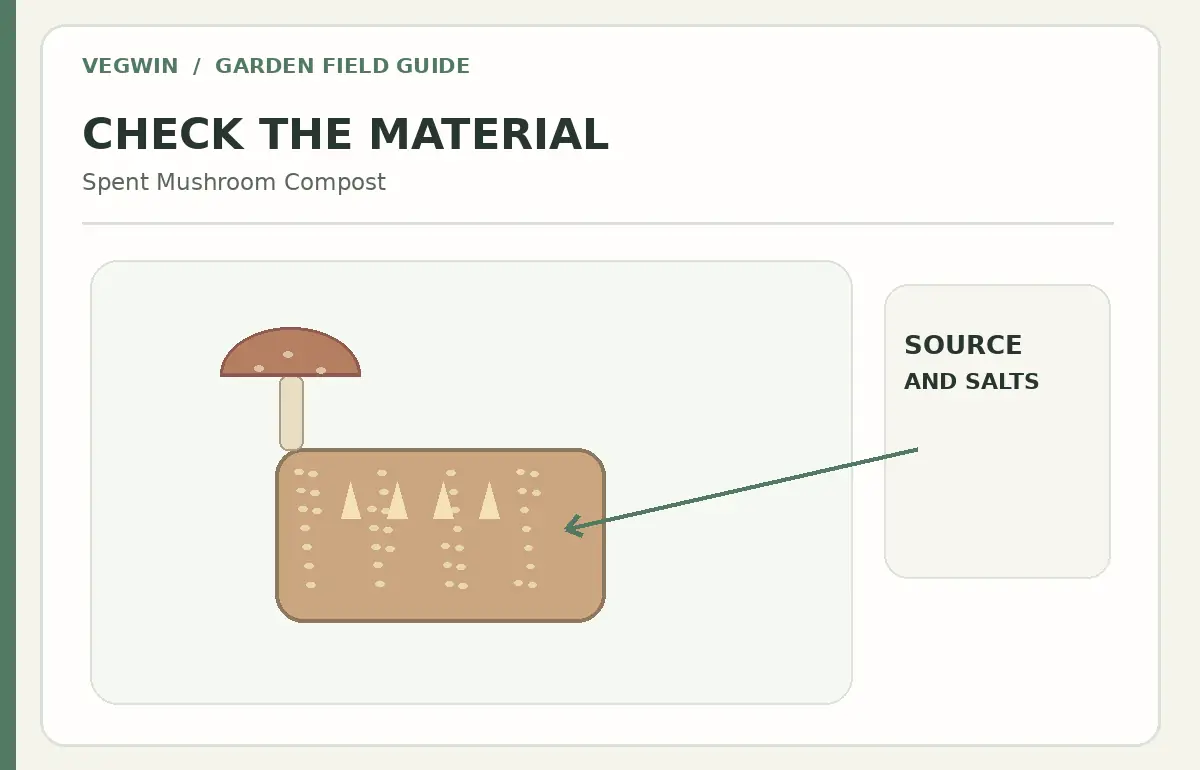
Spent mushroom substrate is usually the fibrous, nutrient-containing growth medium remaining after mushrooms were produced. Commercial mixtures differ; they can include straw, manure-based ingredients, gypsum, and casing material. It is therefore not identical to homemade leaf mold, screened yard trimmings, or potting mix. Two bags with a similar common name may have different moisture levels, textures, pH values and salt concentrations.
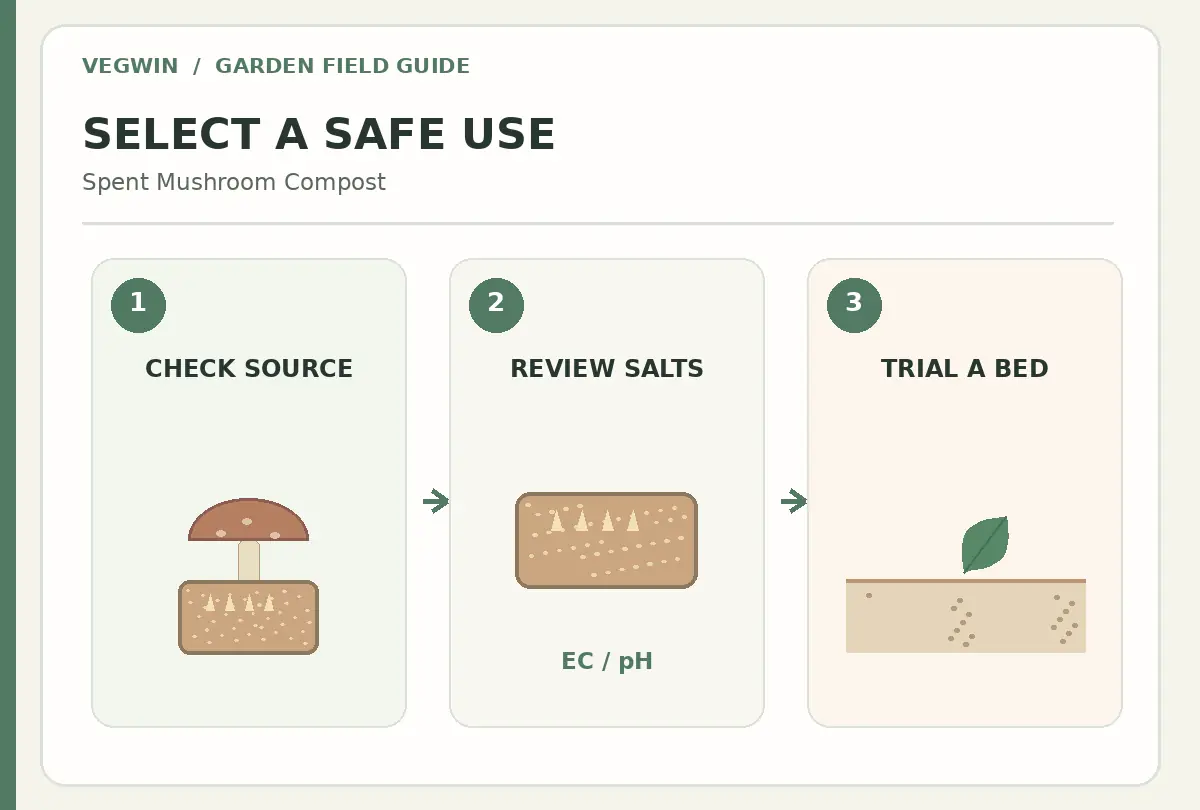
Ask whether the material came directly from a mushroom operation or was aged and blended by a landscape supplier. If the bag lists an analysis, keep the label. Fresh material with a noticeable ammonia odor deserves caution: use it neither as a thick mulch around seedlings nor as a primary transplant medium. If its source or maturity is unclear, start with a small separate trial rather than adding it across your entire vegetable garden.
Recognize when salts are the real limiting factor
Penn State notes that fresh spent substrate may be too salty for certain vegetables and ornamentals. Salts are dissolved mineral ions, not always visible white grains. Even a material that looks dark and well decomposed may have enough soluble salts to affect young roots. Seedlings and newly moved plants are particularly vulnerable because their root systems are small and concentrated near the soil surface.
Oregon State uses electrical conductivity, often abbreviated EC, as a way to assess soluble salts. Do not compare EC numbers from laboratories without checking the testing method: saturated-extract and 1:5-water methods give different scales. If you have a bulk delivery or a history of salt injury, ask your Extension lab which test is appropriate. Do not promise that adding water or waiting a few days makes every high-salt batch safe.
Use weathering information instead of guessing maturity
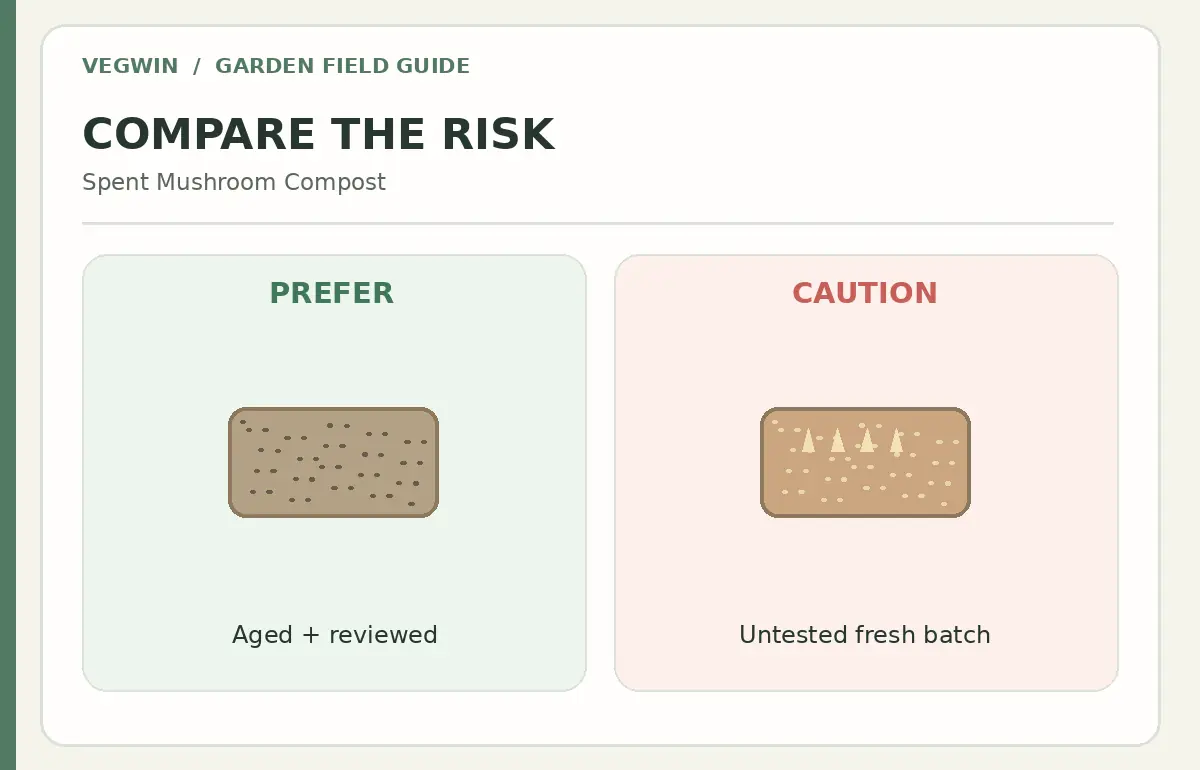
Penn State describes weathered spent substrate as more broadly usable than fresh material and notes that several months of outdoor weathering can reduce salts. That is a description of an observed process, not a guarantee that any uncovered heap has become safe by a particular date. Rainfall, drainage, ingredient mix and handling all vary. A product specifically sold as aged substrate is still worth checking for its intended use.
When storing a batch to weather, keep runoff away from drains, ponds, streams and food-handling surfaces. Use a legal, suitable area with good access and follow local guidance for containing nutrient-rich materials. Never assume that a poorly drained pile with a wet interior is ready merely because its outside has dried. For a sensitive use, an actual product analysis is more useful than visual appearance alone.
Choose suitable beds and avoid acid-loving crops
This material can be valuable as an organic-matter amendment in established, tolerant garden soil when used conservatively and with local testing advice. It should not automatically replace the well-drained potting mix used in seed trays or raised container crops. Garden soil and soilless container media have different drainage requirements, and a dense amendment can aggravate a poorly aerated mix. For a step-by-step method, see how to choose peat-free potting mix for container vegetables.
Compost with high pH or high salts is a poor blind choice around acid-preferring shrubs such as blueberries or rhododendrons. Oregon State Extension specifically warns that some manure-based composts have pH values that make them unsuitable for acid-loving plants. Do not try to correct that issue with an improvised acid dose. Check soil pH and product data before changing a bed designed for plants with specialized needs.
Make a small comparison before changing every bed
Choose one established bed that is not occupied by particularly sensitive seedlings. Divide a manageable area into a comparison patch and an untreated patch, keeping irrigation and sunlight comparable. If you use a purchased amendment, follow its documented recommendations rather than inventing a volume ratio. Record source, purchase date and how the substrate was incorporated or mulched.
Over the next growing period, compare plant establishment, leaf color and drainage, while remembering that differences also reflect weather and soil history. Poor growth is not proof of salt damage by itself: compacted soil, waterlogging, nutrient deficiencies or transplant injury can look similar. A side-by-side test does not replace laboratory analysis, but it does stop one untested product from becoming an irreversible whole-garden experiment.
Separate soil improvement from plant feeding
Spent mushroom substrate supplies organic matter and may contribute nutrients, but it is not a balanced fertilizer with a universal dose. Its actual nutrient profile changes with starting materials and weathering. Adding it every season without reading a soil test can increase nutrient buildup and make it harder to identify the reason for a plant problem. More amendment is not automatically more fertility.
Consider the intended outcome. If your clay soil needs improved aggregation over time, the main benefit may be organic matter. If soil already has high phosphorus or salts, another nutrient-rich input may be unnecessary. Also, if you are filling pots, start from a proven soilless medium instead of a bulk landscape compost. Match the product to the task and let soil results guide future additions.
Review the results and keep a record of each batch
At the end of the season, keep the product label, any EC or pH figures, your trial notes and photographs. If one bed shows burning leaf edges or stunted new growth, evaluate watering, roots and weather before diagnosing. A local soil-testing lab or Extension horticulturist can help determine whether soluble salts are involved. Do not respond to every symptom by adding a different fertilizer. To go further, our guide “Vegetable Garden Fertilizer” shows how to read your soil test before feeding.
If the amendment worked in an established ornamental bed, that does not mean the same batch belongs around germinating lettuce or acid-loving blueberries. Mark the situations that performed well and which were excluded. That small decision log keeps organic soil building practical, repeatable and safer than treating mushroom compost as a magic universal ingredient. For more detail, our guide “Compost Tea for Gardens” looks at what it may do, what it cannot, and safety.
Choose Your Next Step From the Evidence
| What you notice | What it may mean | Reasonable next step |
|---|---|---|
| Fresh product with no analysis | Possible high soluble salts | Request data or weather and test before sensitive use |
| Established tolerant bed | Potential organic matter benefit | Trial modest amount using local recommendations |
| Blueberry or rhododendron planting | pH and salt compatibility matter | Choose amendment based on soil and compost tests |
| Seeds germinating in trays | Root zone easily stressed | Use appropriate seed-starting media, not raw substrate |
Related Guides
- Garden Composting for Beginners: Balance Materials and Fix Pile Problems
- How to Use a Compost Tumbler Without Making a Wet, Matted Batch
- Bokashi Composting: From a Sealed Bucket to Finished Soil
- How to Build a DIY Compost Bin With Good Airflow and Easy Turning
- How to Make Leaf Mold from Fallen Leaves and Know When It Is Ready
How We Research and Check These Recommendations
We reviewed the original institutional and specialist horticulture guidance listed below on October 22, 2026. These sources support the specific biological and practical distinctions discussed above; they cannot forecast conditions in every garden. This is not a claim to have inspected the full published text of every older article. The simplified illustrations show decisions and recognizable plant structures, not photographic proof of a diagnosis. Always account for local weather, plant identification and the recommendations of a nearby Extension office.
Sources checked October 22, 2026: Source 1 — Penn State explains the origin of spent mushroom substrate and why weathering reduces salt risk around sensitive crops.; Source 2 — Oregon State Extension explains how to interpret compost electrical conductivity and pH rather than treating all composts alike.; Source 3 — Oregon State cautions that mushroom compost and manure-based amendments may contain substantial soluble salts.. No paid partnership or affiliate approval is being claimed. For more detail, read our affiliate disclosure. No product treatment or application rate is being prescribed without its appropriate label or local expert context.
Frequently Asked Questions
Not necessarily. It is the used mushroom-growing medium; its aging and analysis determine where it is suitable.
Yes. Penn State warns that fresh spent substrate can have high salts, a concern for sensitive roots.
Use product or laboratory electrical-conductivity data interpreted with the testing method and intended use.
Do not do so automatically. Check pH, salts and the crop’s acid-soil requirements first.
No. It is primarily an amendment, and nutrient additions should still be guided by your soil test.