
How to Identify Squash Bug Eggs on Zucchini and Remove Them Early starts with recognizing the right plant parts, not with rushing to cut or treat. An image showing those parts can keep a simple gardening job from becoming a costly mistake. This guide focuses on one distinct task and explains what to examine, which action to take, and when to delay. Conditions vary by cultivar, season and region, so always compare the instructions with the plant in front of you. The university and horticultural sources linked below inform the specific steps; they are not evidence that every garden will respond on the same schedule. Follow the diagrams together with the text, and stop if the living plant does not match the identification described.
Recognize the Squash Bug Rather Than Any Garden Beetle
Squash bugs, Anasa tristis, are true bugs with flattened bodies and piercing-sucking mouthparts. Adults are generally dark gray or brown, about five-eighths of an inch long, with alternating lighter and darker patches along the abdomen edges. They do not look like round lady beetles and they do not chew large holes through the leaf. University of Minnesota Extension reports that adults can shelter around the base of squash plants and beneath leaves, so a quick glance at the sunny upper surface often misses them. Learning the egg and nymph stages gives a gardener the chance to act before serious damage appears on tender zucchini seedlings or young flowering plants.
Turn Leaves Over and Search Between the Veins
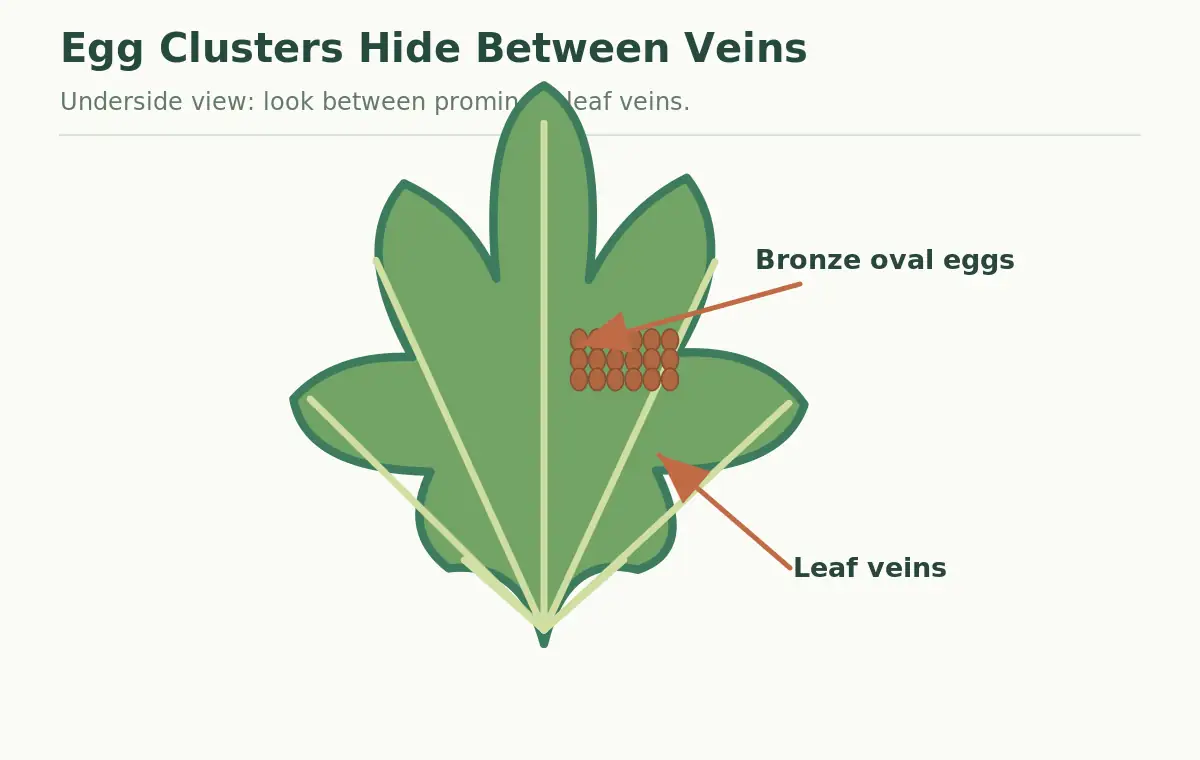
Begin the inspection on a zucchini plant with healthy, accessible leaves. Lift each leaf gently by its stalk and look at the shaded underside, particularly the V-shaped spaces between prominent veins. University of Minnesota Extension describes small clusters of roughly twenty oval yellowish-to-bronze eggs in these areas, although eggs may also occur on stems. Maryland Extension likewise notes that numerous egg clusters are laid mostly below leaves. Because leaf undersides are irregular and hairy, use steady natural light and a handheld magnifier if needed. Do not rip a leaf away simply to examine it. A habit of checking lower surfaces is more useful than only searching for adult insects after the plant begins to wilt.
Compare Bronze Egg Clusters With New Nymphs
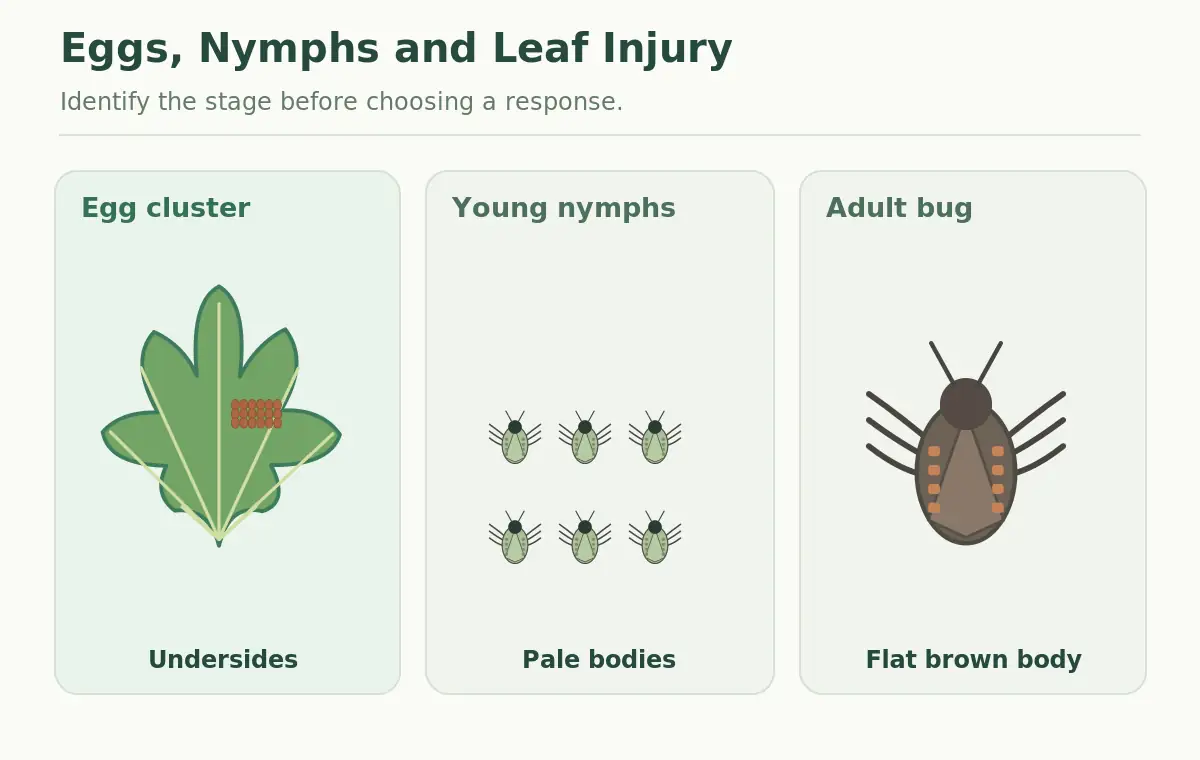
Squash bug eggs are small, smooth, oval and coppery to bronze, generally arranged in a deliberate cluster instead of scattered like dust. Newly hatched nymphs have small pale green bodies with dark heads and legs; later instars become grayish. Their appearance can change quickly, so a pale cluster of crawling insects beside empty eggshells is not necessarily a different pest. University of Minnesota Extension documents these growth stages. Do not identify an infestation from a single blurred picture of brown specks. Look for eggs, young bugs and eventually adults on the same host plant, using the shape and placement of each clue.
Check the Leaf for Piercing-Sucking Injury
Squash bugs feed by drawing plant fluids through slender mouthparts. On zucchini leaves, early injury often shows as small light dots or stippling, followed in heavy cases by yellowing, browning and wilting. Maryland Extension describes these signs and distinguishes them from some other squash leaf problems. Zucchini varieties can also carry normal silvery leaf mottling; that pattern alone is not proof of bugs. Powdery mildew usually appears as a superficial powdery coating rather than a simple trail of individual puncture-like dots. Confirm live insects or characteristic eggs before attributing every damaged leaf to squash bugs, because a wrong diagnosis invites unnecessary treatments.
Remove Eggs Without Ripping the Whole Plant
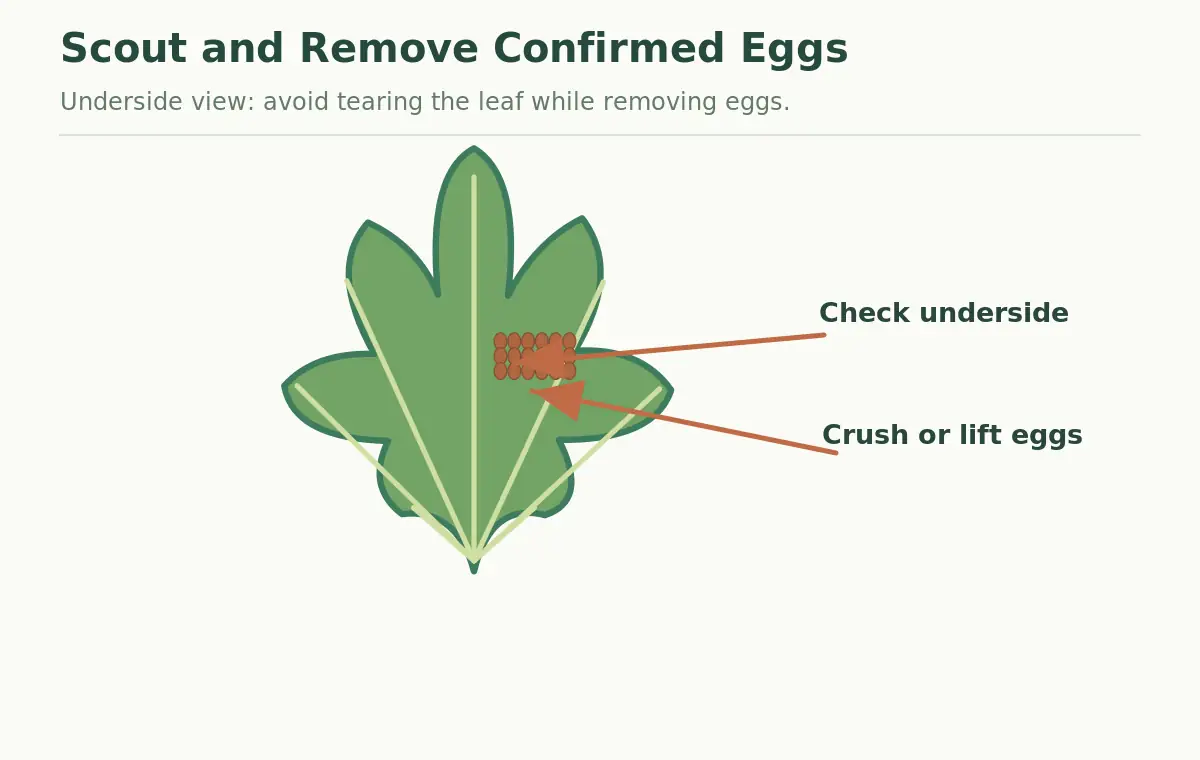
For a small home planting, physical removal can be practical. Carefully crush a confirmed egg cluster in place if that will not shred the leaf, or lift it gently and destroy the eggs away from the crop. University of Minnesota Extension recommends crushing eggs on undersides and stems, and removing nymphs or adults into a pail of soapy water. Check both sides of the leaf afterward and avoid losing your grip on brittle petioles. A small section of badly infested leaf can sometimes be removed, but routinely stripping healthy foliage is counterproductive. Hand removal needs regular repetition because adult bugs can continue laying eggs over an extended period.
Look Under Boards for Hidden Adults
Adult squash bugs often hide during the day and seek shelter beneath objects. University of Minnesota Extension suggests placing flat boards or pieces of newspaper in the bed, then inspecting underneath the following morning when bugs have gathered. This can be combined with hand collection into soapy water for a limited number of plants. Do not leave boards so tight against tender stems that they trap excess moisture or break vines. The method is monitoring and localized removal, not a promise that a single trap eliminates the population. Continue examining leaf undersides because egg masses may appear while you are catching adults.
Protect New Plantings Without Blocking Pollination
Young squash and zucchini are especially vulnerable to squash bug feeding. A lightweight insect-excluding row cover installed before infestation can reduce opportunities for incoming adults to lay eggs, provided its edges stay secured. However, most zucchini requires insect visits to transfer pollen between male and female flowers. Remove or open covers when flowers require pollination, or arrange a reliable hand-pollination method rather than leaving a sealed barrier over a blooming crop. A cover applied after adults are already beneath it can trap the pest with the plants. Physical barriers work best as part of a planned early-season strategy, not as a universal remedy at any growth stage.
Clean Up Hiding Places and Avoid Excess Debris
Adults may overwinter in sheltered garden debris, clods and structures. Remove dying cucurbit vines after the growing season and manage piles of infested residue where local rules permit. University of Minnesota Extension recommends reducing plant debris that gives bugs shelter during growth and at season’s end. Be careful not to blame every mulch material for every infestation; the immediate issue is creating dense hidden shelters near vulnerable crops. Keep plants adequately watered and nourished according to soil conditions so they tolerate some feeding better, while remembering that plant vigor does not prevent eggs from being laid. Inspect nearby pumpkins and other squash as well as zucchini.
Reserve Pesticides for Verified Need and Correct Labels
In small gardens, scouting, hand removal and good sanitation are reasonable first choices. University of Minnesota Extension notes that insecticides are normally not required to manage squash bugs and that fresh nymphs are generally more vulnerable than adults if treatment is needed. Pesticide selection varies by state, crop, active ingredient and product registration. Never use a generic homemade mixture or a pesticide intended for another crop; always follow a currently registered label and local Cooperative Extension advice. Protect bees and other pollinators, especially around open zucchini blossoms. Eggs and adults can be difficult targets, so broad spraying without confirmed identification is a poor substitute for regular inspections.
Keep a Short Scouting Log Instead of Guessing
At each check, record the date, plant location and whether you found adults, bronze egg masses, tiny nymphs or actual leaf injury. Mark an affected leaf if that helps you return without breaking stems. Inspect again after several days, particularly while young squash is growing quickly, to see whether newly laid eggs or fresh nymphs are appearing. One empty eggshell group does not establish a current living infestation, and one wilted leaf does not establish the cause. A short log makes it easier to choose whether hand removal is sufficient or whether local IPM support is warranted. The goal is an accurate diagnosis early enough to protect productive plants.
Compare the Key On-Plant Decisions
| What you see | Action | Why it matters |
|---|---|---|
| Bronze oval eggs | Leaf undersides; often between veins | Remove confirmed clusters |
| Pale young nymphs | Sheltered leaf undersides | Hand collect into soapy water |
| Silver blotches only | Upper leaf surface, no insects | Check variety markings before treating |
Related Guides
- How to Find Squash Bug Eggs and Protect Zucchini Before Wilt
- How to Identify Squash Bugs and Check Eggs Before Control
- How to Recognize Powdery Mildew on Zucchini Versus Natural Leaf Markings
- Growing Zucchini: Pollination, Fast Harvests, and Problem Diagnosis
- When to Harvest Zucchini and Cut the Fruit Without Damaging the Vine
How We Research and Verify These Steps
Sources checked on 2026-10-26: University or horticultural source 1; University or horticultural source 2; University or horticultural source 3. We compared those original recommendations with the specific crop, growth stage and real safety limitation before writing this guide. Site illustrations simplify the relevant botanical details, so always confirm the actual specimen and apply regional Extension advice when conditions differ. No pesticide or planting claim here should be taken as a replacement for a local label or growing guide.
Safety and Independent Editorial Disclosure
This article is independent educational gardening content, not paid sponsorship, and its internal links do not imply a vendor partnership. See the VegWin affiliate disclosure. Use clean tools, prevent injury to yourself and the plant, and wash food crops with clean water. Keep poisonous or irritating plant material out of reach of children and pets. For possible insecticide uses, follow current local registration and label directions; this guide does not provide treatment rates or off-label recipes.
Most often on the undersides of squash or zucchini leaves, particularly between veins, though stems may also carry eggs.
They are typically yellowish to coppery bronze, oval and laid in clusters.
They may be newly hatched nymphs, which begin pale green with darker heads and legs before becoming grayish.
Yes. Confirm identification first, then carefully crush or lift egg clusters without shredding healthy leaves.
A cover can exclude pests early, but flowers generally need insect pollination or carefully managed hand pollination.