
Mint is prized because it regrows readily after cutting; the same growth habit can make it a problem next to vegetables and delicate ornamentals. The essential decision is not simply “sun or shade.” It is where roots and creeping shoots are allowed to travel. A contained planting, an easy watering routine and repeated harvests can provide leaves for months without turning an herb patch into an unwanted mint lawn. Disclosure: This is independent gardening information, not a paid product placement. Affiliate partnerships for this page are not verified; see the site affiliate disclosure.
Choose Your Mint Type and Its Growing Boundary
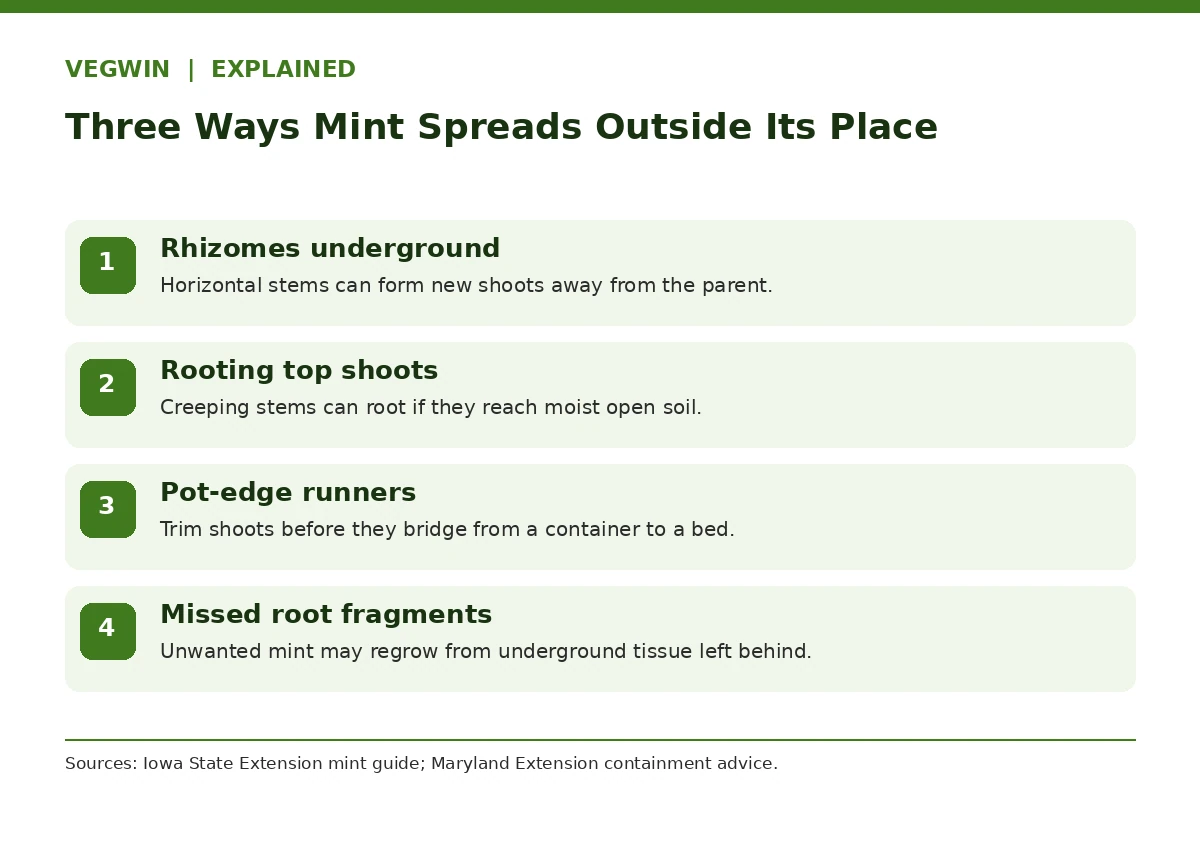
Peppermint and spearmint are common choices, but mint sold under a descriptive flavor name may have different leaf texture, scent and growth vigor. Identify the plant from the supplier rather than treating every named mint as an identical cultivar. Many members of the genus Mentha spread with underground rhizomes, and some stems root where they touch suitable soil. Iowa State Extension describes this aggressive habit. Do not plant a mystery mint beside fragile seedlings or an established perennial bed and assume it will stay within the original planting hole.
Decide the boundary before planting: a freestanding pot is the simplest option for most home gardeners. A bottomless barrier sunk into a bed can make runners easier to see, but it is not escape-proof, and moisture movement differs from that in a portable pot. Planting mint alongside other herbs with lower water needs also creates an irrigation conflict. For a low-maintenance herb collection, keep mint in its own vessel near a water source where you can inspect it without moving several other pots. For the fuller picture, see our guide to growing lemon balm in pots without unwanted self-seeding.
Start With a Container That Can Be Inspected
University of Maryland Extension suggests a container around twelve to sixteen inches in diameter for managing mint. Use adequate depth and drainage rather than a shallow decorative dish without holes. A sufficiently roomy pot holds more moisture and gives the plant room to regrow after harvest, but no pot prevents above-ground runners from trailing out over its edge. Stand the container where escapees cannot quietly root in adjacent open soil, and remember to inspect cracks and drainage openings as plants mature.
If you partly bury a container, leave a visible rim and inspect it regularly. Maryland Extension describes a method with the container rim above the soil so runners are noticeable and can be clipped before rooting. That is a maintenance strategy, not a permanent underground lock: runners can cross the rim, and root or rhizome growth may need periodic division. Choose a pot material you can lift safely, and consider how winter exposure and freeze-thaw conditions affect both the container and the perennial plant in your specific region.
Give Mint Consistent Moisture Without Standing Water
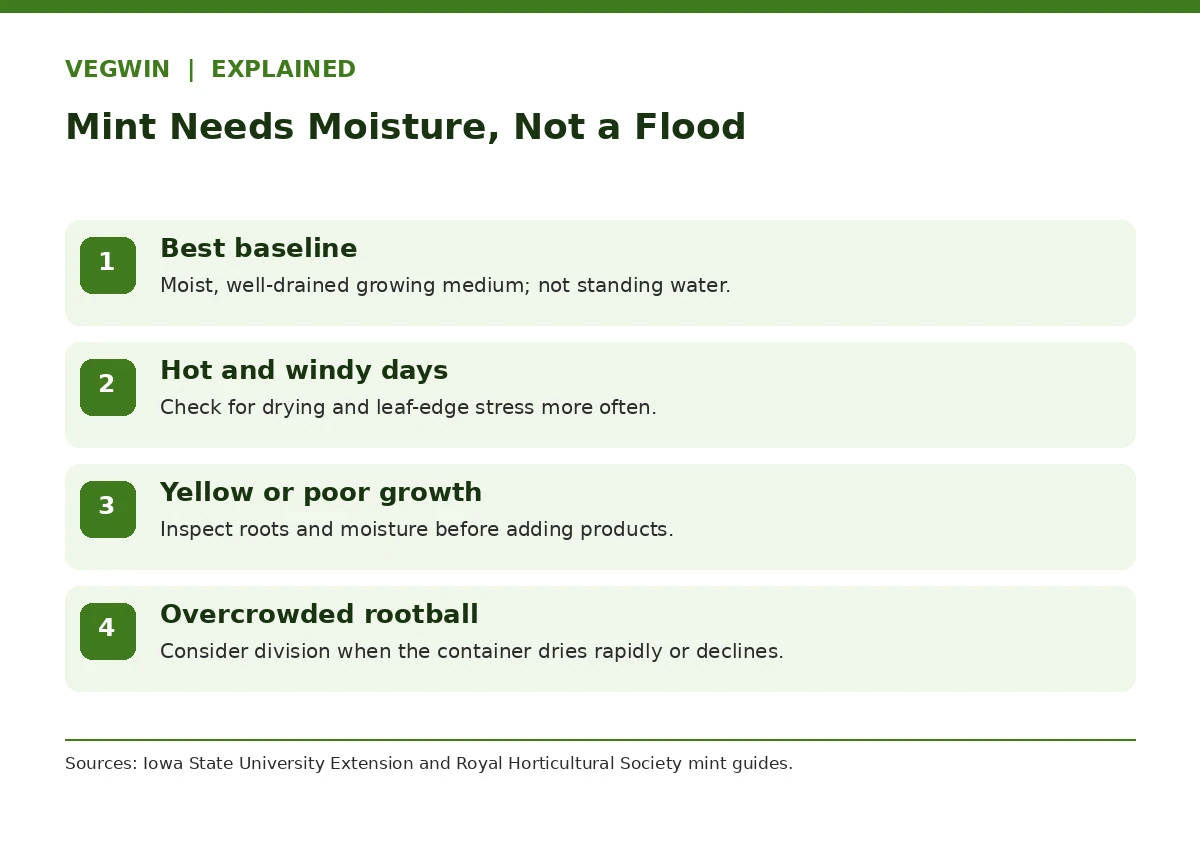
Mint often tolerates both full sun and partial shade, but Iowa State Extension says it grows best with a moist, well-drained, organic-rich root zone. Unlike rosemary or thyme, mint generally suffers when allowed to dry severely and repeatedly. A pot may become dry quickly in wind or reflective summer heat even when a nearby bed remains damp. Check the root zone below the surface and water as needed, allowing excess to run away through unobstructed drainage holes. Do not interpret “likes moisture” as permission to leave the pot standing in water.
Brown leaf edges during hot dry weather can reflect environmental stress rather than a specific insect problem. Check water, media and exposure before reaching for a pesticide. Where afternoons become intense, some protection from the strongest sun may improve leaf quality; in much cooler regions, brighter exposure may be welcome. Local experience matters more than a universal watering interval. When a mint pot dries rapidly immediately after watering, inspect whether the roots have packed the container and whether division is due.
Harvest Leaves in a Way That Encourages Regrowth
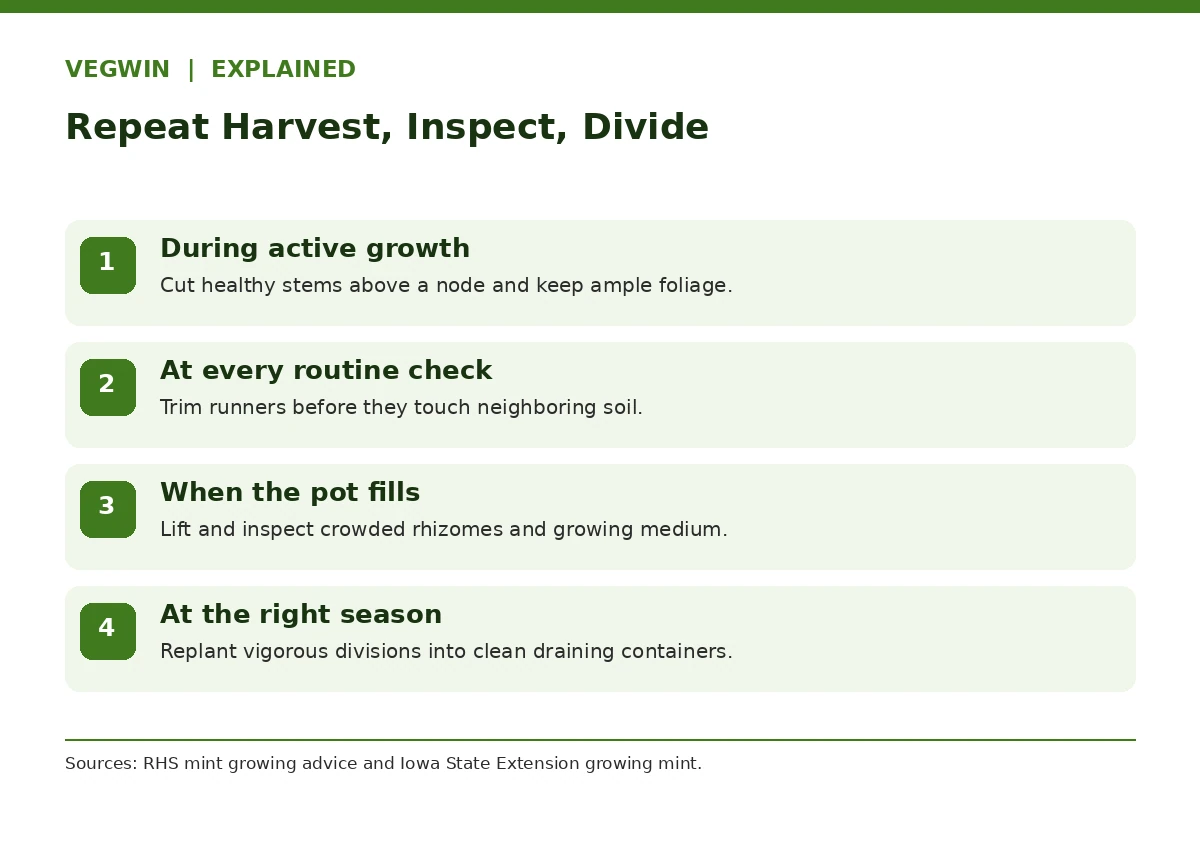
Harvest clean, healthy leaves and young shoots as needed, cutting above a leaf pair or node so remaining stems can branch. Frequent light harvests can encourage compact growth, a benefit noted by the Royal Horticultural Society. Do not strip the entire plant bare whenever a recipe needs a few leaves; leave enough healthy foliage to fuel new growth. Separate leaves that show disease spots or insect damage rather than treating every harvest as suitable for eating without washing. Our guide “Grow Lemon Balm for Fragrant Leaves Without Unwanted Seedlings” adds more detail on this.
For a larger harvest, divide the harvest between several established stems instead of repeatedly cutting one shoot below its remaining growth. If the plant begins to flower, you can still use leaves, but their aroma and texture may change with maturity and growing conditions. Rinse harvested material using standard produce-handling practices and dry it for your intended use. Avoid implying that a garden mint is a medical treatment or that its flavor has guaranteed therapeutic effects: this page addresses horticulture, not medicinal claims. For the fuller picture, see our guide “Herb Garden Planning”.
| Observation | Likely first step | Avoid |
|---|---|---|
| Stems creeping over pot edge | Trim before they root nearby | Assuming a pot stops every runner |
| Pot dries immediately after watering | Inspect root crowding and weather | Automatic daily fertilizer |
| Brown leaf edges during heat | Check moisture and midday exposure | Instant pest diagnosis |
| Reduced fresh growth in old pot | Examine roots; consider division | Repotting without checking drainage |
| Spots or pustules on foliage | Identify disease with Extension photos | Unidentified pesticide treatment |
Stop Rhizomes and Creeping Shoots Escaping the Pot
Make a quick edge inspection part of watering. Lift or rotate the pot when practical and look for stems touching soil outside the container, holes through which shoots can escape and roots emerging into adjacent beds. Trim runners before they establish new rooted plants. Do not assume that a pot placed directly on garden soil will remain isolated just because the stem tops look neat. If stray mint appears outside the planned boundary, remove the rooted runner and any connected underground tissue that you can safely access.
Where mint is already loose in a bed, persistent removal is more reliable than a one-time haircut. The Royal Horticultural Society recommends removing unwanted shoots and as much rhizome as possible because fragments can regrow. Preventing an infestation usually requires less labor than reclaiming a mixed perennial bed after several seasons. Do not use herbicide as the automatic first response, especially close to edible crops. Confirm the plant and select site-appropriate mechanical measures, using local guidance for any exceptional situation.
Divide a Root-Crowded Plant Before Growth Declines
Mint is vigorous, but a pot eventually fills with roots and rhizomes. Signs that maintenance is due include rapid drying, reduced fresh growth, congestion at the surface or shoots emerging from drainage holes. Iowa State Extension recommends dividing established patches periodically, while the RHS advises regularly repotting or dividing container plants as they become crowded. Exact timing depends on climate, growth and container size, so watch the plant rather than an arbitrary annual deadline. Our guide “Mint in Pots” goes into more detail.
For division, lift the plant at an appropriate time for your climate, inspect the root mass, and replant healthy sections in fresh suitable potting medium with good drainage. Dispose of unneeded divisions responsibly: discarded live rhizomes may establish wherever moisture is available. Keep the retained plant out of direct stress while it recovers, and resume harvest when it is growing vigorously. If growth is poor because of soggy medium or a foliar disease, identify that problem before assuming a larger pot alone will cure it.
Recognize Mint Rust, Leaf Spots, and Ordinary Stress
Mint can develop foliar diseases such as rust and leaf spots. Iowa State Extension also notes occasional aphids or spider mites, although healthy stands often tolerate minor pest activity. Inspect both leaf surfaces and compare the pattern of damage with local university images before any response. Remove badly affected material where appropriate, improve airflow and avoid keeping foliage unnecessarily wet. A single yellow leaf is not enough evidence to diagnose rust or recommend a fungicide.
Keep a simple plant-care record: variety name, container size, location, watering pattern, harvest and division dates, and whether runners escaped. If successive harvests become weak, use those facts to test likely causes in a sensible order: moisture, light, pot crowding and verified disease symptoms. This is more useful than adding a new product every time a leaf curls. The best sign of success is not the largest possible mint patch; it is a reliably productive plant that stays where you intended.
Related Guides
- Growing Herbs by Type: Water, Harvest, and Winter Survival Guide
- How to Grow Chocolate Mint in a Pot and Contain Spreading Runners
- How to Root Mint Cuttings in Water With Leaves Above the Waterline
- How to Grow Clustered Mountain Mint From Seed and Recognize Silvery Bracts
How We Research This Guide and Review Regional Exceptions
We checked current results for the precise reader question and read primary university Extension horticultural guidance on October 19, 2026. The public VegWin.org article and category pages were inaccessible during our independent check; consequently, we cannot confirm every live or unpublished WordPress URL, category route or ongoing site update. The editor must check competing posts and the live category in WordPress before manual publication. These recommendations reflect source-specific horticultural evidence and do not replace region-specific crop schedules, soil tests or product labels.
Sources checked October 19, 2026: Iowa State University Extension, growing mint (reviewed July 2026); University of Maryland Extension, growing mint (updated February 2026); Royal Horticultural Society, how to grow mint. Each source supports the specific horticultural claim listed in the editorial record; the sources do not endorse VegWin. Statements about biological variety, planting readiness or garden pests are conditional on crop and local conditions. No pesticide mixture, fertilizer rate or commercial partnership is assumed. See our affiliate disclosure page for the general site policy.
A freestanding container is usually easier to manage because many mints spread aggressively through rhizomes and rooting shoots.
Mint generally does well from full sun to partial shade, but heat and local moisture conditions affect the best exposure.
Dry or hot conditions can cause edge browning. Check root moisture, wind and exposure before assuming a disease.
Yes. Creeping shoots can root beyond the rim and growth may emerge through openings, so inspect boundaries regularly.
Divide when roots or rhizomes crowd the pot and growth declines; time the work for locally suitable growing conditions.