
Chocolate mint is a named peppermint selection with scented green foliage that may show purple or reddish tones. It is a vigorous perennial, not a chocolate-producing plant. Like other mints, it can spread through underground rhizomes and stems that root where they touch moist soil. A pot with real drainage and a regular inspection routine make it easier to enjoy the fragrant tips without allowing the plant to take over neighboring beds. The practical goal is healthy, identifiable leaves plus a root system you can actually keep within bounds.
Buy the named chocolate peppermint rather than anonymous mint
Look for a nursery label identifying the chocolate-scented peppermint selection, commonly listed as Mentha × piperita f. citrata Chocolate. RHS describes dark green leaves that can carry reddish-purple tones and small pink-purple flowers on terminal spikes. Color alone is not dependable identification: nutrition, sun exposure and other peppermint selections change pigmentation. The scent is primarily minty with a chocolate association, not literal chocolate flavor in every leaf. Start from a labeled healthy live plant or cutting when maintaining a named cultivar. Seed from a mint flower cannot be assumed to reproduce identical plant characteristics.
Choose a real container, not a decorative bowl without drainage
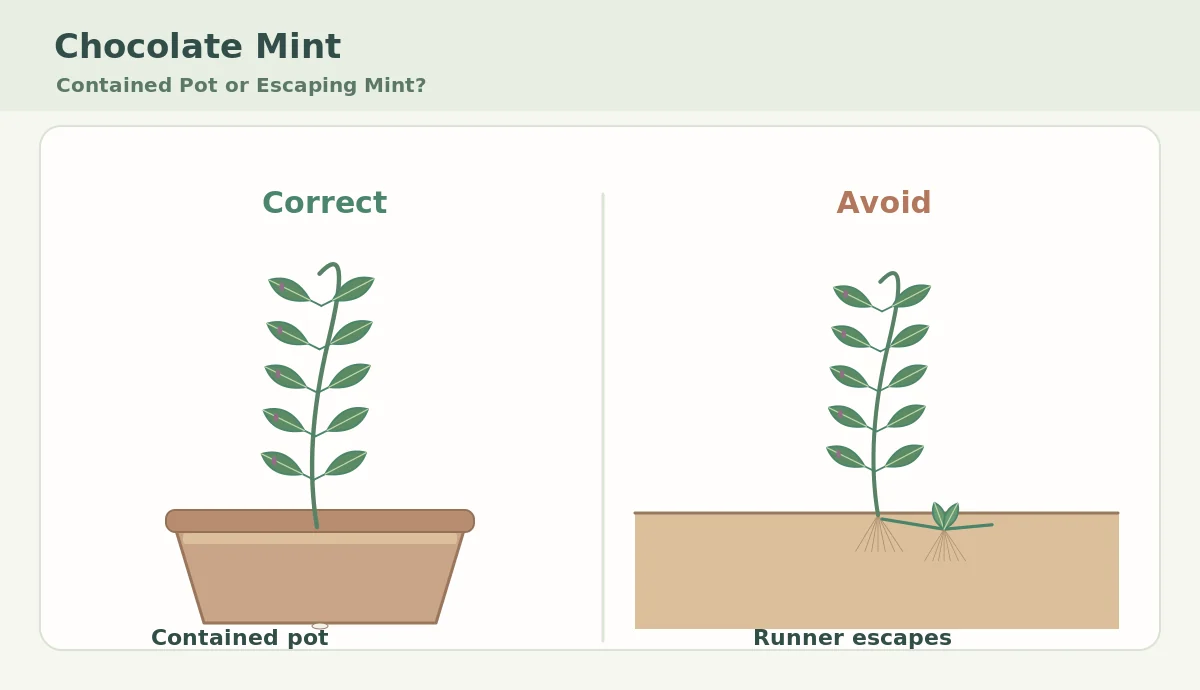
Select a pot with unobstructed drainage holes large enough to accommodate an expanding clump. NC State recommends containers for peppermint because rhizomes spread aggressively. A saucer may collect water briefly after irrigation, but do not let the base stand submerged for long periods. Good-quality potting medium should retain some moisture while allowing excess water to leave. An outer decorative cachepot is fine only if the nursery pot can be removed and drained. Keep the container where escaping stems cannot quietly reach neighboring garden soil. A buried pot with a hidden rim is not a reliable permanent barrier.
Recognize the opposite leaves and living stem nodes
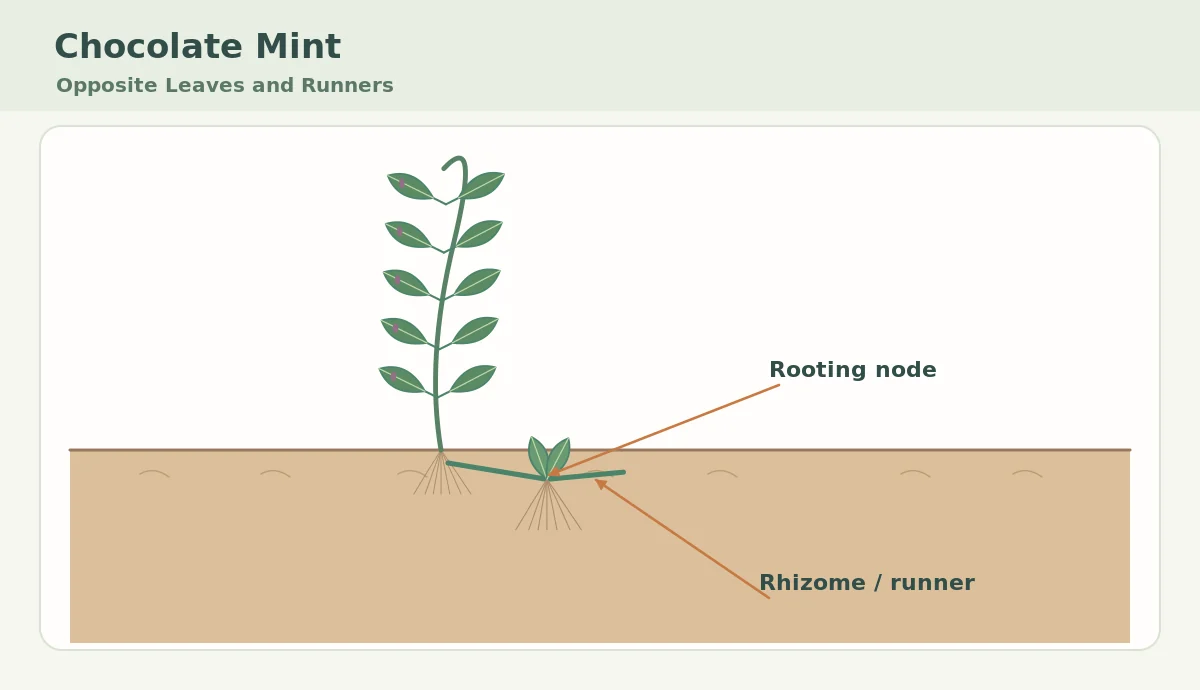
Mint leaves occur in opposite pairs along a usually square stem. A leaf blade joins the stem at a specific node, and tiny buds in that region may produce side shoots. This matters when trimming and when taking cuttings. Drawn leaves floating beside a stem or roots attached to a blade without a node are not accurate depictions of normal stem propagation. If a long shoot lies across soil, check whether it has rooted at one of its nodes. The roots belong below the soil or in rooting media; they are not dangling in dry air without support.
Place the pot in light without baking the roots
RHS lists sun or partial shade for chocolate peppermint. In an unusually hot location, protection from the fiercest afternoon sun can reduce leaf stress if the soil remains moist. Avoid deep indoor shade where new shoots become weak and stretch far between nodes. Container walls can heat quickly on a patio, so monitor the actual root zone rather than judging only leaf appearance. Ensure air can pass between this pot and crowded neighbors. Choose a position you will visit often; a hidden mint container is more likely to send runners across the ground unnoticed.
Keep the medium moist, not stagnant
Peppermint likes available moisture and generally dislikes sustained dry conditions, according to NC State. Check the top of the mix and a little below it, then water thoroughly until excess drains when watering is needed. A small pot in summer may dry faster than a large one in partial shade. Wilting during a heat wave is not by itself evidence that the plant needs fertilizer; first check root moisture and how quickly water runs through. If the surface stays soggy and the stems yellow, examine drainage and roots. Do not try to solve root rot by increasing irrigation.
Start a new plant from a healthy node-bearing cutting
Choose a nonflowering tip with several intact leaves and nodes. Cut below a node with clean scissors, remove only lower leaves that would sit inside the damp propagation medium, and place the node-bearing portion into water or a clean moist propagation mix. University of Wisconsin Extension describes rooting mint stem cuttings and divisions, though its published example is pineapple mint rather than the Chocolate selection. Refresh rooting water if it clouds, or keep a medium moist but aerated. Move cuttings to a draining pot after enough healthy roots form to support new growth. A leaf alone is not a complete stem cutting.

Harvest above a leaf pair and preserve the clump
Cut tender shoots a little above an opposite leaf node, with clean scissors reaching the actual stem. Leaving a healthy leaf pair below the cut provides tissue for renewed branching. Avoid stripping every stem, especially on a recently rooted cutting. Chocolate mint is often used fresh for its scent; take small amounts regularly rather than harvesting only after stems become lanky. If flower spikes form, decide whether you want leaves or late-season bloom and trim appropriately. A spent flower is not a rooted runner and does not need the same treatment as a stem touching the potting mix.
Check pot rims, drainage holes and runners for escape
Inspect the top rim for stems draping toward garden soil. Also look below the pot where roots or rhizomes may emerge through drainage holes and enter ground below. Clip external shoots and lift or reposition the pot if it is rooting into the bed. Rhizomes are true underground stems with nodes and buds, not simply long thin water-absorbing roots. Removing the visible foliage does not necessarily eliminate an established buried rhizome. A patio stand or hard surface makes inspections easier, although drainage must remain free. Repeat the check during active growth rather than waiting for a dense mint colony.
Refresh crowded roots without spreading fragments
As the clump thickens, it can become rootbound, dry too quickly or push against the pot. Repot into fresh medium, divide healthy sections if wanted, and discard excess pieces responsibly. Each section to be propagated needs living buds and roots or an appropriate node-bearing stem. Do not distribute unknown pests, weeds or diseased mint along with cuttings. Keep tools clean between damaged plants. In a region where mint can establish outside, do not dump living root scraps onto a compost pile that cannot destroy them. A stronger plant comes from a manageable root volume and adequate light, not indiscriminate fertilizer.
Troubleshoot weak scent, spots and winter dieback
Scent intensity changes with age, temperature and plant selection; a chocolate-like note is not guaranteed in every leaf. Pale foliage can signal light, root moisture or disease problems. Inspect leaf undersides and stems, and avoid treating a symptom without identification. In cold regions aboveground mint shoots can die back while protected roots survive, but container roots are more exposed to freezing than roots in garden soil. A safe overwintering approach depends on local conditions and the specific plant. Do not bring an infested pot straight into a clean indoor propagation area without inspection.
Use chocolate mint as an herb, not a promise of chocolate flavor
Harvest only positively identified culinary mint grown without inappropriate treatments. Use fresh aromatic leaves in drinks, desserts or garnishes if desired; the aroma is a botanical characteristic, not actual cacao. If you dry surplus leaves, retain the label so they are not confused with unrelated garden plants. Keep harvested leaves clean and handle them as fresh produce. For long-term success, make a two-minute inspection of the pot part of watering: check moisture, the central clump, the rim, and the drainage openings. That routine is more effective than a one-time statement that mint is contained.
Related Guides
- Growing Herbs by Type: Water, Harvest, and Winter Survival Guide
- Mint in Pots: Diagnose Drainage, Root Crowding, and Repotting Needs
- Growing Mint Without Takeover: Containers, Water, and Repeat Harvests
- How to Root Mint Cuttings in Water With Leaves Above the Waterline
- How to Grow Clustered Mountain Mint From Seed and Recognize Silvery Bracts
How We Research and Check Growing Advice
This independent guide was checked against the following Extension or botanical references on October 30, 2026: www.rhs.org.uk; plants.ces.ncsu.edu; hort.extension.wisc.edu. We compared named plant parts, appropriate soil conditions, and the specific operation explained in the diagrams. Planting dates depend on local seasons, living plants, seed labels, site drainage and cultivar differences. The botanical illustrations are explanatory rather than scale-perfect measurements.
No paid partnership or affiliate relationship is claimed for any link in this guide. See the VegWin affiliate disclosure for the site policy. Identify ornamental plants before use, and follow local Extension or qualified professional advice for pests, hazardous species or uncertain symptoms. General garden observations are not pesticide directions or food-safety certifications.
No. It is a peppermint selection with aromatic foliage; it does not produce cacao.
The plant spreads within the pot and can escape via stems or drainage holes, so containment requires periodic inspection.
Seed is not a dependable way to preserve the traits of a named peppermint selection; a correctly labeled cutting is preferable.
Trim an actively growing stem just above a healthy pair of leaves and keep the node below the cut intact.
It prefers evenly available moisture, not permanently stagnant water or blocked drainage.