
Lemon balm (Melissa officinalis) has soft, crinkled leaves with a distinct citrus aroma. It is a useful herb near the kitchen, but gardeners are sometimes surprised by seedlings emerging beyond the original planting. A container makes it easier to keep the mother plant in one place and harvest its leaves; it does not prevent every seed from escaping after flowers mature. The practical combination is a pot with drainage, a well-lit position, moderate watering, and regular cutting before abundant seed set. Lemon balm is not the same plant as lemon mint, and it does not behave exactly like every creeping Mentha. Here is how to grow a vigorous plant while avoiding an unnecessary colony of volunteers.
Identify Lemon Balm Rather Than Lemon Mint
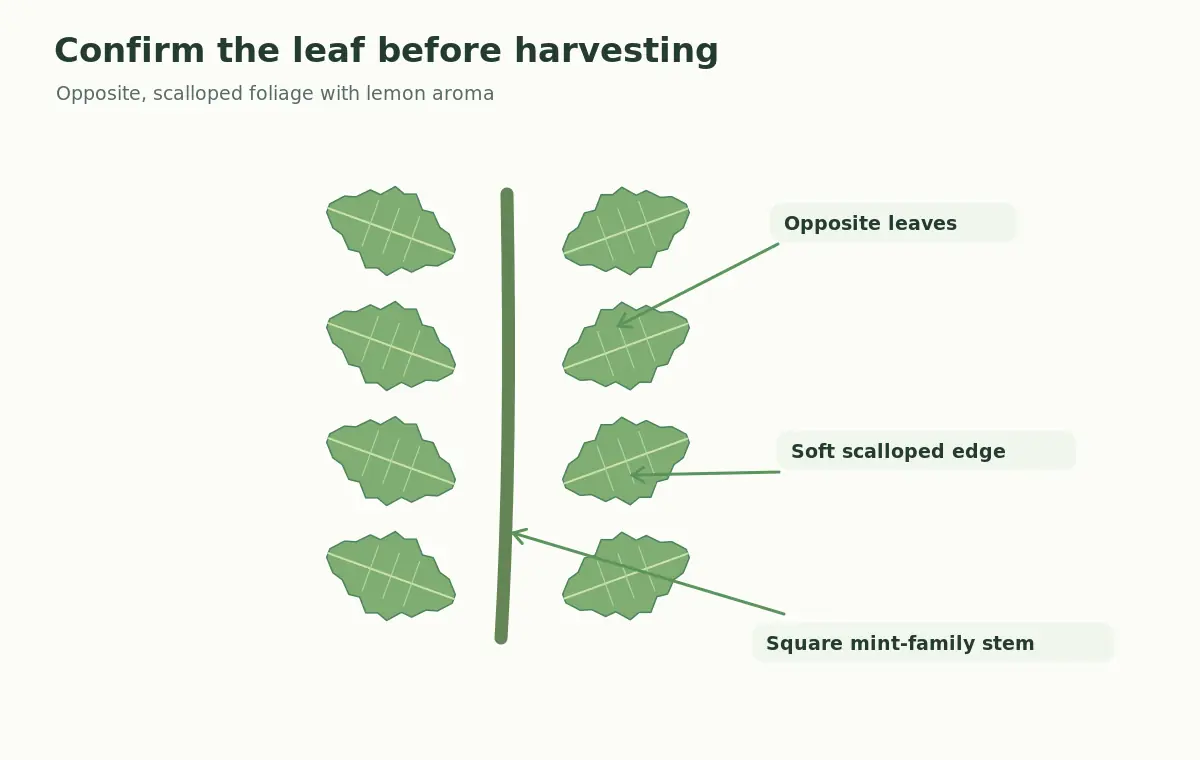
Lemon balm, Melissa officinalis, has opposite leaves with softly scalloped edges, a wrinkled surface and a distinctly lemony scent when bruised. It belongs to the mint family, but it is not the same as a peppermint cultivar sold as lemon mint. Wisconsin Horticulture describes lemon balm as a clump-forming perennial that can self-seed readily. Its white to pale lavender flowers are small, unlike the large showy flowers of many bedding plants. Buy or propagate identified lemon balm and label the pot if you keep several mint-family herbs. Do not assume that a fragrant seedling appearing nearby is automatically safe for culinary use; identify plants confidently before eating them.
Choose a Pot With Real Drainage
Start with a container large enough to accommodate the established clump and stable enough not to tip during winds or harvesting. A pot around a foot across can be a workable home starting point, but vigorous plants and repeated harvests may need a larger volume. Drainage holes must reach the outside; a decorative outer pot without an emptying plan can trap water. Fill with quality container potting mix rather than dense yard soil, which may compact severely. Leave a little space below the rim for controlled watering. University of Minnesota Extension stresses that herb containers require drainage holes. A layer of stones at the bottom is not a substitute for proper drainage, and should never be drawn as the main way to prevent root saturation. Our guide to growing mint without takeover goes into more detail.
Place the Pot in Suitable Sunlight
Wisconsin Horticulture recommends full sun and well-drained growing conditions for lemon balm in the garden. In containers, several hours of good light normally supports compact leafy growth. However, reflected heat from a brick wall, black pot or south-facing balcony can increase root-zone temperature and drying. In very hot climates, observing the leaves and providing afternoon shade may be sensible. If a plant grows weak, pale and elongated indoors, insufficient light can be one cause, although watering and nutrition also matter. Rotate an indoor pot periodically for balanced growth and supply enough light rather than repeatedly fertilizing stems that are stretching toward a window. Use local climate observations instead of claiming that every container must sit in unbroken midsummer sun. Our walkthrough on how to grow garden sorrel in containers for tender repeat harvests sets out each step.
Water Thoroughly but Avoid Constant Saturation
Water when the upper potting mix begins drying rather than because an app says it is watering day. Apply water slowly until it starts draining from the holes, then let the pot drain freely. Do not leave roots permanently standing in an undrained saucer. Lemon balm foliage can flag during a very hot afternoon even when the mix is moist, so feel the soil before applying another soaking. A small pot dries faster than an in-ground herb bed, while a large shaded pot dries more slowly. Keep a newly rooted transplant more consistently moist as it establishes. Consistent observation makes more sense than promising one irrigation interval for all climates, seasons, materials and pot sizes.
Harvest Young Shoots Without Stripping the Crown
Use clean scissors to clip several inches of tender shoot tips when the plant is actively growing. Cut just above a pair of healthy leaves or a branching node so that remaining buds can develop side shoots. Leave sufficient foliage for photosynthesis rather than removing every leaf at once. Wisconsin Horticulture notes that young leaves are especially useful for their aroma and that stems can be harvested several times from established plants. Fresh lemon balm is often more fragrant than dried leaves, which can lose aroma with time. For food use, wash leaves under clean running water and avoid consuming unidentified foliage or plant material exposed to inappropriate pesticide use. Use culinary guidance separately from any medicinal claims. For a step-by-step method, see how to grow catnip in containers and prevent self-seeding.
Remove Flowers Before Seed Matures
Container walls constrain where the parent root clump grows, but seed heads can scatter seedlings in nearby pots, paving cracks or garden beds. Wisconsin Horticulture recommends deadheading after flowering to limit nuisance reseeding. For maximum prevention, inspect flower stalks as they form and cut back before they produce mature, detachable seed. If you value pollinator visits to the small flowers, you may allow a few blossoms and then cut them before seeds ripen, accepting that a few overlooked stalks can still sow volunteers. Remove seed-bearing cuttings from the growing area instead of shaking them over beds. Trimming is a seed-management practice, not a chemical barrier or proof that no new plants will ever appear. For a step-by-step method, see how to grow lemon verbena in pots and bring it indoors before frost.

Prevent a Pot From Becoming Rootbound
A mature lemon balm clump can fill its container and need renovation. Signs include very rapid drying, roots circling densely, poor new growth despite adequate light and a visible decline in leaf quality. Check the root mass by sliding the plant from a moist pot when conditions are mild, rather than repeatedly pulling fragile dry stems. Wisconsin Horticulture recommends dividing or replacing older lemon balm plants after several growing seasons because vigor may decline. Divide at a suitable local season, retain sections with healthy shoots and roots, and repot in fresh suitable mix. Avoid automatically moving every plant to an enormous pot, which can stay wet too long relative to the root volume.
Distinguish Self-Seeding From Root Escape
Lemon balm commonly spreads by clump enlargement and volunteer seedlings; it is not identical in habit to every aggressively running mint. A pot sitting directly on moist soil can sometimes allow roots to exploit drainage holes, so inspect the base if it stays in one place for years. Nevertheless, a new plant two yards away is more likely to have arisen from an escaped seed than a magical underground runner across that distance. Notice where the volunteers grow and whether flower stalks were left to set seed. Remove unwanted seedlings when small and identifiable. Do not transplant unknown garden volunteers into edible herb pots merely because their leaves have a vaguely mintlike outline. Our guide “Grow Lemon Balm for Fragrant Leaves Without Unwanted Seedlings” adds more detail on this.
Adapt Winter Care to Your Region
Wisconsin Horticulture describes lemon balm as perennial in many temperate gardens, but survival depends on cultivar, minimum temperatures and exposure. Container roots are more vulnerable to cold than roots insulated by surrounding ground, especially in a small raised pot. In regions with freezing winters, consult local Extension advice about sheltered container storage, watering during dormancy and acceptable protection; avoid moving plants between heated rooms and hard freezes repeatedly. In mild climates, manage active winter growth and occasional flowering as you observe it. Never use USDA hardiness zones alone as a month-by-month planting calendar. A pot is a manageable microenvironment only if you keep tracking light, moisture and temperature over the year.

Related Guides
- Growing Herbs by Type: Water, Harvest, and Winter Survival Guide
- How to Start Lemon Balm Seeds Without Burying Tiny Seedlings
How We Research and Check Recommendations
Sources checked October 23, 2026. We compared the named plant or disease against university Cooperative Extension recommendations, distinguishing broadly applicable biology from regional production schedules. When guidance depends on crop type, climate or cultivar, those limits are stated rather than hidden behind one universal calendar. This guide offers practical education, not a remote diagnosis, tested soil report, pesticide recommendation, or guarantee of harvest. We do not claim independent field experiments or any commercial relationship with the institutions cited here.
Research sources reviewed: University of Wisconsin–Madison Horticulture (botanical identification, light needs, seed spread, flower removal and repeat harvest); University of Wisconsin–Madison Horticulture (difference between self-seeding lemon balm and running lemon mint); University of Minnesota Extension (herb container drainage and general container culture). No sponsorship, product endorsement, or verified affiliate arrangement is implied. See the VegWin affiliate disclosure for site policy.
It helps contain the main clump, but mature flowers can still produce seeds that germinate beyond the container.
Remove flower stalks before seed ripens if avoiding volunteers is a priority; flowers also attract pollinators when left briefly.
Yes. The pot needs working drainage holes and a well-drained growing medium; standing water can harm roots.
Yes. Established healthy plants can provide multiple cuttings if enough leaves and growing points are left to recover.
No. Lemon balm is Melissa officinalis, while lemon mint commonly refers to a fragrant Mentha type with different growth behavior.