
Spinach leafminer injury often appears as a pale irregular blotch inside an otherwise green leaf. The maggot feeds between the upper and lower leaf surfaces, so spraying the visible patch after tunneling has begun will not reverse the damage. The useful early warning is a group of tiny white eggs on the underside of a sound-looking leaf. Diagnosis matters: the blotch-mining Pegomya species and narrow winding Liriomyza serpentine leafminers may both be called leafminers, yet their markings and egg placement are different.
Look for Irregular Pale Blotches
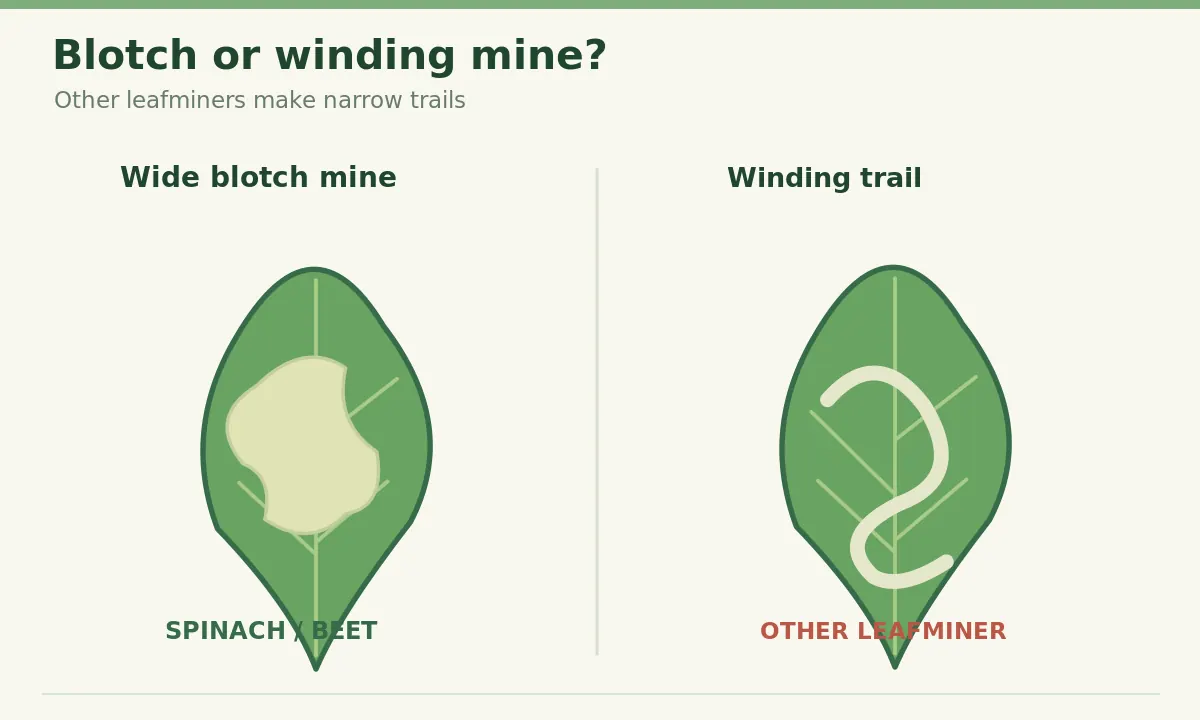
Spinach and beet leafminers commonly create translucent, irregularly shaped patches on spinach, Swiss chard and beet leaves. The blotch may look cream-colored against surrounding green tissue and later become brown and papery. University of Maryland Extension distinguishes these blotches from narrow wandering white tunnels often made by other leafminer flies. Do not diagnose the pest based on an isolated small white dot; sunscald, abrasion or other damage can look pale. Hold a suspect leaf up to light and inspect the area’s irregular internal texture and boundary. Photograph both sides before removing it if the diagnosis is uncertain.
Understand What Makes the Mine
Leafminer larvae are small pale legless fly maggots feeding inside the layers of a leaf. They are not caterpillars chewing exposed round holes from the edge, and their feeding space is within the blade. Montana State University identifies spinach and beet hosts and describes larvae dropping to the soil to complete development. Larvae often cannot be seen without holding a fresh mine toward a light source, and dead brown areas may no longer contain a living insect. Do not slice open every damaged leaf solely for curiosity; doing so can spread plant debris and makes the harvested greens less appealing.

Check the Undersides for White Eggs
Female spinach or beet leafminer flies place small white elongated eggs, often several close together, on the undersides of host leaves. This is a more actionable stage than an established mine because eggs have not yet tunneled into protected leaf tissue. Inspect older leaves near the base while supporting the petiole, and use a hand lens if needed. The detail illustration shows pale rice-like eggs on the underside, not round yellow clusters belonging to a squash bug. Eggs can be wiped off or destroyed promptly where identification is confident. Check more than one leaf, since new eggs may be laid during an active adult flight.
Distinguish Blotches From Winding Trails
Spinach-and-beet leafminer Pegomya generally produces blotches; some Liriomyza species produce narrow serpentine trails that broaden as the larvae grow. University of Maryland describes both groups in its vegetable leafminer guide. Neither pattern alone proves the exact species, but the distinction improves scouting and prevents false certainty. A winding threadlike trail should not be pictured as the principal symptom of the blotch-mining spinach leafminer. Leaf tissue with bacterial spots, fungal lesions or hail tears can also appear damaged. If the cause affects many plants rapidly or symptoms lack typical internal mines, seek a regional diagnostic opinion.
Remove a Small Number of Infested Leaves
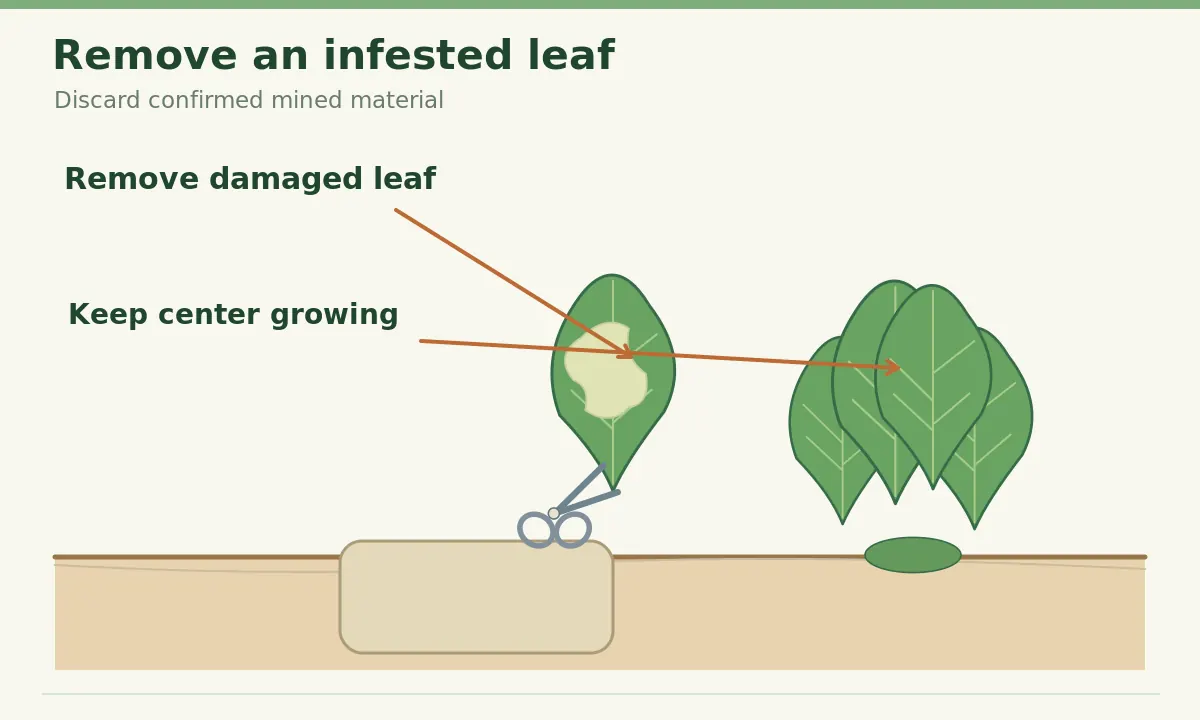
Montana State recommends removing leaves that already contain larvae and disposing of them away from the garden. Cut the damaged petiole cleanly without slicing healthy central growth, especially on young spinach. Bag clearly infested leaves rather than dropping them beside the bed, where larvae may finish development in the soil. However, do not strip every leaf from an already stressed seedling: severe defoliation can destroy the crop faster than a light infestation. Compare the number of active mines with plant size and harvest needs. If large areas are involved, combine targeted removal with exclusion and local Extension guidance rather than repeatedly removing all photosynthetic tissue.
Exclude Flies Before Eggs Are Laid
Floating row covers or fine insect screening can prevent adult flies from reaching new spinach foliage. Montana State and New Hampshire Extension recommend exclusion as a practical nonchemical option. Install the cover at planting or before adult emergence, anchor its perimeter firmly and leave room for leaf expansion. The timing is crucial: a cover placed over larvae or pupae already present within the bed can trap the emerging adults underneath. If last year’s crop had severe leafminers, move the next sowing to a different bed and remove infested crop residues first. Check seams and edges after strong wind.
Manage Weeds and Old Crop Debris
Spinach or beet leafminers can develop on beets, Swiss chard and some related weeds as well as spinach. Weeds and crop debris may keep host tissue available after one harvest ends. Remove heavily infested plants and keep the surrounding bed tidy without stripping beneficial vegetation indiscriminately. New Hampshire Extension stresses weed management and rotation because adults may emerge from soil near previously infested hosts. Rotating a few feet may not entirely prevent fly arrival from outside, but moving new plantings out of old hot spots reduces an avoidable source. Do not compost actively infested leaf matter in a cold unmanaged pile if larvae might survive.
Know Why Late Sprays Have Limited Value
Once larvae are enclosed inside a leaf, contact insecticide has difficulty reaching them. New Hampshire Extension notes that treatments must target the appropriate early stage and that control after mines appear is often poor. Avoid home recipes or applying an insecticide simply because a leaf has a pale patch. Any pesticide used on edible spinach must specifically be registered for the crop and pest in your jurisdiction, with label directions, harvest interval and protective measures followed exactly. Many gardeners can rely on scouting, leaf removal and exclusion for small beds. Conserving natural enemies and avoiding unnecessary broad-spectrum sprays is part of integrated pest management.
Inspect at the Right Growth and Weather Stage
Spinach is a cool-season crop, and some leafminer activity is prominent during mild spring conditions; the exact calendar varies by region and species. Montana State describes spring egg-laying and multiple generations, but gardeners in milder climates may observe a different seasonal pattern. Start looking at leaf undersides when plants establish, not only after the first brown patches become extensive. Check periodically during a known local fly flight, particularly after finding fresh white eggs. Neither USDA hardiness zone nor a single nationwide month accurately predicts each outbreak. Keep a brief dated record to understand when early protection is most useful in your own garden.
Treat Harvested Greens as Food, Not Just Plants
Spinach leaves bearing fresh mines or visible eggs are a quality concern; remove visibly damaged parts and wash sound greens under running potable water. Do not claim that an insecticide residue has vanished simply because the leaf looks undamaged. Follow product-label preharvest intervals if any crop treatment was applied. Avoid taking leaves from a plant showing unknown systemic disease symptoms until its condition is understood. Keep harvested greens cool and use safe kitchen handling. Do not misidentify snail slime trails on the surface as larval mines inside the leaf, or assume every insect on the foliage is the culprit.
Evaluate Prevention With Fresh Growth
After damaged leaves are removed, look at the newest undamaged foliage and check whether new white eggs appear on other leaves. If no new eggs or mines occur under a properly installed cover, the approach may have reduced fresh infestation. If mines continue beneath the cover, check whether insects were already present or whether a gap admits adults. Avoid labeling a single improved plant as proof that a home remedy killed larvae. Successful management means protecting usable new leaves while minimizing unnecessary leaf loss and chemical exposure. Update scouting notes as the crop ages and adjust protection for the next sowing.
Related Guides
- How to Recognize Leafminers on Beets and Protect the Leaves Early
- Growing Spinach: Cool-Season Sowing, Bolting, and Leaf Harvests
- How to Harvest Spinach Leaves Repeatedly Before Plants Bolt
- How to Grow Orach From Seed for Tender Mountain Spinach Leaves
- How to Grow Perpetual Spinach in Pots and Harvest the Outer Leaves
How We Research and Verify Plant Advice
Sources checked on 2026-10-26: urbanipm.montana.edu; extension.umd.edu; extension.unh.edu. We reviewed each institution’s plant identification, correct growth stage and relevant cultural recommendations before adapting them into an independently written step-by-step guide. Where sources are region-specific, their calendar details are not applied universally. Pictures use simplified teaching shapes and should be compared with living specimens; they are not a substitute for laboratory disease diagnosis or local climate guidance. The relevant advice is paraphrased rather than reproduced.
Safety and Independent Editorial Disclosure
This independently prepared educational article does not claim sponsorship or affiliate approval. Our category reading links are informational, not product endorsements. See the VegWin affiliate disclosure. Clean sharp tools before cutting plants, protect hands from thorns and blades, and keep cut plant material away from children and pets where appropriate. Use only locally registered plant treatments labeled for the actual crop, and observe the product label. Do not rely on unsupervised home remedies or unverified harvest-safety promises.
Typically irregular pale internal blotches that later turn papery brown; other leafminers can make thin winding trails.
Small white oblong eggs often occur in groups on the undersides of spinach and related host leaves.
Late contact spraying is often ineffective because larvae are protected inside the leaf.
Fine, well-anchored covers installed before fly arrival can reduce egg-laying, but avoid trapping insects already in the bed.
Target confirmed active infested leaves while keeping enough healthy foliage for the crop; seek local diagnosis if symptoms are unusual.