
Perpetual spinach is a leaf beet, not true spinach. Learn pot depth, seed clusters, and how to pick outer leaves for repeat harvests. This guide explains the plant features you can actually see, the action to take, and the signs that you should change course. Always adapt season and cultivar advice to your own conditions.
Know the Leaf Beet You Are Actually Growing
Perpetual spinach is the garden name for a smooth green leaf-beet type of Beta vulgaris, closely related to Swiss chard. It is not spinach, Spinacia oleracea, despite the name. Look for broad oval to slightly wavy leaves with noticeable pale midribs and long green petioles arising from a shared crown. It normally does not make the swollen storage root of table beets. Calling it perpetual does not mean the plant is immortal; it is commonly grown as a leafy biennial and eventually flowers.
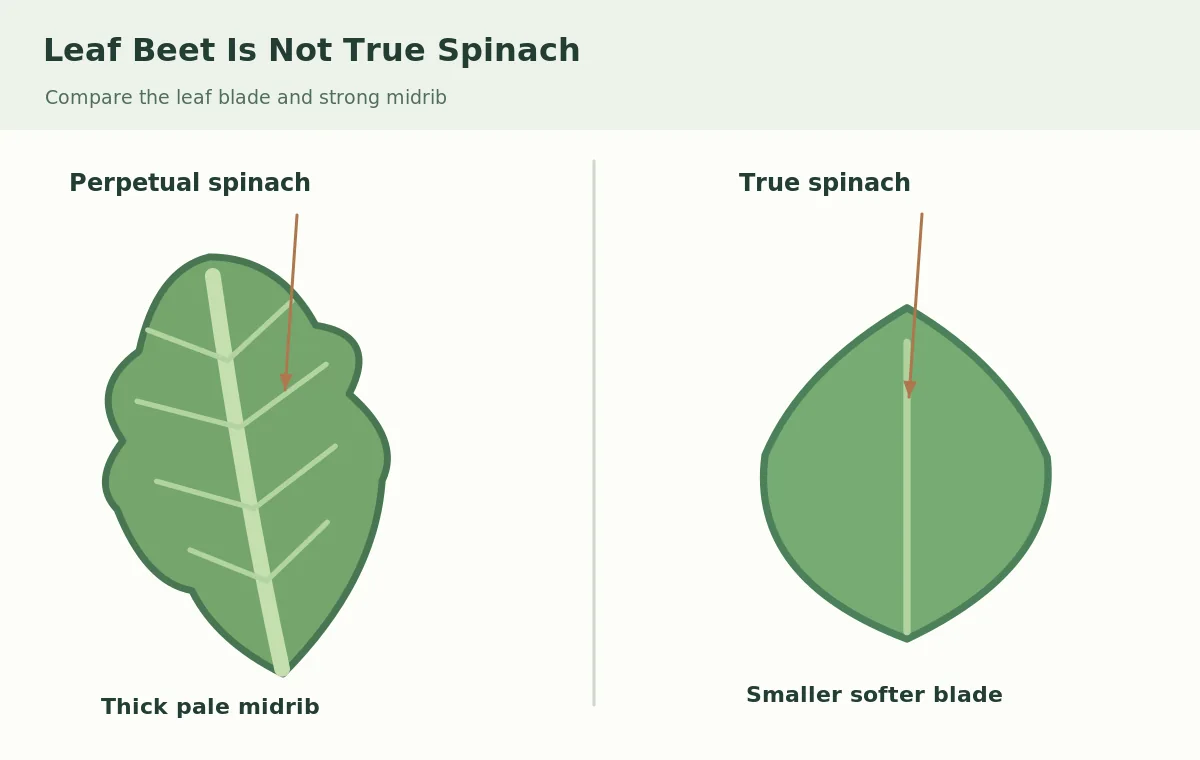
That identification changes how you care for it. True spinach tends to race toward flowering with increasing day length and warmth; leaf beet can often deliver useful picks over a much longer span in suitable weather. The comparison drawing shows the strong midrib and petiole of a leaf beet alongside a smaller, thinner spinach leaf. Seed packets may say perpetual spinach, spinach beet or leaf beet. Confirm Beta vulgaris before following a diagram for repeated outer-leaf harvest.
Choose a Draining Container With Root Room
Use a container with genuine drainage holes and enough depth for a healthy chard-like root system. Colorado State University Extension gives an eight-inch minimum depth for chard as a guide; more soil volume buffers moisture swings better than a cramped shallow saucer. Site the pot where it receives ample light but can be moved if a balcony has punishing reflected afternoon heat. A wide pot may be steadier than a narrow tall one when mature leaves catch the wind.
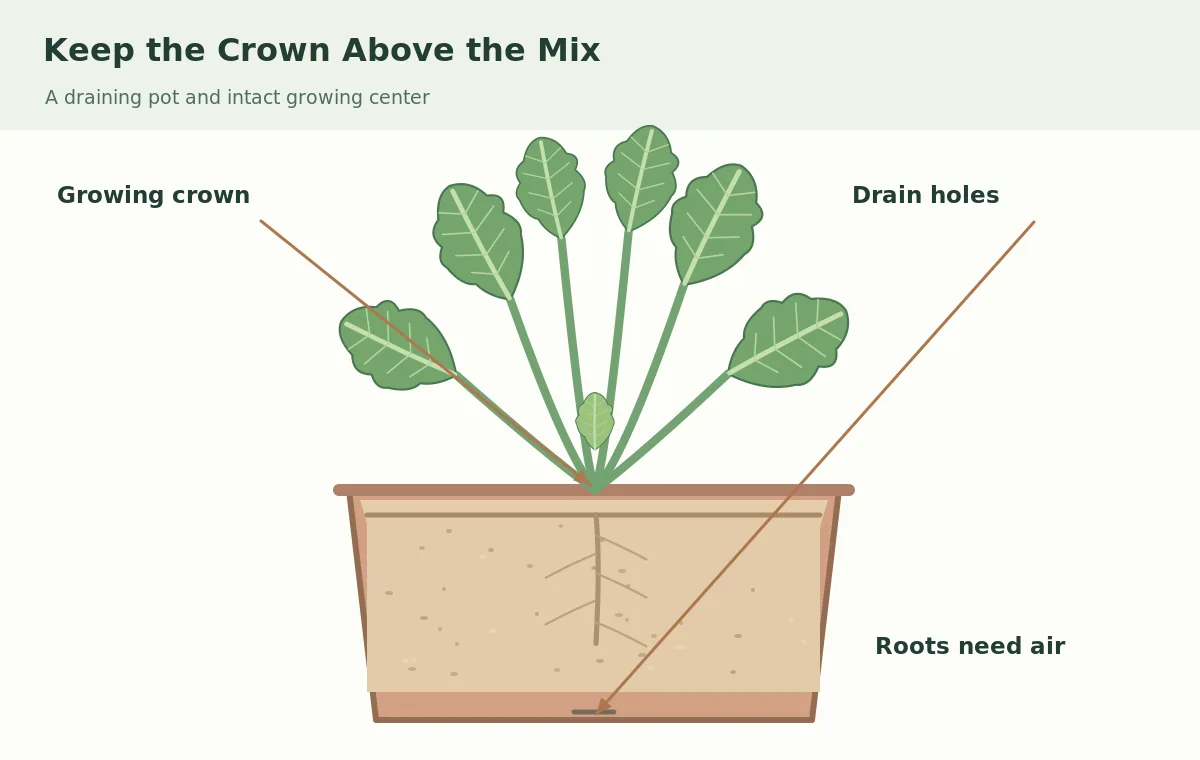
Fill with a suitable container potting mix and leave some watering headspace. Do not put a thick stone layer below a short root zone to make up for missing drainage; the excess water still needs an exit. Keep the central crown at or just above the settled mix surface. The soil cross-section marks drainage openings and the position of the young crown, rather than burying the growing tip under mulch. If you reuse a container, clean it before adding fresh mix.
Sow Seed Clusters and Thin Without Pulling Neighbors
Chard and related leaf beets often produce seed clusters that can yield more than one seedling. Sow according to a reputable packet rather than imagining every brown corky cluster is a single embryo. Keep the mix evenly moist while young roots emerge, but avoid leaving it saturated. When several seedlings stand together, choose the most vigorous one or the spacing appropriate to your pot. Small scissors can remove extra shoots without disturbing the root system of the chosen plant.
Give remaining plants enough space for large outer leaves and airflow. One crowded tuft may look impressively full at first, but petioles compete for water and younger centers can stay shaded. If seedlings become long and pale, review light exposure rather than immediately adding fertilizer. Protect very young plants from severe heat and drying wind during establishment. Once roots occupy the pot, water thoroughly and allow surplus water to drain away rather than keeping the surface permanently soggy.
Read Moisture and Feeding Needs From the Leaves
Broad leaf-beet foliage loses water quickly, especially during sun and wind. Feel the mix below its surface before watering and note how heavy the pot is when fully watered compared with partially dry. A brief midday droop on a hot day does not automatically mean dry roots; check moisture before pouring in more. Chronic waterlogging can also cause limp leaves because damaged roots cannot supply them. Keep moist conditions even but never stagnant.
Because leaves are continuously removed, the plant needs an appropriate nutrient supply; use a container fertilizer only when justified by the mix and label directions, without inventing a universal dose. Brown edges or pale foliage can come from salts, heat, irrigation errors or pests, not just low fertility. Check leaf undersides for insects and remove clearly damaged leaves. Avoid spraying edible greens with a product not labeled for that crop and location. Good air circulation and clean harvest scissors reduce unnecessary handling.
Cut Mature Outer Petioles and Leave the Center
The most repeatable harvest is to cut one or several large outside leaves close to their attachment near the crown, leaving the small center leaves intact. Hold the chosen stalk to separate it visually from the young growing point. Make the cut on the outer petiole with sharp clean scissors; do not cut a straight line through all the emerging leaves. RHS specifically describes taking the outside stalks of chard while leaving the middle to grow.
The action drawing uses a highlighted outer petiole and a separate arrow to the living crown. This is a practical distinction: a tuft of leaf stems may appear to meet at one point, but the central growing region should be untouched. Harvest sparingly from a recently transplanted plant until it has rebuilt leaf area. If you cut too many leaves at once, regrowth may slow because less photosynthetic tissue remains. Leave some full-size foliage especially during cool, low-light periods.
Tell Normal Aging From Heat and Pest Stress
The oldest outside leaves eventually yellow or become tough, while the center continues to produce younger ones. Remove damaged outer leaves and compost only those free of concerning disease. A sudden flower stalk announces the approach of the plant’s reproductive phase, at which point leaf texture may change. This does not mean the pot has been poisoned or infected. Replace the plant when leaf quality and output no longer match your needs.
Look also for pale tunnels or patches left by leaf miners, aphids tucked under leaf blades and fungal spotting after persistent wet weather. Do not diagnose a named disease from one yellow leaf. Inspect the upper and lower surfaces, watering pattern and new growth first. Pest exclusion and sanitation are better first steps than a routine spray. A well-watered pot with a healthy open crown often delivers better repeated picking than a dense planting forced with extra nitrogen.

Plan a Succession Instead of Assuming Endless Leaves
For a dependable home supply, sow a few new leaf-beet plants before the old group becomes excessively tall or begins bolting. Time the replacement according to local temperatures and daylight rather than a hardiness-zone number. A pot in winter shade may give far fewer leaves than one in long summer days, even where frost is absent. In cold-winter gardens, severe freezing can end a crop despite the reassuring perennial-sounding name.
Record sowing date and each picking so you can compare varieties and the amount of shade on your site. If harvested foliage has soil splashes, wash it under clean running water before use and handle as a leafy vegetable. Use the final comparison image as a check: the usable pot has intact young leaves and open air around the crown, whereas cutting the growing point or burying it sacrifices the next harvest.
Related Guides
- Vegetables in Pots: Match Crops, Container Volume, Sun, and Water
- How to Harvest Spinach Leaves Repeatedly Before Plants Bolt
- Growing Spinach: Cool-Season Sowing, Bolting, and Leaf Harvests
- How to Grow Orach From Seed for Tender Mountain Spinach Leaves
- How to Recognize Spinach Leafminer Blotches and Remove Infested Leaves
How We Research and Check Botanical Details
Authoritative sources reviewed on 2026-10-27: plants.ces.ncsu.edu — NC State identifies perpetual spinach within the leaf-beet group, which forms harvestable leaves rather than a swollen beetroot. www.rhs.org.uk — RHS instructs gardeners to harvest outer chard leaves with stalks at the base while preserving younger leaves. extension.colostate.edu — Colorado State lists chard as a container crop and advises adequate soil depth, consistent water and taking outside leaves. nwdistrict.ifas.ufl.edu — UF/IFAS depicts perpetual spinach as broad-leaved spinach beet, with cultural needs distinct from true spinach. The figures are purpose-drawn botanical explanations, not photographs or guarantees that every cultivar has identical dimensions. The sowing and harvest times are conditional on local growing conditions.
This educational page is not sponsored and has no paid product placement. See our affiliate disclosure. Use locally registered crop protection products only under their labels, and follow local Extension advice for pest or disease diagnosis.
No. It is a leaf-beet type related to chard, not Spinacia oleracea.
Yes. Choose a freely draining pot with enough depth and volume for chard-like roots.
Cut mature outside petioles low on the plant while leaving the young center intact.
Often it can. Thin crowded seedlings carefully without disturbing the keeper.
No. As a biennial leaf beet it eventually ages and flowers, so plan replacement sowings.