
Garden hyacinths carry a dense upright cluster of fragrant, star-like tubular flowers above thick strap-shaped leaves. Their bulbs have two ends that should not be confused: a pointed shoot tip and a flatter root plate. The correct planting diagram keeps both ends in view, with the bulb fully beneath a well-drained soil surface.
Confirm the Bulb Is a True Garden Hyacinth
This guide addresses garden hyacinths, mainly Hyacinthus orientalis and its hybrids, rather than grape hyacinths (Muscari), which form much smaller flower clusters. Mature garden hyacinths bear a compact cylinder of tubular, often six-lobed flowers on one fleshy upright flower stalk. Fleshy narrow strap-like leaves gather around the base. The dormant bulb has a papery tunic, a narrower nose where the shoot develops, and a basal plate from which fibrous roots grow. Avoid planting any bulb that is soft, moldy, or leaking. RHS also warns that all parts can cause stomach upset if swallowed, so do not confuse them with edible onion bulbs.
Choose a Suitable Early Fall Planting Time
RHS recommends planting ordinary garden hyacinth bulbs in early autumn for spring blooms. That guidance reflects climates with a cool season; gardeners in mild-winter areas may need regionally appropriate bulbs and chilling practices for reliable flowering. Hardiness zones describe cold extremes, not the exact autumn date a bed is ready. Plant while the bulb is dormant, with enough time for roots to establish, and avoid keeping bulbs in warm storage for months. This article is about normal outdoor garden bulbs, not specially prepared hyacinths that flower indoors for holiday displays, which follow a different forcing schedule.
Select Sun or Light Shade and Drainage
Hyacinths prefer soil that releases excess water rather than staying saturated around the basal plate. A spot with sun or some light shade can work for a spring display, but flowering and return performance may decline in deep shade. Improve heavy soil structure before planting; do not make a narrow bowl of loose potting mix in compacted clay where water collects. A raised position or container with drainage can be a safer choice on persistently wet ground. Plan a grouping that is easy to enjoy from a path without cutting emerging foliage with routine early spring cultivation.

Distinguish the Pointed Nose From the Root Plate
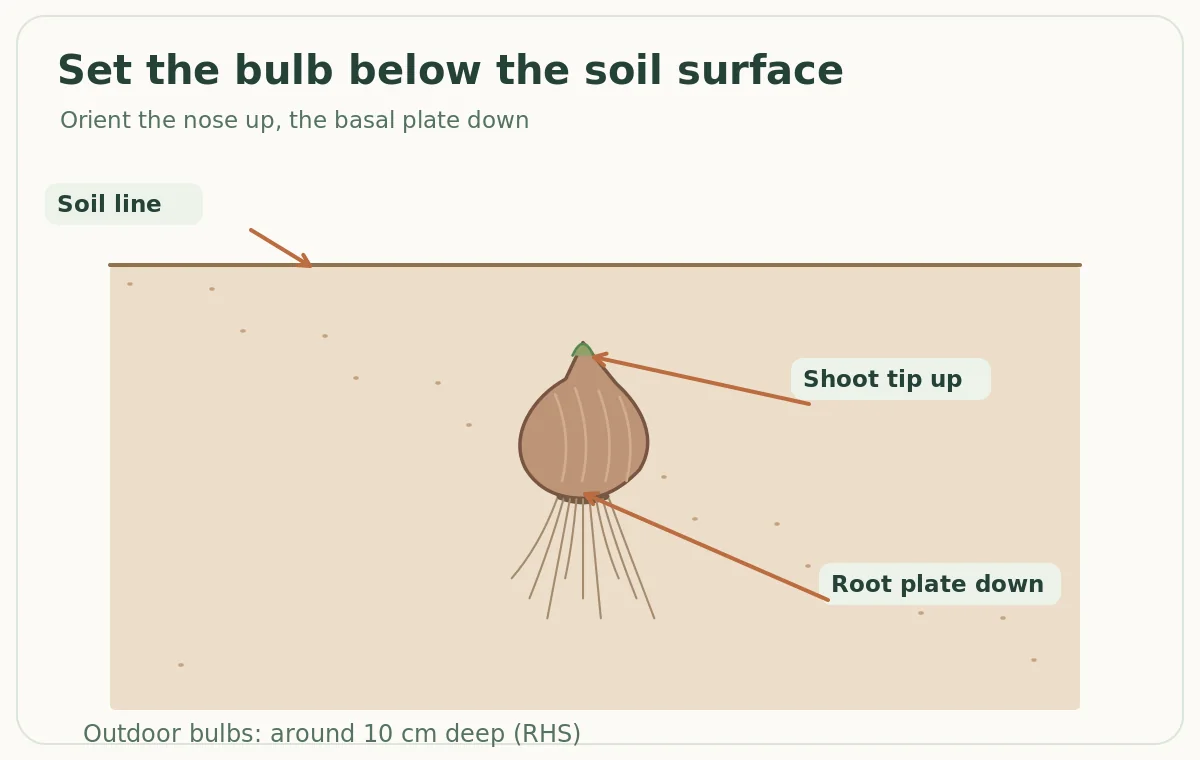
The top of a dormant hyacinth bulb normally tapers to the shoot nose, while the lower end is broader and flattened around its basal plate. Fine roots may be absent on a dry purchased bulb but will emerge downward from that base. Hold the bulb gently to identify both ends before putting it into the hole. Do not interpret a loose papery flap of the tunic as the shoot. If a bulb has an irregular shape, look for the root scar or existing root initials rather than assuming every tapered edge must face up. The picture enlarges the shoot tip, basal plate, and intact bulb body.
Plant Beneath the Soil at the Stated Depth
RHS specifies garden hyacinth planting at approximately 10 cm (4 inches) deep, with at least 7.5 cm (3 inches) between bulbs in ordinary borders. Check the local supplier label for its depth convention, and measure consistently from the soil surface to the indicated part of the bulb. Set the basal plate on the bottom of a prepared hole, tip upward, and replace soil so no large void surrounds it. The drawing places the entire bulb underground, roots forming below the base, and the shoot pointing toward the surface. It does not draw leaves or flowers emerging from a newly planted dormant bulb.
Plant a Container Group Without Waterlogging
A fairly deep pot with drainage holes makes a portable hyacinth display. Place bulbs in an appropriate potting mix, allowing them enough room to develop roots and avoiding physical contact between adjacent bulbs unless a specialized forcing method instructs otherwise. RHS suggests ordinary compost and grit when extra drainage is required. Plant at the relevant outdoor depth and water to settle the medium, then monitor moisture during the rooting period. A decorative pot without drainage can trap winter rain and lead to bulb rot. Keep containers protected from severe freezing conditions that expose roots more intensely than soil in a garden bed.
Watch Winter Roots and Spring Emergence
Roots may be developing unseen in the cold season long before green shoots appear. Resist digging up the bulbs repeatedly to check progress, because that damages emerging root initials. As the weather changes, the pointed shoot grows upward through the covering soil, followed by upright leaves and the flower spike. If a shoot comes through a little crooked, let it establish rather than forcing it straight by hand. Water according to rainfall and drainage, and use protection from animal digging if your garden has known problems. A hyacinth bulb that has no viable basal plate is unlikely to establish normally.
Remove Spent Flowers but Keep Green Leaves
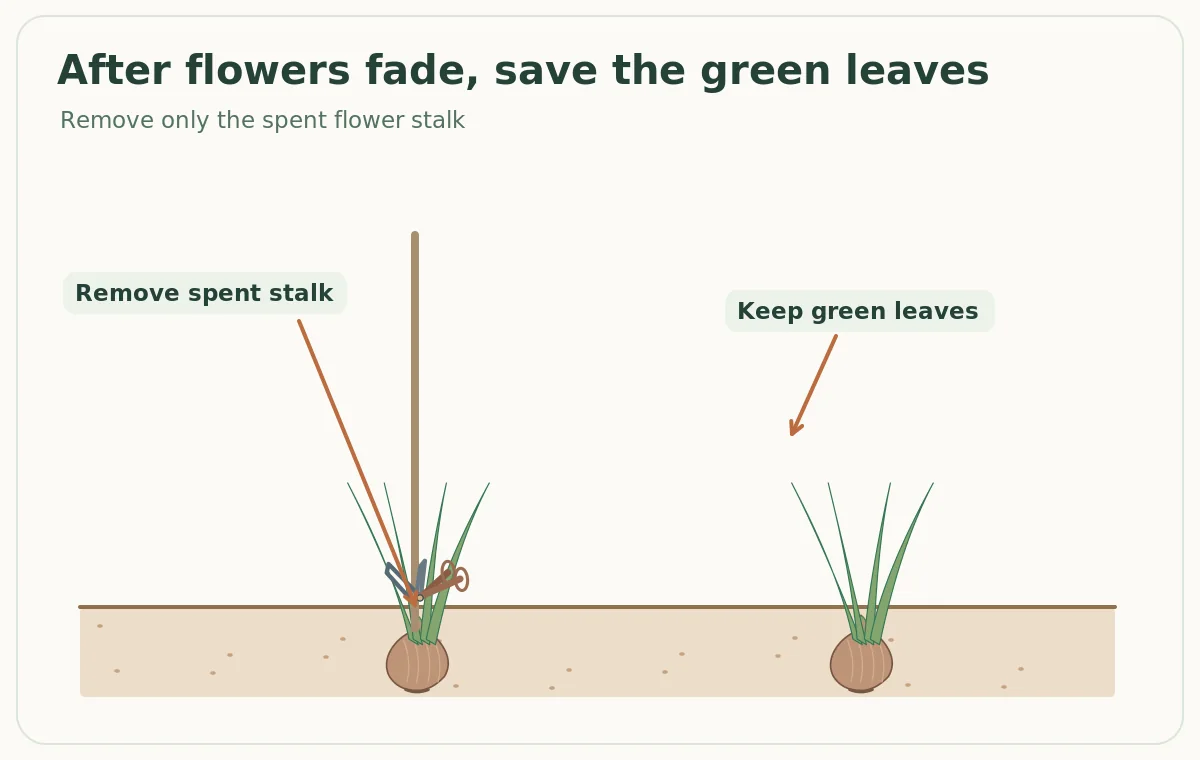
After the flower cluster fades, RHS advises cutting off the flower stalk at its base while leaving green leaves in place. The leaves manufacture reserves for the next flowering attempt. Cutting them into a tidy stub immediately after bloom sacrifices that recharge period. Continue appropriate care until the foliage naturally yellows and declines. The diagram contrasts a spent flower stalk removed cleanly with a plant whose still-green leaves remain. Do not damage the bulb nose below the soil while trimming. Some heavily forced bulbs flower less strongly in later years even when care has been good, which is not necessarily gardener error.
Diagnose Weak Blooms and Rot Carefully
A weak floral spike might reflect the bulb’s previous treatment, age, shade, unsuitable chilling, or growing conditions. Standing water can cause soft rot at the basal plate; discard visibly decayed bulbs instead of sealing them back into the same wet pocket. Slugs may damage emerging leaves, and animals may disturb newly planted beds. Check the actual symptom before applying any pesticide. RHS cautions that hyacinth bulbs can irritate skin, so wear gloves when handling many bulbs. If growth fails, note drainage, temperature and planting date for the next cycle rather than assuming a single fertilizer application will solve every cause.
Use an Orientation and Aftercare Checklist
Before planting, verify the correct species and a firm dormant bulb. Identify the pointed shoot nose and flattened root plate, prepare drainage, set the bulb with its point up and cover it fully. Mark the planting area to avoid accidental digging later. In spring, check for strap leaves followed by a dense flower raceme; after bloom remove only the spent flower stalk. Let the remaining leaves yellow naturally before clearing them. Where winters are very mild or extreme, seek local bulb advice because timing and subsequent performance differ. The illustration is a growing guide, not a claim that every bulb will flower identically each year.
Related Guides
- When to Plant Hyacinth Bulbs in Fall and Set the Right Depth
- How to Plant Tulip Bulbs in Fall With the Point Up and Root Plate Down
- When to Plant Caladium Tubers: Start Warm and Avoid Cold Rot
- When to Plant Ornamental Allium Bulbs and Avoid Wet-Soil Rot
- When and How to Plant Muscari Bulbs for Reliable Spring Color
How We Research and Verify Plant Advice
The species descriptions, sowing and harvest actions, and environmental cautions were checked against RHS RHS on October 28, 2026. We use the original plant-specific sources to distinguish botanical anatomy from generalized gardening habits. Local climate, cultivar and soil conditions may change timing and outcomes; this article does not imply a fixed yield, medical benefit, sponsorship, or pesticide prescription. The illustrations are explanatory diagrams rather than to-scale construction drawings. Review VegWin’s affiliate disclosure for the site’s general policy; no affiliate partnership is asserted in this guide.
Place the flat basal root plate down, with the pointed shoot end directed upward.
RHS advises approximately 10 cm or 4 inches for ordinary outdoor garden planting.
No. Persistent wetness encourages bulb decay; choose well-drained soil or a draining pot.
Leave them until they yellow naturally so the bulb can replenish its reserves.
No. Hyacinth is ornamental and can cause stomach upset if swallowed.