
Mustard greens are leafy brassicas with bold-flavored leaves that often become tougher and sharper when warm weather pushes the plant toward bloom. The harvest decision is not only leaf size: you must also check the center for a rising seed stalk. These illustrations distinguish usable outer foliage from the young central growth and the yellow flowers that signal bolting.
Identify Leaf Mustard and Its Variable Leaf Shapes
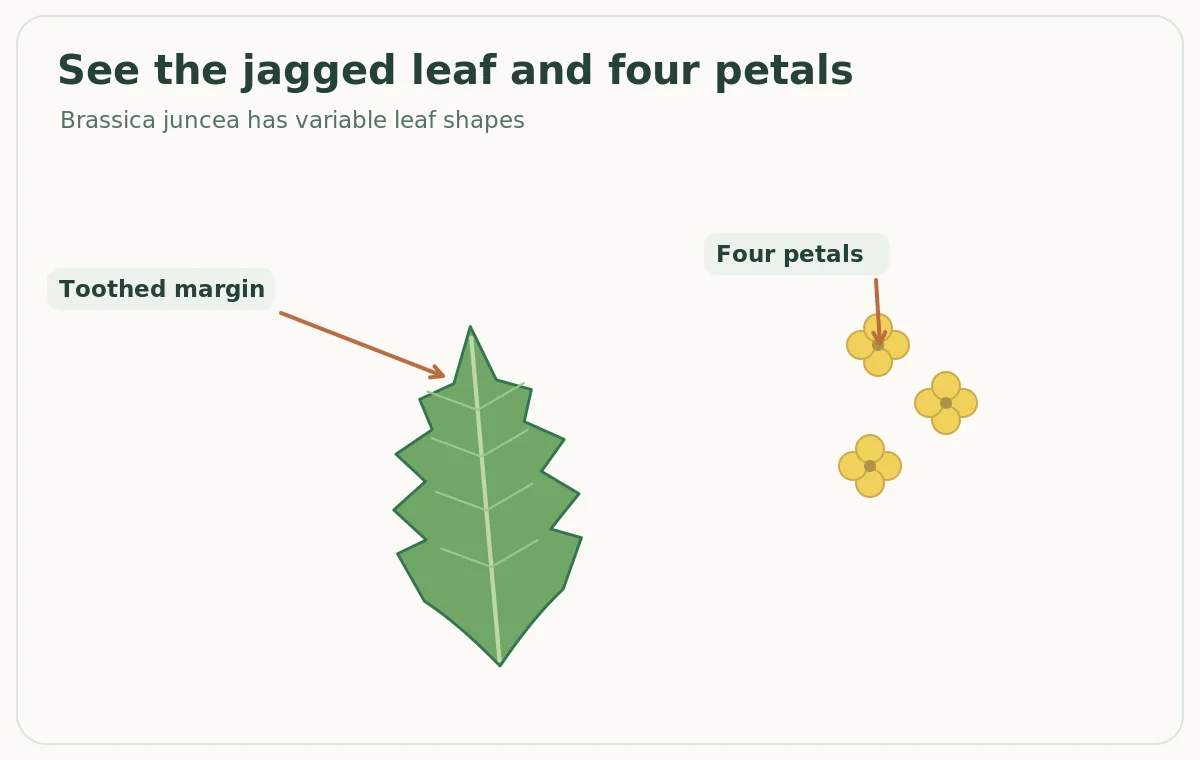
Many garden mustard greens belong to Brassica juncea. Depending on cultivar, the leaves may be broad, toothed, deeply ruffled, purple-tinged or comparatively smooth. They emerge alternately along the shoot rather than as neat opposite pairs like mint. For this diagram, a green serrated cultivar shows a strong central midrib and branching veins, with new leaves arising from the center. Do not identify unknown wild greens for eating from a picture alone. The mustard family also contains turnips, radishes and other cultivated brassicas, so a seed packet with the botanical name and edible leaf type prevents later confusion.
Favor the Cool Part of Your Local Season
Utah State University Extension describes leaf mustard as a cool-season crop that grows best before summer heat. In colder regions, that may mean spring and a later fall sowing; in warm regions, a mild winter window may be more suitable. Using the USDA hardiness zone as a sowing calendar is misleading because local soil temperature, frost, and heat differ widely. Plan the harvest when plants can grow without prolonged drought stress. Fast tender growth during cool weather usually produces a different eating quality from plants that have been heat-stressed for weeks. Choose varieties appropriate for the season rather than promising one fixed harvest date.
Give Seedlings Soil, Water, and Room
Utah State Extension advises direct sowing mustard seed about half an inch deep in a fertile, well-drained bed. Thin after plants have several true leaves so air and light reach the lower foliage. Dense seedlings can be used as small greens if they have been properly grown and cleaned. Avoid burying the central bud under heavy mulch. Water the root zone consistently; fluctuations from dry to drenched can damage texture and increase stress. If garden soil is heavy, improve it thoughtfully rather than pouring water into a compacted trench. Observe how quickly new leaves develop as the weather warms.
Tell Mature Harvest Leaves From the Inner Bud
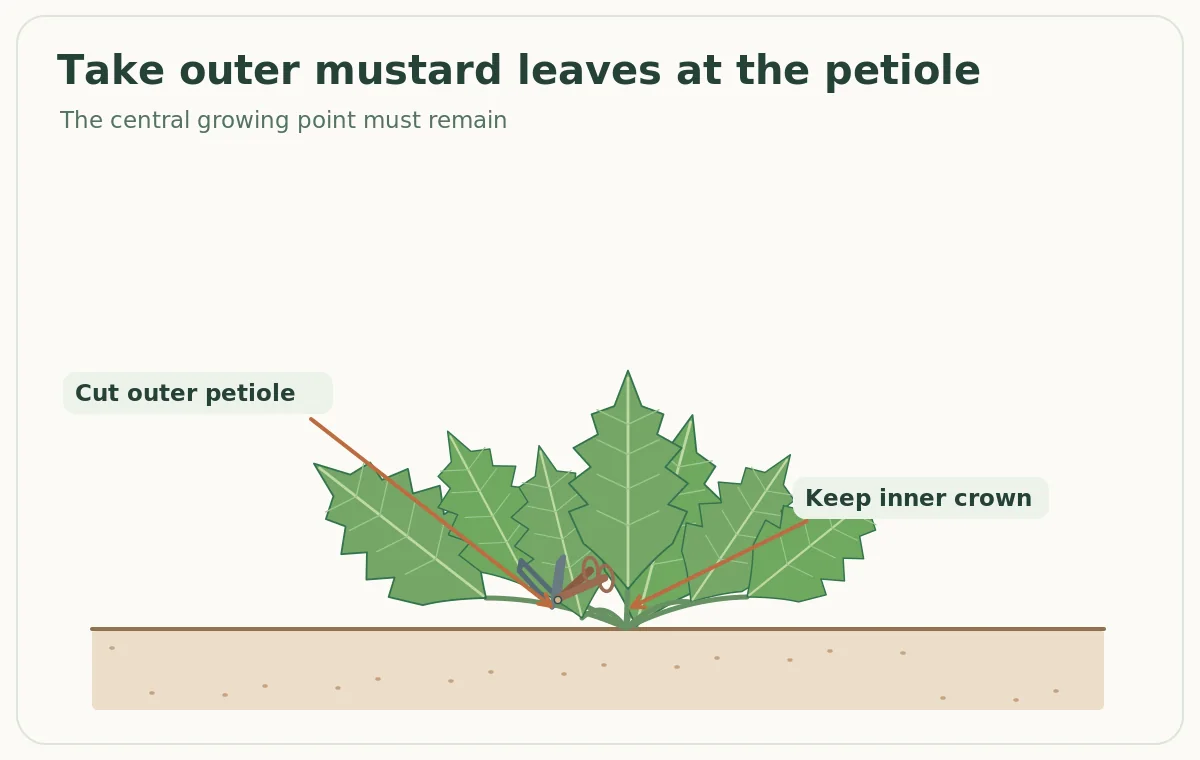
Look for a robust blade with characteristic serrated or frilled edges and a firm petiole attached to the main shoot. On a leafy young plant, larger outside or lower leaves can be removed while the central leaves remain small. That center is the active growing point. Utah State Extension states that older leaves are commonly stripped first, letting younger leaves continue. Do not confuse a tall, narrow emerging flowering shoot with another desirable leaf. Check the center before each harvest, because the transition to bolting can be rapid under heat or increasing day length.
Cut or Snap an Outside Leaf at Its Petiole
Hold the stem or leaf base steady and remove only the chosen outer leaf with clean scissors or a careful snap close to its attachment. Keep the blade of the tool away from small central leaves and the crown. The diagram places the cutting point on the leaf petiole, not across the top of the plant. A full cut-and-come-again harvest can work for vigorous crops when the growing point stays intact, but a weak plant needs more foliage left to recover. Carry leaves into shade promptly rather than stacking them in the hot sun while continuing work.
Read the First Signs of Bolting
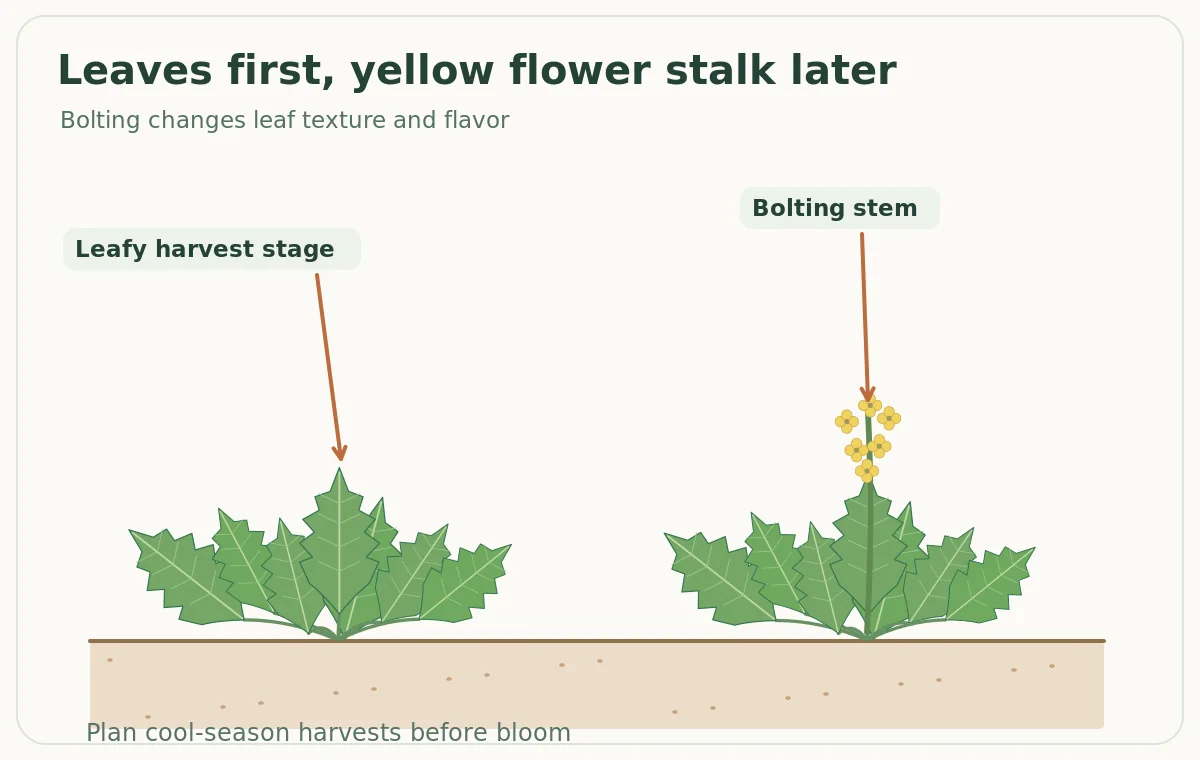
A compact leafy plant becomes different when the central stem elongates and carries flower buds. Brassica juncea flowers normally open with four yellow petals in a cross shape, followed by long, narrow seedpods. Leaves may become smaller or stronger-tasting as energy shifts toward flowers and seed. You can taste a correctly identified clean cultivated leaf before deciding on a final harvest, but do not assume a bitter leaf is unsafe solely because of flavor. If the plant is already flowering, focus on salvaging quality leaves or removing it and sowing again in a better season. A calendar alone cannot reverse physiological bolting.
Manage Heat and Flea Beetles Conservatively
Heat and moisture stress encourage tougher foliage. Use an appropriate mulching method to conserve moisture without smothering the crown, and consider a cooler season rather than trying to keep one spring plant going through extreme heat. Tiny round holes may indicate flea beetle feeding; check the undersides and nearby plants before diagnosing. Floating row cover used early can reduce some insect exposure, but remove or manage it appropriately when plants need air and when weather becomes hot. Apply only pest-control measures labeled for the crop and location; plant identification and monitoring should come before sprays.
Wash and Store Fresh Leaves Properly
Harvest in cool conditions when possible and remove yellow, damaged or contaminated foliage. Rinse the leaves using suitable clean water, drain them and refrigerate promptly. Do not treat leaves grown in contaminated soil or splashed with untreated wastewater as automatically safe because they look green. Younger tender leaves may work well in salads when appropriately grown and handled; more mature leaves are commonly cooked. Flavor varies with variety and temperature, so describe the plant’s actual taste rather than relying on generic assurances that every leaf will be mild. Keep harvest tools clean between garden beds to limit moving pathogens.
Decide Whether to Keep the Plant or Replant
If the center is still leafy, the plant is growing well, and weather remains favorable, modest outside-leaf harvesting can continue. If a tall flower stalk is already forming, repeated cutting may not restore its original leaf quality. Remove spent plants and start a new sowing when the climate offers another cool window. Record the cultivar, bed exposure and the dates when bolting began to refine your next schedule. A site with partial afternoon protection may help in some climates, but too much shade reduces growth, and no shade treatment can make an extremely hot season suitable for every cultivar.
Apply a Three-Part Harvest Test
First check botanical identity: recognizable mustard foliage with a strong midrib and leaf shape consistent with the seed packet. Second check plant stage: a leafy crown without a stretched flower stalk is usually the better harvest stage. Third check the selected leaf: large enough for use and free from major damage or contamination. Remove an outside petiole while leaving the center healthy. Compare the diagram of a bolting plant bearing four-petaled flowers before you make a second cut. This simple test avoids harvesting by leaf size alone and encourages repeatable decisions throughout a cool-season crop.
Related Guides
- When to Harvest Mustard Greens and Keep Tender Leaves Coming Back
- How to Grow Mustard Greens in Pots and Keep Harvesting Outer Leaves
- How to Grow Mustard Greens for Tender Repeat Harvests
How We Research and Verify Plant Advice
The species descriptions, sowing and harvest actions, and environmental cautions were checked against University Extension University Extension on October 28, 2026. We use the original plant-specific sources to distinguish botanical anatomy from generalized gardening habits. Local climate, cultivar and soil conditions may change timing and outcomes; this article does not imply a fixed yield, medical benefit, sponsorship, or pesticide prescription. The illustrations are explanatory diagrams rather than to-scale construction drawings. Review VegWin’s affiliate disclosure for the site’s general policy; no affiliate partnership is asserted in this guide.
Usually while plants grow actively in cool weather and before a flower stalk develops.
Yes, if the central growth point stays intact and the plant remains vigorous.
A rising central flower stalk develops clusters of small, typically four-petaled yellow flowers.
No. Brassica juncea cultivars range from smooth to deeply frilled or lobed.
Not reliably. It may be better to resow in a cooler period.