
Tulips begin their spring display with a bulb planted months earlier. A tulip bulb is a layered underground storage organ with a pointed shoot tip and a flatter basal plate that grows roots. These parts tell you which way it belongs in the planting hole. Planting depth is measured from the base of the bulb to the finished soil surface, not from its top or from the bottom of a layer of mulch. Use the botanical drawings alongside the actual specimen in the garden, and check your local climate, cultivar and current conditions before making cuts or planting decisions.
Pick Healthy Tulip Bulbs and Varieties
Choose firm bulbs without soft patches, unpleasant odors or obvious mold. A papery outer tunic is normal, whereas deeply rotten or mushy basal tissue is not. Large hybrid tulips and smaller species tulips can require different planting depths, so retain the supplier label. Tulips also vary in reliability as returning perennials, depending on cultivar, climate and garden conditions. When planning a long-lived display, distinguish a one-season show from bulbs selected for naturalizing rather than assuming every hybrid behaves identically.
Compare the plant in front of you with the close-up rather than treating an illustration as a substitute for species identification. If a familiar-looking leaf, root or flower has a different attachment, stop and confirm the plant. The difference matters for this specific task and for avoiding damage.
Understand the Tulip Bulb Anatomy
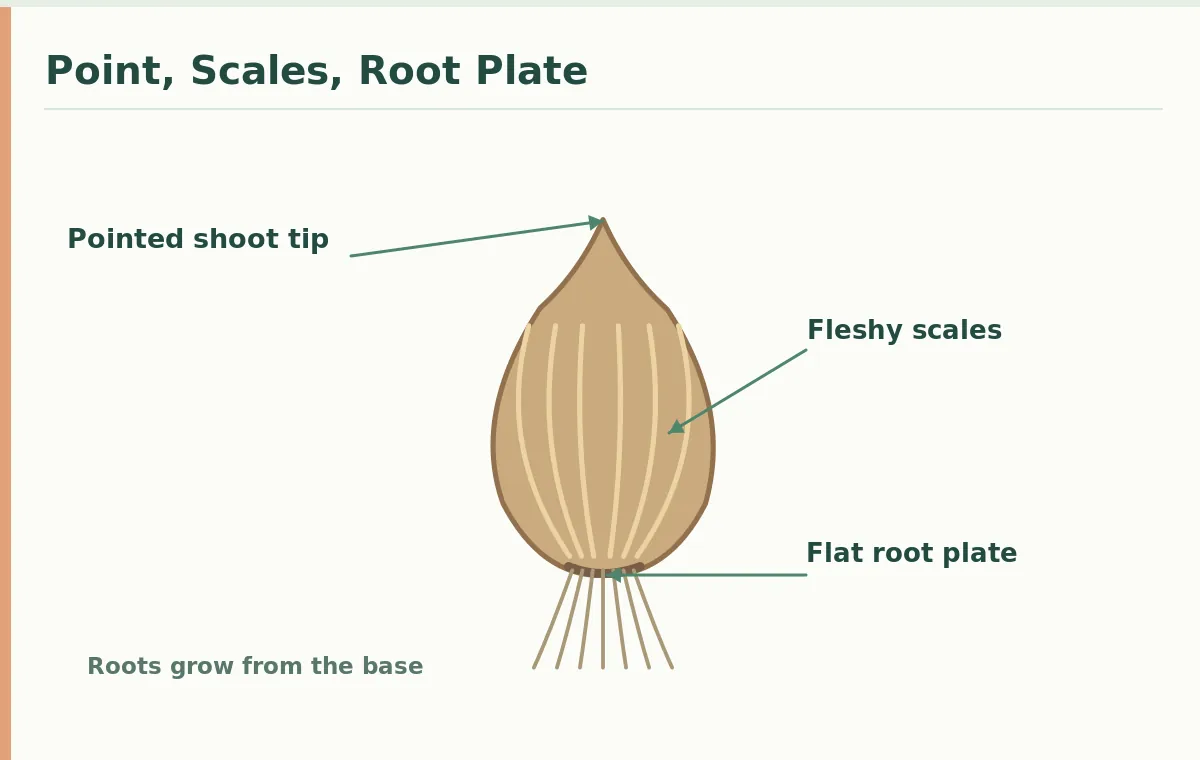
The narrow pointed end houses the young leafy shoot; the broad flattened lower end is the root plate. Beneath a dry protective tunic are fleshy scales that store resources for early growth. The basal plate is where true roots emerge. This is a bulb rather than a gladiolus corm: those organs have different internal structures even if both are planted underground. Examine a single bulb before planting many so you do not confuse the pointed end with old roots.
Choose a Fall Planting Window
In cold-winter areas, plant spring-flowering tulips in fall when soil has cooled but before the ground becomes unworkable. Rutgers Extension describes autumn establishment, with roots developing before winter freezes. Do not interpret a USDA plant hardiness zone as a calendar date; actual soil conditions and local frost history matter. Warm-winter climates can require special bulb chilling or different cultivar selection, and annual treatment may be more practical than expecting reliable rebloom every spring.
Prepare materials before you start, then work on a small test area. Record what the soil and weather were like, and adjust cautiously for the variety in your garden. It is easier to correct one shallow planting or misplaced support than an entire row after plants begin actively growing.
Measure the Depth From the Root Plate
Iowa State Extension recommends a base-to-soil-surface depth of roughly six to eight inches for many larger garden tulips, while some smaller botanical tulips can be three to five inches deep. Follow your bulb label if it specifies a different requirement. Dig the planting hole to the relevant depth, then place the bulb on its broad basal plate. The diagram measures from the true root plate up to the finished topsoil, with the point still beneath ground.
Set the Point Up and Cover Gently
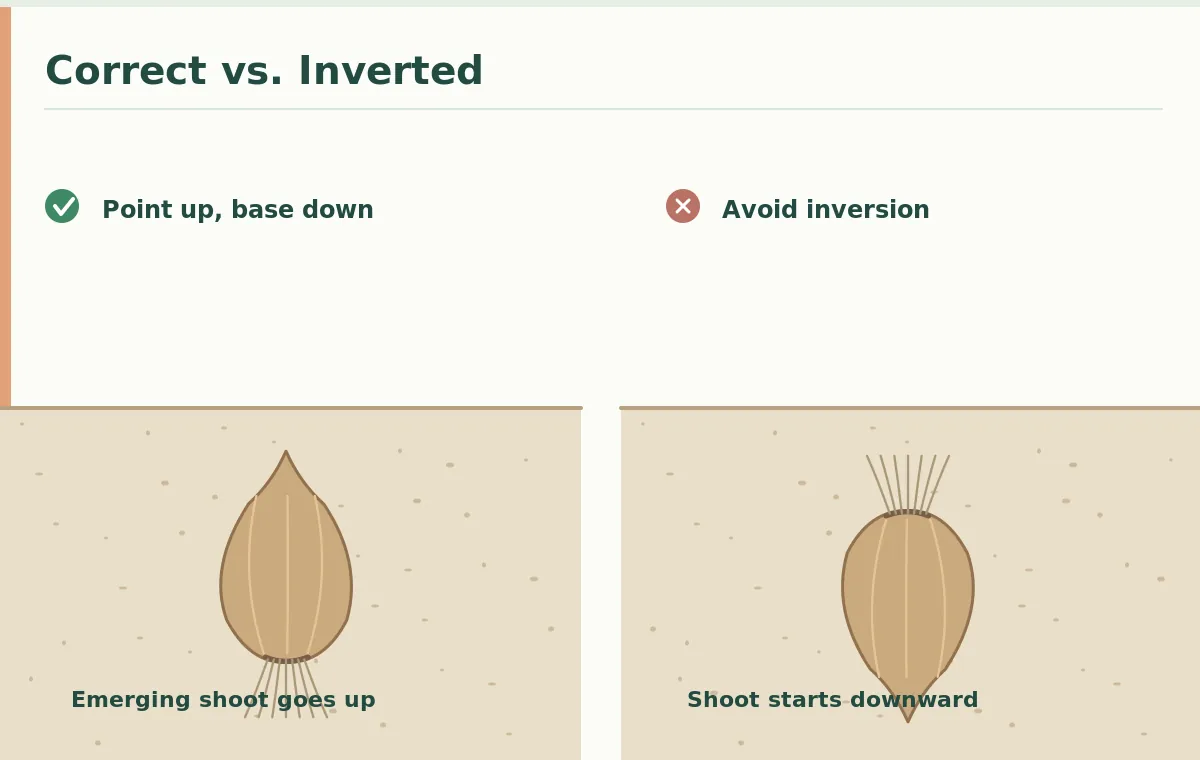
Place the bulb point up, flat root plate down, and fill soil around its sides without crushing it. The central shoot should aim toward the soil surface, while new roots will grow from the base. A bulb tilted slightly is not inevitably lost, but fully upside-down planting wastes stored resources as the shoot redirects. In heavy wet soil, prioritize drainage rather than digging an extremely deep, permanently soggy hole. Firm gently to remove large air pockets.
Look again at the actual living growing point or fruit attachment before cutting or moving anything. In the diagram, arrows mark plant parts rather than arbitrary positions in the frame. Keep roots and healthy crown tissue wherever the job depends on regrowth, and leave damaged plant parts out of stored harvests.

Space Bulbs for Mature Spring Foliage
Large hybrid tulips may be spaced about four to six inches apart, according to Iowa State, with smaller species often closer together. Think about how their broad spring leaves will emerge and overlap, not just the size of the bulbs you can hold in your palm. Arrange groups rather than an unnaturally tight solid cluster. If planting a bed, lift the topsoil layer evenly so each basal plate rests at a consistent depth. Keep bulbs away from locations that collect winter runoff.
Water, Mulch and Protect the Bed
Water after planting if the ground is dry to settle soil against the bulbs and support fall rooting. Do not keep the bed waterlogged. Mulch may buffer temperature swings and protect the surface, but it is distinct from the measured mineral-soil planting depth and should not turn a shallow hole into an apparently deep one. Where rodents dig bulbs, use appropriate physical exclusion techniques that do not block the emerging shoots. Check local site conditions instead of relying on universal feeding recipes.
Over the following days, inspect for new growth, moisture stress or changes in plant color. The goal is a repeatable process, not an exact calendar prediction. Temperature, rainfall, variety and soil drainage will alter results, so use observable botanical stages to decide what to do next.
Let Leaves Rebuild the Bulb After Bloom
The bloom is not the end of the bulb life cycle. Green leaves continue photosynthesis and return energy to the underground scales after flowers fade. Remove spent blooms if desired, but do not cut all leaves while still green. Once foliage naturally yellows, it can be removed without interrupting much active storage. Rutgers Extension notes keeping green foliage is important for the following year. A tulip that fails to return may have suffered wet soil, insufficient chilling or cultivar limitations.
Troubleshoot Missed or Uneven Sprouts
If nothing emerges, check whether bulbs rotted, were eaten or were planted into conditions unsuitable for that variety. Do not dig through the bed too early in cold climates, because spring emergence varies with temperatures. Very shallow bulbs can experience freeze-thaw displacement; very deep planting may delay emergence or reduce flowering in some situations. When failures repeat, investigate local drainage, bulb quality and the fall planting window before changing fertilizer or assuming a contagious disease.
Related Guides
- When to Lift Tulip Bulbs: Wait for Yellow Leaves and Store Them Dry
- When to Plant Tuberose Bulbs for Fragrant White Flower Spikes
- How to Plant Liatris Corms and Grow Upright Purple Flower Spikes
- How to Plant Crocus Corms in Pots Without Winter Waterlogging
- How to Plant Anemone Coronaria Corms Without Wet-Soil Rot
How We Research and Check Botanical Details
This guide was compared with these Cooperative Extension or university horticulture materials on October 28, 2026: yardandgarden.extension.iastate.edu source 1 extension.rutgers.edu source 2 extension.illinois.edu source 3. Their recommendations inform the plant anatomy, season, appropriate depths and handling depicted above. We treat range-based guidance as regional guidance, not a guarantee for every garden, and we avoid unsourced pest remedies or fertilizer rates. The diagrams are teaching illustrations; verify the living specimen, its cultivar and local gardening conditions before applying the steps.
Disclosure and Editorial Limitations
This article is educational and contains no confirmed affiliate product recommendations. See the VegWin affiliate disclosure. No WordPress publication or endorsement is claimed. Local extension staff can help with unusual symptoms and species identification; inspect the current plant and use current local guidance where conditions differ from general advice.
The pointed shoot end goes up; the flat basal root plate goes down.
Measure from the bottom of the bulb at the root plate to the finished soil surface.
No. Many large hybrids use roughly six to eight inches, while some smaller species tulips are planted less deeply.
Leave green leaves until they yellow naturally so they can replenish the bulb.
Discard visibly rotted or soft bulbs; choose firm healthy planting stock.