
Muscari, commonly called grape hyacinth, sends up short spikes of small blue, purple or sometimes white bell-shaped flowers in spring. The name sounds like the larger true hyacinth, but these are different bulb plants with different habits. A handful of muscari bulbs planted at random can look lost in a big border; a deliberate drift near a path or beneath deciduous shrubs is more effective. The same willingness to multiply that creates a drift can become a nuisance in a space that must stay tightly controlled.
The practical plan has four parts: purchase the right species or cultivar, plant in fall where water drains away, group bulbs instead of making a strict grid, and decide in advance whether you welcome self-seeding. This guide uses Muscari armeniacum as a common reference and explains why bulb-packet depth instructions can differ between reputable sources. It avoids promising a bloom date from a USDA zone number. For the basics, see our guide: When to Plant Hyacinth Bulbs in Fall and Set the Right Depth.
Choose a site that will not trap water
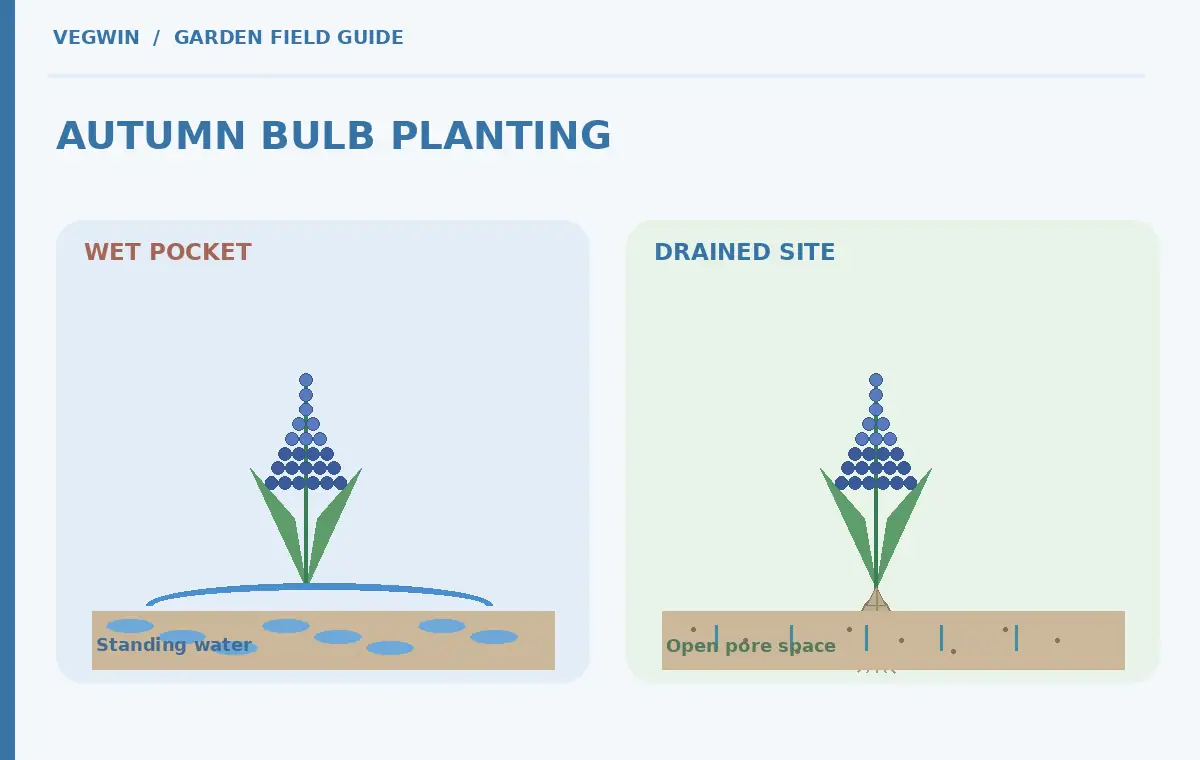
Muscari generally performs in well-drained ground from sun to partial shade. Light beneath deciduous trees can suit spring bulbs because branches may be bare while leaves and flowers are growing. A wet hollow that remains saturated through winter is a poor choice: North Carolina Extension warns that excessive moisture can rot dormant bulbs. Good drainage is more important than forcing an exact ornamental soil mix. If you want the full process, read how to plant anemone coronaria corms without wet-soil rot.
Before planting, check the area after rainfall. If water sits in a depression and does not soak away, improve the location rather than hiding bulbs under gravel. A gently raised border edge or a suitable container with drainage openings may be a better fit. In a warm region that does not give typical hardy spring bulbs their expected cold season, use region-specific guidance rather than assuming fall planting guarantees a spring display.

Plant in autumn and read the correct label
Fall is the standard planting season for muscari bulbs in temperate gardens. Wisconsin Extension gives fall planting advice for M. armeniacum and notes that narrow leaves may appear again in mid-fall. That foliage is usually part of the plant’s normal cycle, not a signal that bulbs were planted too early. The exact local planting week depends on soil conditions and season, not simply on a hardiness-zone map.
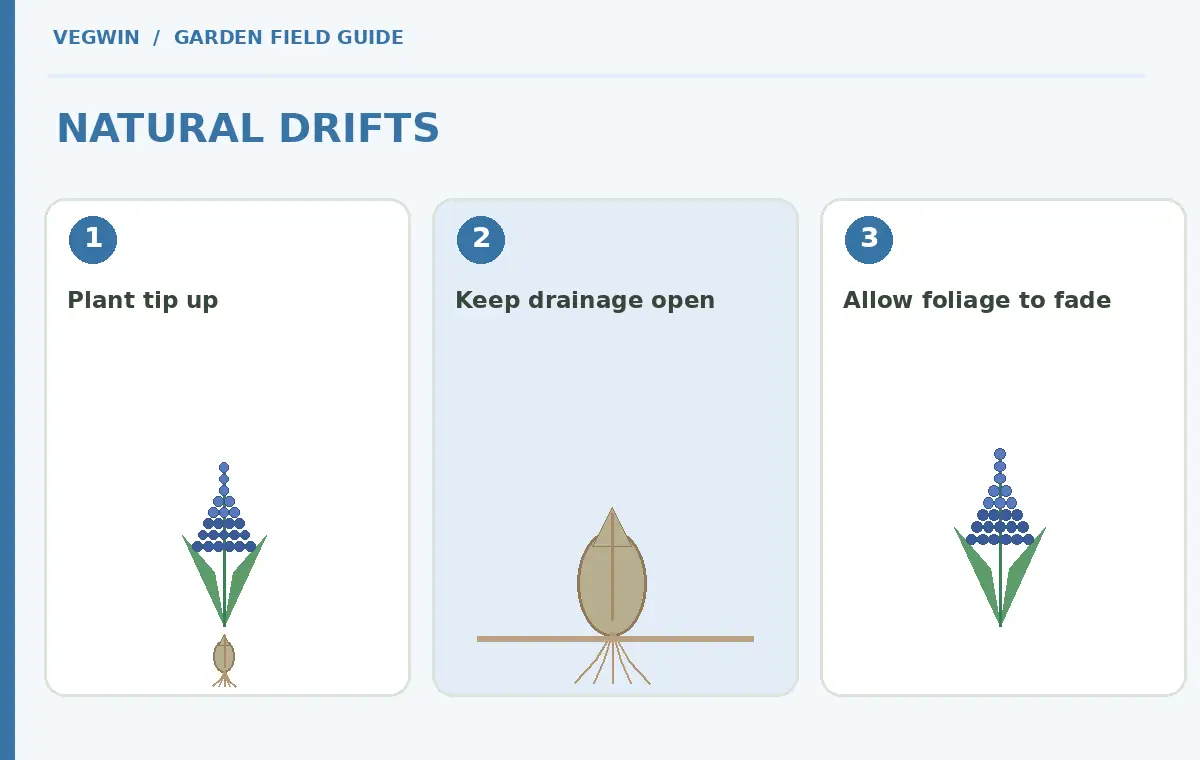
Depth recommendations from respected references vary. Wisconsin Extension gives approximately 3–4 inches deep for M. armeniacum, while North Carolina Extension lists roughly 2–3 inches for muscari generally. The correct interpretation is not to average the numbers blindly: follow the instructions for the species and bulb size you have and make sure the planting soil drains. Set the narrow tip upward if you can identify it, then cover gently.
Arrange clusters that look natural from the path
Make several small, irregular groups rather than spacing individual bulbs around an entire bed. View the planting from where you will walk or sit: a ribbon curving around a stone or an open patch beneath shrubs creates more visual impact than scattered singles. Bulbs will multiply and the display can gradually fill in. Leave access to other perennials so digging and maintenance do not become a yearly problem.
You do not need to force uniform spacing when planning a drift, but do not pile bulbs directly on top of one another. Both the Wisconsin and North Carolina plant guides provide modest spacing recommendations for their specific contexts. Use the packet as your starting point and leave room for growth. Mark the boundaries now so you can distinguish intentional muscari from seedlings that later appear in paths or lawns. If you want the full process, read how to start cleome seeds for tall summer spider flowers.
Manage pots differently from open garden beds
Containers allow a muscari display near a door and make spreading easier to contain. Use a pot with drainage holes and a suitable potting mix, not heavy compacted garden soil. Plant bulbs so their growing points are correctly oriented and they have adequate depth for roots. Keep the container where local conditions support normal winter chilling and avoid a permanently waterlogged saucer.
A container can also dry out unexpectedly, particularly when under a roof overhang. Check moisture instead of following a fixed daily watering schedule. A pot display that is protected from the worst winter rain may still need occasional water during active root growth. Before a hard freeze, consider whether your container itself requires insulation according to local extension advice; a small exposed pot experiences different conditions from bulbs in open ground.
Leave spring foliage until it yellows
After flowering, the leaves continue supplying energy to the bulbs. Do not braid, tie or cut them while still green just to tidy a path edge. North Carolina Extension recommends allowing foliage to yellow and fade before cleanup and reducing watering as dormancy begins. It may look messy briefly, but premature removal is more likely to weaken next spring’s performance.
In climates where M. armeniacum makes leaves again in fall, do not treat those leaves as weeds by default. Watch for familiar narrow strap-shaped foliage at the location you planted. Where you need an exceptionally tidy bed, combine muscari with plants that emerge later and visually cover yellowing foliage without shading it too early.
Contain unwanted spreading before it surprises you
Muscari can naturalize through offsets and sometimes seed. That can be a major advantage in a meadow-style planting and a drawback next to a gravel path. The RHS specifically notes the tendency to spread, while North Carolina Extension describes clump formation and dieback. Decide which outcome you want before you plant fifty bulbs.
If you prefer a tidy boundary, use containers or small beds with accessible edges, remove seedheads before mature seed scatters where appropriate, and lift unwanted offsets during suitable maintenance windows. Do not dump bulbs or soil containing unwanted bulbs outside managed garden areas. Some named muscari varieties have different vigor and flowering colors, so save the plant label for later decisions.
Match the observation to the next action
| What you observe | Practical next step |
|---|---|
| Moist, free-draining spot | Plant in fall and group bulbs irregularly. |
| Water pools through winter | Choose a different spot or a well-drained pot. |
| Fall leaves appear | Usually normal for M. armeniacum; do not cut automatically. |
| Spring foliage still green | Let it feed the bulb until natural yellowing. |
| Muscari spreads into unwanted places | Remove offsets or choose containers for future plantings. |
Keep this table with the planting records rather than converting it into rigid rules. Local weather, the actual species or cultivar, growing conditions and the condition of the plant all influence how a recommendation should be applied. When observations conflict with a general schedule, identify the cause before cutting, planting or watering more. If you want the full process, read how to divide crocosmia corms without sacrificing next summer’s flowers.
Related Guides
- When to Plant Caladium Tubers: Start Warm and Avoid Cold Rot
- When to Plant Ornamental Allium Bulbs and Avoid Wet-Soil Rot
- When to Plant Ranunculus Corms for Cool Weather and Healthy Roots
- When to Plant Asiatic Lily Bulbs and How to Avoid Bulb Rot
- When to Plant Freesia Corms in Pots or Mild-Climate Gardens
How We Research and Verify This Guide
Research checked October 22, 2026. We compared plant-specific guidance from established university Cooperative Extension programs and the Royal Horticultural Society, distinguished general growing principles from regional details, and used the sources to check the practical choices in this article. Our diagrams are simplified teaching illustrations and are not scaled planting plans.
Sources reviewed: University / Extension horticulture reference; University / Extension horticulture reference; RHS. Consult local Extension advice for climate-dependent timing, unusual plants or unresolved symptoms.
Editorial disclosure: This guide provides independent education and does not claim any verified paid partnership or commercial recommendation. See our affiliate disclosure for the site policy.
No. Muscari is a different genus from true Hyacinthus, even though both are grown as spring bulbs.
Yes, many muscari grow in sun to partial shade if the soil drains well.
Autumn is typical in temperate regions; local weather and the bulb type determine the precise window.
Some types, including M. armeniacum, naturally produce leaves in autumn.
Yes, some types multiply and self-seed freely. Choose a location where naturalizing is welcome or use a container.