
An iris leaf with a brown tip does not automatically have an iris borer. The damaging insect is the larva of a moth, Macronoctua onusta, and its diagnostic trail usually begins in young iris leaves before descending into the underground rhizome. Early feeding leaves narrow water-soaked streaks and small holes; later injury can include frass, tunnels, and a soft, foul-smelling rhizome invaded by bacteria. University of Minnesota Extension advises monitoring early rather than waiting for whole fans to collapse. This guide shows where to look in spring, what changes in summer, how to avoid confusing leaf diseases with insects, and which cleanup steps reduce overwintering eggs.
Understand the Iris Borer's Seasonal Route Through the Plant
The iris borer is a moth whose caterpillar attacks iris plants. According to University of Minnesota Extension, the insect commonly overwinters as eggs on dead iris leaves and debris; tiny larvae emerge in spring, chew into new foliage, and travel down into the rhizomes later in the season. In Minnesota, rhizome injury becomes prominent by midsummer, but the exact weeks differ with local weather. After feeding, larvae leave to pupate in soil, and adult moths lay eggs again toward late summer or fall. This route explains the seasonal scouting schedule: look for small leaf entry sites early, inspect the base of affected fans later, and remove dead plant material after the egg-laying season ends. A single broad treatment date copied from another state cannot replace checking plant development locally.
Identify Narrow Water-Soaked Streaks in Young Leaves
In spring, unfold the visual silhouette of a sword-like iris leaf fan and examine both faces of the younger blades. University of Minnesota reports small feeding holes and narrow tan or water-soaked streaks where larvae tunnel in the leaf. Such streaks may run lengthwise along the leaf, following its veins, rather than producing a single circular chewing hole. Inspect close to the central folded leaf and near the bases, where tiny larvae are easy to overlook. An early injury mark should prompt closer inspection, not a confident diagnosis from across the yard. Frost scorch, fungal leaf spot, and other stress can also brown iris leaves. Compare several leaves, note whether the streak looks like a tunnel, and look for active feeding or a larva before deciding that an insect is present.

Look for Frass and Brown Tissue at the Fan Base
As a larva grows it may leave tattered leaf tissue, brown streaks, and sawdust-like waste called frass near the base of the fan. Penn State Extension mentions these signs alongside dying tips and water-soaked streaks. You may not find the caterpillar on the surface because it is feeding inside. Gently separate the upper part of a suspicious leaf fan to follow the discolored trail toward its base, taking care not to tear healthy fans needlessly. A slimy, foul-smelling basal area points toward bacterial decay, which can follow borer injury but may also occur without a borer. Healthy rhizomes and leaves should not be dug up merely because they are brown at the very end of the season. The combination of damage location, season, frass, and internal tunnel is more informative than leaf color alone.
Know What an Iris Borer Caterpillar Looks Like
A mature iris borer larva is a relatively large, fleshy pinkish-to-whitish caterpillar with a darker head, potentially approaching about two inches in length according to University of Minnesota Extension. Young larvae are much smaller, which is why early signs may be easier to find than the insect itself. Unlike a root, a caterpillar has a defined head and segmented body and may be curled inside feeding tissue. Do not mistake a harmless earthworm uncovered during digging for the culprit. A partially rotted rhizome may contain other scavengers that arrived after decay began, so identification still matters. If you find a suspect larva, compare its features against Extension photographs. Wear gloves when handling damaged material and place the insect and heavily affected fragments in a sealed disposal container rather than scattering them around the bed.

| Observation | Recommended next step | Avoid |
|---|---|---|
| Narrow spring leaf streak | Inspect for a small tunneling larva | Diagnosing from a brown tip alone |
| Tunnel or borer in rhizome | Remove and dispose of badly damaged sections | Composting infested rhizomes |
| Foul, slimy rhizome tissue | Isolate and discard rotten tissue; check drainage | Assuming insect spray cures soft rot |
Inspect Rhizomes for Actual Entry Holes and Tunnels
Later in the season, dig a seriously affected iris carefully with a fork placed away from the rhizome cluster. Remove loose soil to look for actual holes, galleries, or a caterpillar inside the thick horizontal storage stem. A bearded iris rhizome normally has a fan of leaves at one end and roots along its underside. The rhizome is not a deep tuber or a seed pod; it lies at or near the soil surface for many bearded irises. University of Minnesota notes that severe borer feeding can predispose rhizomes to bacterial soft rot. If a segment is firm and clean, preserve it when possible; if a rhizome has extensive tunnels or active larvae, discard that section according to regional guidance. Do not put suspect diseased rhizomes into a home compost pile that may return pathogens to the iris bed. For the basics, see our guide: When to Divide Bearded Irises and Replant Rhizomes at Soil Level.
Separate Borer Injury From Bacterial Soft Rot
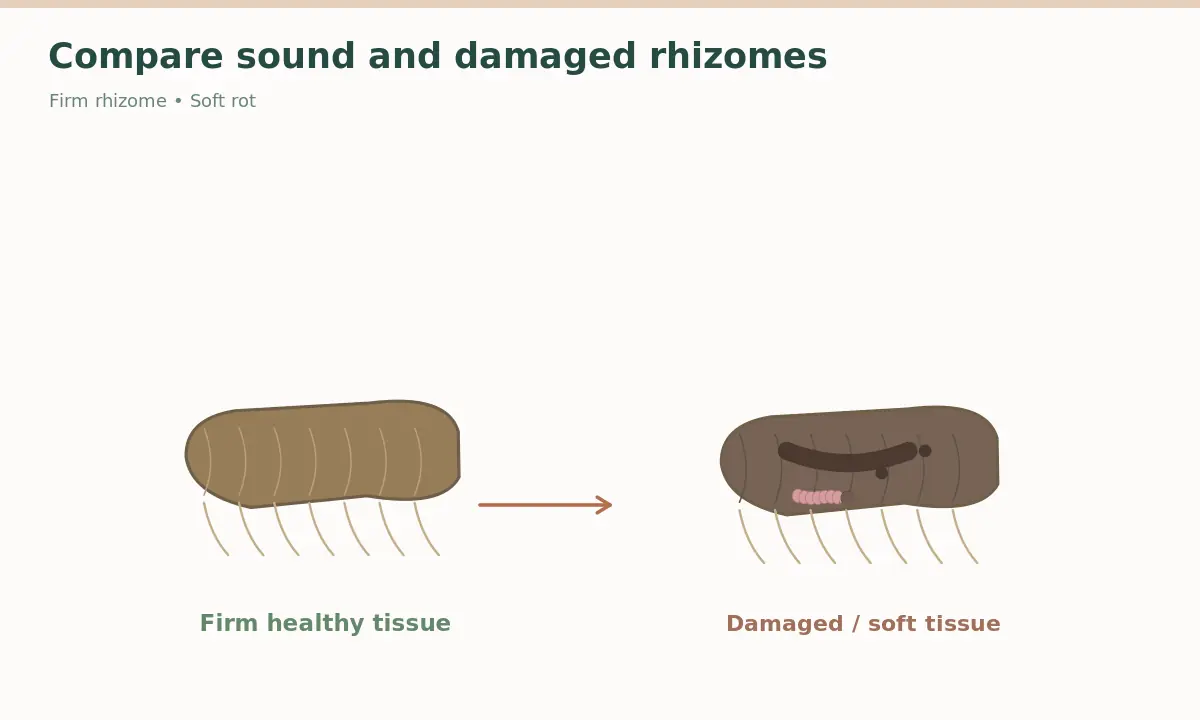
A soft, foul-smelling iris rhizome signals bacterial rot, but it does not by itself prove that a borer caused the entry wound. University of Minnesota’s diagnostic guide lists borers and bacterial soft rot separately while acknowledging their overlap. Borers make internal tunnels and may leave frass or a recognizable caterpillar. Soft rot produces slimy, mushy tissue and an offensive odor; physical injuries, soggy conditions, and other factors may contribute. A healthy rhizome is firm when pressed and does not ooze. The result-comparison illustration shows a firm segment beside a dark softened one, but real damage can occur together on a single plant. Remove severely rotten tissue with care, disinfect tools between diseased plants, and review drainage. Do not use a routine insecticide to treat an established bacterial disease; it will not restore decomposed rhizome tissue.
Manage Early Leaf Injury Before Larvae Reach the Rhizome
When a damaged leaf contains a tiny borer early in spring, University of Minnesota describes crushing the insect within its tunnel or removing an affected leaf as feasible actions. In a small garden, this targeted response can avoid broader disruption. Do not strip large amounts of healthy foliage from every iris, because leaves support future flowering. If damage is confined to a single small segment, remove that segment and dispose of the infested tissue securely. Revisit the same planting as new leaves expand because additional eggs may hatch at different times. Monitor neighboring iris clumps even if they initially look sound. Local Extension guidance may discuss pesticide options at the brief early-hatch stage, but treatment is not automatically necessary in a bed with no established borer problem, and precise timing cannot be predicted from the calendar alone.
Clean Old Iris Leaves After the Fall Egg-Laying Period
Iris borer eggs overwinter on dead iris plant debris, so late-season sanitation is a major preventive tool. University of Minnesota recommends removal after a hard frost, once adult moths are no longer actively laying eggs in its climate. Collect dried leaves, stems, and old debris around the fan bases and dispose of likely infested material appropriately. Do not burn garden waste where prohibited or leave piles beside the same iris bed. In places without a comparable hard frost, ask local Extension when egg-laying ends and how sanitation is timed. Keep the clump weeded enough that you can inspect leaves in spring, but avoid disturbing shallow rhizomes with vigorous hoeing. This sanitation interrupts part of the insect life cycle; it cannot repair a severely damaged rhizome already rotting inside the soil.
Use Pesticide Advice Only After Confirming Identity and Timing
University of Minnesota discusses pesticide options for iris borer but also cautions that timing is crucial: early hatch when caterpillars are exposed is unlike a large larva hidden inside a rhizome. Product legality and labels vary over time and between regions. This article does not prescribe specific chemicals, rates, mixtures, or application schedules. Before any treatment, positively identify the pest, evaluate severity, ask your local Cooperative Extension for current registered options, and follow the full product label including pollinator, environmental, and personal-protection directions. Avoid broad spraying after heavy rot appears, since it cannot recreate destroyed plant tissue. Some nematode treatments are mentioned in Extension guidance, but their performance depends on conditions and should not be presented as guaranteed. Physical monitoring and sanitation remain important whether or not a pesticide is used.
Replant Healthy Iris Fans With Drainage and Airflow
After discarding severely infested or rotten sections, retain only firm, clean rhizomes with viable leaves or buds and sound roots. For bearded iris, the rhizome normally sits shallowly in a draining site; burying it deep in persistently wet soil can encourage trouble. Consult local species-specific planting instructions, since Siberian iris and other irises have different preferences. Space retained plants so leaves can dry and future damage is visible. Do not transplant a badly damaged piece into a clean bed simply because it has one green leaf. Wash tools and separate suspicious material from healthy propagation stock. Mark the planting and check it again next spring for new streaks. Good culture will not guarantee freedom from airborne moths, but it helps you detect pests early and limits avoidable rhizome decay. If you are starting from scratch, read When and How to Divide Siberian Irises Without Losing Healthy Fans.
Related Guides
How We Research and Verify This Guidance
Original source pages were reviewed on 2026-10-24: extension.umn.edu — University of Minnesota Extension: iris borer life cycle, early leaf signs, larval tunnels and sanitation; extension.psu.edu — Penn State Extension: diagnostic streaks, frass, rhizome damage, and fall bed cleanup; apps.extension.umn.edu — University of Minnesota diagnostic guide: differences between iris borer injury and bacterial soft rot. We compared the plant or insect identity, stage of development, documented actions, and limits on each recommendation. Regional calendars are qualified rather than copied from one university into a nationwide rule. Educational illustrations simplify scale while retaining the relevant plant structures and action directions. Local Cooperative Extension and cultivar documentation take priority when conditions differ.
Disclosures, Safety, and Local Differences
This article is educational gardening information and does not imply personal medical, pesticide, or agricultural consultation. We claim no sponsorship or affiliate relationship for these recommendations. Read VegWin’s affiliate disclosure. Follow regional plant restrictions and current product labels if considering pest control. Hardiness zones describe winter low-temperature patterns, not exact annual planting or harvest dates. We do not supply invented fertilizer or chemical treatment rates.
Look for small leaf holes and narrow water-soaked or tan streaks in new iris growth during spring.
Not usually, but tunneling can badly damage rhizomes and allow secondary soft rot.
Borer activity leaves tunnels, frass, and sometimes a caterpillar; soft rot gives mushy, foul-smelling tissue and may have other causes.
No. Identify the cause first; old leaves, leaf diseases, frost, and other issues can also cause browning.
In regions with hard freezes, Extension advises cleanup after the fall egg-laying period, often after hard frost. Ask locally in milder climates.