
Pattypan squash is a summer squash with shallow, scalloped, flying-saucer-shaped fruits. It belongs to Cucurbita pepo, the same species as many zucchini and other summer squashes, but its flattened outline makes harvest judgments look different. The goal is not to wait for a rock-hard winter squash. It is to grow a healthy warm-season plant, recognize the first female blooms, and remove tender young fruits while the plant continues making more.
Identify pattypan fruit before choosing seed
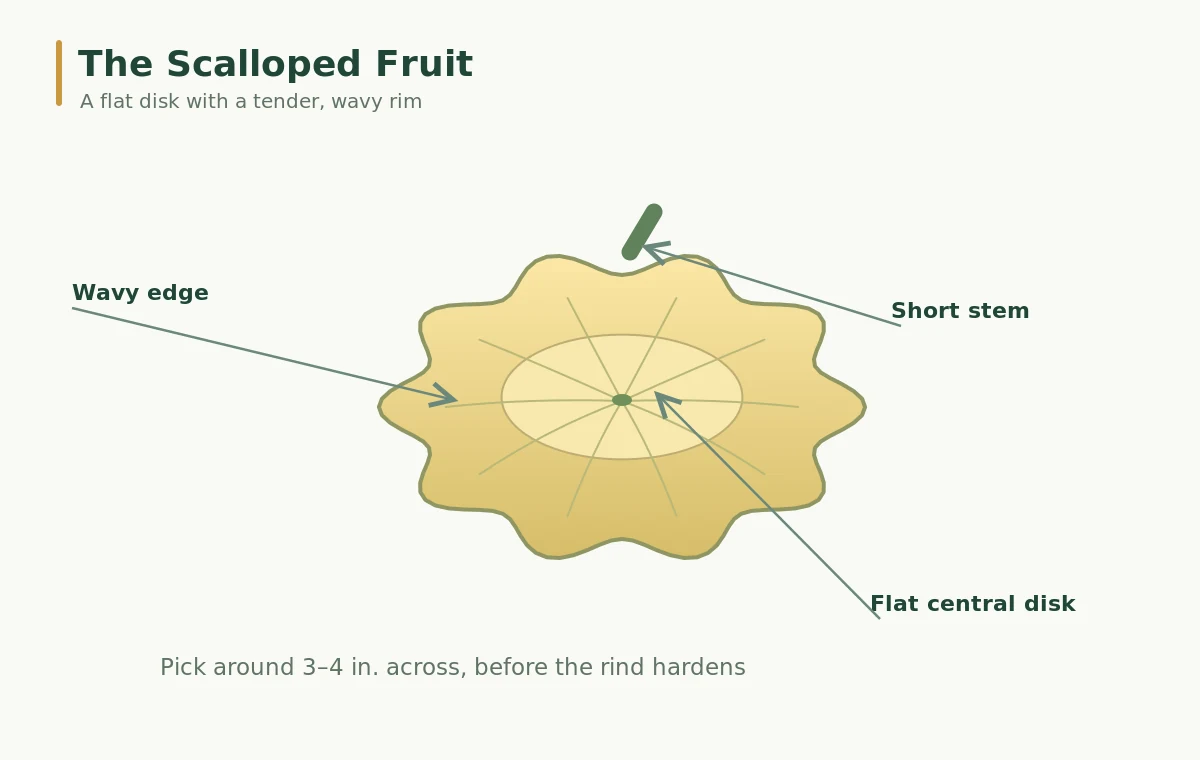
Look for seed labeled pattypan, scallop squash, or a named scalloped summer-squash cultivar. Mature fruit can be white, pale green, yellow, or a mixture of colors, so color alone does not determine tenderness or readiness. On a young fruit, the central disk is broad and the rim is lobed or scalloped rather than cylindrical. Buy seed for the actual habit and fruit color you want instead of assuming that any package marked summer squash makes the same shape.
University of Minnesota Extension separates bush summer squashes from varieties that send longer vines. Read the seed description for its growth habit, and reserve more bed space than the diameter of one fruit might suggest. A pattypan fruit forms from an ovary behind a female flower, not by swelling the flower petals themselves. That distinction becomes useful the moment yellow blossoms start appearing and a gardener wonders why some blossoms do not turn into squash.
Sow seeds only after soil warms
Choose a sunny location with soil that drains but does not dry out immediately after watering. Pattypan is frost-sensitive. Minnesota Extension advises direct-seeding squash only after frost risk has passed and the soil at a two-inch depth is about 70°F or warmer. That temperature is a soil measurement, not a USDA hardiness-zone number. In a cool spring, it is better to measure or wait than to put expensive seeds into cold mud and conclude they are defective.
A useful starting depth is about one-half inch for summer squash, as described by Minnesota Extension; defer to the packet for a specific variety. Lay seeds beneath that layer of loose soil and gently water the bed. Plant enough to allow for poor emergence, then thin young plants before they compete. If seedlings have tangled roots, cut extras at soil level instead of tugging one through the roots of the keeper. Label the sowing spot while there is still bare ground to avoid accidental hoeing.
Protect roots and leave room for foliage
The first two seed leaves are broad, followed by substantial, often angular true leaves on long petioles. The center of a developing plant contains new leaves and later flowers, so do not bury the growing point or heap mulch tightly against it. Wide leaves can shade weeds, but they also make it hard to see fruit underneath. Position plants to allow access for inspection without stepping on the crown or twisting their stems.
Some gardeners start squash indoors to gain time, but these plants dislike root disturbance and poorly warmed outdoor ground. Maryland Extension suggests short indoor production in roomy individual pots rather than growing a large, tangled mass for weeks. Move plants only after conditions suit warm-season squash and carefully preserve the root ball. Improve soil with mature compost where appropriate, and use a soil test rather than treating every pale leaf as a request for more nitrogen.

Tell male and female blossoms apart
Squash carries separate male and female flowers on the same plant. A male flower sits on a slender stalk without a little squash directly behind its petals. A female flower has a miniature, scalloped ovary between the blossom and its attachment to the plant. University of Minnesota Extension explains that insects must transfer pollen between flowers for normal fruit development. A flower that closes without forming a usable fruit is not automatically evidence of an insect pest.
Early blooms are often male, so let the plant establish itself before diagnosing pollination failure. Encourage visits from bees by growing flowering plants nearby and avoiding insecticide sprays on open blossoms. If a small fruit yellows, shrivels, or stops growing, check weather and pollinator activity before deciding that the plant needs feeding. In prolonged cold, wet, or cloudy conditions, pollination may simply be limited. Do not represent a male flower as a future squash in illustrations or garden notes.
Water the soil and scout the canopy
Water the root zone deeply when needed and adapt frequency to rainfall, soil texture, and plant size. Avoid keeping leaves wet unnecessarily: drip irrigation, a soaker hose, or careful watering near the soil helps limit leaf wetness. Keep mulch clear of the stem and do not aggressively cultivate beneath spreading foliage. Squash can form extra roots at soil-contact points, and repeated movement or lifting of vines can damage those connections.
Look under leaves for cucumber beetles, squash bugs, wilted stems, or powdery areas on the foliage. Many symptoms overlap, and a single spotted leaf is not a sufficient basis for a chemical treatment. Minnesota Extension recommends identifying the problem before acting. Record which leaves are affected and whether the growing tip remains healthy. If you use temporary insect-excluding row cover, remove it when flowers need access to pollinating insects; covered flowers cannot receive normal insect visits.
Cut tender scalloped fruits regularly
Maryland Extension gives approximately three to four inches across as a practical harvest size for pattypan squash. Some cooks prefer even smaller fruit; use both diameter and a tender, easily marked rind as clues. This is a different decision from harvesting winter squash, which is deliberately left to harden on the vine. Large overlooked pattypans can become seedy and tough. Check daily or frequently when the plant is producing, because a small disk can enlarge surprisingly fast in warm weather.
Find the short fruit stalk where the pattypan attaches to the plant. Support the fruit with one hand, then use clean pruners or a knife to cut the stalk without slicing the central crown or neighboring developing fruit. Do not twist or drag the plant to force a harvest. Pick dry fruit when possible, and carry it gently so its rim does not bruise. Removing overgrown squash also prevents it from absorbing resources while new tender fruit waits below the foliage.

Store briefly and improve your next planting
Summer squash is best used while fresh rather than cured like hard-rinded storage squash. Refrigerate unwashed, undamaged fruit for short-term use and inspect it before cooking. Minnesota Extension notes that extended refrigeration can damage summer squash quality, so do not promise winter-squash storage life. Wash hands, utensils, and produce with ordinary food-safety care, and discard fruit with rot or a strong unexplained off-odor.
Make a simple growing record: soil warmth at sowing, first male blossom, first female blossom, first fruit, and the diameter at which your household likes the texture. These notes reveal whether poor production stems from a late start, pollination, unnoticed oversized fruit, or weather. If harvests dwindle, check healthy new growth before sowing another crop. The reliable sequence is seed beneath warm soil, spreading rough leaves, separate flowers, and repeatedly harvested tender scalloped fruit.
Related Guides
- When to Harvest Patty Pan Squash for Tender Scalloped Fruits
- Squash Vine Borer: Identify Stem Damage Before Treating
- How to Prevent Squash Vine Borers Before They Enter Stems
- Powdery Mildew on Squash: Confirm Leaf Symptoms and Slow Spread
- How to Identify Squash Bugs and Check Eggs Before Control
How We Research and Check Botanical Details
We read and checked university Extension resources on 2026-10-29: extension.umn.edu; extension.umd.edu. These sources inform the specific plant structures, seasonal decisions and horticultural practices described here. We compared the article intent with the supplied VegWin WordPress title list and earlier draft archives to avoid a duplicate focus. Published and draft statuses differ; outside public indexing cannot conclusively reveal hidden draft slugs. Local climate, cultivar labels and site drainage still affect decisions.
This educational guide is independently written and is not a paid recommendation. No affiliate arrangement or sponsored product is claimed. Please see the VegWin affiliate disclosure for the site’s existing policy. Botanical diagrams are explanatory illustrations designed to clarify structures and actions; a local Extension specialist is best placed to diagnose an uncertain disease or site-specific plant problem.
No. It is a summer squash usually harvested while the scalloped rind is tender, unlike storage winter squash.
About one-half inch is a common University of Minnesota summer-squash recommendation; follow a cultivar-specific packet if it differs.
Those are normally male flowers. Female blossoms have a small developing ovary immediately behind the petals.
University of Maryland Extension gives about 3–4 inches across; smaller tender fruits are also useful.
No. Fresh summer squash has a shorter useful storage life than mature hard-skinned winter squash.