
Fennel seed is collected from the branching umbrella-shaped flower heads of Foeniculum vulgare, not from the swollen base sold as Florence fennel. The challenge is timing: bright yellow blooms are too early, while brittle brown heads can shed their fruit-like seeds with a light touch. The safest home-garden workflow is to identify mature brown umbels, cut the heads into a dry paper bag, finish drying out of direct weather, then clean and store them. This guide distinguishes common seed fennel from bulbing fennel, shows what mature umbels actually look like, and explains what to do when several heads ripen at different times.
Identify the Type of Fennel You Grow
Common or herb fennel grows tall, feathery foliage and branching yellow flower umbels that eventually produce aromatic seeds. Florence fennel is selected instead for its thickened stem base; Utah State University Extension explains that harvesting the bulb while still firm is a different operation. Some Florence plants bolt and set seed, but that is not the same goal as growing common fennel for spice. Check the seed packet, identify the plant before cutting, and do not confuse fennel with ornamental members of the carrot family that may be unsafe. If plant identification is uncertain, do not harvest its seeds for food.
Recognize Brown, Dry Seed Umbels
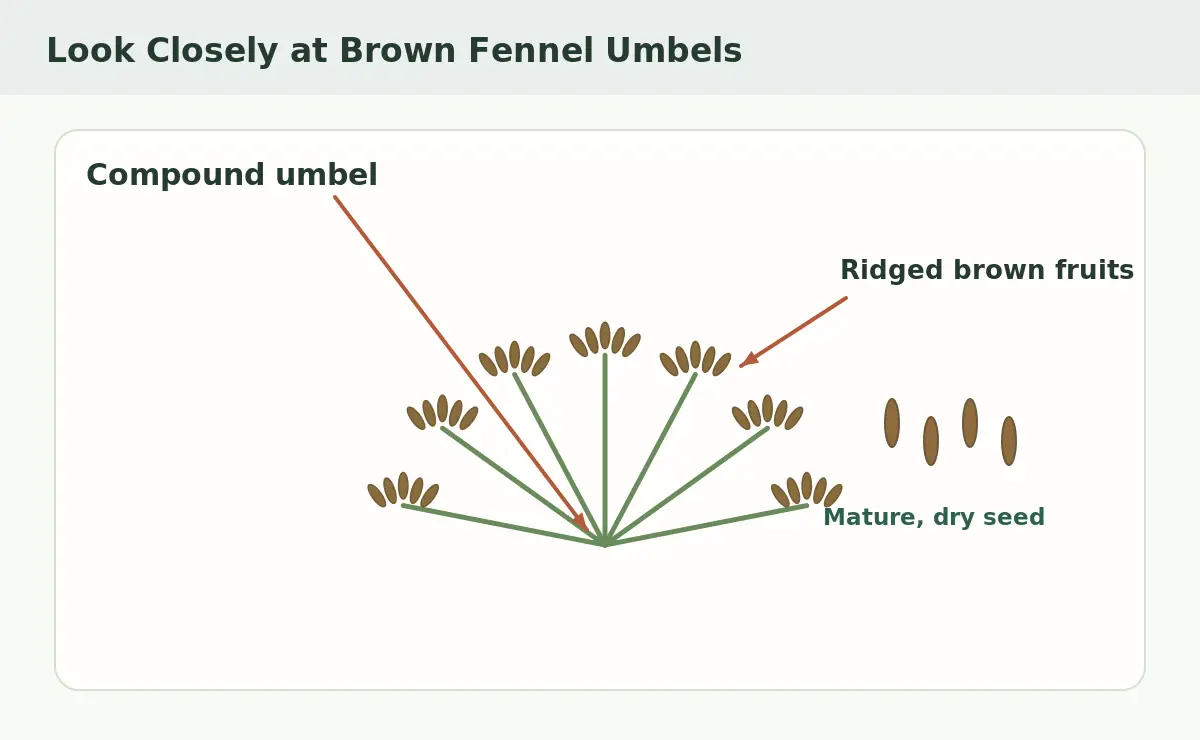
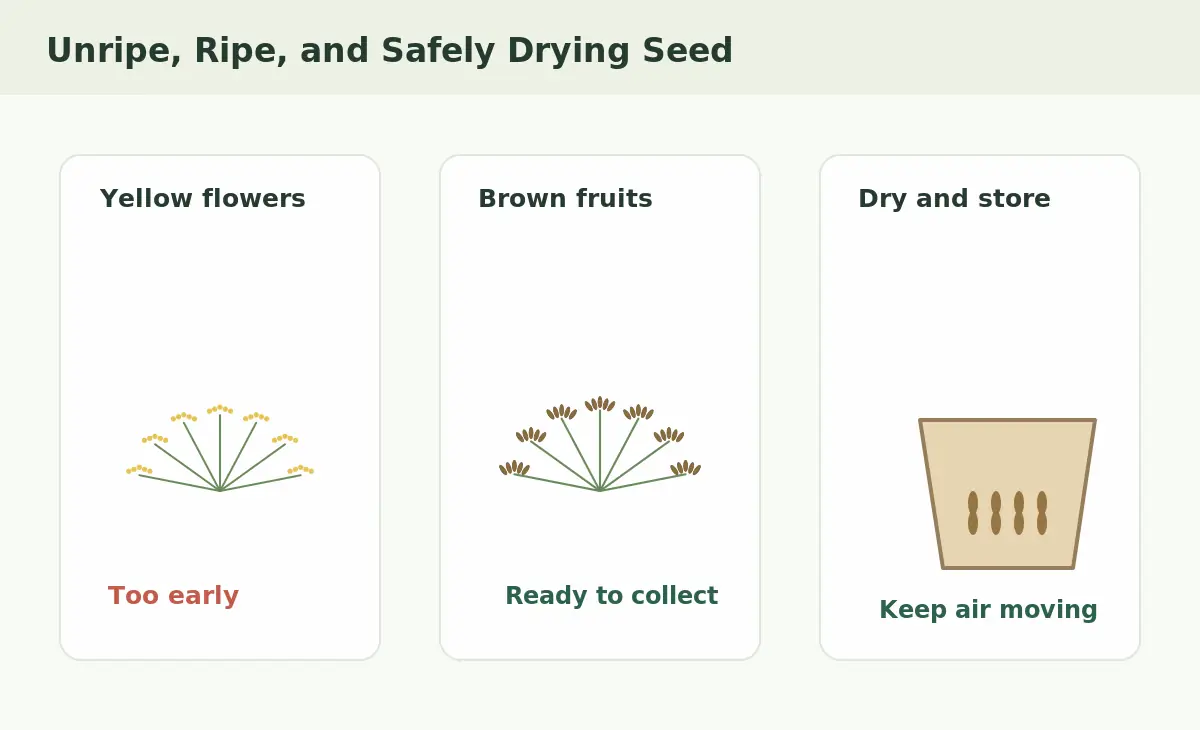
Each fennel inflorescence is a compound umbel: slender stalks radiate from a shared point and carry smaller clusters. Yellow flowers become plump green, ridged fruits commonly called seeds; these later lose their green color and turn brown as they mature. On the main plant, different umbels can be at different stages at the same time. Select mostly brown heads with seeds that feel developed rather than flat, sticky or soft. A few green fruits on outer branches need not mean the entire stalk must remain indefinitely, but a completely yellow-flowering head is immature. Observe a head gently before cutting, since mature fruits can fall easily.
Plan Harvesting Around Dry Weather
RHS describes collecting ripe fennel seedheads toward the end of the growing season. That is a growth-stage guideline, not a guaranteed month for every climate. A cool-temperate garden may reach maturity in late summer, while warmer climates or later sowings shift the date. Choose a dry stretch whenever possible and wait for morning dew to evaporate before you handle umbels. Wet seed heads packed immediately into a closed plastic bag are more likely to mold. If storms are approaching and the heads are nearly brown, harvest the best mature clusters rather than allowing all of them to scatter in wind and rain.
Set Up a Clean Collection Bag
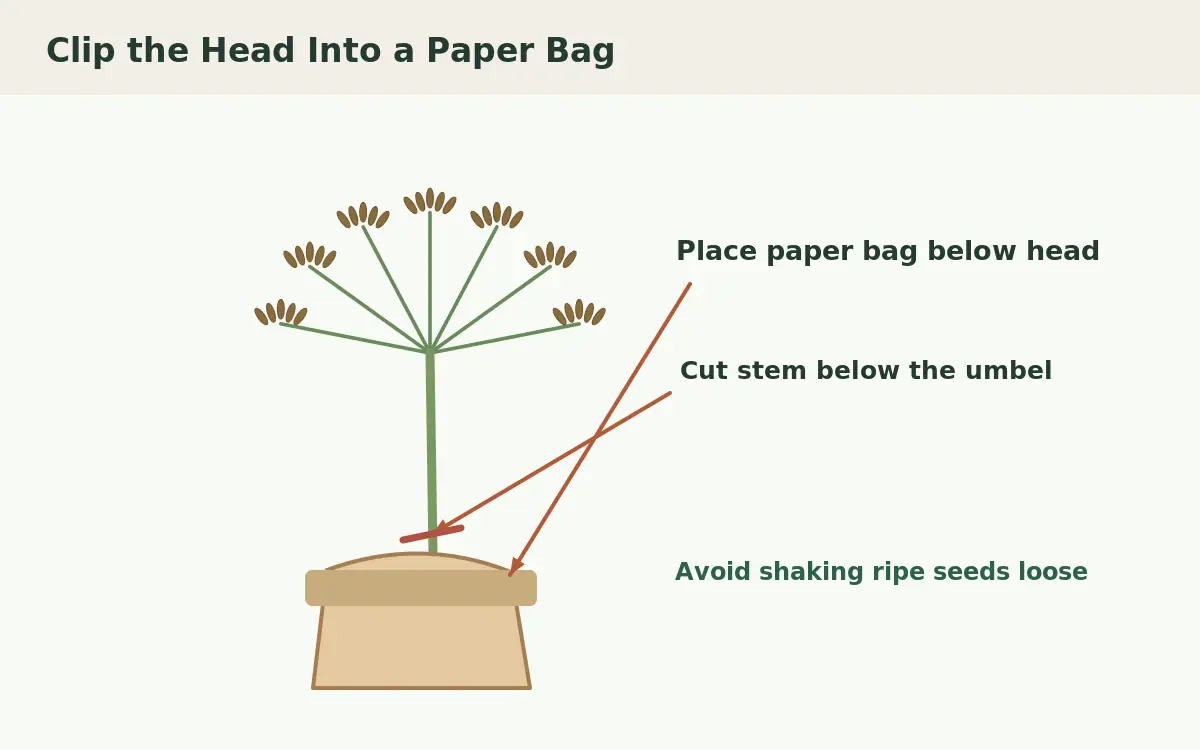
Use clean pruners, a breathable paper bag, and a tray to catch stray fruits. Write the plant name and collection date on the bag before working. Hold the open paper bag directly below a ripe umbel or gently place the head into it, then cut its supporting stalk a short distance beneath the clustered rays. Do not sharply tug on the head while the stalk is still attached; the seeds can shake loose onto the soil. A light pair of gloves may be useful because University of Minnesota Extension notes potential contact dermatitis from fennel seed. Work one plant or cultivar at a time so the dry heads stay properly identified.
Cut Whole Umbels Without Crushing Seeds
Clip an entire mature umbel rather than plucking individual tiny seeds while leaning over the bed. Leave enough stalk beneath the head that it can lie loosely in the bag without being crushed. If the plant carries multiple ripe heads, harvest the top and side umbels separately as they mature. The drawing shows the stalk cut beneath the radiating seed-bearing branches and the collection bag held underneath the flower head. Avoid including wet leaves, rotten tissue or insects in the bag. Do not strip every immature flower if you want further seed production and forage for visiting beneficial insects.
Finish Drying in a Paper Bag
Carry collected heads indoors to a shaded, airy, dry place. Leave the bag open or loosely folded so air circulates and moisture can escape, rather than tightly sealing damp material. As umbels continue to dry, the seeds release from their slender pedicels and gather in the bag bottom. Check the bag after a few days and stir the heads lightly if they still feel soft. Drying time depends on indoor humidity and how mature the heads were when cut, so use touch and inspection instead of relying on a fixed day count. Discard any batch with visible mold or an off odor.
Separate Clean Fruits From Stems
Over a shallow tray, gently rub or shake the dry umbels to detach mature seeds. Remove large woody stalks, flower debris and obvious insects by hand. A mesh strainer may help separate larger fragments, but the ridged fruits are small enough to pass through some sieves; test with a small sample first. Do not wash the seed to clean it just before storage, because rewetting restarts the drying problem. Spread clean seeds in a shallow layer and confirm they are completely dry. Fennel fruits are elongated with longitudinal ribs, not large round peas or flat paper flakes.
Store Culinary and Sowing Seed Separately
Place fully dry seed in a clean airtight jar or moisture-resistant container; label the type, date, and intended use. Keep the container cool, dark and dry so aroma and seed viability decline less quickly. If you intend to sow saved seed, note that nearby fennel types can cross and home-saved progeny may not match a named cultivar. For cooking, use only seeds from correctly identified edible fennel plants that were not treated with pesticides incompatible with food harvest. A sealed jar should never contain damp seedheads or unclean plant residues. Smell and inspect the batch before use and discard damaged or moldy material.
Allow Space for Wildlife and Self-Seeding
Fennel blooms are attractive to beneficial insects, and some seed can be left on stems for wildlife or natural regeneration. This can also create volunteers beyond the intended bed, so evaluate local invasive-plant guidance before allowing large-scale seed spread. Remove unwanted flower heads before they brown if control matters more than seed saving. A few upright umbels can be left for visual interest while the rest are harvested. Where winter weather is severe, RHS allows dry stems to remain as habitat until spring cleanup, but do not leave diseased material that could complicate sanitation.
Avoid Timing and Storage Mistakes
Harvesting only yellow flowers yields little mature seed; waiting until a head shatters may leave little to collect. Plastic storage while the seed is still damp encourages spoilage, and soaking seed with water to make it look clean only creates a new drying problem. Poor plant identification is a more serious hazard than a small yield. Watch for pollen and dust sensitivity and wash hands after handling. Rather than trying to rescue a moldy bag, discard it. The practical success test is simple: clean, brown, dry, ridged fruits separated from the stems and stored away from humidity.
Match the Advice to Your Growing Region
Do not use a USDA hardiness-zone number to choose the harvest date; zones describe winter minima, not the exact weeks when seeds mature. Plants grown as annuals in cold regions and perennial fennel in milder climates may bloom at different times. Select mature umbels by appearance, monitor rain and humidity, and adapt drying conditions to your home. This article concerns edible fennel seed harvesting, not concentrated fennel supplements or herbal treatment. For suspected allergies, medication interactions or medically significant use, consult a qualified professional rather than inferring safety from culinary tradition.
Authoritative Sources and Further Reading
These primary horticultural references informed the identification, timing and procedure in this guide: extension.usu.edu reference (Utah State University Extension explains the difference between common and Florence fennel and recommends cutting brown umbels into paper bags, drying and moisture-proof storage.). www.rhs.org.uk reference (RHS describes collecting ripened fennel seedheads in late summer, drying them in a paper bag and sealing clean dried seed.). extension.umn.edu reference (Minnesota Extension notes that fennel seed can cause contact dermatitis, a reason to wear gloves when handling mature umbels.).
Related Guides
- How to Harvest Fennel Seeds When the Umbels Turn Brown
- How to Grow Herb Fennel for Feathery Leaves Instead of Bulbs
How We Research Plant-Care Instructions
We compared practical horticultural recommendations across the cited university Extension and RHS materials, reviewed critical growth points and common look-alike plants, and created the accompanying botanical teaching diagrams to match those instructions. Sources checked October 27, 2026. Our title comparison covered 155 accessible articles from B097–B127, but we cannot certify an exhaustive B001–B096 inventory; site-wide editorial review remains appropriate before publishing.
Climate, Safety and Independent Editorial Disclosures
Timing varies with species, local weather, growing conditions and cultivar, and USDA plant hardiness zones alone do not provide an annual sowing, pruning or disease calendar. Follow product labels and regional Extension guidance; there is no claim of a confirmed commercial partnership or special pesticide treatment. The illustrations are simplified educational diagrams, not photographs or a replacement for laboratory identification. For site policies see VegWin affiliate disclosure.
Harvest when the compound umbels have turned mostly brown and their ridged fruits are dry and developed, before wind scatters them.
Green fennel fruits can be used fresh for flavor, but choose brown, dry umbels for ordinary long-term seed storage.
Paper catches fruits as they detach while allowing moisture to escape; a sealed plastic bag can trap dampness.
Florence fennel is grown chiefly for a swollen stem base; common fennel is generally preferred for abundant culinary seed.
Clean and fully dry the fruits, then keep them labeled in an airtight container in a cool, dark, dry location.