
Clusters of tiny green, pink or dark insects often appear on the soft tips and flower buds of roses. They may be aphids, but a few sap feeders do not automatically threaten the whole shrub. Learn to recognize their pear-shaped bodies and paired rear cornicles, check for distorted tender growth, and look for the insects that feed on aphids before reaching for a spray. Start with observation and low-impact control. This approach protects pollinators and predatory insects and avoids treating the wrong problem when a rose merely has some visible insects.
Inspect New Rose Buds and Tender Shoot Tips
Aphids prefer succulent new growth, so inspect unopened flower buds, recently extended stems and the undersides of tender leaves first. You may see a tight group of tiny pear-shaped insects rather than a solitary beetle or caterpillar. University of Minnesota identifies rose aphids, Macrosiphum rosae, as green or pink and generally up to about one-eighth inch long, though other aphids also visit roses. Look for several individuals of different sizes clustered together. Check neighboring buds and healthy leaves for comparison. A few aphids on an otherwise vigorous mature rose may need nothing more than monitoring.
Look for the Two Rear Cornicles
Most common aphids have a pair of short tubes near the rear of the abdomen called cornicles. With a hand lens, these structures plus long antennae and six legs help separate aphids from similar tiny insects. Wings may be present on some adults, but many are wingless. Color by itself is an unreliable identification tool because aphids on roses can appear green, yellowish, pink or other shades. Do not confuse an aphid shed skin with a living pale insect. If identification remains uncertain, photograph the colony with the affected stem and consult a local Extension pest diagnostic service.
Distinguish Feeding Damage From Mere Presence
A few aphids often cause no meaningful damage to an established rose. Heavy feeding on expanding tissues can curl or distort young leaves, weaken new buds and reduce flower appearance. Sticky honeydew, the sugary waste left by aphids, can accumulate on leaves and support a dark sooty mold coating. Ants may visit honeydew, but ants alone do not prove aphids are causing a major problem. Compare plant growth over several days rather than judging only the insect count in one photo. Severe wilt, cankers or widespread dieback may involve other causes requiring a different diagnosis.

Check for Natural Enemies Before Intervening
Lady beetles, lacewing larvae, hover fly larvae and parasitoid wasps can reduce aphid populations. Look for their larvae as well as recognizable adult insects; helpful larvae may not resemble the familiar ladybug. Some aphid bodies become tan, swollen mummies after parasitic wasps develop inside them. If colonies remain small and natural enemies are active, repeated spraying can remove predators and cause unnecessary disruption. University of Minnesota Extension advises that many aphid outbreaks can be tolerated. Allow time for natural enemies to respond while monitoring whether new rose growth is still being distorted.
Dislodge Small Colonies With Directed Water
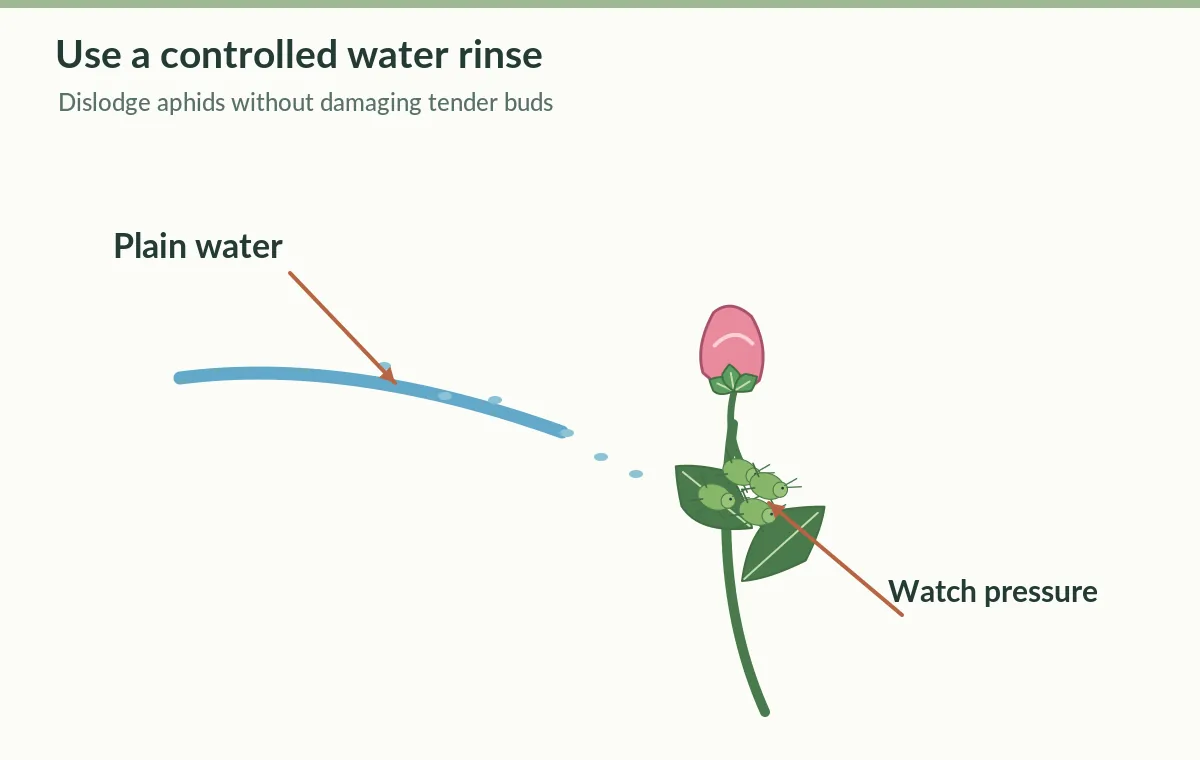
When colonies are accessible and damaging tender growth, a stream of plain water from a hose can knock aphids off stems and buds. Aim from a suitable angle and use only enough pressure to dislodge insects without snapping shoots, bruising petals or waterlogging a container. Support delicate stems if necessary. Water treatment is most appropriate outdoors, where leaves can dry; avoid creating prolonged leaf wetness in conditions favorable for foliar diseases. Recheck plants afterward because missed aphids can reproduce rapidly. Do not confuse a water rinse with a permanent, one-time cure for every infestation. Our walkthrough on how to identify cabbage aphids on kale and manage colonies sets out each step.
Remove Concentrated Clusters Selectively
If a single weak tip carries a dense aphid colony and the rose otherwise has abundant healthy growth, carefully removing that heavily infested tip may be reasonable. Use clean pruners, avoid unnecessary loss of flower buds and dispose of the cut material. Do not strip all emerging shoots from a young plant just to remove insects, because the plant needs those leaves to recover. Rub or rinse a few visible aphids from a sturdy stem if you can do so without damaging it. Keep any approach proportionate to the actual injury rather than adopting a rigid rule that every aphid requires the same action.
Do Not Treat Sticky Leaves With Dish Detergent Recipes
Household detergent mixtures are not the same as labeled insecticidal soap, and they can injure foliage. Oils, soaps and other pesticides can also affect non-target insects, especially when applied indiscriminately to flowers. If low-impact measures are insufficient and treatment is justified, identify an appropriately registered product for roses and the target pest in your jurisdiction. Follow its current label for application conditions, protective measures, pollinator precautions and any other legal requirements. Do not assume a product described as natural is harmless to pollinators or safe to apply directly to open blooms.
Check Open Flowers for Bees and Other Visitors
Roses with open flowers can attract pollinating insects, and the shrub may host predators feeding on aphids. Before watering or any treatment, look closely at flowers and adjacent foliage. Avoid unnecessary application to active visitors or flowering surfaces. If a particular product is considered, its label controls when and how it may be used; a generic blog cannot override that information. Where aphids are light and natural enemies are visible, it may be better to continue monitoring. The presence of pollen, petals and insects together is a reason to be especially careful about broad-coverage sprays.
Change Conditions That Favor Repeated Outbreaks
Soft flushes of rapidly growing tissue can attract aphids, and excessive nitrogen fertilization may stimulate such growth. Avoid adding fertilizer simply because insects are present; feed only as the plant and site require. Keep the rose adequately watered without saturating roots, and use appropriate spacing and pruning to improve access for inspection. Remove severe infestations on weeds nearby when justified, but do not strip out every flowering plant that supports beneficial insects. A balanced garden still contains some prey for predators. Repeated outbreaks are a signal to examine season, plant vigor and management, not just to rotate through stronger chemicals. If you want the full process, read how to identify scale insects on houseplants and remove them safely.
Monitor the Same Buds After Your First Action
Choose a few marked shoot tips and check them every few days during an active outbreak. Record whether aphids are increasing, whether new leaves are curling and whether beneficial insects have appeared. A handful of aphids after rinsing does not mean failure if tender growth remains healthy. Conversely, a plant with worsening bud distortion or sticky sooty foliage may require another deliberate action. Photograph the buds before and after your first water treatment for an objective comparison. Monitoring is especially important because aphids can reproduce quickly under favorable temperatures, and a single inspection may be misleading.

Escalate Only When Harm Outweighs the Tradeoffs
Decide based on the size of the colony, the condition and age of the rose, bud damage and the presence of predators. A mature landscape rose often tolerates a small cluster; a prized young cutting with severely distorted tips may warrant closer intervention. Begin with physical removal or a directed water rinse where suitable. When pesticides are genuinely needed, verify pest identity, local product registration and label instructions and consider effects on beneficial insects. There is no evidence-based benefit to automatically applying a chemical on every calendar date. If symptoms remain unclear, a regional plant clinic can help separate aphids from disease or environmental stress.
Related Guides
- How to Identify Rose Sawfly Larvae and Stop Windowpane Leaf Damage
- How to Identify Japanese Beetles on Roses and Reduce Flower Damage
- When to Prune Roses: Match the Rose Type and Find a Healthy Bud
- How to Plant Bare-Root Roses and Check the Graft Depth for Your Climate
- How to Identify Cherry Slug Sawfly Larvae and Reduce Leaf Damage
How We Research and Verify Practical Advice
We compared university Cooperative Extension and established horticultural guidance for the specific plant and decision in this article, including seasonal differences, plant physiology, and limitations of each approach. Sources were reviewed on October 23, 2026. Outcomes still depend on local climate, cultivar, soils, weather, and plant condition. For an unusual symptom or legal restriction, use an appropriate local Extension resource.
Sources, Scope, and Editorial Disclosure
Sources checked: University of Minnesota rose aphid identification (rose aphid shape, size, rear cornicles, tender buds and low injury from small colonies). University of Minnesota Extension aphid management (monitoring, hose water removal, beneficial insects and restraint with pesticide treatment). University of Maryland Extension rose health (bud and leaf distortion, honeydew, ant attraction and natural enemies).
Disclosure: We do not claim brand sponsorship, commercial endorsement, or a verified affiliate relationship in this guide. Read the VegWin affiliate disclosure. Diagrams are educational and show representative anatomy; the actual plant, label, and local conditions take precedence over a simplified drawing.
Low to moderate numbers commonly cause little harm, but heavy colonies can distort young leaves and flower buds.
They are called cornicles and help distinguish aphids from many other small insects.
Yes. A carefully directed hose rinse can dislodge accessible colonies; check for return and avoid damaging buds.
No. Household detergents can damage plants and are not a substitute for properly labeled insecticidal soap.
Yes. Lady beetles and their larvae, lacewings, hover fly larvae and parasitic wasps are important aphid enemies.