
A rose leaf with pale translucent patches can look scorched, diseased, or chewed by beetles. One frequent culprit is a roseslug sawfly larva, a small green insect relative of wasps that scrapes leaf tissue while hiding along a leaflet. Despite the name, it is neither a true slug nor a butterfly caterpillar. Several sawfly species attack roses, and their larvae and feeding patterns differ. Correct identification matters because spraying an arbitrary caterpillar remedy can be ineffective and unnecessarily expose pollinators. This guide helps you examine the underside of a leaf, recognize early windowpane feeding, choose hand removal when appropriate, and know when a damaged leaf alone is insufficient to diagnose an ongoing infestation.
Look for the Distinctive Windowpane Leaf Pattern
Early roseslug feeding often removes the soft tissue from one surface of a rose leaflet while leaving the opposite epidermis and larger veins intact. From above, that thin remaining membrane may look like a pale, translucent windowpane. As it dries, the patch can turn tan or brown and may break through into a hole. A hole by itself is not proof of roseslug because beetles, other chewing insects and weather injury can also damage foliage. Look for fresh feeding at the edge of older lesions and compare several leaves. The leaf pattern is a clue that tells you where to search, not a final identification without seeing the actual insect.
Turn Rose Leaves Over to Find Small Larvae
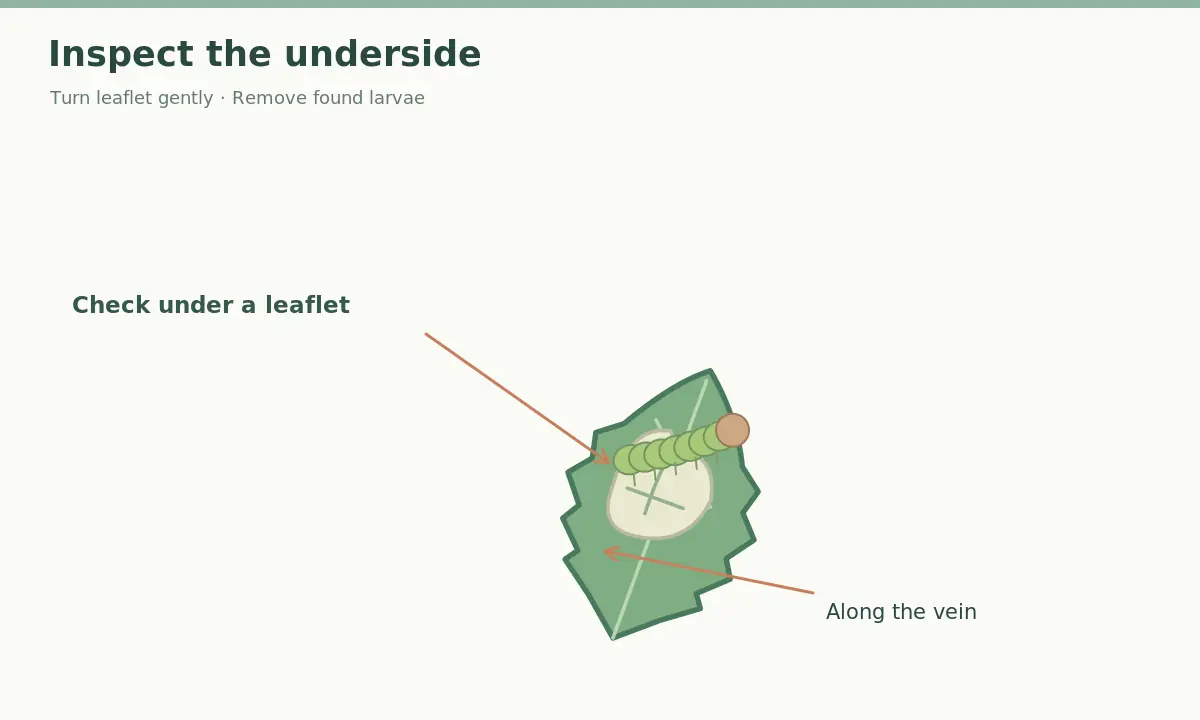
Roseslug larvae are easy to miss because their green bodies blend into foliage. Examine the undersides of leaves near fresh windowpane areas, especially around new spring growth in regions where the insects become active then. Use a hand lens if you have one, or photograph the underside close up. Many larvae rest along a vein or edge rather than on the obvious hole. A small pale-green, soft-bodied larva with a brownish head can be the common roseslug. Do not confuse a fuzzy leaf vein or a shed insect skin with an active feeder. If no larvae are present, inspect again at another time instead of treating a historical injury as a current outbreak.

Distinguish Common, Bristly, and Curled Roseslugs
Maryland Extension recognizes multiple rose-feeding sawflies. Common roseslug larvae are relatively smooth, greenish-yellow and usually small; bristly roseslug larvae have conspicuous short bristles and can progress from leaf etching to holes; curled roseslug larvae may curl on the underside and chew more extensive tissue as they mature. The species also differ in their seasonal number of generations. Avoid basing treatment on a single body-length cutoff, which changes with larval age. An illustration comparing a smooth tapered larva with a bristly one is useful, but a close photograph and local Extension key can resolve uncertain cases. Not every pale green worm on a rose is the same pest.
Remember Sawflies Are Not True Caterpillars
Sawflies belong to Hymenoptera, a group related to wasps, bees, and ants. Their larvae superficially resemble caterpillars, but the biology and treatment response differ. Maryland Extension notes that many sawfly larvae have more pairs of abdominal prolegs than moth and butterfly caterpillars. Do not rely on home remedies marketed for all ‘worms.’ In particular, Bacillus thuringiensis kurstaki products intended for many true caterpillars are not a reliable sawfly solution. Accurate identification lets you choose hand removal, water dislodging, or another appropriate response rather than spraying something because a rose leaf has been eaten. Always verify the label and crop/site registration of any pesticide in your area.
Start With Scouting and Hand Removal
When only a few plants or larvae are involved, inspect leaf undersides and remove accessible larvae by hand. Small larvae can be brushed into a container of soapy water for disposal, or dislodged with a directed stream of water where this will not batter the rose or nearby desirable insects. Check again because eggs may hatch later and a few overlooked individuals can resume feeding. Do not strip all affected leaves from a small rose if the foliage is still substantially green and photosynthetic. Distinguish cosmetic injury on a vigorous established plant from widespread feeding on a newly planted or severely stressed rose. Match the response to living larvae and actual plant condition.
| What you see | Action | Avoid |
|---|---|---|
| Pale translucent leaf windows | Inspect undersides for roseslug larvae | Treat every old scar |
| Bristly green larva on leaf | Confirm sawfly, remove where practical | Assume it is a moth caterpillar |
| Beetles or neat semicircular cuts | Identify insect or leafcutting bee | Spray before identifying cause |
Understand Why Damage Can Remain After Pests Leave
A dried, tan leaf window does not heal back to green tissue after the sawflies disappear. Brown patches seen weeks later may therefore reflect old feeding rather than a continuing pest population. Inspect nearby fresh leaves before repeating controls. Maryland’s life-cycle notes indicate that different rose sawfly species are not present for exactly the same period or number of generations. That makes regional monitoring more useful than a fixed one-time calendar spray. Taking dated photographs of fresh leaves and the underside is a practical way to separate old injury from new feeding. If no larvae are found and new foliage is undamaged, additional intervention may offer little benefit.
Differentiate Beetles and Leafcutting Bees
Japanese beetles can skeletonize rose foliage but are recognizable as relatively large metallic insects; they also attack flowers and leave a different set of visible clues. Leafcutting bees neatly remove semicircular pieces from leaf margins to line nests; that pattern is not the irregular etching of a sawfly. Spotting the insect helps avoid unnecessary treatment of beneficial bees. Slugs can make ragged holes too, but a true slug’s body, activity pattern and slime trail differ from a green sawfly larva. Check the timing and appearance of damage in your region, then photograph both surfaces. A site with mixed damage might have more than one explanation rather than a single universal pest.
Protect Pollinators and Other Garden Allies
Rose flowers are visited by bees, and broad insecticide use can affect beneficial organisms as well as pests. Begin with nonchemical scouting and removal when those methods match the infestation. University Extension guides discuss registered products for heavier problems, but choice depends on local approvals, product label, bloom stage and the actual insect identified. Do not apply a spray to open blooms or improvise a home concentration. Treating a few damaged leaves on a strong rose may do more ecological harm than leaving them alone. Regular visits to the plant’s underside identify small populations early, when manual action is least disruptive. Favor a specific diagnosis rather than preventive blanket spraying.

Check Recovery Without Over-Pruning a Rose
Once active feeding stops, allow healthy leaves to remain so they can support replacement growth. Prune dead or severely damaged shoots according to ordinary rose care, but do not remove every leaf with a small windowpane mark. An overpruned rose may have fewer resources to recover from pest injury. Keep the root zone evenly watered during drought, avoiding prolonged waterlogging. Inspect new leaves rather than judging the condition of older scarred foliage. A few discolored leaflets are often a cosmetic issue on established vigorous shrubs. Where defoliation is heavy or repeated, record dates and species if possible, and consult your local Extension about targeted management appropriate to the location. If you want the full process, read how to identify and control cabbageworms on kale, cabbage, and broccoli.
Use a Three-Step Diagnosis Before Acting
First, examine several leaves for pale scraped patches, holes or smooth semicircular cutouts. Second, turn over the newest injured leaflets and look for a living sawfly larva, noting whether it is smooth, bristly or curled. Third, estimate how much of the plant is affected and whether tender new foliage is currently being eaten. This sequence prevents confusion between old feeding and active infestation. If a few larvae are present, physical removal may be sufficient. If you find beetles or signs of leafcutting bees instead, the conclusion changes. When the insect cannot be identified, seek a local Extension diagnosis before choosing a pesticide or discarding much of the plant.
Related Guides
- How to Identify Aphids on Roses and Control Them Without Harming Allies
- How to Identify Japanese Beetles on Roses and Reduce Flower Damage
- When to Prune Roses: Match the Rose Type and Find a Healthy Bud
- How to Plant Bare-Root Roses and Check the Graft Depth for Your Climate
- How to Identify Cherry Slug Sawfly Larvae and Reduce Leaf Damage
How We Research and Check These Steps
Source pages were read and cross-checked on 2026-10-24: extension.umd.edu — Maryland Extension: updated 2026 rose sawfly larval forms, feeding damage, and monitoring; extension.umd.edu — Maryland Extension: rose-specific sawfly distinctions and small-infestation hand removal; extension.umn.edu — Minnesota Extension: roseslug identity, windowpane feeding, and pollinator-safe IPM considerations. We checked the exact plant or pest identity and compared timing, recommended action, and regional or cultivar exceptions before developing the diagrams. Botanical simplifications in our drawings show relevant structures and positions but are not to scale. Local Cooperative Extension advice and specific packet or cultivar guidance should override generic schedules where they differ.
Disclosures, Safety, and Regional Differences
This is educational gardening information, not a personalized agricultural, health, or pesticide consultation. No partnership or sponsorship is claimed for these recommendations. See VegWin’s affiliate disclosure. Follow local plant regulations and all current product labels. USDA hardiness zones describe winter low-temperature patterns, not exact planting dates or insect-activity calendars. No unsupported fertilizer or pesticide rates are supplied.
No. Roseslugs are immature sawflies, related to wasps; the name describes their slug-like appearance.
Turn over leaves near fresh scraped or translucent patches and check along the undersides and veins.
Bacillus thuringiensis kurstaki is intended for many true caterpillars, not sawfly larvae; do not assume it will work.
Often yes. Established plants can replace foliage after feeding stops, although old scarred leaf tissue will not turn green again.
No. Confirm an active pest, gauge the extent of feeding and use low-impact removal where appropriate; follow local labels if chemical control is truly needed.