
A gray, powdery-looking patch on new kale growth may be a living colony of cabbage aphids rather than mildew or garden dust. These small insects cluster deep in fresh folds where a quick spray may miss them. This guide explains which plant parts to inspect, how to tell a minor colony from a serious harvest problem, and why protecting natural enemies belongs in the response before any pesticide decision.
Look for a Waxy Gray-Green Cluster
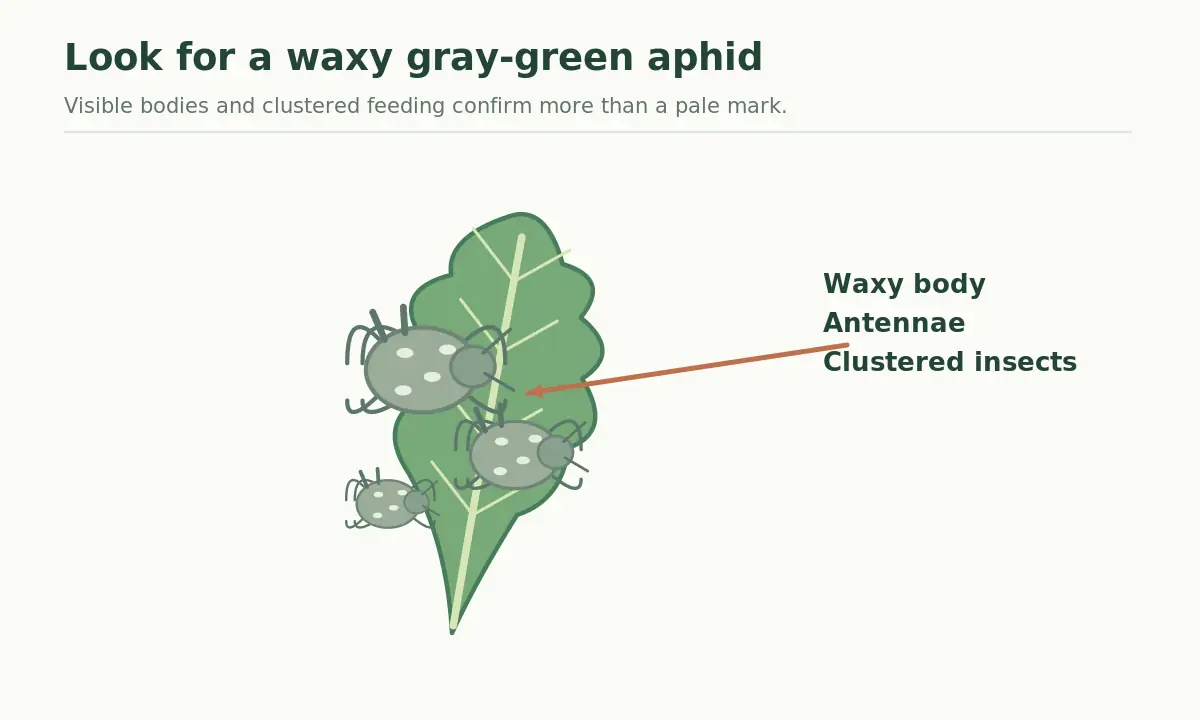
Cabbage aphids, Brevicoryne brassicae, often look dusty because their gray-green bodies carry a whitish waxy coating. They may form tight groups on young kale leaves, leaf stalks and developing flower shoots. Each insect is small and pear-shaped, with slender antennae; use a hand lens rather than relying on color from a distance. Some may have wings when colonies become crowded. Not every pale patch on kale is an aphid: look for multiple individual bodies, movement, and feeding clusters. University of Minnesota Extension describes these distinctive traits and notes that low populations can produce little or no visible damage. Record where the group sits before choosing a response.
Inspect Leaf Tips and Protected Folds
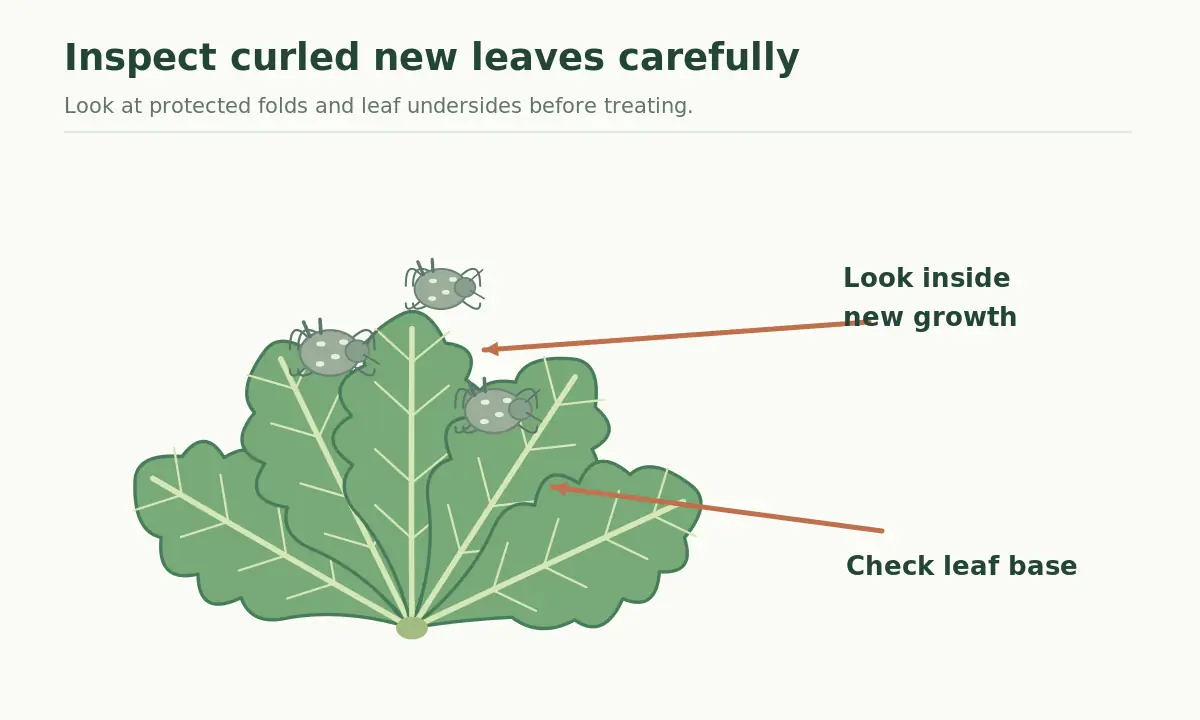
Young tissue attracts dense colonies, and a folded leaf can hide many insects from a quick overhead glance. Gently unfold several developing kale leaves and inspect both surfaces, including leaf bases near the growing center. Examine plants at bed edges as well as the middle; infestation can be patchy. Check at intervals suited to local pest pressure rather than declaring the garden clear after one glance. University of California IPM emphasizes monitoring because aphids multiply and move among mustard-family plants. The location matters: a few on a fully expanded outer leaf differ from a large group contaminating the exact tender shoots you planned to harvest.
Distinguish Aphids From Caterpillars and Whiteflies
Chewing holes alone suggest a different culprit from a waxy aphid cluster, since aphids feed by piercing and sucking plant fluids. Imported cabbageworms and other caterpillars leave ragged holes and dark frass. Whiteflies are tiny white-winged insects that fly when disturbed, while aphids often remain on the tissue. Aphids can excrete honeydew, leaving sticky residue that may support sooty mold, but the waxy coating of cabbage aphids can make residues less obvious. Do not diagnose from yellowing alone: nutrient and water stress can mimic some general symptoms. Look for live insects and their position on new growth; a diagnosis guides a more proportionate and useful response.
Assess Damage Before Declaring an Emergency
Small numbers on vigorous kale often cause minimal direct injury, although they may complicate harvesting. Dense colonies can curl leaves, stunt young plants and heavily contaminate edible foliage. The most useful home-garden decision involves the extent of fresh growth affected and whether insects are easily removed from harvestable tissue. Commercial field IPM thresholds published for heading cabbage or broccoli are not universal treatment rules for a dozen backyard kale plants. Check whether plant vigor is declining or aphids keep appearing on newly opened leaves. A few insects surrounded by predators are not equivalent to a packed crown with damaged emerging foliage and no clean leaves to eat. Our walkthrough on how to identify cabbage worms and protect brassicas with IPM sets out each step.
Build a Graduated Response From Observation
Start by marking the affected plants and checking how many young leaves hold live colonies. On a small patch, pruning one severely infested leaf or washing a reachable group from the plant can be sensible first steps. Support kale stems while applying gentle water so tender shoots are not torn. Repeat inspection because aphids hidden within folds may remain. Dispose of heavily contaminated material according to local guidance rather than leaving a growing infestation next to vulnerable seedlings. Large or recurrent colonies may need a different response, but pest identification should precede any treatment. Escalation is not measured solely by how unpleasant a photo looks: assess plant condition, harvest usability and trend over time.
| Finding | Interpretation | First response |
|---|---|---|
| Few aphids on healthy leaf | Low pressure possible | Watch and reassess |
| Dense cluster on tender crown | Harvest contamination risk | Remove or wash reachable colonies |
| Predator larvae and mummies | Natural enemies active | Avoid disruptive sprays |
| Curled leaf packed with aphids | Protected feeding site | Remove severely affected leaf if practical |
Preserve Lady Beetles and Parasitoids
Lady beetles, lacewing larvae, syrphid fly larvae and tiny parasitic wasps can reduce aphid numbers. UC IPM highlights the value of conserving these enemies. Look for hoverfly larvae among colonies and rounded, discolored aphid mummies before removing every small aphid colony indiscriminately. A broad-spectrum insecticide may kill predators that were restraining pests. Reduce unnecessary dust and avoid routine blanket spraying. Beneficial insects do not always control a heavily hidden colony quickly enough for immediate harvest, but they matter to the whole garden over time. A mixed planting with flowering resources can support predators without pretending a particular companion flower guarantees an aphid-free bed. If you want the full process, read how to identify aphids on roses and control them without harming Allies.
Use Water and Removal Carefully on Edible Kale
For a small colony, directing a measured stream of water onto leaf undersides can dislodge aphids. Avoid violent blasts that shred delicate young leaves or drive soil onto food. Remove individual badly infested leaves if adequate clean foliage remains to feed the plant. After washing, return when surfaces are dry enough to examine and check for survivors. Rinse harvested kale with clean running water and inspect folds closely; severely infested produce may be better discarded. Do not wash leaves with household soap, bleach or an untested home concoction. These can cause phytotoxicity or create food-safety concerns. Managing the living crop and washing harvested food are related but different operations.
Treat Insecticidal Products as a Last-Resort Tool
Commercial insecticidal soaps and horticultural oils sometimes have a place in aphid IPM, but only when the exact product label permits use on kale in your jurisdiction. Contact products must reach aphids directly and may not penetrate curled growth. Follow the labeled rate, weather limits, crop restrictions, re-entry requirements and preharvest interval; do not mix an improvised dish-detergent spray. Oils or soaps can damage stressed foliage or plants treated in hot sun. UC IPM warns that contact options offer incomplete control under protected waxy colonies. If you cannot identify a lawful product and read its full label, choose monitoring and physical actions or seek regional Extension assistance instead. If you want the full process, read how to identify whiteflies on tomatoes and reduce their damage.

Reduce Sources Across the Brassica Bed
Cabbage aphids also use other mustard-family crops and some mustards growing as weeds. Check kale, cabbage, broccoli and nearby volunteers rather than treating one leaf repeatedly while another plant remains covered. Remove infested finished crop debris and manage host weeds using safe practices. Inspect transplants before bringing them into the bed. Avoid planting new kale immediately alongside a pile of discarded brassica stalks. Crop rotation and site sanitation can lower pest carryover pressure, though flying aphids may still arrive from elsewhere. Fine insect mesh used from transplanting can exclude some immigrants if edges are sealed and pests were not already present; ventilate as temperatures rise.
Recheck New Growth and Record the Trend
A useful follow-up asks whether aphids are decreasing on fresh leaves and whether the plant is still producing usable kale, not whether every old damaged leaf has become perfect. Check the same growing points after your first action, take a photograph from a similar angle, and watch for natural enemies. If the colony persists deep in curled tissue, water alone may fail; do not assume several repeated washes guarantee control. In a severe infestation, removing one badly affected plant may protect the rest of a small bed, but weigh this against the risk of moving insects on debris. Local IPM advice remains essential when identifying other aphid species or choosing an approved pesticide.
Related Guides
- How to Identify Cabbage Aphids on Broccoli Before Heads Fill
- How to Identify Cabbage Looper Caterpillars on Broccoli Leaves
- How to Recognize Flea Beetles on Radishes and Protect Young Seedlings
How We Research and Check These Recommendations
This guide was reviewed on 2026-10-24 against horticultural guidance from University of California IPM; Minnesota Extension insect diagnosis; UC IPM home landscape guidance. We compare the advice with the precise crop, flowering habit, or pest life stage rather than copying a generic garden calendar. Timing and performance depend on region, season, cultivar, and plant condition; consult local Cooperative Extension for unusual disease or weather problems. This article is educational, not a substitute for product labels or local rules.
Sources, Transparency, and Practical Limitations
Source URLs and the claim each supports are recorded in the article metadata and linked above. We did not conduct a controlled trial in your garden, and no specific harvest yield, germination percentage or treatment success is guaranteed. VegWin does not claim a sponsorship or commission for the techniques mentioned here. See our affiliate disclosure for site-wide details. Pesticide products must be legally registered for the crop and used exactly as labeled.
No. Confirm individual pear-shaped insects under a hand lens; wax or debris without insects is not diagnostic.
Usually small numbers cause little direct harm, but large colonies can stunt growth and contaminate leaves.
Water can dislodge exposed aphids, but hidden colonies may remain; monitor and repeat assessment.
Do not improvise detergent sprays on food crops; use only legally labeled products and directions when needed.
Lady beetles and other predators can suppress colonies, though dense protected clusters may need additional management.