
Broccoli can grow beautiful leaves and still disappoint at harvest. Sometimes the plant forms a tiny head too early; other times the central crown stays loose, or yellow flowers begin to open before you pick it. Those outcomes are not interchangeable, and a “more fertilizer” response is often too late or inappropriate. Growing broccoli well means matching the crop to a cool growing window, establishing vigorous transplants and recognizing the actual harvest stage. This guide includes a visual diagnosis of head formation and an optional second harvest of side shoots.
Know Which Broccoli Type You Purchased
Conventional heading broccoli forms a central cluster of unopened flower buds, and some varieties produce smaller side shoots after the central head is cut. Sprouting broccoli is selected for a different pattern, often with numerous smaller shoots. University of Minnesota Extension published research in July 2026 showing that sprouting varieties and some heading varieties can differ substantially in side-shoot production. Read the cultivar packet rather than promising every plant a large central head plus months of harvest. For the basics, see our guide: When to Harvest Purple Sprouting Broccoli for Tender Spears and Side Shoots.
For home use, choose between a substantial single crown and a succession of smaller shoots. Consider whether your family wants an occasional large meal or regular small portions. A cultivar listed as heat tolerant may handle local conditions better than a sensitive one, but cannot turn broccoli into a hot-season crop everywhere. Days to maturity are estimates tied to cultivar and whether the count starts from seed or transplanting.
Schedule Broccoli Around the Cool Growth Window
Broccoli performs best when head development occurs under suitable cool-season conditions. Local timing can mean spring transplants, fall transplants, or different windows in mild climates. The University of Minnesota Extension offers Minnesota-specific schedules; they should not be copied as national dates. Look at local last and first frost patterns, expected heat at the head-forming stage, and cultivar development time. USDA hardiness zones describe winter cold tolerance, not precise annual vegetable planting dates. Our guide to growing cabbage goes into more detail.
A transplant placed out too late in spring may encounter hot days just when the head should form. A fall crop can be more predictable in many regions, but the available daylight and first frost matter. Plan backward from the period in which you want the plant to build a head, allowing enough time for establishment. If summer conditions are extreme, do not assume temporary shade alone will solve reproductive development problems.
Avoid Rootbound or Stressed Transplants
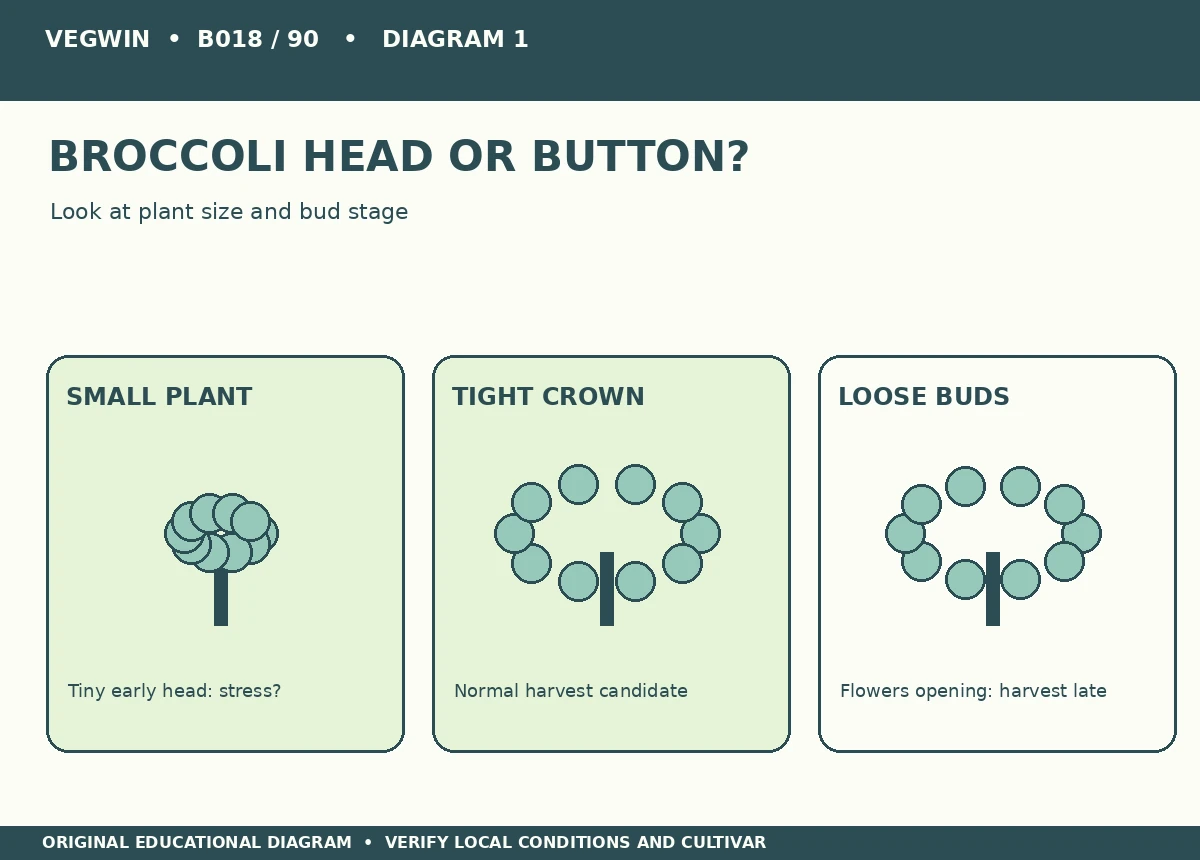
Start or purchase compact, healthy transplants that are not severely rootbound or excessively old. Iowa State Extension identifies stressed transplants, dry conditions, poor fertility and prolonged cold as contributing factors in premature tiny head formation, called buttoning. A large transplant is not always a more advanced investment if its roots have been cramped. Harden plants before moving them outside and avoid sudden exposure to strong wind and sun.
Plant at packet or regional recommended spacing so roots have room and leaves can capture light. Set transplants carefully, water them in and monitor the crown as growth resumes. Broccoli belongs to the brassica family, so record where cabbage, cauliflower, kale and related crops grew before. Rotation can reduce some localized disease pressure, but cannot keep mobile insects from finding a new bed. Address any established clubroot or soil disease with local diagnosis.
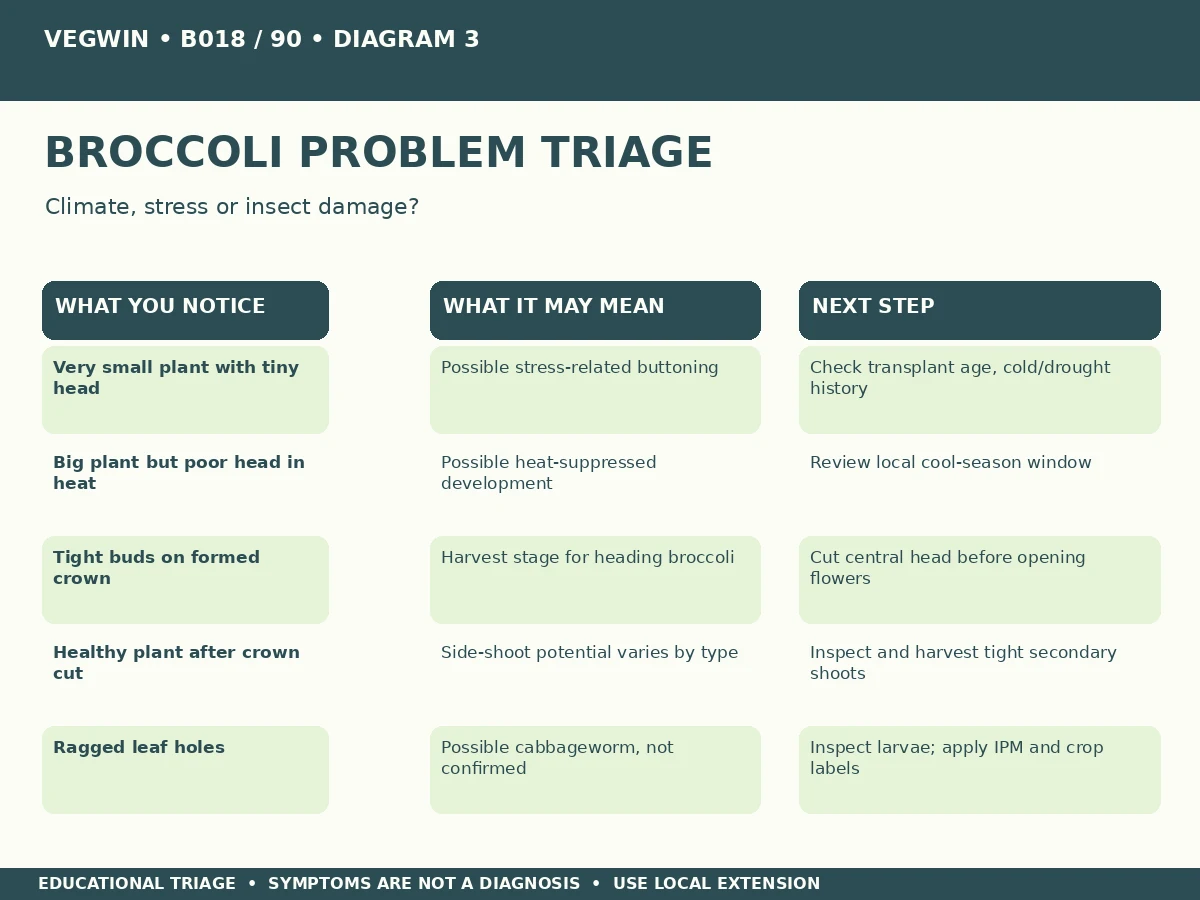
| Observation | Likely decision point | Next check or action |
|---|---|---|
| Very small plant with tiny head | Possible stress-related buttoning | Check transplant age, cold/drought history |
| Big plant but poor head in heat | Possible heat-suppressed development | Review local cool-season window |
| Tight buds on formed crown | Harvest stage for heading broccoli | Cut central head before opening flowers |
| Healthy plant after crown cut | Side-shoot potential varies by type | Inspect and harvest tight secondary shoots |
| Ragged leaf holes | Possible cabbageworm, not confirmed | Inspect larvae; apply IPM and crop labels |
Keep Growth Steady Without Guessing Fertilizer Rates
Broccoli requires an adequately fertile soil and regular access to moisture during establishment and head formation. Correct deficiencies based on a soil test and relevant Extension recommendations, not a generic internet dosing chart. Excess nutrients can also create problems, so avoid adding fertilizer solely because the outer leaves look large or the crown is slow. Check whether temperatures, crop age and transplant stress better explain the delay.
Mulching and small, regular weed removal can help maintain consistent root-zone conditions. During a dry spell, irrigate sufficiently to wet the active roots without saturating soil for long periods. In wet weather, make sure water drains away. A plant that wilts in waterlogged soil may have damaged roots, not a lack of water. Inspect the center regularly as the plant moves toward harvest; timing can change quickly once buds are visible.
Distinguish Buttoning From Heat-Delayed Heads
Buttoning refers to unusually early formation of a small, often unusable head on a plant that has not developed adequate size. It can follow transplant or environmental stress. A different problem occurs when hot weather interferes with normal head formation or causes loose, uneven buds. Iowa State Extension explains both buttoning and the poor head set possible under high temperatures. The practical response depends on identifying which stage and condition you have encountered. To go further, our guide to growing cauliflower shows how to protect the curd and spot stress early.
Take a photo showing the entire plant, central crown and sowing or transplant date. If the plant is tiny with a prematurely formed head, applying fertilizer is unlikely to transform it into a full-sized healthy crown. If a well-grown plant has not formed a head and weather has been hot, assess its crop window. Avoid default claims of a single nutrient deficiency, because growth stage, environmental history and cultivar can all influence the outcome.
Cut Tight Crowns Before Buds Open
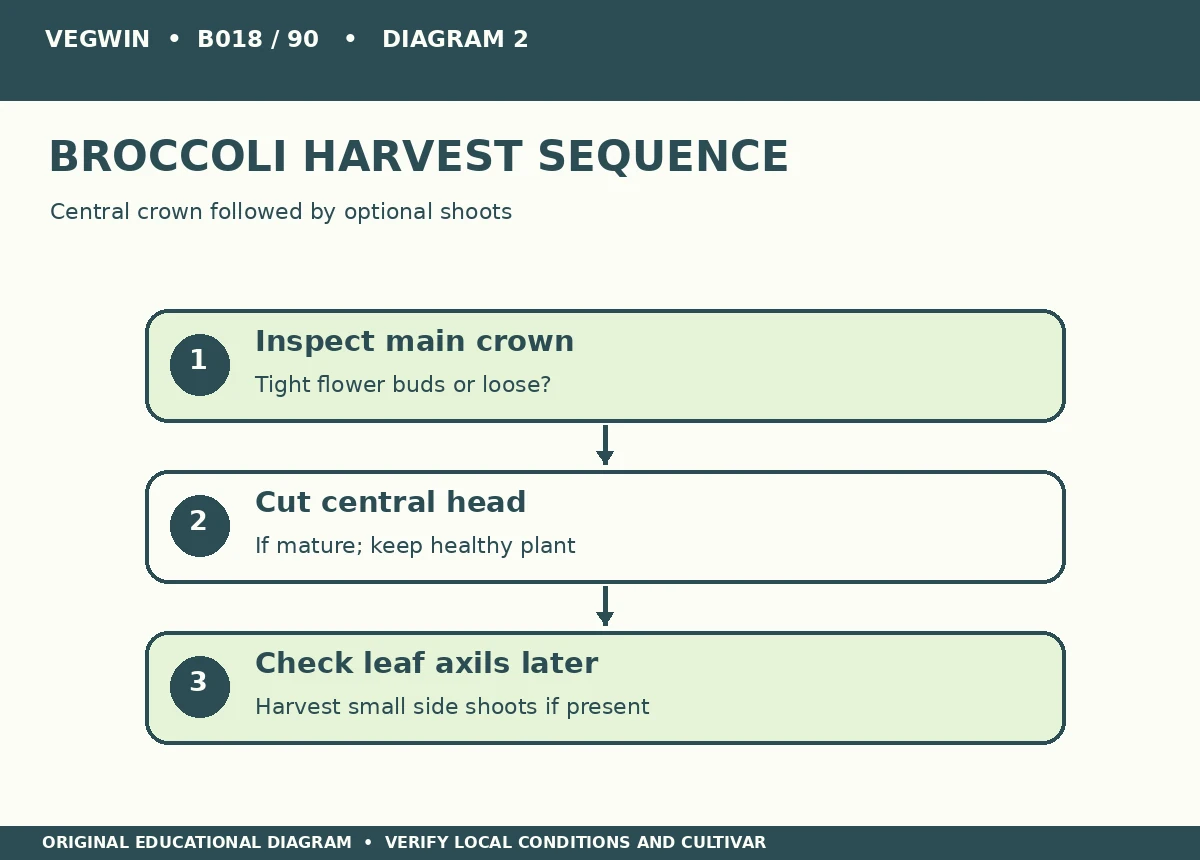
A typical heading broccoli crop is harvested when the central head is well developed, the buds remain tight, and yellow flowers have not started to open. Use a clean knife and cut the central stem below the head. Size varies with cultivar and weather; do not wait for an arbitrary supermarket diameter when the buds are already loosening. Handle the cut head gently and cool it promptly for best quality.
Leave a healthy plant in the ground if its cultivar is capable of making useful side shoots and the season still supports growth. Smaller lateral shoots may form where leaves meet the stem after the central head is cut. Harvest these while buds remain tight. Sprouting types may be managed differently, so follow the cultivar’s recommendations. Do not leave a diseased plant indefinitely just because secondary shoots are theoretically possible. For the basics, see our guide: When to Harvest Broccoli Rabe for Tender Leaves and Tight Flower Buds.
Investigate Insect Damage Before Treating Greens
Broccoli leaves can be damaged by cabbageworms, flea beetles and other brassica pests. Large ragged holes with caterpillars suggest a different problem from tiny scattered shot holes. Check undersides and developing heads regularly for eggs or feeding. Exclusion mesh installed early can prevent some pest access when used correctly, while good field sanitation and rotation records help with broader prevention. Our guide to growing kale adds more detail on this.
An insecticide should never be the starting assumption. Confirm the organism and whether the damage threatens useful harvest, then consult local IPM guidance. Follow the current product label for broccoli specifically, including any preharvest interval, protective measures and local rules. After harvest, write down the cultivar, date, head condition, whether side shoots followed and any weather stress. Those records tell you more about improving the next planting than repeating a standard calendar.
Related Guides
- How to Harvest Chinese Broccoli (Gai Lan) Before the Buds Open
- When to Harvest Broccoli Heads and Keep Side Shoots Growing
- How to Grow Broccolini for Slender Stems and Repeated Side Shoots
How We Research These Crop-Specific Decisions
We reviewed the linked original crop publications on 2026-10-20: University of Minnesota Extension, Iowa State University Extension, University of Minnesota Extension. We checked their claims about crop identity, flowering or harvest physiology, local timing, spacing and preventive management. Publication dates differ; older crop biology has been cross-checked against other current Extension material where possible. These custom diagrams express qualitative decisions, not controlled-trial data, guaranteed yields or fixed planting dates. Confirm the live sitemap and article content before manual publication.
Disclosure: No paid placements, sponsored products or affiliate relationships are claimed in this article. The buttons lead to independent university educational sources and imply no partnership. Verify the live VegWin affiliate disclosure page before manual publication. Any future treatment or product recommendation requires crop-specific label, safety and local-rule checks.
Premature buttoning can be linked to transplant stress, cold exposure, drought or inadequate growth conditions; investigate timing and plant condition first.
Heat or unsuitable growing conditions can delay or disrupt head formation; confirm cultivar, age and seasonal temperature history.
Harvest once the crown is developed and the small buds are still tight, before many yellow flowers open.
Some heading cultivars grow smaller side shoots, and sprouting varieties often produce shoots as their main harvest. Yield varies widely.
Yes. Both are brassicas and share several diseases and insect pests, so they belong to the same family in a rotation record.