
Purple sprouting broccoli rewards attention more than a single large harvest. It makes clusters of small flower buds at the ends of branching shoots, and a mature plant can supply tender spears over successive pickings. The most important signal is the bud itself: pick a compact, well-formed purple spear before yellow petals open and before the stem toughens. Timing varies widely. Traditional overwintering cultivars may not crop until late winter or spring, while other sprouting broccoli varieties mature sooner. This guide explains how to recognize the right stage, find a sensible cutting point, and keep the plant producing instead of removing its whole crown after the first picking.
Know Which Kind of Broccoli You Planted
Purple sprouting broccoli is not the same harvest form as familiar green-headed calabrese. It usually develops many narrow, leafy stems tipped with modest purple bud clusters rather than one broad supermarket head. It is also not broccoli rabe, which is a different leafy brassica with a shorter crop cycle and different harvesting cues. Read the full seed label and expected cropping season. RHS distinguishes sprouting broccoli from calabrese and points out that winter varieties can take many months to begin cropping. Newer sprouting or mini-broccoli selections may mature more quickly, and some make green rather than purple florets. A comparison of actual plant habit and unopened flower clusters is more trustworthy than a generic number of days printed on a packet.
Use Tight Buds Rather Than a Calendar Date
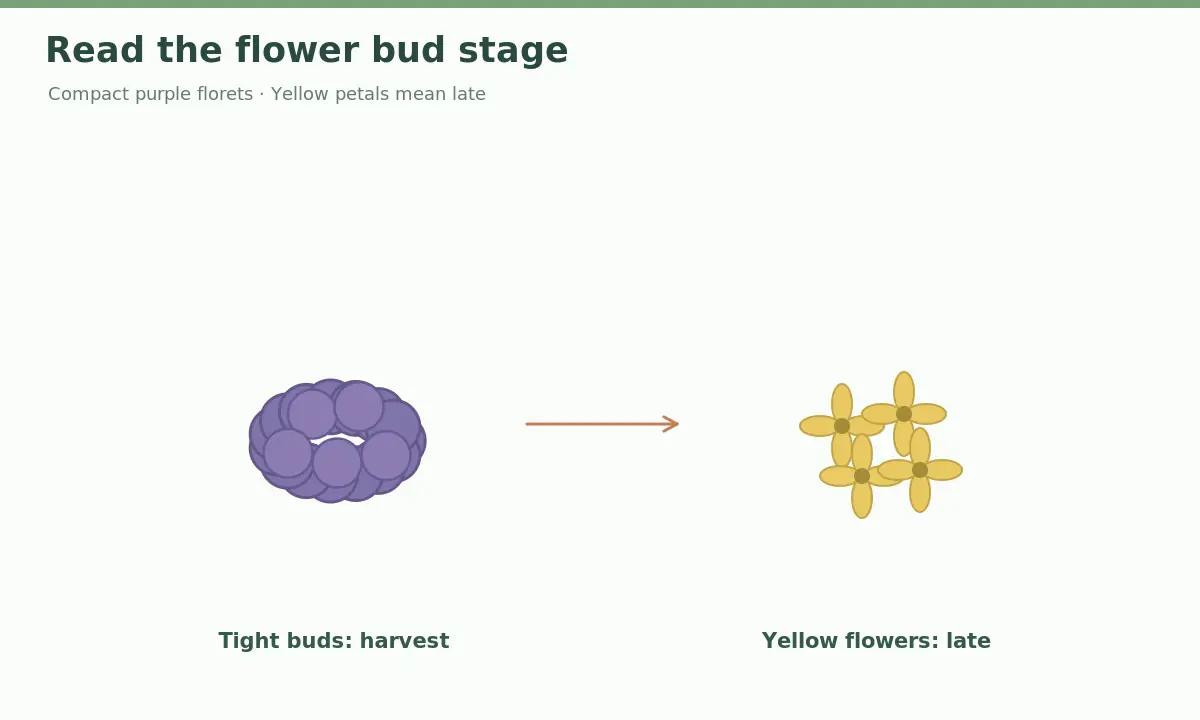
A ready spear has a recognizable cluster of packed, still-closed flower buds. The florets may be dark purple, violet, or purple-green depending on the cultivar and temperatures. Do not wait for a head to become the diameter of supermarket broccoli. Each shoot has its own optimum size. Yellow petals opening between the buds mean the spear is transitioning toward flowering, when eating quality can decline. Oregon winter-growing advice reflects maritime Pacific Northwest conditions rather than every state, so dates should not be copied into warm climates. Mark the first appearance of purple buds, then inspect them frequently during a mild spell. The gap between tight buds and open flowers can become short when weather warms.
Test Whether the Stem Is Still Tender
A sprouting broccoli harvest includes a length of the soft green or purple stem and sometimes small attached leaves. RHS describes spears of roughly four inches as an example, not a rule for every plant or cultivar. Feel the upper shoot: it should bend slightly without being woody or stringy. If it has been exposed to cold for weeks, outer foliage may look ragged even when the new spear is fresh. Avoid using a fixed stalk length if the bottom of that length is already tough. Cut at a naturally tender section and test a small cooked piece after harvest. You may trim an older, fibrous lower portion rather than discard the whole unopened cluster.
Harvest the Central Spear Without Uprooting the Plant
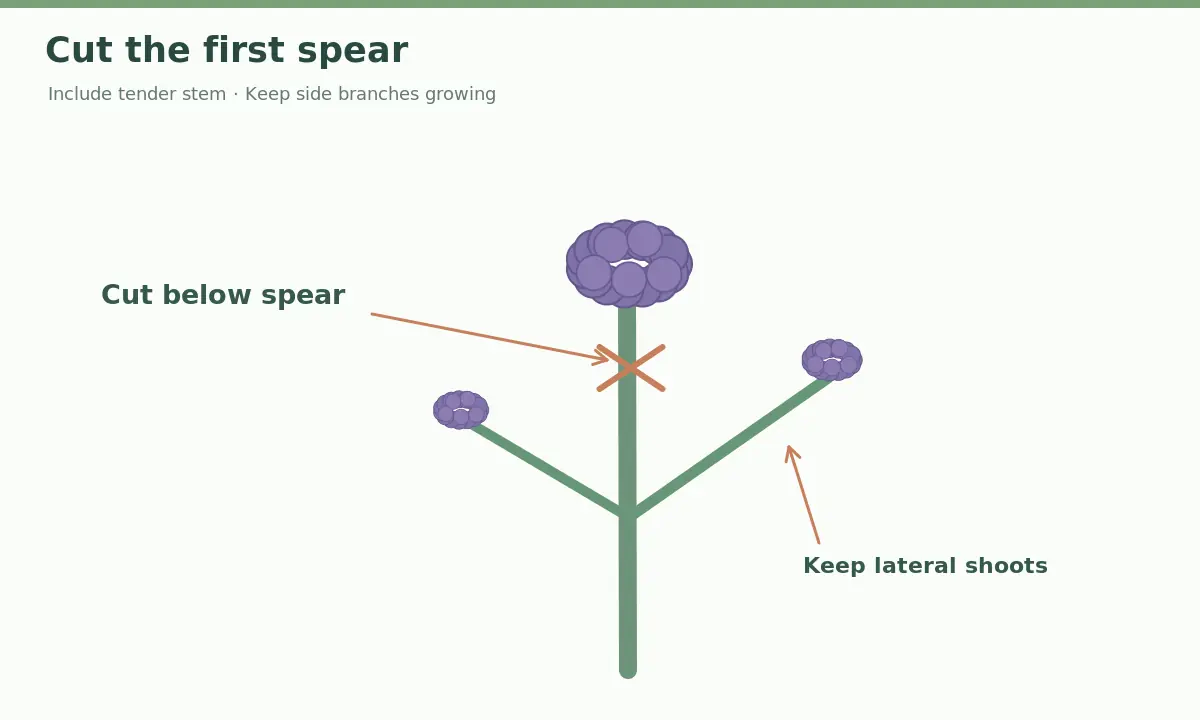
Use a clean knife or sharp snips, support the stem with the other hand, and cut below the compact central bud cluster while leaving the main plant and its leafy framework intact. Do not pull the spear downward: that can strip bark or snap a productive branch. Remove enough stem for a good kitchen portion but do not saw deep into the basal crown or remove new branching points. RHS advises cutting the central spear first, after which secondary spears often develop or enlarge. Look at where smaller shoots emerge from leaf axils; these are future harvests. Remove the collected spear immediately to a clean basket so bruising and sunlight do not rapidly reduce its quality.
Check Side Shoots Every Few Days During Active Cropping
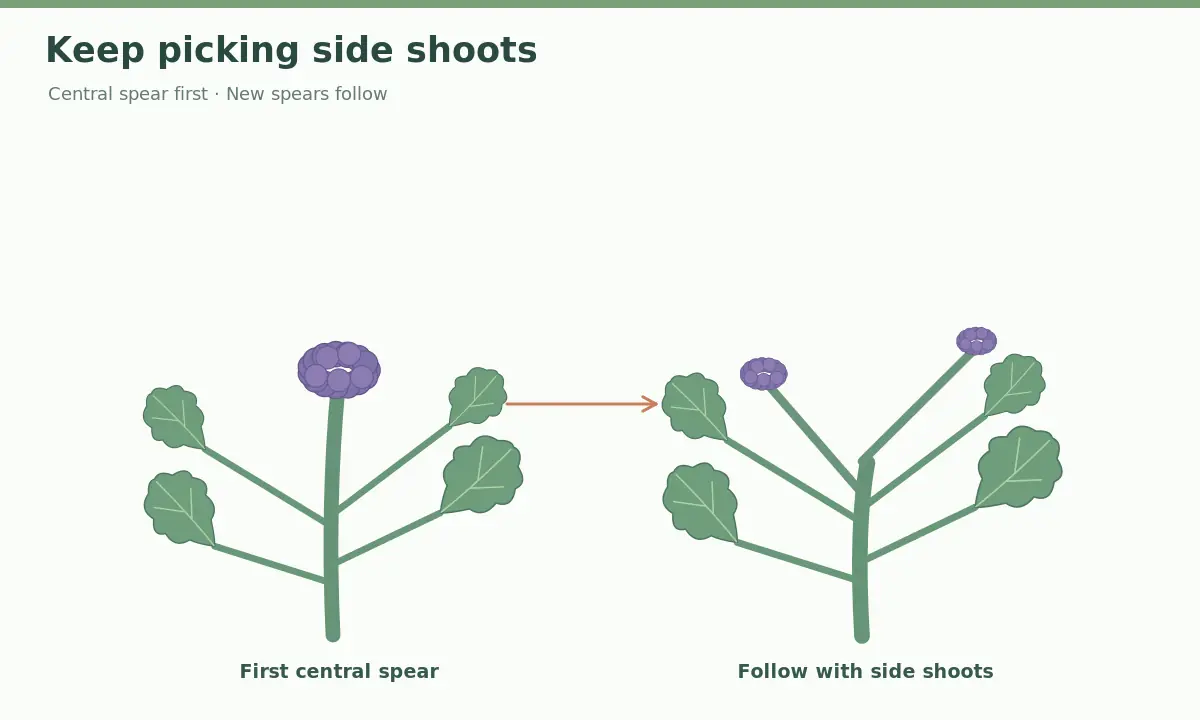
After the initial cut, many plants develop additional purple florets on thinner lateral stems. Each needs to be evaluated separately for closed buds and tenderness. Some are ready together; others lag by days or weeks. In cool weather the plant may develop steadily, while an abrupt warm interval can push several shoots into flower at once. Visit the crop often enough to collect the smaller spears before their petals separate. Do not strip all foliage to make them easier to see. Healthy green leaves feed the plant during ongoing production. If one shoot is flowering, remove that shoot and inspect the others instead of assuming the entire plant is suddenly past use.
| Situation | Useful action | Avoid |
|---|---|---|
| Closed purple bud cluster | Cut the tender spear | Wait for supermarket-size head |
| Central spear removed | Check remaining side shoots | Uproot the whole plant |
| Yellow petals appearing | Harvest usable shoots promptly | Expect unopened buds to return |
Protect Harvest Quality During Frost and Warmth
Sprouting broccoli often tolerates chilly conditions, but the amount of cold a particular cultivar can withstand depends on its genetics and plant condition. Mature winter varieties in maritime gardens are a different proposition from tender young seedlings facing sudden severe freezes. Following a hard freeze, let foliage thaw and inspect for water-soaked or mushy tissue before harvesting. Warm conditions are the opposite hazard: buds can loosen and yellow flowers may emerge quickly. Record local weather and sample spears rather than equating USDA hardiness zones with guaranteed harvest weeks. Those zones describe typical winter minimum temperatures, not the time of spring bud formation in your garden.
Handle Pests and Plant Damage Before Cutting
Like cabbage and kale, purple sprouting broccoli may host cabbageworm caterpillars, aphids, and other brassica pests. Inspect the deep spaces between buds, the undersides of leaves, and the upper shoot before bringing florets to the kitchen. A fine insect barrier can help during susceptible stages, but it must be installed early and secured without crushing the growing tips. Remove obviously infested or decayed portions and wash edible shoots under potable running water. If a pest is present, identify it before considering a pesticide; any product must be registered for edible broccoli and the preharvest interval followed. Damage already made by insects should not be mistaken for a nutritional problem that requires fertilizer.
Refrigerate Promptly and Prepare the Whole Tender Spear
Place harvested sprouting broccoli out of direct sunlight, trim away badly damaged foliage, and refrigerate promptly. Rinse before use, checking the compact buds for hidden insects and soil. Spears are good steamed, sautéed, roasted, or included in a stir-fry. Purple pigments may fade toward green during cooking, which is normal rather than a sign that the vegetable was harvested incorrectly. Use the tender small leaves along the spear if clean and sound. Do not leave cut stalks in a warm bucket while you finish an afternoon of garden work. For food safety, separate harvest containers from ones used for pesticides, manure, or other nonfood tasks.
Decide When the Plant Has Finished Producing
A mature broccoli plant does not offer new spears forever. Production slows as branching points flower, older stems toughen, or warming weather accelerates bolting. The total harvest period varies by cultivar and climate; RHS notes that some sprouting types yield over several weeks. An old plant covered mainly in open flowers and fibrous stems may no longer justify the space. Inspect for active, tight new buds before clearing it, especially after the first central harvest. If continuing harvests would be poor, remove the exhausted plant and consider disease-aware crop rotation. Do not use a compost pile as a disposal location for severely diseased or heavily infested material unless local guidance supports it. For the basics, see our guide: When to Harvest Broccoli Rabe for Tender Leaves and Tight Flower Buds.
Plan Next Season Using Harvest Notes
Write down the cultivar, sowing and transplant dates, winter minimums, first central spear, and final worthwhile side shoot. A short record reveals whether your variety fits your season: overwintering purple broccoli can perform well where winters are mild, but may fail or require different timing in harsher locations. Some newer sprouting cultivars are meant for an entirely different summer-to-fall window. Choose based on local Extension guidance and the seed packet rather than copying a UK harvesting month literally. If the plants made mostly leaves, review sowing season, sun, spacing, and cultivar requirements before applying unverified fertilizer remedies. Your own bud-stage photographs can become a useful picking reference.
Related Guides
- How to Harvest Chinese Broccoli (Gai Lan) Before the Buds Open
- When to Harvest Broccoli Heads and Keep Side Shoots Growing
- Growing Broccoli: Prevent Buttoning and Harvest Side Shoots
How We Research and Verify These Steps
Sources were opened and cross-checked on 2026-10-24: www.rhs.org.uk — RHS describes sprouting broccoli types, picking unopened spears with tender stems, and repeated side-shoot harvests; extension.umn.edu — Minnesota Extension explains tight bud harvest timing and continued side-shoot growth; extension.oregonstate.edu — Oregon State Extension explains the regional and seasonal requirements of overwintered purple sprouting broccoli. We compared seasonal advice, exact plant anatomy, growing methods, and differing regional conditions, and used those findings in the accompanying illustrations. Botanical drawings are explanatory, not to scale. Your local Cooperative Extension and specific cultivar or seed-packet instructions take priority when conditions differ.
Disclosures, Safety, and Regional Differences
These are educational gardening guidelines, not personalized agricultural or medical advice. No sponsorship or partnership is claimed. Read VegWin’s affiliate disclosure. Follow all local plant, food safety, and pesticide regulations and current product labels. USDA hardiness zones describe winter minimum temperatures rather than exact sowing dates. The diagrams are simplified to emphasize the relevant plant structures.
It is bred to produce many small spears; do not expect a large green calabrese-style head.
Yes. Cut while the purple buds are tight and the stem is tender.
Yes. Include a short tender length of stalk and sound young leaves.
Healthy plants commonly produce side shoots that can be picked in later visits.
No. Purple pigments often fade during cooking; judge raw maturity by bud closure and stem tenderness.