
Basil becomes fuller when you remove the right part of a growing shoot, not when you strip its leaves randomly. On sweet basil, leaves usually grow in opposite pairs along a square-sided stem. Tiny buds sit in the angles where each leaf stalk joins that stem. If you pinch the main tip just above a healthy pair, those two remaining buds can become side branches. Cutting below the pair removes the growth points you wanted to keep. This guide makes that small but decisive anatomical difference easy to see and repeat.
Locate Paired Leaves on a Living Basil Stem
Follow one basil stem from its base toward the tip. On common culinary basil, soft oval green leaves usually appear as opposing pairs, with the next pair turned around the stem. Each pair marks a node; the section between two nodes is an internode. Look carefully at the inside angle between a leaf stalk and the main stem for a tiny side bud. You are not cutting on the broad leaf blade or through the soil-level crown. Pinching depends on these real living nodes, and young plants with only a few leaves should not be shortened aggressively.
Choose a Leaf Pair That Can Stay and Grow
Pick a well-formed, healthy pair below the soft terminal growing tip. Ideally several true leaves have developed so the plant can continue photosynthesizing after pinching. Leave the paired leaves and both axillary buds attached to the stem. If you choose a pair covered in lesions, pest damage or wilting, address the plant’s problem before making a training cut. Seedling cotyledons should not be confused with a developed true-leaf node. In the diagram, the green leaves and the small paired buds immediately below the cut are the essential structures that must stay.
Pinch the Stem Just Above That Node
Use clean fingertips for a tender shoot or clean small scissors for a tougher stem. Remove the upper growing tip with a short clean cut just above the chosen leaf pair, leaving a small piece of internode rather than slicing into the node itself. Hold the plant steady so the lower stem is not torn. Avoid leaving a long ragged stub, and never place the blades between the leaf stalks at the level of the buds. The correct diagram shows the cutting line crossing the main stem ABOVE the opposing leaves and NOT through either bud.
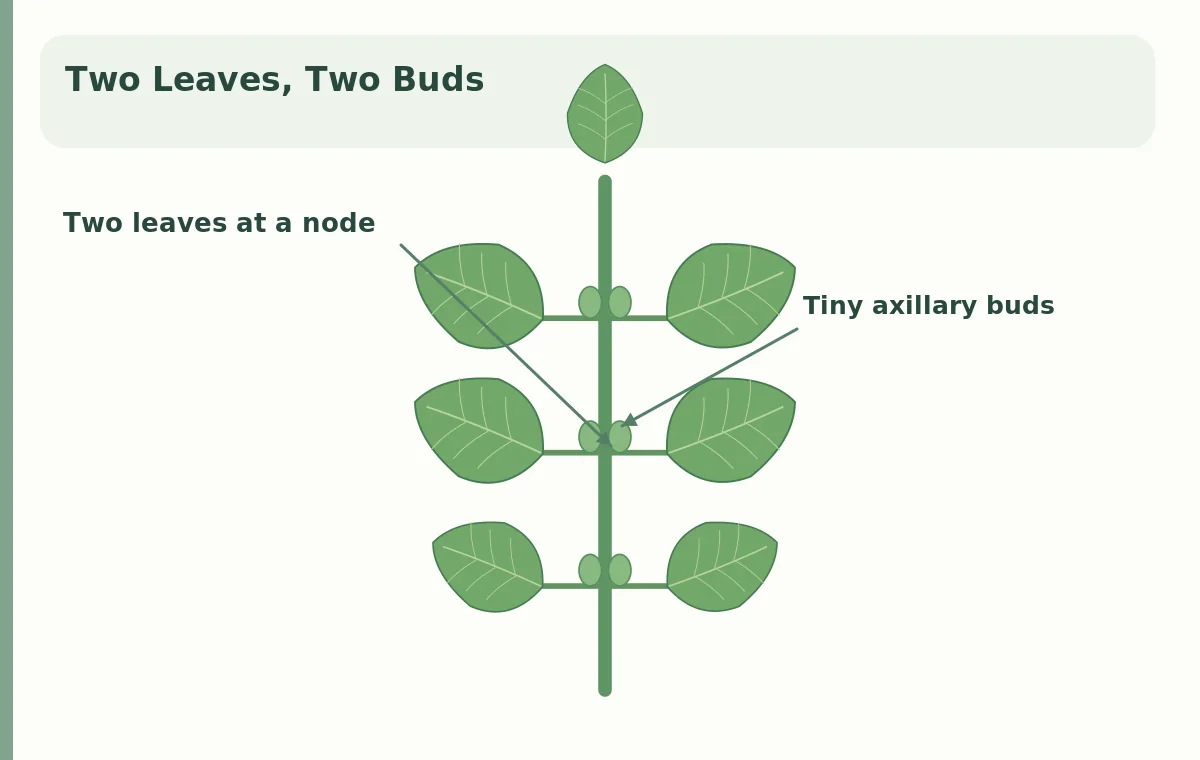
Watch the Two Axillary Buds Become Branches
Removing the main tip changes how growth is distributed along the stem. Healthy side buds just below that tip commonly begin stretching into new shoots; UMN Extension describes new growth after cutting above a leaf pair. Do not expect two identical branches to appear on the next day. Light, adequate warmth, growing medium and root health affect the response. Watch whether both buds remain green and are extending. Once those branches carry their own well-developed leaf pairs, you can repeat the method on selected branch tips if you still want a more compact shape.
Harvest Leaves Without Stripping the Entire Plant
There is a difference between picking a few single leaves for dinner and taking a larger stem-tip harvest. For stem-tip harvest, a cut above a leaf pair preserves future branching. For individual leaves, pick selectively while leaving plenty of healthy green surface on the plant. Do not remove every leaf below your chosen cut; the new side shoots need the remaining plant to supply energy. Basil stems are tender and bruise easily, so avoid dragging scissors across adjacent foliage. Wash harvested leaves before food use, and discard any material with questionable contamination.
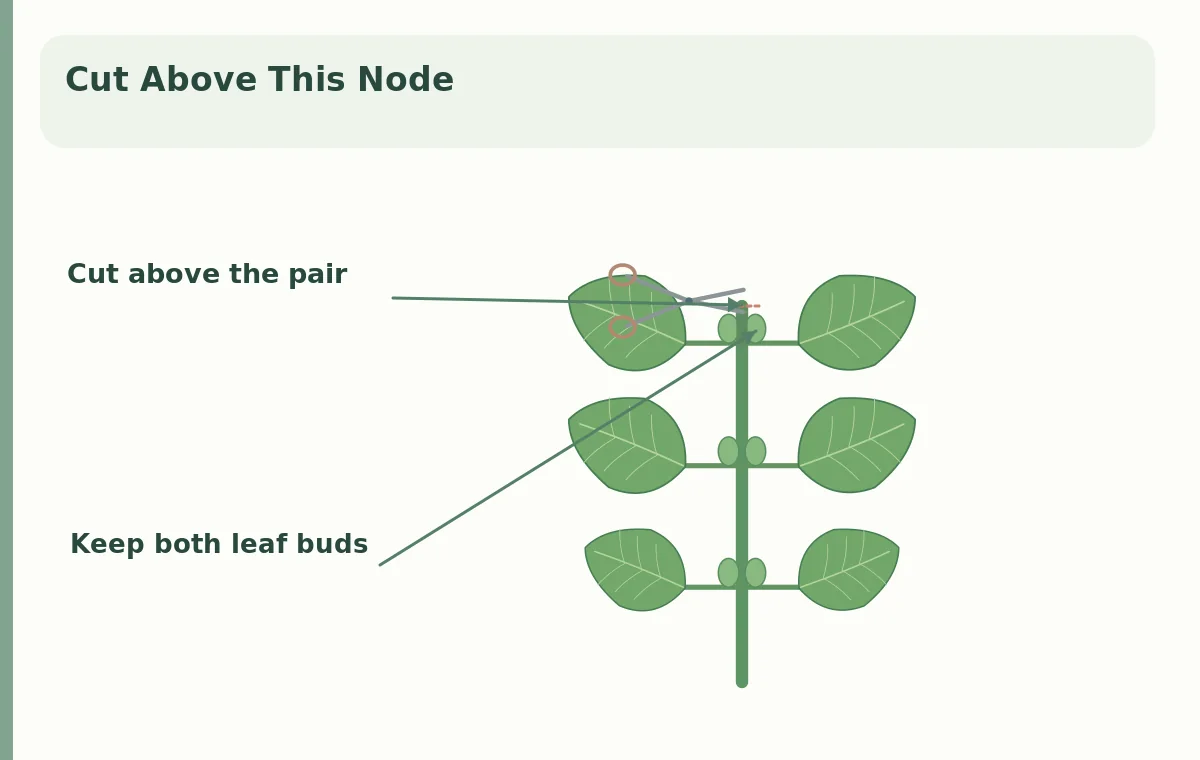
Remove Flower Spikes Before They Dominate Growth
As basil matures it may send up a terminal flower spike, often with small flowers in whorls. University Extension sources explain that flowering changes growth and leaf quality, so gardeners seeking leaves commonly remove these shoot tips. Follow the flowering stem down to a healthy pair of leaves and make the same above-node cut. Do not rip flower clusters off together with the entire leafy side branch. Some ornamental or pollinator plantings deliberately keep flowers; in that situation pruning for maximum leaves may not be the goal. Choose according to your garden purpose.
Compare Correct Pruning With Common Mistakes
Cutting directly through a node destroys the paired buds instead of encouraging them. Cutting a bare, very low stem with no leaves left may stall regrowth. Picking only the single central leaf while leaving the apical growing tip does not reliably redirect branching. The comparison graphic shows side shoots forming from the saved axillary buds on a properly pinched plant, and a damaged example where the important leaves and buds have been removed. This is a developmental comparison, not a promise that every basil variety branches at exactly the same speed.

Adjust Pinching to Conditions and Basil Types
Large-leaved lettuce basil, compact Greek types, purple-leaved cultivars and Thai basil may differ in natural branching and flowering habits. Some require less frequent training than tall sweet basil. Bright light and suitable warmth are more important than repeated cutting if seedlings are thin and pale. Container plants dry out sooner than garden-bed plants and need functioning drain holes. Do not use USDA hardiness zones as a substitute for monitoring night temperatures; basil is sensitive to cold. When a plant is stressed, improve conditions before attempting to make it bushy through increasingly hard pruning.
Build a Simple Repeatable Pruning Routine
Each time you harvest, count the healthy pairs remaining on the target shoot and identify the upper pair that will support regrowth. Cut above that pair, note the two small buds, and check again after several days of active growth. Stop if the plant is no longer replacing foliage or if temperatures are unfavorable. Use clean tools between suspect plants and inspect leaf undersides for pests rather than treating every curled leaf as a nutrient deficiency. This routine makes pruning a series of targeted node decisions rather than a habit of randomly clipping the tallest green parts.
Related Guides
- Growing Herbs by Type: Water, Harvest, and Winter Survival Guide
- How to Pinch Basil Flower Buds and Keep Tender Leaves Growing
- How to Harvest Thai Basil Above Leaf Nodes for Fresh Branching Shoots
- How to Grow Purple Basil From Seed and Keep Its Leaves Colorful
- How to Grow Cinnamon Basil From Seed and Recognize Its Paired Leaves
How We Research and Verify Botanical Details
The referenced university Extension and specialist horticulture guides were checked on October 28, 2026, for the particular plant anatomy, harvest or planting action discussed here. extension.umn.edu horticultural guide explains university of Minnesota Extension instructs cutting basil whole stems just above paired leaves for fresh growth. extension.arizona.edu horticultural guide explains university of Arizona Cooperative Extension explains harvesting basil above a leaf pair and removing flower spikes. The drawings illustrate crop features and techniques, rather than documenting the appearance of every cultivar. Adapt local timing to your weather, actual growth stage and regional growing advice.
Disclosure and Important Local Limitations
This educational article has no confirmed affiliate arrangements, sponsored endorsements or chemical treatment instructions. See the VegWin affiliate disclosure. When a root, tuber, seed or plant is not positively identified, do not eat it. For unexplained rots, insects or widespread symptoms, seek a diagnosis from your local Cooperative Extension or qualified plant specialist before applying products.
The two axillary buds at the leaf bases can continue growing into branches if the node remains intact.
Wait until several true leaves are present and the seedling is established; avoid stripping a tiny plant.
No. Pinching removes a stem tip above a node, whereas single-leaf harvest may leave the terminal growing point intact.
You may remove the buds and leaf area needed for strong regrowth, especially on a young plant.
For continued culinary leaf harvest, commonly yes; gardeners who value flowers for pollinators can leave some spikes.