
Saffron is the dried red stigma of Crocus sativus, not the whole purple flower and not the yellow pollen-bearing stamens. A home grower may see a handful of blooms during autumn and have only a short opportunity to collect them. Correct identification must come before harvesting: the poisonous plant commonly called autumn crocus or meadow saffron can be a Colchicum, not a true saffron crocus. This guide shows exactly which red flower structures to take and when to handle them.
Confirm the Plant Is Crocus sativus
Use corms purchased and clearly labeled Crocus sativus from a reputable supplier. The flowers are generally lilac to purple, with six petal-like tepals, a long red three-branched stigma and three yellow-orange stamens. Narrow grasslike leaves may appear with or around the flowering season. A name such as autumn crocus is not sufficient identification. RHS explicitly warns about deadly poisonous Colchicum species, which are sometimes sold or discussed under confusingly similar common names.
Do not treat color, height or a single photograph as proof of identity. If the original corm label is missing or the plant is a naturalized autumn-flowering bulb of uncertain origin, do not use it as a spice. Saffron crocus develops from a corm, not an onion bulb, and its flowers do not produce viable seed in normal cultivation. The detailed botanical illustration is of true C. sativus only; the toxic lookalike in the comparison is an identification warning, never a tasting suggestion.

Watch for Fresh Autumn Flowers
Harvest timing follows flowering, usually in fall, not a generic calendar date for every climate. RHS suggests October as a typical period, with later flowering possible in the first year. University of Vermont reports a later October-to-November season for its location and advises monitoring frequently as new flowers appear. A flower is ready once it is elongated and beginning to open, revealing the red stigmas; delay can expose the delicate parts to more weather.
On bright dry mornings, check the corm patch before flowers fade in harsh sun. If petals are wet with dew, rain or melting frost, the University of Vermont fact sheet advises waiting for them to dry or thaw. Don’t force a wet flower open to meet an arbitrary schedule. Take only flowers you can identify and process promptly. Small-scale gardeners may remove individual stigmas from open blooms rather than collecting entire flowers; either method needs clean hands and careful separation.
Find the Three Scarlet Stigma Branches
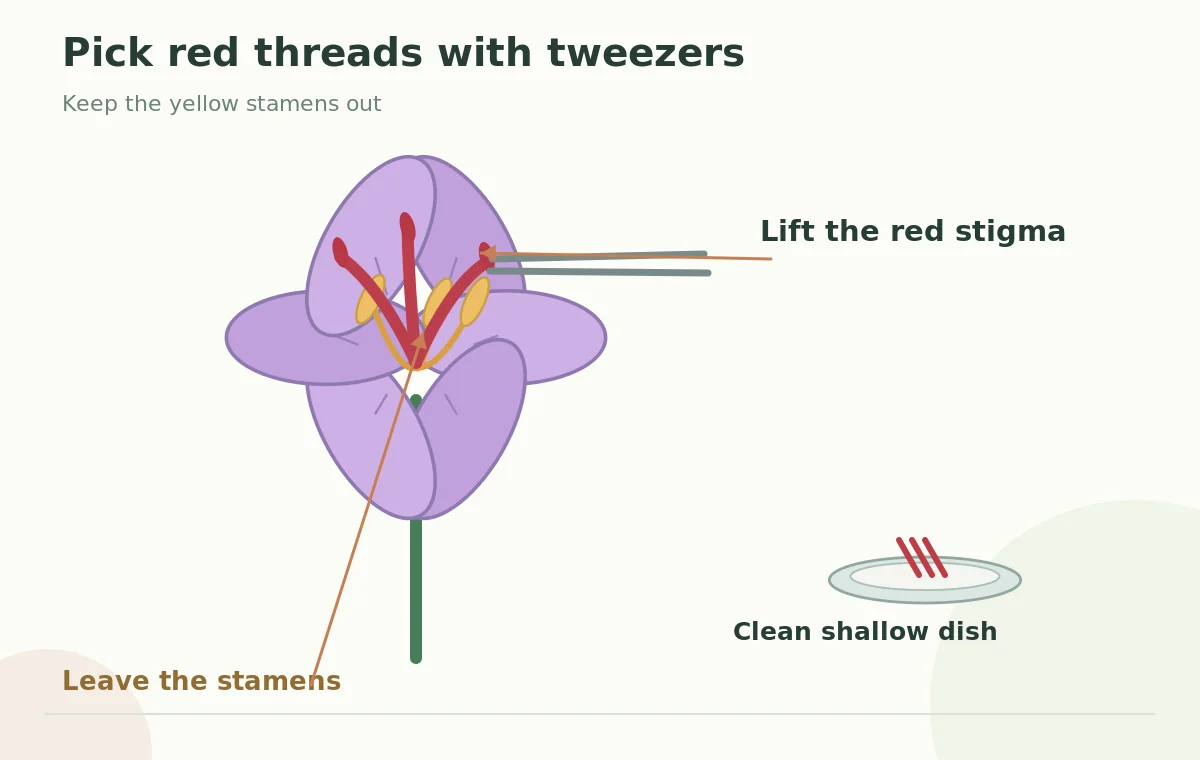
Look into the center of the six-tepal flower. The stigma branches are elongated, soft and vividly red, usually three visible branches attached to a style. The pollen-bearing stamens are shorter, more upright and pale yellow to orange. Saffron threads are the red stigma tissue, not a collection of all colored structures. The RHS specifically instructs harvesting the long red stigmas with tweezers and leaving the paler stamens out of the spice harvest.
Hold the opened flower steady rather than pulling on an entire clump of leaves. Use clean fine-tipped tweezers to lift the red branches gently. The diagram has an arrow ending on a red stigma tip; a separate arrow ends on the yellow anther of one stamen. It is important that those pointers do not cross. If the flower lacks the expected arrangement, stop and verify identification. Never gather unidentified red strands from other ornamental crocuses.
Separate Threads Without Crushing Them
Work over a shallow clean dish so a small red thread cannot be lost in grass or soil. If you harvest whole flowers, carry them indoors in a clean breathable tray and separate the stigma promptly. Remove petal scraps and any pollen-bearing stamens from the red thread pile. Avoid rubbing or pressing the threads so firmly that they turn into an unidentifiable dark paste. The University of Vermont guide emphasizes timely handling of newly harvested flowers.
Use a small amount of product as your expectation. RHS estimates roughly 150 flowers to produce a gram of dry saffron, so a household patch may produce only a few servings. Do not try to increase yield by adding yellow stamens, random flower parts or commercially colored fiber. When gathering, keep a count of flowers processed and record the corm source. This record makes it easier to check a future crop before a flower is ever harvested.
Dry Gently and Store Only Completely Dry Threads
RHS advises a gentle home approach: spread separated stigmas on kitchen towel on a raised rack and air-dry at room temperature for at least a day, continuing until fully dry. A single layer prevents threads from sticking together in a wet clump. Protect the drying area from dust, direct contamination and pets. Do not substitute an unverified oven temperature or assume that a few hours at high heat will preserve fragrance better.
When completely dry, transfer to a clean airtight container and keep it away from light and moisture. Label it with plant identity and harvest date. A clean, dry storage jar helps distinguish the spice from fresh plant material that could mold. Don’t store partly dried stigmas in a sealed wet container. If you cannot establish that the plants were Crocus sativus, no drying method makes the unidentified material safe to eat.

Protect Corms for Another Season
After collecting threads, leave healthy foliage attached to the plant. It supplies energy to the corms while growing, so removing leaves for a cleaner-looking bed is counterproductive. RHS describes saffron as a sun-loving plant of free-draining soil that produces replacement cormlets. Conditions that remain wet for long periods can encourage rot. Do not yank the corm out with the flower or assume the flowering stem is the same as a perennial woody stem.
Mark the planting location while leaves are still visible. Inspect for rodent disturbance or wet patches rather than applying chemical treatments routinely. If a corm patch fails to flower, look for poor light, drainage, immature cormlets or local weather as possible factors; different causes need different responses. Corms may need time to become large enough to flower well. Keep the identification label attached to the bed through its dormant season.
Avoid Dangerous Autumn Crocus Confusion
Colchicum autumnale and related species can carry the common name meadow saffron, but they are not culinary saffron. RHS calls Colchicum highly poisonous. Some differences include the number and arrangement of stamens, but no single visual feature is an acceptable substitute for knowing the exact plant’s identity from a reputable source. In the comparison panel, the warning-side flower is labeled as a poisonous lookalike, and no edible part is indicated.
Never forage unidentified autumn flowers for a culinary spice, even if a social media picture seems similar. Keep harvested red threads away from unlabeled bulbs and ornamental plant trimmings. For households with children or pets, store both corms and dried materials securely. If accidental ingestion of a suspect ornamental plant occurs, contact a poison center or local emergency medical service; do not attempt homemade remedies. Identification must precede every harvest.
Use a Simple Harvest Decision Sequence
First confirm a labeled, correctly identified C. sativus planting. Second check for a fresh elongated, opening flower on a suitable dry morning. Third find the three red stigma branches and separate them from the yellow stamens. Fourth dry clean red threads fully, then store them airtight in a dark, dry place. These four decisions matter more than trying to match a calendar day borrowed from a different growing region.
Photograph the flower close enough to see the red stigmas and pale stamens before removing anything; record harvest timing and the number of flowers. That lets you compare the next season without relying on memory. The result is a small amount of traceable saffron from a verified plant, not a mixture of red petals and other floral tissues. When in doubt about identity, leave the flower alone.
How We Research and Verify Botanical Details
Verified primary sources reviewed October 28, 2026: www.rhs.org.uk — RHS identifies the red stigmas as saffron, explains harvest and ambient drying, and warns about poisonous Colchicum. www.rhs.org.uk — RHS plant profile describes the autumn-flowering corm, pale purple flowers, red stigma and free-draining growing conditions. www.uvm.edu — University of Vermont saffron fact sheet explains harvest stage, damp-weather precautions and same-day separation of red threads. Seasonal timing depends on local conditions and named cultivars; diagrams simplify scale while preserving the structural details described.
This independent educational guide contains no paid placements or confirmed product affiliate offers. Read the VegWin affiliate disclosure. Follow local Cooperative Extension and IPM advice for regional problems instead of unverified home chemical recipes.
The long red three-branched stigma of verified Crocus sativus, dried after harvest.
No. The culinary saffron harvest is the red stigma, not the shorter pollen-bearing stamens.
No. Colchicum species can be highly poisonous; common names are not proof of identity.
Wait for petals to dry or thaw when possible, and separate harvested stigma promptly.
Dry them completely and keep them in an airtight clean container away from light and moisture.