
Hollyhocks can surprise new growers by spending their first season making a broad, low cluster of leaves instead of the towering flower stalk shown on a seed packet. Many traditional Alcea rosea selections act as biennials: a leafy rosette forms first, and blooms follow in the next season. Some newer selections behave differently, so read the packet before planning a first-year display. Seed-starting success means healthy roots, appropriate spacing and realistic expectations—not forcing a rosette to flower prematurely.
Choose the Seed Type Before Planning a Bloom Date
Traditional hollyhocks are often biennial, forming leaves and roots one season and flowering the following year. Wisconsin Extension emphasizes that other selections can act as short-lived perennials, and some cultivated lines may bloom sooner under suitable conditions. Read the cultivar name and packet notes rather than treating every hollyhock as a true annual. A first-year rosette does not mean your sowing failed. If immediate flower spikes are important, buy established plants or select a cultivar explicitly bred for faster flowering. In a continuing garden, stagger seedling generations so one group establishes while an older group produces blooms.
Prepare a Sunny Bed With Good Drainage
Hollyhocks are tall ornamental members of the mallow family and generally do best where they receive plenty of sun and the soil drains rather than staying soggy. Choose a location with room for tall stems, accessible airflow and enough space to weed around the plants. Avoid planting directly against a wall that traps wet foliage after rain. Add organic matter only as needed for the soil condition; do not invent fertilizer rates from appearance. Remove perennial weeds and rake the bed to a fine surface before sowing, as Penn State Extension recommends for flower seeds. A clear prepared surface also helps you identify seedlings instead of accidentally pulling them.
Select Outdoor Sowing Time for Your Climate
Hollyhocks may be direct-sown in a suitable outdoor bed when growing conditions allow seedlings to establish. In some regions, summer sowing provides first-year rosettes that overwinter and flower the next year; in others, spring sowing is more practical. The safe timing depends on frost patterns, heat, cultivar and local experience, so consult regional Extension instructions. Never use a USDA winter-hardiness zone number by itself as the date to sow annual or biennial seeds. Sow thinly following the packet instructions for that variety, including the specified covering depth. Extremely deep burial delays or prevents emergence in many small-seeded flowers. For the basics, see our guide: When to Sow Hollyhock Seeds and Why Some Bloom in Year Two.

Keep the Seed Surface Moist During Germination
After sowing, water gently so seeds remain where you placed them. Maintain appropriate moisture near the germination zone without compacting the surface or washing seeds into low spots. A finely textured, well-prepared seedbed improves contact between seed and soil. Avoid soaking an area until standing water persists; poor drainage can damage seedlings before they are visible. Mark the row or patch so it is not disturbed while emergence is uneven. Seedling speed depends on temperature, moisture and seed condition, so do not declare failure because another species in the bed came up first. Read the packet for any cultivar-specific light or germination guidance.
Identify the Broad Leaf Rosette in Year One
Young hollyhocks develop rounded to shallowly lobed leaves on stems near the crown, eventually forming a large basal rosette. This foliage has a quite different silhouette from the slim, leafy spikes and saucerlike flowers of an established blooming plant. The leafy first season is normal for many traditional biennial hollyhocks: the plant is building roots and stored reserves. Keep the crown healthy and avoid digging the rosette just because no stalk appears by midsummer. Weed around the base and watch for discoloration on both leaf surfaces. A healthy rosette is future flowering potential, not an underperforming annual that must be fertilized into bloom. If you are starting from scratch, read When to Sow Sweet William Seeds for the Right Flowering Season.
Thin Seedlings Before Leaves Become Crowded
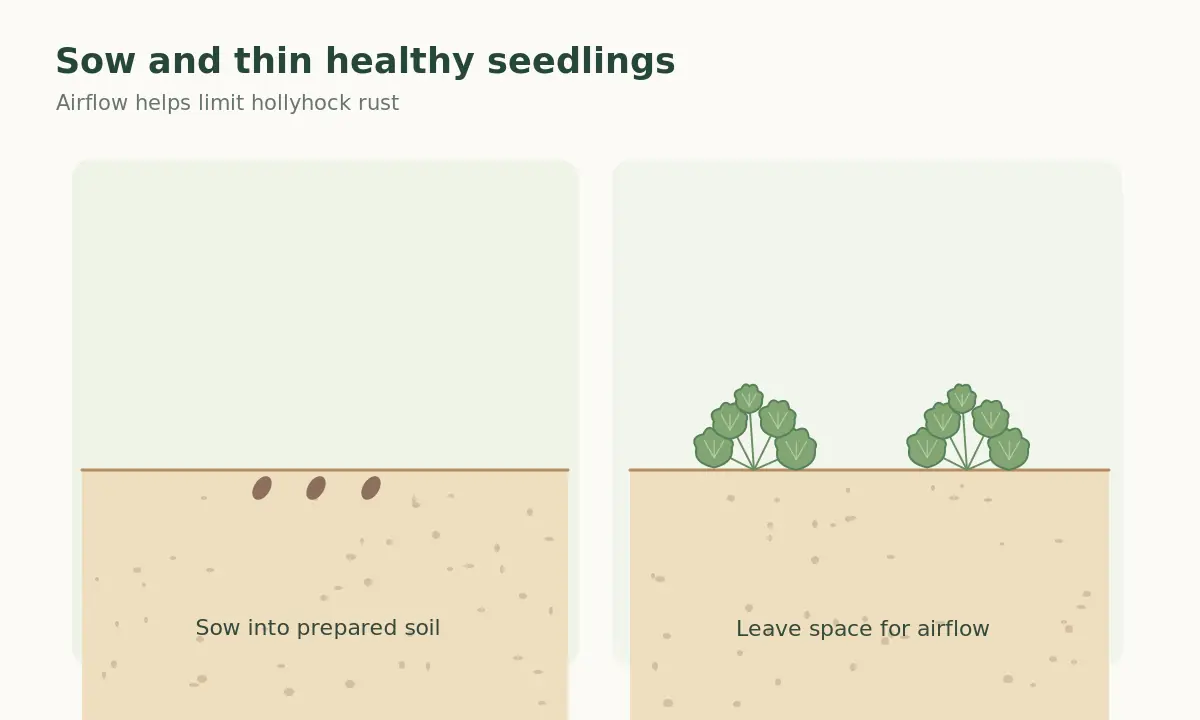
Hollyhocks benefit from room around their foliage. Penn State Extension lists representative hollyhock spacing on the order of twelve to twenty-four inches for seed-raised plants, but mature height and cultivar size vary, so compare the packet. Thin crowded rows while seedlings are still manageable and water the remaining plants lightly if soil was disturbed. Reposition transplants while their roots are young rather than repeatedly shifting older deep-rooted rosettes. Space is especially useful where rust and leaf disease are recurring problems; crowding holds humidity and makes inspection difficult. Do not keep every volunteer just because the original seed germinated successfully.
Watch for Orange Rust Pustules on Leaves
Hollyhock rust is a common leaf disease, often showing yellowing and orange-brown spore pustules, especially on the lower leaf surfaces. Inspect both sides of leaves rather than relying on a view from above. University Extension advice emphasizes sanitation: remove dead and badly diseased foliage and clear infected debris rather than allowing it to accumulate under the plants. Maintain airflow and avoid routinely wetting leaves with overhead watering. Fungicide choices, where legal and warranted, require a confirmed diagnosis and a currently approved local label; this article does not provide product or mixing directions. Disease management protects vigor, but cannot guarantee every leaf remains perfect.
Understand What Happens After the Flowering Year
In the second season, many traditional plants send up long vertical stems with numerous blooms opening along the spike. Flowers may attract pollinators and later form round seed capsules. Some plants decline after producing seed because of their biennial habit, while short-lived perennial selections may return. Do not confuse natural end-of-life decline with failure to water one hot afternoon. If you want the next generation, retain some mature seed heads; if you do not want volunteers, remove them before seeds disperse. Seedlings arising from open-pollinated garden plants may not match named hybrid parents in color or flower form. Our walkthrough on how to sow foxglove seeds on the surface and grow healthy first-year rosettes sets out each step.
Support Flower Spikes Without Crowding Them
Tall flowering hollyhocks can lean or break in wind, particularly in exposed borders. Set a slender stake early if necessary and tie stems loosely, avoiding abrasion or girdling. Keep enough room around the leaf bases to reach them for inspection and water at soil level. Do not tie several large plants into a tight, poorly ventilated bundle; their broad leaves already overlap easily. Flowering stems that break should be cut cleanly rather than wrapped with tape in hopes that severely damaged tissue will heal. The amount of support needed depends on cultivar height, local wind and exposure, not a standard rule that every hollyhock needs a large frame.

Plan a Two-Generation Hollyhock Border
For a reliable cottage-garden sequence, leave space for both established flowering plants and younger rosettes. Save a little seed from healthy desirable plants where appropriate, but remember that seedling traits can vary; named double hybrids are not guaranteed to reproduce true from collected seed. Label the sowing year because it helps explain why one plant is flowering while another is only leafy. Remove excess volunteers before they dominate pathways or trap moisture among susceptible leaves. Review any local concerns about volunteers and keep plants out of unmanaged natural habitats. A sustainable patch is based on staggered ages, good sanitation and species-aware expectations. If you want the full process, read how to identify hollyhock rust before removing healthy leaves.
How We Research and Check the Recommendations
Our editorial process compared the plant-specific recommendations in university Cooperative Extension publications with general horticultural guidance, including information about growth stage, climatic limitations and safe handling. Claims were checked on October 23, 2026. Plant species, cultivars, exposure, regional climate, and local regulations can change the best action. This guide is educational, not a substitute for advice from a regional Extension specialist or a laboratory diagnosis.
Sources Used and Editorial Disclosure
Sources consulted and checked: chippewa.extension.wisc.edu: Traditional biennial rosette year, second-year bloom, cultivar variations and self-seeding. extension.illinois.edu: Full sun, first-year rosettes, tall bloom spires, rust hygiene and airflow. extension.illinois.edu: Hollyhock growth habit, sunlight, soil and wind support.
Disclosure: No paid brand placement, approved affiliate recommendation or product sponsorship is claimed in this article. See the VegWin affiliate disclosure. Explanatory illustrations show typical plant structures and methods; follow plant-specific labels and current local guidance when making irreversible cuts or applying garden treatments.
Many traditional hollyhocks are biennial and form a first-year rosette before flowering the next year.
No. Some cultivars are bred for earlier flowering or behave as short-lived perennials; check the seed packet.
Yes. Some seed freely, but the seedlings may not match hybrid parents exactly.
They may be hollyhock rust pustules; inspect both sides and seek local diagnosis when unsure.
No. Thin to cultivar-appropriate spacing to support growth, air movement and access for inspection.