
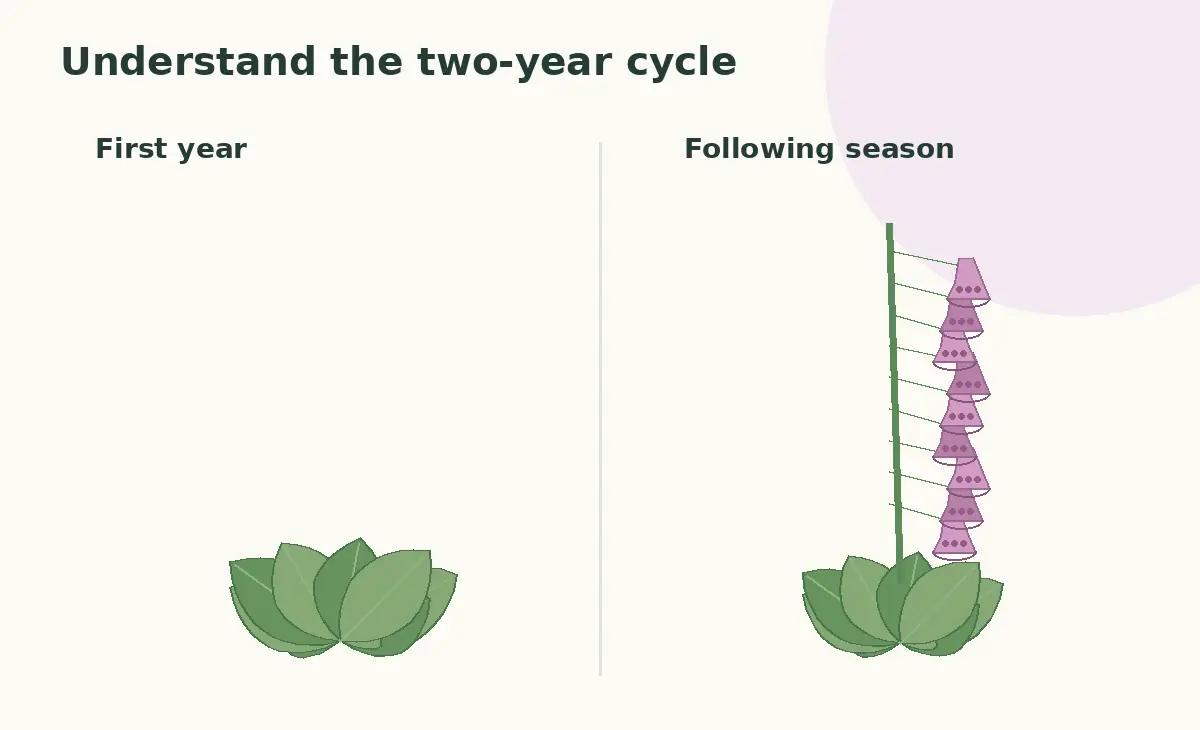
Common foxglove, Digitalis purpurea, usually spends its first growing season making a low rosette of leaves and flowers in the following season. Tiny seed is easily lost by burying it too deeply. The Royal Horticultural Society recommends scattering it on the moist surface and keeping it exposed to light; it also notes that many foxgloves are biennial rather than reliable long-lived perennials. This guide follows seed from safe handling through emergence, potting on, and establishment, so a first-year rosette is recognized as progress rather than a failed flower spike. Every part of foxglove is toxic if eaten, including seed.
Check the Seed Packet for the Exact Digitalis
Digitalis purpurea, the common foxglove, is often a biennial with a basal rosette of soft, oval leaves and later a tall one-sided spike of hanging tubular flowers. Other Digitalis species can behave as short-lived perennials, and some cultivated selections flower sooner than typical biennial seedlings. Always read the species and cultivar name before using a schedule. Seed from a named hybrid may not reproduce the parent color, habit, or timing, and certain hybrids set little or no viable seed. Label each tray. Because all parts contain toxic compounds, wear gloves for seed work, wash hands afterward, and keep containers away from children, pets, food, and edible-seed supplies. If you want the full process, read how to grow hollyhocks from seed and understand first-year rosettes.
Choose a Season That Allows Rosettes to Establish
RHS recommends late spring to early summer for sowing many common foxgloves, after severe cold risk has eased, with transplanting once sturdy. In a very hot area the appropriate sowing window may differ; favor mild weather that allows leaf and root growth without constant heat stress. Do not use a USDA perennial hardiness zone as an exact sowing calendar. That system describes average winter cold tolerance, not the best month for a young Digitalis seedling. For traditional biennials, plan for robust leafy plants the first season, followed by flowering the next year when conditions permit. Some selections differ, so packet instructions take precedence.

Surface-Sow Seeds That Need Light
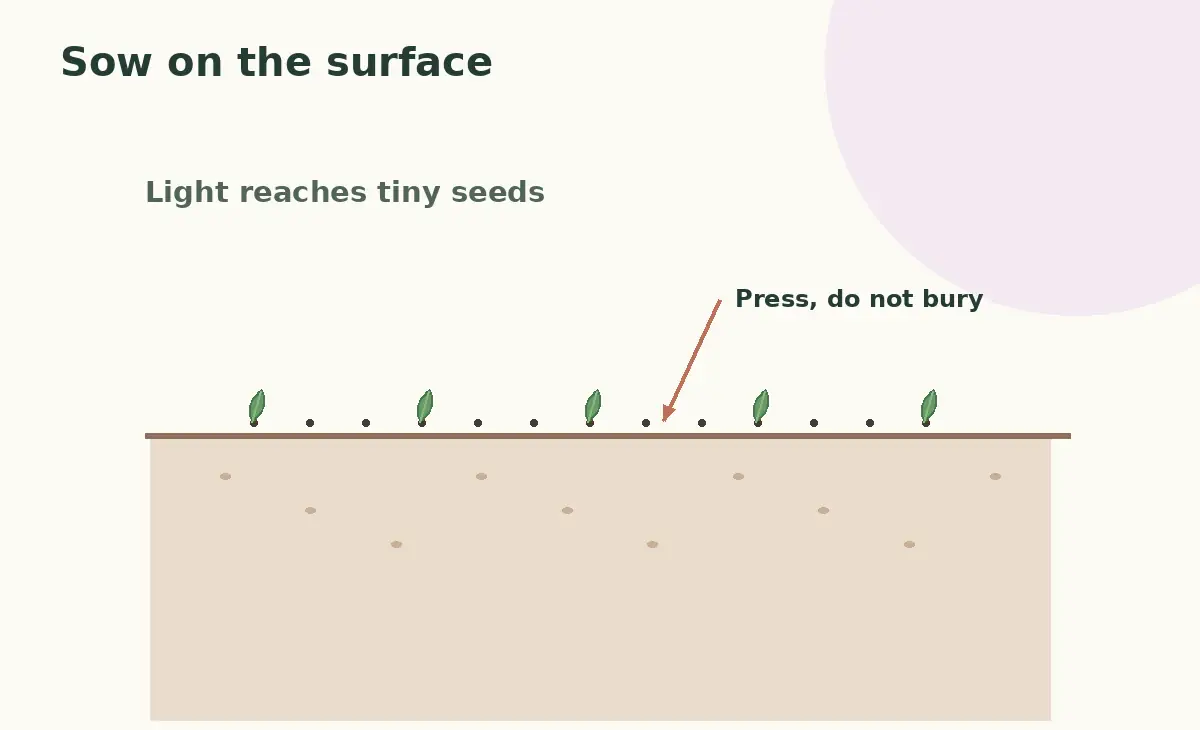
Fill a clean tray with fine, free-draining seed-starting mix and pre-moisten it gently. Scatter the very small seeds thinly across the surface instead of tipping the entire packet in a pile. Press them lightly into contact using a clean flat surface or fingertips; do not bury them under compost. RHS specifically describes foxglove seed as light-requiring for germination. Use a clear label to separate it from other small-seeded ornamentals. A careful fine mist or bottom-watering routine keeps seeds from being washed into one corner. A deep blanket of mix is a common reason for weak or failed emergence.
Provide Gentle Light and Consistent Moisture
Place the tray in bright but sheltered conditions, out of scorching midday sun and drying wind. RHS gives approximately 50–60°F (10–15°C) as suitable for traditional surface-sown foxglove seed, with germination often taking two to three weeks. Those figures describe favorable conditions, not a promise for every seed lot. Keep the surface evenly moist without making it swampy. If a humidity cover is used briefly, check it each day and ventilate as seedlings emerge; stagnant air can encourage fungal problems. Germinated seedlings need light right away so they do not become long and thin.
Thin and Pot On When Seedlings Can Be Handled
Foxglove seedlings begin tiny and can form a dense green carpet when seed is sprinkled too heavily. Do not yank a whole crowded mass out by its leaves. Instead, lift well-rooted young plants with a narrow dibber while holding a leaf, not the fragile stem. Give each a small pot or cell with good drainage and enough room for a growing rosette. Thin others in place if moving would cause excessive damage. Keep new pots shaded from harsh sun during the adjustment period, then restore bright, indirect light. Slugs and snails frequently attack small rosettes, so inspect trays and the growing area, especially after rain.
| Situation | What to do | Why |
|---|---|---|
| Seeds have been scattered | Press on surface without covering | Light supports germination |
| Healthy low rosettes form | Grow on and protect through winter | Typical biennials flower the next season |
| Seedlings are crowded | Thin or pot on carefully | Allows proper root and leaf growth |
Transplant Before Roots Become Potbound
Move sturdy young plants into a prepared garden bed when seasonal conditions are suitable, hardening them off gradually if grown under cover. RHS suggests allowing around 12–14 inches between many common foxgloves so their low rosettes can expand. Preserve the seedling crown at the level it occupied in the pot rather than packing soil into its center. Choose compost-enriched, moisture-retentive but draining soil, usually in dappled or light shade. Water thoroughly after planting, then monitor root-zone moisture as plants establish. A small crowded rosette may postpone its flowering rather than suddenly catching up next spring.
Recognize the Normal First-Year Rosette
A healthy common foxglove that does not flower in its first season is often behaving normally. Look for a low cluster of broad, softly hairy leaves radiating from a central point and becoming progressively more substantial. The flowering spike commonly emerges after the plant has built a strong rosette and experienced an appropriate seasonal cycle. Do not pull out healthy nonflowering rosettes as weeds without confirming the identification. Record where they are planted, because winter leaf loss or changes in nearby bedding plants can make small ornamentals difficult to locate. In warm regions and with specially bred seed lines, timing can differ. If you are starting from scratch, read When to Sow Sweet William Seeds for Strong Rosettes and Second-year Flowers.
Manage Self-Seeding and Flower Spikes Safely
Tall spikes may need support in exposed gardens, especially where rain and wind combine. Once flowers fade, decide whether to leave a few seed capsules for volunteer plants or remove the flower stalks to limit spread. Most seedlings from saved hybrid seed will not reliably copy named flower colors. Keep foxglove seedheads and trimmings out of compost piles that could be mistaken for edible material, and use gloves to handle them. New volunteers can germinate beyond the original bed. Where the species is considered invasive or problematic, follow regional guidance and do not let it seed into natural areas. If you are starting from scratch, read When to Cut Back Foxgloves and When to Leave Seed Pods.
Troubleshoot Poor Germination Without Guessing
First check whether seed was buried or the surface allowed to dry out. Review the date and age of the seed, temperature extremes, and drainage. A cold, saturated tray may remain wet for weeks and still produce poor seedlings. Very warm windowsills can become much hotter than room air in full sun. A thin green growth in the tray could also be algae rather than foxglove seedlings. Do not add fertilizer to ungerminated seeds hoping to force growth. Repeat a small trial in a clean, fine substrate under the conditions recommended for the specific packet; compare only one or two changed variables at a time.
Make Safety Part of the Garden Design
Digitalis contains cardiac glycosides and is hazardous if ingested. NC State explicitly flags common foxglove for high-severity poisoning. Plant it where gardeners will not confuse the rosette with edible greens and where inquisitive children and animals cannot reach it. Never suggest home herbal preparations from foxglove; medical digitalis drugs are not equivalent to eating or brewing garden plants. After garden work, wash gloves and hands and clean tools. If exposure or ingestion is suspected, seek immediate professional poison-control or veterinary advice. Attractive flowers and pollinator value do not remove this risk.
How We Research and Verify These Steps
We cross-checked the identification, timing, practical actions, and safety cautions against these authoritative resources on 2026-10-24: www.rhs.org.uk reference; plants.ces.ncsu.edu reference; www.rhs.org.uk reference. Guidance from RHS or university Extension may describe a particular climate, species, or planting system, so compare it with your actual growing conditions. We distinguish observations supported by those references from local decisions that must be adapted to a garden, cultivar, or weather pattern.
Disclosures and Regional Considerations
This is educational garden guidance, not a promise of a crop or flower outcome. No paid partnership or affiliate recommendation is claimed for this article; see VegWin affiliate disclosure. Weather, plant identity, garden location, and local regulations can change the safest procedure. For pesticides, use only products currently registered for the exact crop and pest and follow the label. Toxic ornamentals must be kept away from children and pets, and proper protective equipment should be used as described.
Not for the common foxglove method described by RHS. Press the fine seed onto moist compost; the seeds need light for germination.
Most ordinary Digitalis purpurea plants form leaves in year one and bloom in the second season. Some special cultivars flower earlier.
Yes. All plant parts, including seeds, are poisonous if eaten. Keep the seed away from people, pets, and food.
It favors dappled or partial shade. Extremely dark sites may reduce vigor and flowering; follow the species and local conditions.
Not reliably from many hybrids or named selections. Some hybrids make little viable seed, so purchase verified seed when exact traits matter.