
Hostas often expand into magnificent clumps without needing much attention. A large plant is not automatically an overgrown plant. Division becomes useful when a clump crowds nearby paths or neighbors, develops a dead center, or supplies new plants for another shaded spot. The trick is to protect the crown, where leaves and roots join, instead of cutting random handfuls of leaves and hoping they root.
Spring offers a particularly readable moment: hosta shoots emerge as tight pointed noses before the leaves open. You can see which sections have growing points, separate the root mass, and put the pieces back before expanding leaves lose excessive moisture. Late-summer work may be possible, but the risk of slow establishment rises where cold arrives soon. This guide makes the decision based on plant condition and local season rather than an arbitrary calendar date.
Decide whether this hosta actually needs division
Look at the entire clump from above and the sides. A healthy hosta that is large but still has a vigorous, leafy center can often remain undisturbed for years. A hollow or dead center, crowding against stone edges, or a desire to propagate a favorite cultivar provides a clearer reason to divide. Ignore general advice that every perennial needs dividing on a fixed two-year schedule. Size also depends on the variety: miniature hostas naturally look different from giant selections. Mark the part you want to retain before lifting; this avoids accidentally discarding the healthiest portion.
Time the job around emerging spring points
Iowa State University Extension identifies early spring, just as pointed shoots begin to emerge, as the best time for division. The clump is easier to handle before big leaves unfold and obscure where each crown begins. In many climates, spring division also gives roots the growing season to recover. Hostas can be divided later in spring or in late summer when conditions allow, but newly moved pieces then require careful moisture management. Avoid dividing during severe drought or just before a hard freeze, when damaged roots have fewer opportunities to establish. For the basics, see our guide: When to Divide Hostas and Keep Healthy Crown Buds and Roots.
Prepare a shaded destination before lifting roots
Choose a site suited to the hosta’s mature size and light needs, not just an empty gap that will be overcrowded next year. Test drainage and prepare a broad planting area before digging up the original clump. Keep the transplant site ready so exposed roots do not sit dry in sun or wind. Garden soil should settle around the roots without burying the crown deeper than it grew before. If reusing the same planting hole, set aside improved surface mulch separately from the soil so you can return the crown to its original grade. For the basics, see our guide: When to Plant Coral Bells and Keep the Heuchera Crown Above Soil.

Lift a clump while keeping its crowns intact
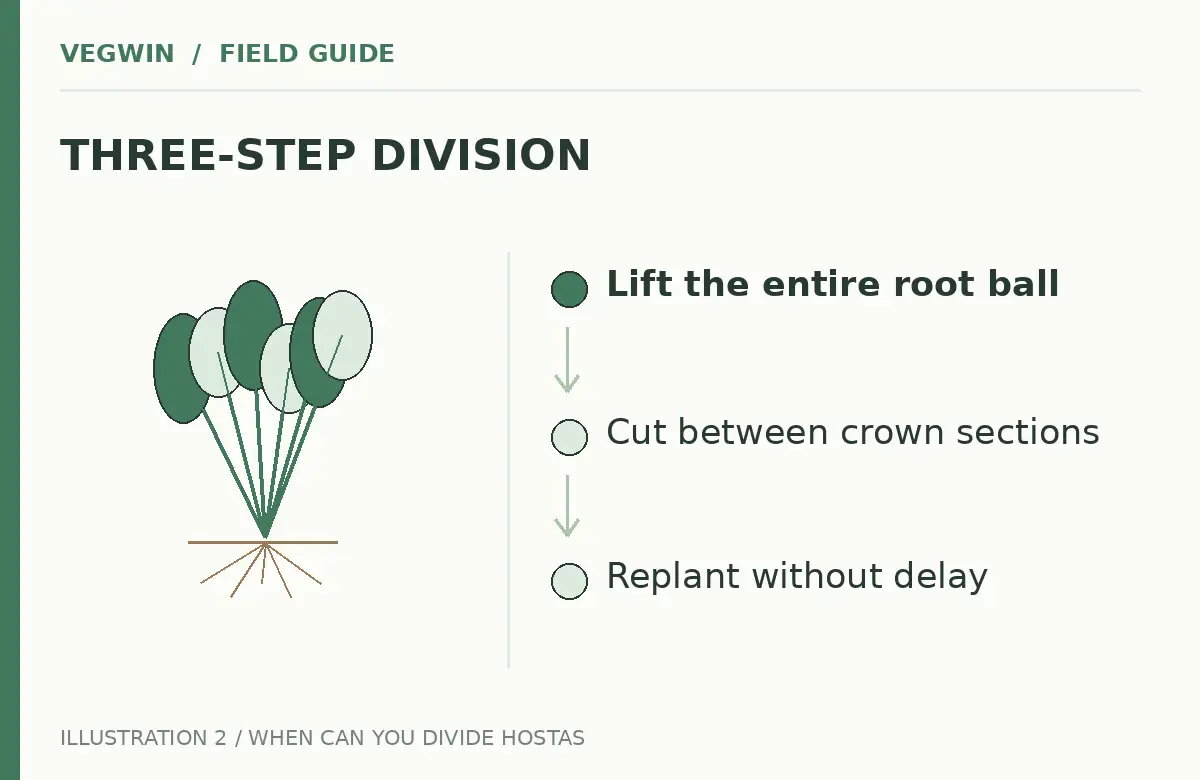
Water a dry planting area before work, then use a spade to loosen soil outside the main root zone. Work around the clump rather than levering hard against one side and snapping the crown. Lift the plant onto a tarp where you can examine it safely; larger old hostas can be heavy and benefit from two people. Gently brush or rinse enough loose soil to distinguish roots from crown sections. Brown decayed tissue and an empty center should not be included in a new division, even if that makes the resulting plant look smaller.
Keep several growing points with healthy roots
Each transplant should contain a viable crown section and an adequate attached root system. Iowa State suggests at least two or three emerging points per division. A piece consisting of leaf blades without a crown is not a division. Extremely tiny splits might survive, but they are slow to fill the desired space and can be more vulnerable to drying. Follow natural separations where possible and use a clean sharp knife or spade for tougher junctions. Do not pull so forcefully that you tear most roots away from the piece you plan to keep.
Replant at the same depth and water thoroughly
Set every division at approximately the soil level of the original plant, spreading roots naturally without forcing a tight ball into a deep narrow hole. Backfill gently, press enough to remove large pockets, and water the entire root area. A modest mulch layer can reduce drying, but do not mound mulch over the crown itself. Move divisions promptly after separation; leaving them in an uncovered pile while preparing another border turns a controlled propagation task into transplant stress. Check soil moisture over the following weeks rather than watering by habit alone.
Protect late-summer divisions from winter heaving
When summer division is necessary, prioritize an early enough date for re-rooting in your climate. Keep soil evenly moist while the division establishes and avoid extra fertilizer intended to force lush late growth. In climates with freeze-thaw cycles, a protective winter mulch after the ground cools can reduce heaving of recently moved plants. The amount and timing vary by local conditions, so rely on your regional Extension guidance. Division is not a guaranteed same-season display; plants may need time to recover their full leaf size and vigor. For a step-by-step method, see how to divide astilbe in spring while keeping crowns and roots intact.
Handle variegated varieties without changing the label
Hostas are popular for distinctive leaf patterns, and division preserves the characteristics of the parent clump more reliably than growing seeds of a hybrid or cultivar. Label each group before splitting if several similar hostas grow together. Do not identify cultivars only from a single shaded or sun-exposed leaf, because color intensity can vary with site. A variegated clump sometimes includes an unusual shoot; examine what is actually attached to its crown before claiming that every division will have identical leaves. Keep a photograph of the original and its location for later comparison.

Monitor recovery instead of expecting immediate perfection
After moving, foliage may droop temporarily because severed roots cannot immediately meet the leaf canopy’s demand. Check the soil around roots, not just the surface mulch. Look for renewed growth and firm crowns. Persistent wilting in wet soil suggests a different problem from drying in loose, exposed soil. Protect tender foliage from trampling and check for slug damage without confusing holes in leaves with failed division. If a piece looks weak, avoid repeatedly digging it up; first confirm moisture, soil contact, and the planting depth you used. If you are starting from scratch, read When and How to Divide Hostas Without Losing Crowns.
Related Guides
- How to Divide Bearded Irises and Replant Healthy Rhizomes
- When to Divide Astilbe and Replant Clumps Without Drying Their Roots
- When to Divide Black-Eyed Susans Without Losing Healthy Crowns
- How to Divide Autumn Joy Sedum Without Burying New Crowns
- When to Divide Agapanthus in Pots or Borders Without Losing Blooms
How We Research and Verify Garden Advice
We focused on separates a truly crowded or failing hosta clump from a healthy large one, then uses visible emerging points and attached roots to guide the split. Local climate, cultivar, equipment performance, and plant health can change an otherwise reasonable recommendation. Sources were checked October 21, 2026. We do not include paid product links in this article; see our affiliate disclosure.
Sources checked October 21, 2026: Primary Extension reference (Spring points stage, division size, and replanting immediately). Related Extension guidance (Hosta crown division, variegation fidelity, and late summer options). Additional university guidance (General perennial division and handling of dead centers). These links support the horticultural distinctions, but do not replace local Extension guidance for a particular site.
Yes. Vigorous hostas may thrive for many years without division unless crowding, a dead center, or propagation makes it useful.
They are the pointed emerging leaf shoots visible in spring, useful for finding crown sections before leaves unfurl.
Iowa State Extension recommends at least two or three points plus a substantial portion of the crown and healthy roots.
Yes, with enough time for root establishment and careful moisture management; regions with winter freeze-thaw may require protective mulch.
No. Replant near the previous soil level and keep mulch from piling against the crown.