
Hostas are long-lived clumping perennials grown mainly for their ornamental leaves. They do not need to be divided on a strict timetable, but a very large clump may crowd its neighbors or develop a tired-looking center. Division also lets you propagate a named variegated cultivar while preserving its foliage pattern. Iowa State University Extension recommends spring, just as pointed new shoots or “eyes” begin to emerge, as the easiest time to see where a clump can be split. The important principle is simple: every new section must include a healthy crown and roots, not just a handsome leaf or a slice of bare root. This guide shows the process and the timing choices.
Decide Whether the Hosta Really Needs Division
A healthy hosta may grow undisturbed for many years. There is no automatic rule that every clump must be split after exactly three seasons. Consider division if the clump has become too wide for a path, is crowding neighboring plants, is visibly dying in the center or you want additional identical plants. First check that the apparent central gap is not caused by vole feeding, crown rot, drought or another problem. A diseased clump should not be divided into several new locations as a shortcut, because that can spread infected tissue. If the plant looks vigorous and fits its space, leaving it alone is a valid management choice.
Identify Spring Eyes and the Rooted Crown
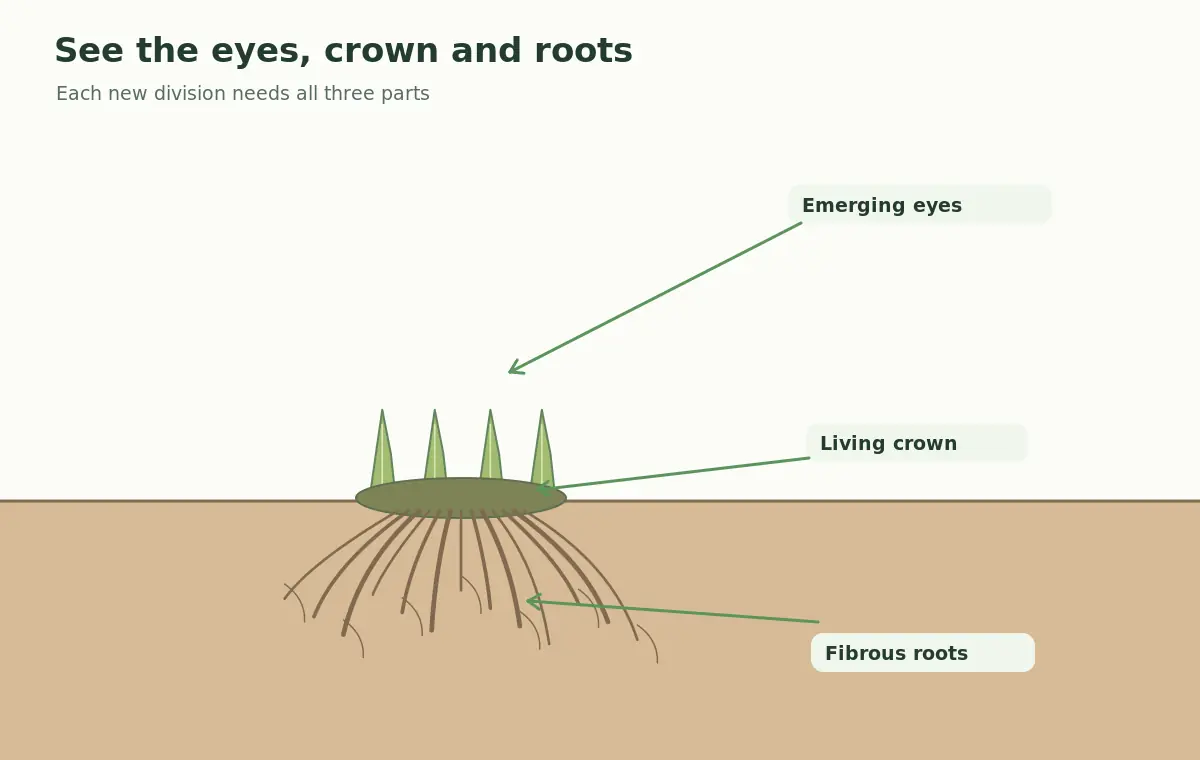
Before leaves unfurl, hostas produce pointed emerging shoots commonly called eyes or noses. These arise from a crown just at or beneath the soil surface, with a dense network of pale to tan roots below. The eye itself is a growing shoot, not a root tip. A viable division contains shoot buds attached to living crown tissue and enough roots to support the new plant. Iowa State recommends pieces with at least two or three points and a good portion of crown and root system for reliable division. A detached leaf blade or several loose roots without a bud will not function as an ordinary hosta division. If you are starting from scratch, read When to Divide Hostas and Keep Healthy Crown Buds and Roots.
Choose Spring or a Suitable Late-Summer Window
Early spring, when new points are visible but large leaves have not yet expanded, is the preferred time for straightforward division in many temperate gardens. Iowa State also recognizes late-summer division, though the plant then needs enough mild weather to establish before freezing. Exact months differ by region; hot weather and drought can make any division more stressful. Choose a cool, workable day with soil neither bone dry nor saturated. If dividing in late summer where winters freeze, Iowa State recommends protective late-fall mulch to lessen frost heaving. Do not treat a USDA hardiness-zone map as the precise day to lift a perennial. Our guide to dividing tall garden phlox adds more detail on this.
Water, Prepare the Site and Sanitize Tools
A day before digging, water the hosta if the soil is dry, allowing moisture to reach roots without turning the planting area into mud. Prepare its new locations first, with partial shade or shade appropriate to the cultivar, moist but draining soil and adequate room for mature spread. Gather a sturdy spade, a clean sharp knife for stubborn crowns, a hose or watering can and breathable material to protect lifted roots from sun. Remove old soil from tools and clean cutting surfaces between suspect plants. This helps reduce accidental movement of pathogens. Never plan to leave newly lifted divisions exposed for hours while you search for an open planting bed.
Lift the Entire Clump With Roots Attached
Begin digging beyond the leaf canopy or visible eyes instead of plunging the spade into the center of the plant. Work around the perimeter, loosening soil and levering gently until the root mass can be lifted. Some roots will inevitably break on old clumps, but the aim is to preserve a substantial shared root ball for partitioning. If the clump is too heavy, get help rather than forcing the spade against your body. Shake or rinse away enough soil to see where the crown joins the roots; avoid prolonged hard washing that dries roots or strips fine root branches. Keep the clump shaded and work steadily. For the basics, see our guide: When to Plant Coral Bells and Keep the Heuchera Crown Above Soil.
Split Into Sections With Several Eyes and Roots
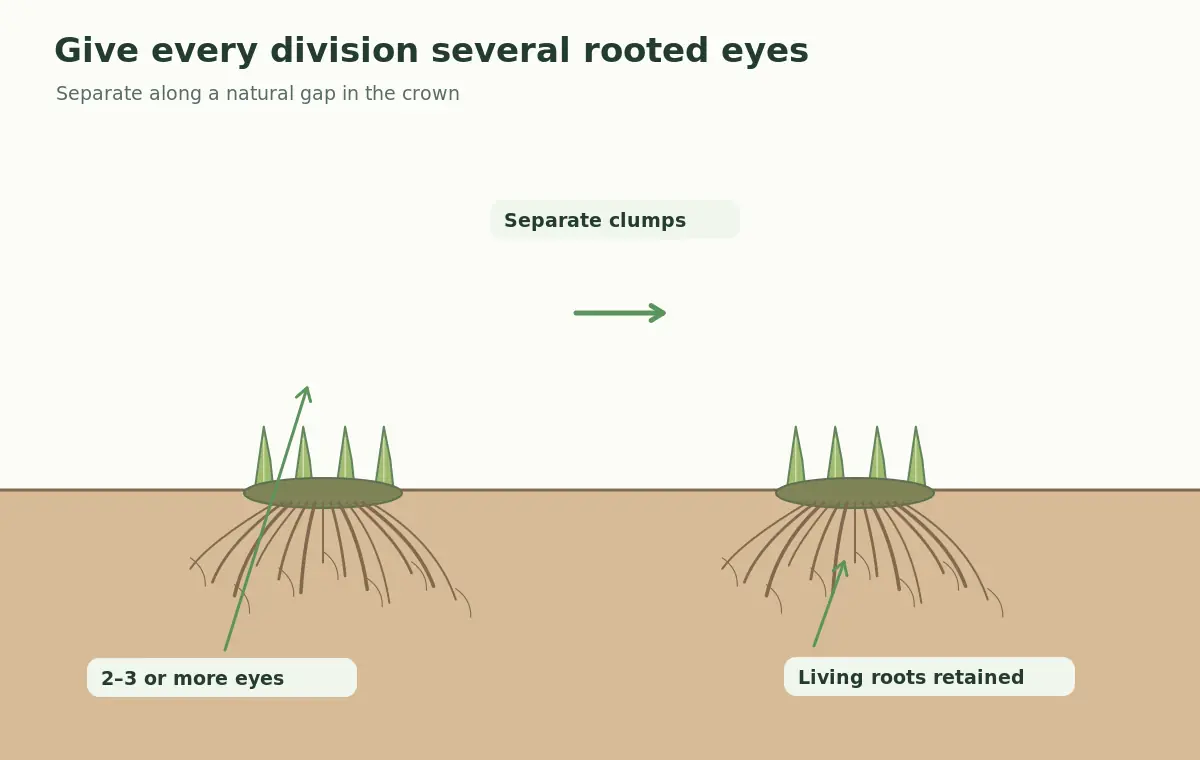
Examine the exposed crown for natural gaps between clusters of pointed eyes. Pull apart loose sections by hand if they separate easily. For a solid, woody old crown, use a sharp spade or knife to cut through a suitable natural gap. Each resulting division should have at least two or three healthy eyes and a meaningful set of living roots, following the Iowa State guidance. One large section is better than multiple tiny pieces stripped of roots. Discard black, soft or dead central material rather than redistributing it. Recheck every piece before setting it aside: two leaves without basal crown tissue are not two viable plants.
Replant at Approximately the Original Crown Depth
Dig a hole broad enough to spread the roots without folding them tightly upward. Position the rooted crown near its prior soil level, then refill soil gently around it. Cover roots but do not bury the crown far below its old position or leave bare roots drying above ground. Water thoroughly to settle soil around root contact, then correct obvious sinking or air pockets. A light organic mulch may help retain moisture, kept away from packing directly against the crown. A diagram showing a crown submerged deep under mulch is a warning, not a planting instruction. Spacing should reflect the mature size of the individual hosta cultivar. Our walkthrough on how to divide hostas without damaging crowns or planting too deep sets out each step.
Support Divisions During Their First Growing Season
Recently divided hostas have fewer working roots relative to their leaf area and may droop during sunny weather. Water as needed to maintain reasonably consistent soil moisture, especially during dry spells, without creating waterlogged conditions that favor crown trouble. Temporary light shade can reduce stress on divisions with substantial foliage. Avoid repeated digging to see whether roots have formed. The plant may put energy into rebuilding its root system before producing a full ornamental display. Iowa State cautions that some newly divided perennials bloom poorly until later seasons; prioritize survival and steady new leaves rather than insisting on an immediate show.
Protect Late-Summer Divisions From Frost Heaving
Where soil freezes, repeated freezing and thawing can lift recently planted crowns. Iowa State recommends applying several inches of protective organic mulch in late fall to late-summer hosta divisions, using materials such as straw or pine needles, especially in regions with harsh winters. This seasonal blanket is not permission to bury the living crown deeply during planting. In mild-winter climates, frost heaving may not be the main concern; heat, prolonged dry conditions or poor drainage can matter more. Check local climate and drainage before adopting blanket seasonal instructions developed for a different state.

Preserve Cultivar Traits and Prevent Problems
Hosta seed does not reliably reproduce the variegation pattern and mature size of a named parent. Division, by separating a vegetative crown, is the usual way to keep a cultivar’s basic leaf pattern. But diseased plants should not be propagated just because the colors are attractive. Inspect for unusual mottling, spots, petiole collapse and root injury, and seek a qualified diagnosis where symptoms are suspicious. Also confirm that you are authorized to propagate patented cultivars for the purpose intended. Take a labeled photograph of each split clump during its first season so that similar green shoots are not confused with another cultivar later.
Related Guides
- When to Divide Daylilies: Keep Healthy Fans and Replant Crowns Correctly
- When to Divide Ornamental Grasses and Remove a Dead Center
- When to Divide Astilbe and Replant Clumps Without Drying Their Roots
- When to Divide Black-Eyed Susans Without Losing Healthy Crowns
- How to Divide Autumn Joy Sedum Without Burying New Crowns
How We Research and Check Recommendations
Sources checked October 23, 2026. Our review compared species-specific university Cooperative Extension material with broader gardening recommendations and separated observations that apply widely from regional planting, dormancy and weather decisions. An illustration is a simplified teaching aid rather than a diagnostic image or substitute for inspecting a live plant. This guide does not report original trials, promise cultivar-specific results, endorse pesticides or make claims of sponsorship.
Sources reviewed: Iowa State University Extension — All About Hostas (hosta characteristics and division at spring shoots with two or three eyes and roots); Iowa State University Extension — How to Divide and Transplant Perennials (appropriate timing, root-ball handling and replanting); Iowa State University Extension — When Is the Best Time to Divide Hostas? (early spring preferred; late-summer divisions need care). VegWin does not claim partnership with these institutions; see the site affiliate disclosure.
Early spring as the pointed eyes start to emerge, before leaves fully expand, is usually best.
Iowa State recommends at least two or three points, along with a meaningful share of crown and roots.
Yes, if conditions permit establishment before winter; extra watering and frost-heave protection may be needed.
Keep its crown approximately at the original soil level, with living roots covered but the crown not buried deeply.
No. Healthy plants can often remain undisturbed for many years until size, crowding or a declining center creates a reason.