
An agapanthus in a tight pot is not automatically begging to be divided. Its fleshy roots often fill the available space, yet a plant that still grows strongly and flowers well may be better left alone. Divide because the clump has become unmanageable, is splitting the pot, or needs to be multiplied—not simply because you can see roots near the surface. The decision is different for a mature border clump and a container that can be moved into a slightly larger pot.
The most useful starting point is to examine the root mass, the plant’s recent flowering, and the season ahead. The Royal Horticultural Society favors spring for division; Wisconsin Horticulture also explains why a recently divided plant may take time to flower again. Use local frost risk and the hardiness of your particular agapanthus, especially an evergreen type, before exposing tender roots outdoors.
Decide whether the plant actually needs division
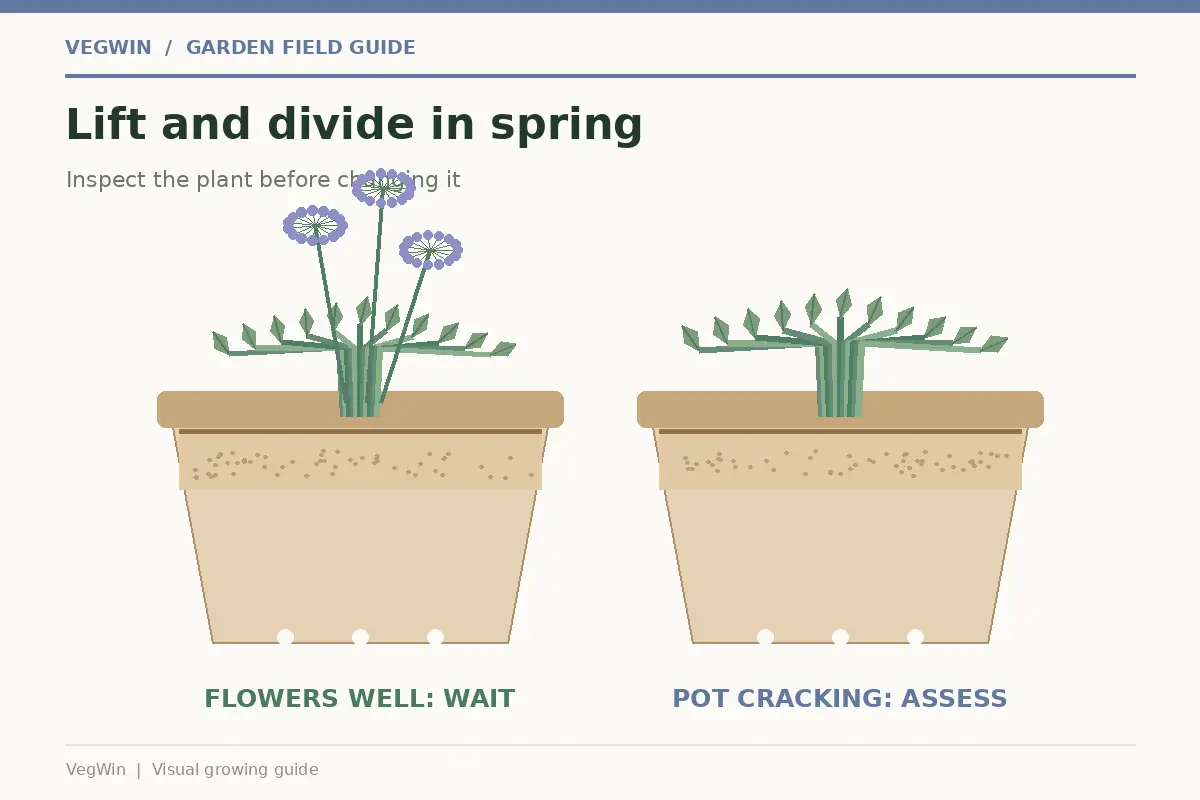
Compare three signals rather than responding to one crowded-looking root. A pot that is deformed or cannot hold enough water may need attention. A clump whose center is weak or whose pieces are expanding beyond its intended space can benefit from separation. A vigorous agapanthus blooming happily in a sound container generally does not. Lack of flowers can also follow shade, dry summer soil, excessive winter warmth, or unsuitable winter protection; cutting the roots will not fix those conditions. If the pot is only mildly tight and the plant is healthy, consider moving it into a slightly larger container rather than chopping a thriving clump.
Choose a spring window with recovery time
Spring growth is a practical moment to divide most agapanthus because new roots have a growing season to establish. In the United Kingdom the RHS describes late March and April, but those calendar months are not transplant instructions for every US climate. Choose a time when freezing nights no longer threaten the exposed roots or move newly potted divisions into a sheltered, frost-free position. Wisconsin Horticulture notes that division after flowering can work, yet it may reduce next season’s display. Do not divide during an extreme heat wave, saturated soil, or when a clump is stressed from drought.
Compare repotting with splitting a crowded clump
A plant whose roots occupy most of its pot may simply need a wider home, while a large congested mass that cannot be accommodated may justify two or three substantial divisions. Too many tiny pieces are a false economy: each has less stored energy and fewer roots from which to rebuild. The RHS cautions that agapanthus does not reliably flower better when excessively pot-bound; it can bloom poorly both when overpotted and when badly congested. The goal is a proportionate root space, not a rigid rule that the plant must be squeezed or chopped every year.
Lift the roots without wrenching off the crown
Water a dry potting mix lightly ahead of handling, then tip the container carefully and ease out the root ball. If roots hold fast, work around the container edge instead of yanking stems. For a border plant, use a fork outside the crown to lift with as much root mass as practical. Brush away enough loose mix to locate natural clusters of shoots. Healthy agapanthus roots are fleshy and can tear if forced. Lay the clump on a clean surface in shade while you decide where to separate it, rather than leaving exposed roots in strong sun and wind.
| What you see | Best next move |
|---|---|
| Healthy flowers; firm intact pot | Leave it alone and monitor moisture |
| Roots crowding a small pot, but clump manageable | Move to a modestly larger pot |
| Pot splitting or very oversized clump | Divide into a few rooted sections in a safe season |
| Few flowers but roots appear healthy | Check light, summer water and winter treatment first |
Make fewer divisions with living roots attached
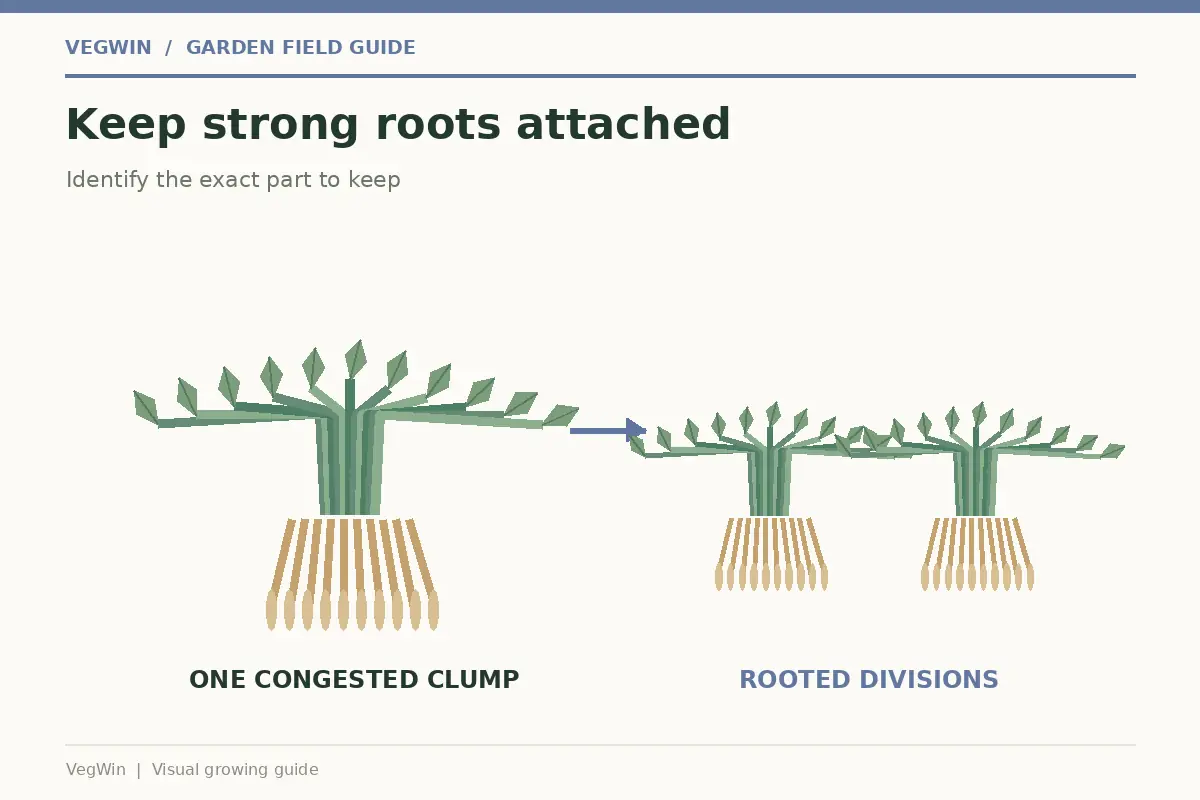
Find groups of leaves or growing points that carry a generous section of attached roots. Smaller clusters sometimes pull apart; tougher congested clumps may need a sharp clean knife or spade. Aim for clear pieces with shoots and substantial roots, avoiding thin rootless slices and excessive cutting. Discard plainly rotted sections and clean tools before moving to another plant. Wisconsin Horticulture recommends cutting into sections with roots attached. Remember that named cultivars copied by division retain their identity; plants raised from their seeds may vary. Do not label a seedling as an exact copy of its parent.
Set the crown at the original planting level
Choose free-draining potting mix and a container with open drainage holes. Position each division so the crown is not buried under several inches of mix; cover the roots while retaining the original shoot base at a sensible level. Firm the mix gently without crushing fleshy roots, then water to settle it and allow the surplus to escape. In a border, replant promptly in reasonably draining ground with good light and sufficient room for the clump to mature. Waterlogged soil damages roots; a gravel layer inside an otherwise poorly draining pot is not a cure for blocked drainage holes.
Manage the first growing season conservatively
Newly separated clumps need steady, not swampy, moisture while roots re-establish. Check the mix beneath the surface before watering again and keep pots out of punishing midday heat during initial recovery. Move plants into stronger light gradually where necessary. Do not assume that large fertilizer doses will force a quick bloom: the plant first needs functional roots and leaves. A newly divided agapanthus may produce foliage instead of a flower stalk during its first year. That is a predictable cost of division, not proof the plant was destroyed.
Match winter protection to the type you grow
Agapanthus includes evergreen and deciduous forms with different winter tolerances. Wisconsin Horticulture describes protecting container plants in freezing climates and moving suitable ones inside before frost. Do not use a USDA hardiness-zone number as a flowering or division calendar; assess the named plant, local minimum temperatures, and whether a container is more exposed than garden soil. Evergreen forms may require brighter frost-free protection, while dormant deciduous plants can be handled differently. Label the container with its cultivar or known type so that next winter’s decision is based on the actual plant.

Check the decision again before next spring
Watch for resumed leaf growth, firm shoots and a pot that drains normally. Record whether flowering returned and whether the root mass quickly filled its new space. If the new division is healthy but does not bloom, evaluate light, summer water and winter care before dividing again. In a large border, observe whether the center renews itself; in a pot, check whether the plant can still be watered evenly. A photograph of the root ball, labeled with date, can prevent routine and unnecessary repeat division.
Related Guides
- How to Divide Autumn Joy Sedum Without Burying New Crowns
- When to Divide Astilbe and Replant Clumps Without Drying Their Roots
- When to Divide Black-Eyed Susans Without Losing Healthy Crowns
- How to Divide Herbaceous Peonies in Fall and Set the Eyes Shallowly
- How to Divide Shasta Daisies in Spring and Replant Healthy Crowns
How We Research and Check Recommendations
This guide was researched on October 23, 2026 using the institutional horticultural references below. We separated species-specific guidance from broader garden practice, checked limits on regional timing, and avoided treating a search phrase as a universal instruction. Dates and site conditions in your garden may differ from the examples. The drawings simplify plant structure to explain decisions; inspect the living plant before making a cut, sowing or transplanting.
Sources reviewed: www.rhs.org.uk — Spring division container sizing differences between fl; hort.extension.wisc.edu — Division of pot-bound clumps attached roots frost prote; www.rhs.org.uk — General handling root separation and timing of division. Each reference was checked on October 23, 2026. For more information on site relationships, read the affiliate disclosure. There are no paid product recommendations or approved affiliate offers in this article.
It is possible, but the disruption can affect the display. A suitable spring window generally gives roots more recovery time.
No. Healthy clumps can remain intact for years; division should answer a real size, vigor, or propagation need.
The plant may be rebuilding its roots. Also check available sun, consistent summer moisture, and suitable winter care.
Avoid burying the crown deeply. Cover the roots while keeping the shoot base near its previous level.
No. Keep substantial rooted clusters rather than weak individual pieces, unless a plant-specific method supports smaller divisions.