
A strawberry runner is not a weed or a diseased vine. It is a horizontal stem, called a stolon, that can produce a rooted daughter plant. Whether you should cut it depends primarily on what kind of strawberry you are growing and how you want the bed to function. June-bearing plants in a traditional matted row use runners to replace and expand productive plants. Day-neutral plants grown as individual fruiting plants are generally managed by removing runners to favor fruit. Cutting every runner from every strawberry bed is therefore as misleading as allowing all of them to tangle together. First identify the crown, runner and daughter plant; then choose a realistic bed plan.
Learn the Difference Between Crown and Runner
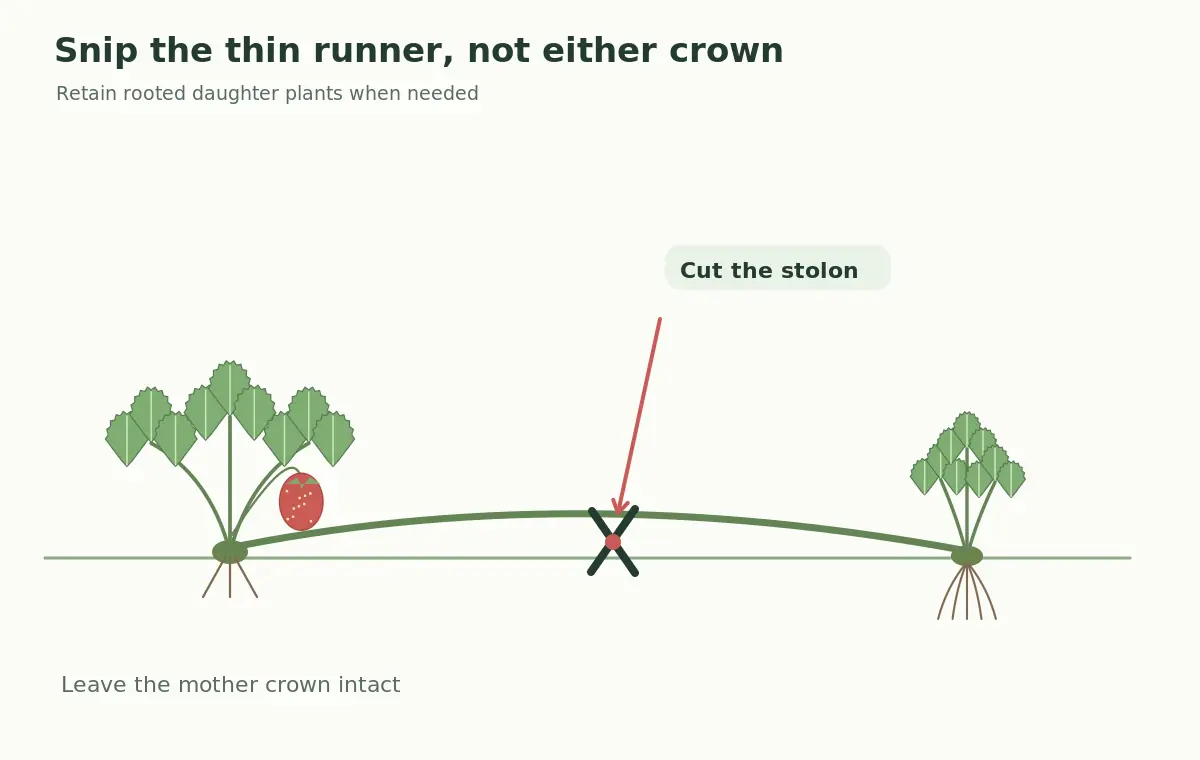
University of Minnesota Extension describes the strawberry crown as the short central stem where leaves, flower stalks, roots and runners originate. A runner grows horizontally away from the mother crown, and at a node it can develop leaves and roots to form a daughter plant. Its thin connecting stem is not a root. If you tug a daughter before it is rooted, you may pull on the mother plant; if you cut into the crown instead of the runner, you can seriously injure the plant. Strawberry leaves normally have three leaflets, which can help distinguish strawberry foliage from low-growing weeds. Examine a whole runner before deciding where it begins and ends.
Identify Your Strawberry Bearing Habit
June-bearing strawberries produce one main concentrated crop each year. Day-neutral types make flowers and fruit over a longer portion of the growing season, depending on temperature and location. Some catalogs also label everbearing types, which may give two flushes and can need specific management. These labels are more useful for runner strategy than fruit color or size. If you bought starts, find the cultivar on the label and check a local Extension guide. Do not infer that a strawberry with fruit in June must be June-bearing: day-neutral plants can fruit at that time too. Likewise, one summer without many berries does not diagnose the cultivar type.
Let Selected June-Bearing Runners Root in Rows
The University of Minnesota explains that June-bearing strawberries grown in matted rows benefit from daughter plants rooting within the designated row, where they fill and renew the planting. Keep healthy runners that can root into bare spots inside that row. Gently position a runner so the daughter node rests against suitable soil, without burying the mother crown. Light contact and consistent moisture support rooting. Remove runners growing into paths, lawns or neighboring crops, and thin excessively crowded daughters rather than letting the entire patch become an impenetrable carpet. The goal is an accessible, productive row, not unlimited spread. Renovation practices after harvest may include additional thinning based on region and plant age. Our guide “Plant Bare-Root Strawberries Without Burying the Crown or Bending Roots” goes into more detail.

Clip Day-Neutral Runners to Favor Fruit
For day-neutral strawberries managed as separate fruiting plants, Minnesota Extension recommends removing runners throughout the growing season. Runners use resources for vegetative reproduction that can otherwise support flowering and fruit production. Examine plants periodically and cut newly forming stolons while they are still easy to distinguish from leaf stems. That does not imply every strawberry species should be denied reproduction or that removing one runner will automatically create extra berries. Fruit production also depends on plant vigor, adequate water, pollination, temperature and nutrition. If your goal is to propagate a day-neutral cultivar, you can intentionally retain some runners on separate stock plants, accepting the possible tradeoff in that plant’s fruit.
Make a Clean Cut Without Wounding the Crown
Use small, clean scissors or pruners to cut the runner’s slender connecting stem a short distance away from the mother crown or young daughter plant. Choose an accessible portion of the runner; there is no botanical need to shave the cut flush against the crown or remove attached leaves. Hold the stalk with one hand and cut with the other, avoiding accidental cuts to flower stems or forming fruit. If a daughter has already rooted and you want to move it, gently test whether it resists lifting, then separate the runner before transplanting it with its roots intact. Do not pull against the crown to snap the runner. Remove scissors from the fruit area when not in use.
Pick the Right Moment for Runner Decisions
There is no single national date for cutting strawberry runners. Minnesota’s home-garden advice emphasizes removing some runners through the season and monitoring June-bearing rows after their main harvest. Day-neutral production systems commonly remove runners repeatedly as they form. Instead of copying Minnesota’s July dates into warmer states, watch your cultivar’s growth cycle, heat and active fruiting season. Newly planted June-bearing beds may be managed differently in the establishment year from old patches being renovated. When making new plants, give rooted daughters enough time to establish before local cold or heat extremes. Use local Extension renovation schedules if you are changing bed width or renovating large June-bearing rows. For the basics, see our guide: When to Root Strawberry Runners and When to Cut Them Off.

Root and Move a Daughter Plant Safely
To retain a useful daughter, choose a vigorous runner node with new leaves and visible root initials or developing roots. Pin its base gently against moist potting mix or adjacent loose soil while it remains connected to the mother. Avoid covering the growing point. When roots have established, sever the connecting runner with clean scissors, preserving as much of the new root system as practical. Transplant into a prepared place with the middle of the crown at soil level; do not bury it deeply or leave the roots drying in air. University of Minnesota stresses correct crown depth because the leaves and roots originate there. Keep newly placed daughters evenly watered while they establish.
Prevent a Crowded or Unproductive Patch
A dense strawberry mat can reduce airflow and make berries hard to locate and pick. Crowding may also keep foliage wetter after rain, although the degree of disease risk varies with local conditions. Inspect where runners rooted, remove weak or misplaced daughter plants and maintain paths for harvest and ventilation. There is no advantage to permitting dozens of tangled rooted plants to compete in a small container intended for one or two crowns. Conversely, cutting all runners from a traditional June-bearing renewal row may leave too few replacement plants for next season. Inspect plant health before propagating: daughters from a virus-suspect, poorly growing mother plant are not a clean source just because they look small and fresh. If you are starting from scratch, read When to Cut Strawberry Runners and When to Root Daughter Plants.
Review the Bed Plan Each Season
At the end of a season, take note of how many useful daughter plants established and whether the strawberries produced fruit where you could reach it. A June-bearing patch may need selective renewal; a day-neutral container may benefit from regular runner clipping, fresh potting mix on a suitable cycle and an intentional replacement plan. Some strawberry varieties are relatively short-lived or are managed annually in commercial systems, but a home plot need not mimic every high-input production practice. Check local overwintering advice before discarding healthy plants. The right choice comes from the cultivar and planting system, not a viral instruction to cut or never cut every runner. Record the cultivar so next season’s decision is much easier.
How We Research and Check Recommendations
Sources checked October 23, 2026. We compared the named plant or disease against university Cooperative Extension recommendations, distinguishing broadly applicable biology from regional production schedules. When guidance depends on crop type, climate or cultivar, those limits are stated rather than hidden behind one universal calendar. This guide offers practical education, not a remote diagnosis, tested soil report, pesticide recommendation, or guarantee of harvest. We do not claim independent field experiments or any commercial relationship with the institutions cited here.
Research sources reviewed: University of Minnesota Extension (crown, stolon and daughter anatomy, June-bearing versus day-neutral runner strategy); University of Minnesota Extension (runner thinning in home gardens, cultivar groups and regional timing); University of Minnesota Extension (matted-row establishment versus runner removal from day-neutral systems). No sponsorship, product endorsement, or verified affiliate arrangement is implied. See the VegWin affiliate disclosure for site policy.
No. In a matted-row system, allow selected healthy daughters to root within the row, while controlling excess and out-of-row runners.
Not for a single-plant fruiting system. Extension production guides recommend clipping runners throughout the growing season.
Snip the thin connecting stolon with clean scissors, away from the crown and without pulling on rooted plants.
Yes. Daughter nodes can root and become independent plants once roots have established and the connecting stem is cut.
Once it has formed an adequate root system and local growing conditions allow establishment; keep its crown correctly positioned at soil level.