
Coral bells are usually purchased for leaf color and texture, but the most important planting detail is the short crown where leaves meet roots. A new Heuchera can look healthy in its pot yet struggle after planting if soil or mulch covers that crown or the rootball dries out. The right season helps, but careful placement and drainage often decide whether a transplant settles in.
University of Maryland Extension describes Heuchera americana as a clump-forming perennial that prefers well-drained conditions and often benefits from afternoon shade. Iowa State specifically identifies coral bells among plants susceptible to frost heaving. This guide combines those two concerns into a planting method: choose the site, inspect the crown, plant at grade, and revisit the crown after freeze–thaw cycles.
Identify the plant and choose a suitable site
Check whether the nursery pot contains a Heuchera species, a colorful hybrid or a similar-looking foamflower relative. Leaf colors and vigor vary among cultivars, so the plant tag matters. Maryland Extension describes H. americana as naturally adapted to part sun through shade, often doing better with afternoon shade in drier ground. A sunny display bed in a hot climate may demand more careful moisture management than a protected woodland edge.
Choose a location where rainfall drains rather than pooling against the crown. Avoid sites where roof runoff or an irrigation sprinkler repeatedly saturates one low spot. A shallow root system can be damaged by both prolonged dryness and saturated conditions. If soil is compacted, address bed preparation before planting instead of placing the rootball in a tiny hole of loose mix surrounded by impermeable ground. Match the particular cultivar to your region and exposure.
Prefer establishment time over hardiness-zone shortcuts
Planting in spring is a conservative option in cold regions because roots have time to establish before repeated winter freezing and thawing. Iowa State notes that shallow-rooted perennials such as coral bells can be heaved upward when soil repeatedly freezes and thaws, especially if planted late in the season. That does not mean fall planting always fails; it means frost patterns and rooting time change the risk. If you are starting from scratch, read When to Dig Dahlia Tubers and Store Healthy Clumps Through Winter.
In climates with mild winters and hot summers, an appropriate fall window may offer a gentler establishment period. Follow a regional Extension calendar and observe the current weather rather than assigning planting dates to USDA zone numbers. If an unexpectedly hot spell follows planting, reduce stress with appropriate shade and careful watering. If a hard freeze is near, a newly planted small rootball needs greater protection than an established clump.
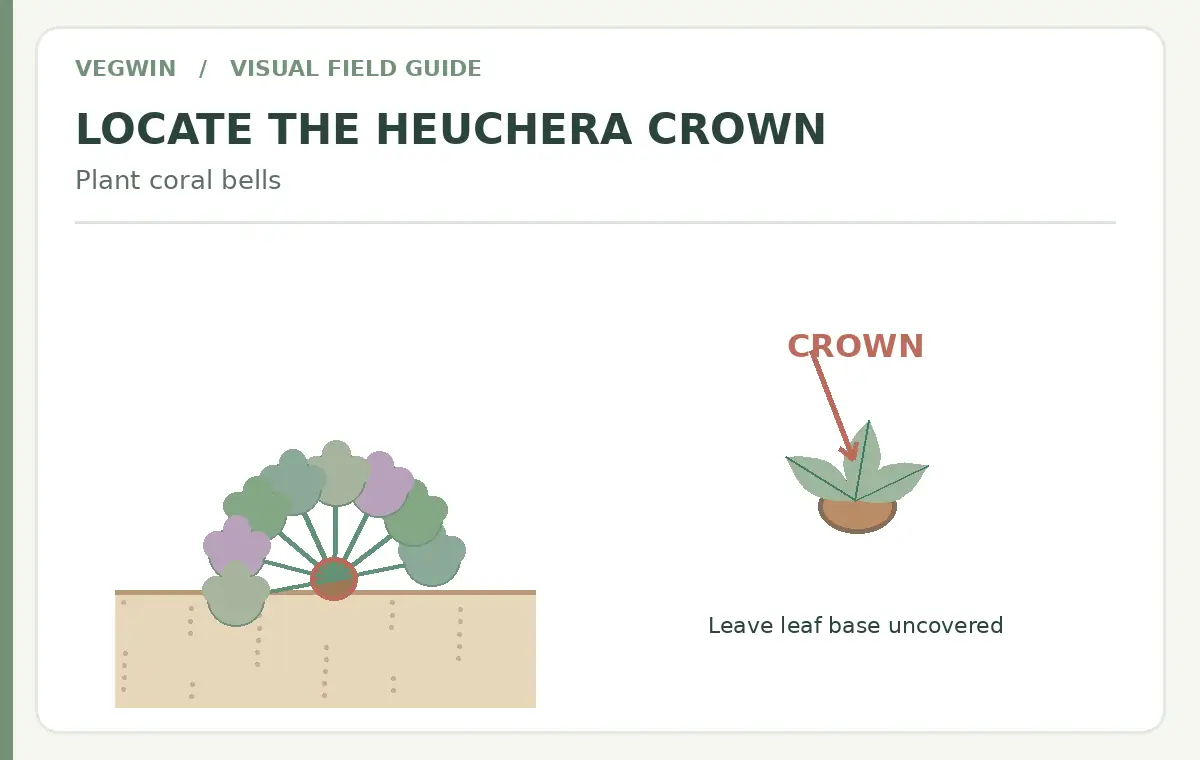
Locate the crown before removing the pot
Water the nursery container appropriately so the rootball holds together but is not muddy. Examine the plant at soil level: the crown is the compact growing point where leaf petioles arise. You should be able to identify it before lowering the plant into a hole. Occasionally the nursery mix sits above the crown or settles below it. Do not reproduce a bad potting depth automatically.
Gently slide the plant out and inspect roots around the sides and bottom. If roots circle tightly, carefully loosen the outer layer without tearing apart the crown. A severely pot-bound plant may need extra preparation and a longer establishment period. Set the rootball on a small firm base of native soil so it does not sink after watering. The final soil surface should meet the rootball without burying the central crown.
Plant at grade and keep mulch off the leaf base
Prepare a hole wide enough to settle the existing rootball and backfill with suitable soil around it. Place the crown at the level appropriate for that plant, generally at or slightly above the surrounding soil surface, never buried under a mound. Water to settle soil and check again: if the plant sinks, carefully reset it while roots are still manageable. The useful goal is firm root contact without trapping moisture against the short stem base.
Use a modest mulch layer around the planting zone to reduce drying and temperature swings, but pull mulch back from the crown. A thick wet collar hides rot and makes it impossible to observe heaving. Do not mound new compost or potting soil over the central leaves in an attempt to protect against frost. Soil and mulch each serve different functions; neither should smother the growing point. Photograph the final position as a reference for the next visit.
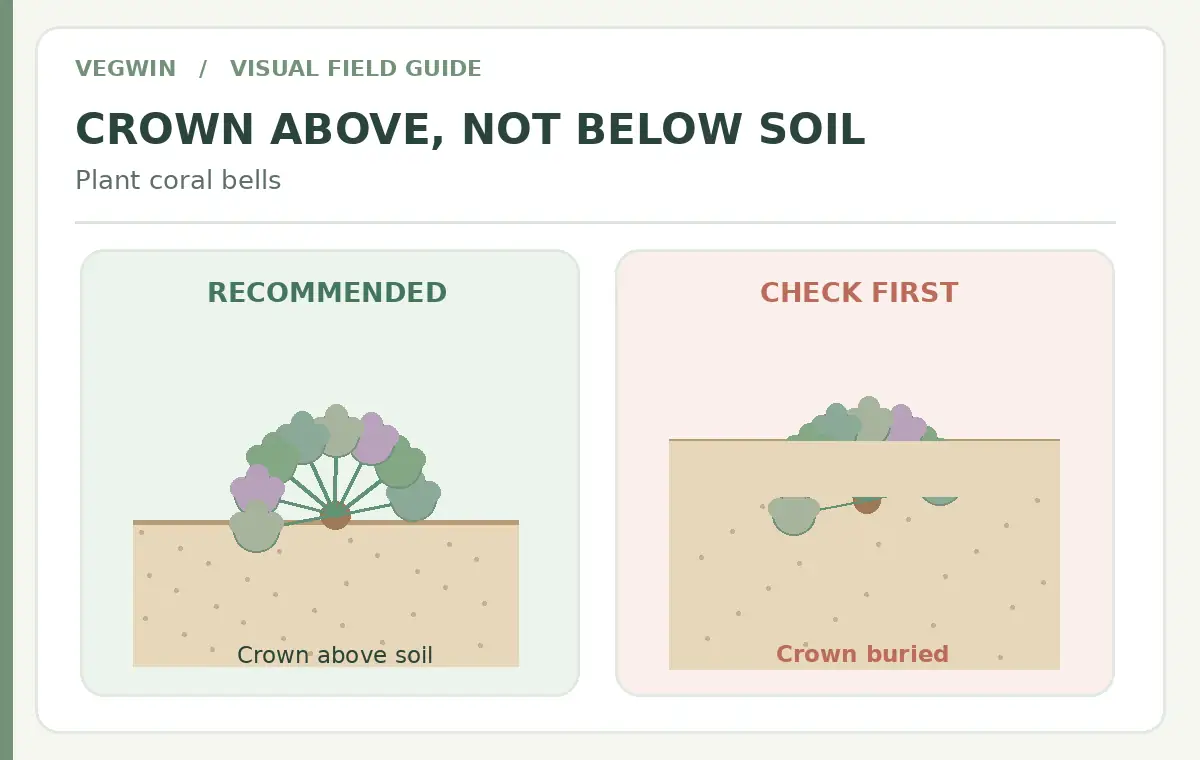
Water for roots without keeping the crown soggy
After planting, water slowly enough to wet the rootball and surrounding soil, then let excess water drain. Check moisture below the surface instead of judging only by the appearance of damp mulch. A small nursery rootball can dry while adjacent native soil remains moist, particularly where the original potting mix is much lighter. Recheck after wind or unusual heat, and adjust frequency to rainfall and the plant’s developing root system.
Standing water and persistently soggy soil are signals to reconsider drainage, not to follow a fixed watering schedule more faithfully. Maryland Extension describes Heuchera in dry-to-moist but well-drained conditions. Heavy fertilizer cannot correct a buried crown or waterlogged planting hole. If leaves droop, inspect for dry roots, heat, rot or physical damage before assuming more water is always beneficial. Keep irrigation directed at the root zone when practical. For a step-by-step method, see how to plant creeping phlox in sun or shade without root rot.
Monitor winter heaving and adjust protection
Freeze–thaw cycles can physically push shallow-rooted plants upward. Iowa State identifies coral bells as prone to this problem. After a thaw, inspect whether the crown sits unnaturally high or roots are exposed. Do not press frozen soil hard around brittle roots or pull the plant down by its leaves. When conditions are workable, settle exposed roots back into contact with soil and correct the surrounding surface carefully. If you are starting from scratch, read When to Plant Coral Bells and Keep the Heuchera Crown Above Soil.
In cold regions, protective mulch used at the appropriate seasonal time can moderate soil temperature changes, but do not cover the central growing point. A newly planted specimen merits more frequent checks than a long-established clump. If winter losses repeat at the same site, investigate drainage, repeated frost movement and planting timing before purchasing the same cultivar again. A different bed may solve more than heavier covering.
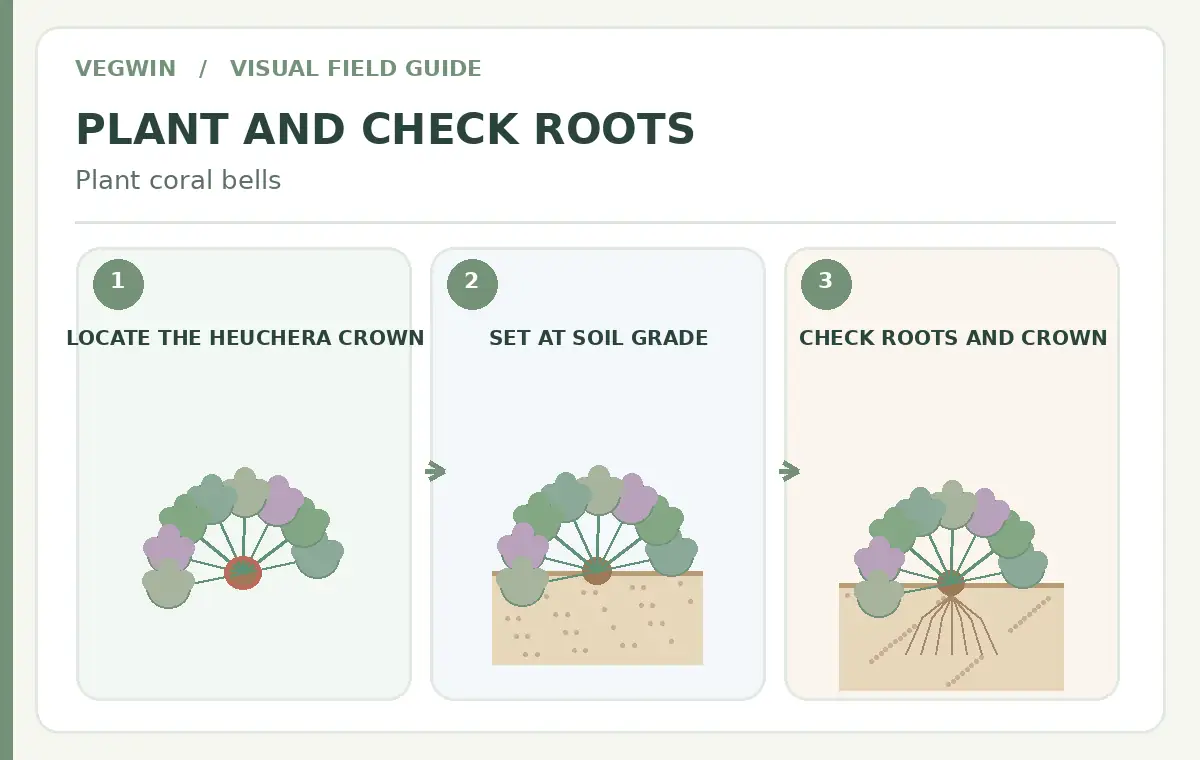
Know when to divide instead of replanting deeply
Older clumps can become raised, crowded or less vigorous, and some Heuchera species benefit from division every few years. University of Maryland notes that H. americana clumps can be divided. Division is not the same as burying an exposed crown: if a stem has grown woody or tall, evaluate healthy roots and viable growing points rather than dumping soil over the top of an aging plant.
Keep labeled photographs from the day of planting and after the first winter. Note leaf vigor, crown position, shade and irrigation history. If plants do poorly, compare those variables before concluding that a perennial is unsuitable for the entire region. The most useful outcome is a planting method that can be repeated: suitable site, correct crown height, draining soil and periodic checks for movement.
Choose the Next Action From Your Observations
| What you observe | What it may mean | Your reasonable next step |
|---|---|---|
| Spring in a freeze–thaw climate | Time to establish roots | Usually a conservative planting choice |
| Late fall in severe-winter region | Heaving risk for new clumps | Consult local frost timing and mulch guidance |
| Crown buried in wet soil | Growing point at risk | Reset plant at proper level |
| Exposed roots after winter thaw | Frost heaving possible | Resettle when soil can be worked |
Related Guides
How We Research and Check These Recommendations
This article was researched against the original institutional gardening resources linked below on October 22, 2026. We identified the growing stage or plant structure relevant to each decision, distinguished regional examples from universal biological needs, and checked safety where edible and ornamental species might be confused. This does not amount to an independent full-text audit of every older published page. These simplified illustrations explain an action and are not diagnostic photographs. Consult local Extension recommendations and the actual label for any regulated garden product.
Sources reviewed October 22, 2026: Institutional source 1 — University of Maryland profiles Heuchera americana and notes its preferences for well-drained soil and afternoon shade.; Institutional source 2 — Iowa State explains winter frost heaving risk for shallow-rooted coral bells and the benefit of spring planting and protective mulch.; Institutional source 3 — Iowa State includes Heuchera among perennials sometimes used in seasonal ornamental planting and confirms its cool-weather landscape use.. We have not asserted any approved affiliate partnership or paid endorsement. Please read the VegWin affiliate disclosure for the site policy.
It depends on species, cultivar and climate; H. americana often benefits from afternoon shade and well-drained soil.
It is the short growing point where the leaves emerge above the root system; avoid burying it.
Often in suitable climates, but late establishment in areas with repeated freeze–thaw cycles raises heaving risk.
Shallow-rooted plants may be lifted by winter frost heaving; inspect root exposure and correct it when workable.
No. Keep mulch around the soil surface but away from the central crown and leaf bases.