
“Use loam” is common vegetable gardening advice, but it can be misleading when loam is treated as a product or a secret three-part recipe. Loam is a soil texture category that reflects a mix of mineral particle sizes: sand, silt and clay. It often balances water storage with drainage, yet two soils both described as loam can behave very differently if one is compacted, low in organic matter or left waterlogged.
Oregon State University Extension explains how texture affects both moisture and soil biology; University of Minnesota Extension provides practical tests for evaluating garden soil. The useful question is not whether you can make every bed exactly “loam,” but whether roots in your particular bed have enough air, moisture and nutrients. This guide helps you make that decision before paying for truckloads of topsoil or amendments.
Separate soil texture from soil structure
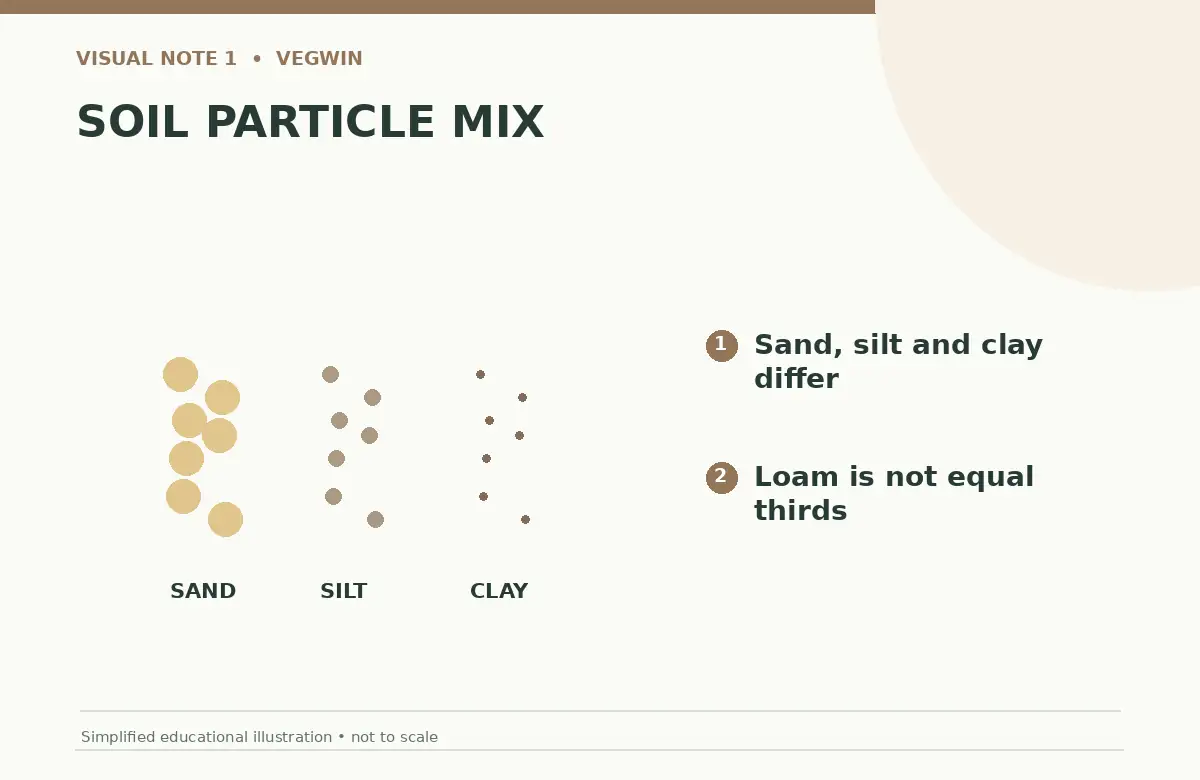
Texture describes the proportions of mineral sand, silt and clay, which do not rapidly change when a garden is managed. Sand particles are relatively coarse and help water move; clay particles are fine and retain moisture and many nutrients; silt falls between them. Loam is a balanced texture range, not an equal-parts formula. Two loams can have different amounts of each mineral fraction and still fall within soil-texture classification.
Structure describes how soil particles and organic matter group into crumbs and pore spaces. A compacted loam can have poor infiltration, while well-managed clayey soil can support productive vegetables. Oregon State Extension emphasizes the role of soil pores and long-term organic matter management. Before purchasing soil, inspect its structure, moisture behavior and test results, not just the vendor’s loam label. For a step-by-step method, see how to choose peat-free potting mix for container vegetables.
Make a cautious hands-on texture check
University of Minnesota Extension describes a simple ribbon test: moisten a small handful until it has a workable, putty-like feel and press it between fingers to form a ribbon. A long persistent ribbon suggests more clay; a soil that crumbles quickly may be sandier. The test is approximate and cannot replace a professional particle-size analysis, but it helps determine why a bed holds or releases water differently than expected.
Check a few places across the bed, especially if it contains multiple imported layers. Remove stones and large organic fragments before working the handful. Avoid declaring the soil “perfect loam” from a single squeeze on a very dry or overly wet day. Pair the texture observation with how water moves after rainfall and whether the soil breaks into stable crumbs when it is appropriately moist.
Interpret drainage in the actual growing area
Waterlogging means pore spaces remain filled with water long enough to exclude air needed by roots. It is possible in a loam just as in a heavy clay when subsoil is compacted or a planting area collects runoff. Look for repeated puddles, a sour smell, hard compacted layers or poor rooting. Do not use a short sunny-day surface inspection as proof that deeper soil drains correctly.
Conversely, sandier loams may drain quickly and need more consistent watering and mulching. The best amendment decision depends on whether the problem is infiltration, deep drainage, compaction, or rapid drying. For persistent standing water, address the site and subsurface pathway before trying to solve the entire issue with an extra bag of compost. A layer of gravel under topsoil is not a substitute for correcting drainage conditions. Our guide “Fix Poor Raised-Bed Drainage Before Adding Gravel or Soil” adds more detail on this.

Use organic matter without treating it as mineral loam
Well-made compost and cover-crop residues can support structure, biology and moisture management, but they do not permanently change the mineral sand–silt–clay proportions of the original soil. Oregon State Extension recommends gradual addition of organic material and minimal disturbance where practical. Adding excessively large volumes at once is not necessarily better, especially in shallow raised beds with nutrient-sensitive crops. Our guide “Compost for Clay Soil” adds more detail on this.
University of Minnesota Extension cautions that too much compost in raised beds can cause its own water-management problems and may increase nutrient levels beyond a crop’s needs. Choose finished, appropriate material and incorporate only where the bed and management system call for it. Keep roots and future soil tests in mind rather than buying a branded “loam builder” based on a fixed ratio advertised for every garden.
Choose topsoil for a raised bed by evidence
For a new raised bed, Minnesota Extension favors a good-quality loam or sandy-loam topsoil combined appropriately with plant-based compost. Do not assume bagged potting medium behaves like field topsoil in a large bed, or that an inexpensive construction fill is horticultural soil. Ask a supplier about screening, debris, drainage, origin and available test results. Examine a sample in your hand and, when possible, check how it wets and drains. For a step-by-step method, see how to improve sandy garden soil with compost, mulch, and better watering.
If the original ground below the bed is severely compacted, the new material on top will not automatically create a route for excess water. Check the interface before filling. Also consider whether the soil source carries troublesome perennial weeds or has been used in ways that raise contamination questions. A soil test can identify pH, nutrient and organic matter concerns; site history determines whether separate contaminant tests are warranted.

Use soil testing and plant response to plan changes
University of Minnesota Extension recommends laboratory soil testing to determine nutrient needs and inform amendments, rather than guessing from texture alone. The lab’s recommendations depend on crop and region. Healthy loam does not mean the pH is suitable for every crop or that phosphorus and potassium are automatically sufficient. Submit representative soil samples using your local lab’s method, then follow its interpretations. If you want the full process, read how to take a raised-bed soil test that gives useful results.
After planting, watch root growth, water infiltration, earthworm activity where appropriate and whether beds dry between irrigations. Record changes over seasons rather than expecting texture to convert overnight. A productive vegetable bed can be sandy, loamy or clayey when drainage, nutrients, organic matter and timing are managed. Loam is a useful starting description, not a universal requirement for food production.
Match the Observation to Your Next Step
| What you find | What to do next |
|---|---|
| Soil feels gritty and dries quickly | Check irrigation and mulch; consider suitable organic matter |
| Soil ribbons strongly and stays wet | Protect structure, address compaction and drainage before adding amendments |
| Supplier offers “loam” without specifications | Request a sample, origin and relevant soil-test information |
| Vegetables struggle despite good texture | Use a lab soil test and check light, water and root conditions |
Related Guides
How We Research and Verify This Guide
This article was reviewed on October 22, 2026 using subject-specific recommendations from university Cooperative Extension and/or the Royal Horticultural Society. Those checks cannot substitute for a full paragraph-by-paragraph audit of every previously published article. Simplified original illustrations explain decisions but are not exact horticultural measurements.
Sources checked: Oregon State Extension explains sand, silt, clay, loam, drainage and organic matter management.; University of Minnesota Extension explains soil texture checks, ribbon tests and soil-test interpretation.; University of Minnesota Extension discusses loam or sandy-loam topsoil choices for raised beds and compost caution.; University of Arkansas Extension notes that loam and sandy loam suit vegetable production but other textures are workable..
Editorial disclosure: This is independent educational information; no paid endorsement or approved affiliate relationship is claimed. For the site’s standing policy, read the affiliate disclosure.
Loam is often useful, but productive vegetables also grow in other textures if drainage, structure and nutrients are managed.
No. Loam is a range of mineral texture combinations, not a fixed equal-parts recipe.
Compost can improve structure and biology, but it does not quickly change the underlying mineral texture category.
Try a moist hand-ribbon test as a rough indication and use professional testing for precision.
A tested quality loam or sandy-loam topsoil can work well, but evaluate the source, drainage and compost amount.