
A soil test can help you decide whether a raised bed needs a nutrient amendment, a pH adjustment, or nothing at all. But the laboratory measures the soil you send—not the entire garden by magic. One scoop from the wettest corner, or a mixture of unlike beds and pathway dirt, can produce a number that does not describe the root zone you actually manage.
The useful part of sampling is deciding which soil belongs in the same sample. Raised beds often contain imported soil, compost and amendments that differ from the native yard. This guide shows how to collect a representative composite sample and when to keep beds separate. Always follow the sampling depth and handling instructions from the laboratory receiving your sample.
Define a sampling area before collecting soil
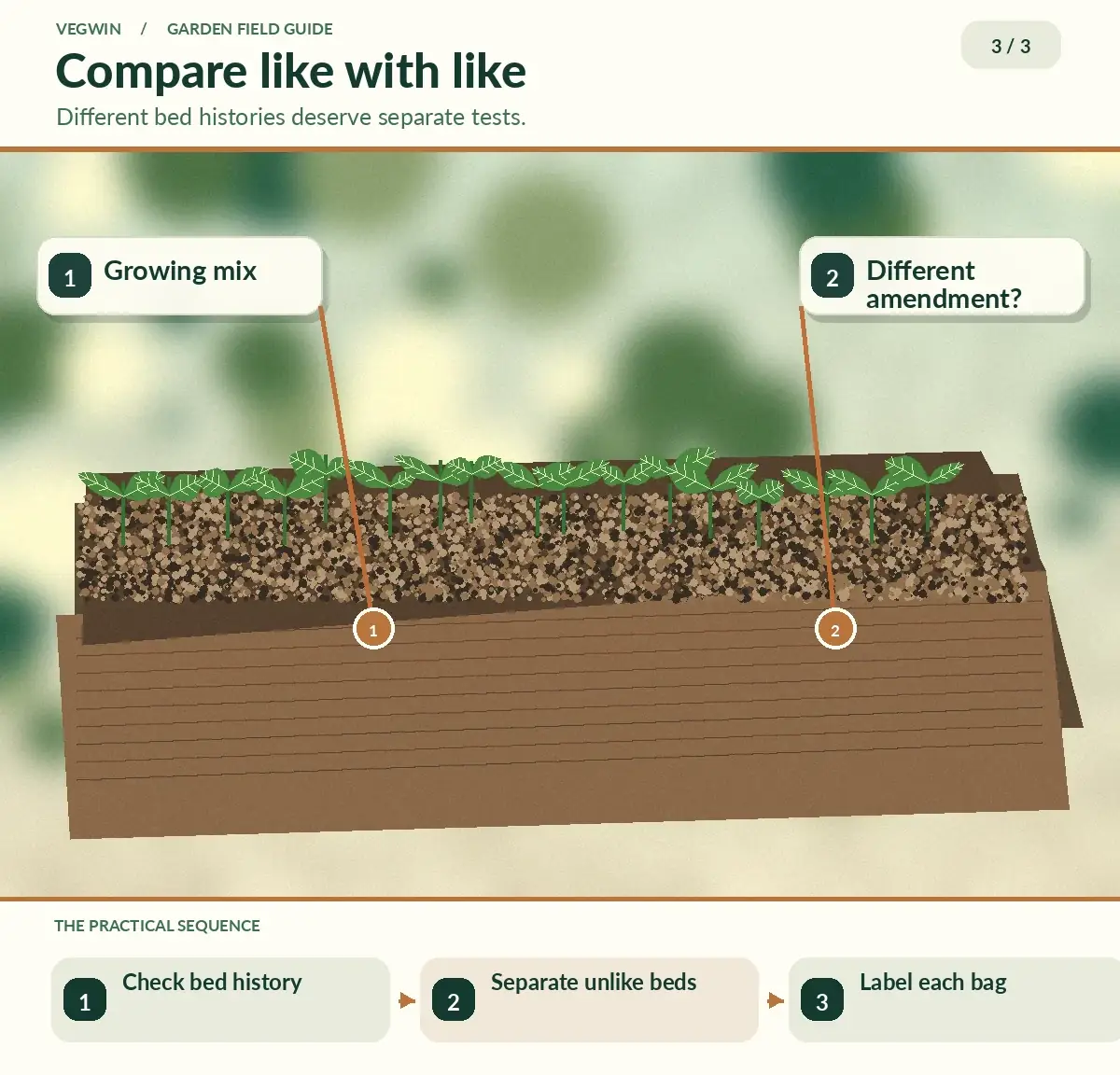
Start by walking the garden and listing beds that share the same imported mix, crop history and amendment schedule. If two adjacent beds were filled at different times or one received manure every season while the other did not, they may have materially different nutrient levels. Combining them into one sample could conceal the condition of both. A representative sample describes a reasonably uniform management area.
The University of Minnesota specifically advises sampling raised beds from the beds themselves, not from paths between them. If a bed has a clearly unusual patch—persistent poor growth, a known spill or an area with very different fill—treat it as a separate diagnostic question. Label any separate samples and note the symptoms so the lab or Extension office can interpret the numbers appropriately.
Choose the test and lab before you dig
Contact your state university soil testing laboratory or local Cooperative Extension office. Ask for the appropriate home-vegetable-garden test and current sample instructions. A routine fertility test often includes pH and key nutrient recommendations, but tests and laboratory methods differ. Special concerns such as lead or other contaminants require different testing; they are not automatically covered by every standard garden package.
Decide what you want to learn before adding more compost, lime or fertilizer. Lab recommendations depend on intended crop and local soils. A home gadget that gives a single quick reading is not necessarily equivalent to a lab analysis with a standardized method. If you recently added a concentrated amendment, tell the lab or delay sampling according to its instructions so the sample reflects the condition you wish to assess.

Take multiple small cores at a consistent depth
Use a clean trowel or soil probe and a clean bucket. Across the selected bed or group of comparable beds, collect many small cores from different locations instead of filling the bag with one shovelful. Penn State describes eight to ten garden cores as a home-garden sampling approach and a garden depth of roughly six to eight inches; your testing laboratory’s instructions govern the actual sample.
Push aside mulch and surface debris before collecting the soil itself. Try to capture the same depth range at every location so each portion represents the root zone fairly. Do not include rocks, roots, fertilizer granules, garden fabric or path gravel. Avoid touching samples with contaminated containers or combining soil from a compost pile with your vegetable bed. If that is your next decision, our guide “Vegetable Garden Fertilizer” explains how to read your soil test before feeding.
Mix the soil and submit only the required amount
Break up clods and mix the individual cores thoroughly in the clean bucket. The purpose of the composite is to average the normal variation within one management area. Then measure out the volume requested by the laboratory, rather than mailing the entire bucket. University of Minnesota notes that about one to two cups may be sufficient for many home tests, but lab-specific kit directions take priority.
If the soil is wet, follow instructions for air-drying before shipping. Keep the sample away from fertilizers, manure dust and other materials that could change the result. Label bags clearly with the bed location and crop goal, retain a simple map of where you sampled, and keep the submission paperwork matched to the bags. The paperwork matters as much as the physical sample.

Read the report without assuming more nutrients are better
A high nutrient number is not automatically good news. Repeated manure or compost additions can increase phosphorus, and Minnesota Extension cautions that some raised-bed mixes already contain more compost than needed. If a report indicates adequate fertility, adding a complete fertilizer out of habit may be unnecessary or counterproductive. Recommendations should follow the lab’s interpretation and intended crop.
Be cautious with pH adjustments too. Soil pH affects nutrient availability, but lime or sulfur choices depend on a measured condition, buffering and crop requirements. Do not use a universal spoonful-per-square-foot recipe from an unrelated region. Ask Extension to clarify confusing units or nutrient categories; soil laboratories do not all report results in the same format.
Retest after real changes not every small observation
For an established, consistently managed raised bed, Minnesota Extension suggests periodic tests about every two to three years. A new bed with an unfamiliar purchased blend may warrant an initial baseline. A major amendment, a persistent crop problem or substantial changes in management can justify an earlier test as advised by your lab. Do not confuse normal day-to-day plant variation with proof of a soil chemistry problem.
Record sample date, laboratory, depth, crop and amendments applied afterward. Then compare future tests collected at similar times and from the same management unit. This creates a meaningful trend rather than a pile of unrelated readings. If different beds consistently test differently, retain separate histories instead of chasing a garden-wide average.
Keep contamination and drainage questions separate
Routine fertility results cannot diagnose every garden failure. Waterlogging, compaction, shade, insects and diseases can all limit growth even when nutrient levels are adequate. Conversely, contamination concerns near older structures or former industrial land require specific sampling and specialized tests. If you suspect a hazard, contact local Extension or public health specialists for an appropriate testing plan.
The practical finish line is a decision you can defend: whether to amend, what kind of amendment may be needed, or whether to change water and soil structure management instead. A carefully labeled representative sample makes that decision much more reliable than a handful of soil taken at random.
Related Guides
How We Research and Verify This Advice
This guide compares university Cooperative Extension and other established horticultural recommendations instead of relying on a single gardening tip. We checked the sources on October 21, 2026, and treated differences in cultivar, region, bed history, and climate as real limitations. The practical decision steps are editorial synthesis, not the result of a controlled VegWin garden trial.
Sources reviewed: Raised-bed soil should be sampled from the beds, not between them, then mixed for testing. Raised-bed fertility should be guided by soil testing and compost history. Multiple garden cores at consistent depth combined into a representative sample. Use a clean bucket and several locations; dry and submit a composite sample.
Disclosure: This article does not claim a product test, sponsorship, or paid partnership. The informational resource buttons point to external guidance, not unverified affiliate offers. Read our affiliate disclosure. Confirm local recommendations with your Cooperative Extension service where timing, soil, disease pressure, or plant variety affects the result.
No. Sample the growing media inside the raised beds; path soil may have a different history and fertility.
Only when their soil mix, amendments and management are similar enough that one average result would be useful. Otherwise, submit separate samples.
Follow your receiving laboratory’s instructions. Penn State describes roughly six to eight inches for garden sampling.
Not always. Minnesota Extension describes periodic testing about every two to three years for established beds, with earlier testing when conditions warrant.
Not necessarily. Request a specific contaminant analysis from a qualified laboratory if lead or another hazard is a concern.