
A raised bed is not automatically better because it is taller, and “raised bed soil” is not a single standardized recipe. The useful question is what lies below the bed, what will grow in it, and where excess water can go. A bed sitting over healthy garden soil needs a different decision from a box on concrete or a site where contaminants are suspected. This guide starts with that distinction, then helps you measure the fill and adjust the mix without turning a gardening project into a guess about bags and brands.
Start With the Ground Beneath the Bed
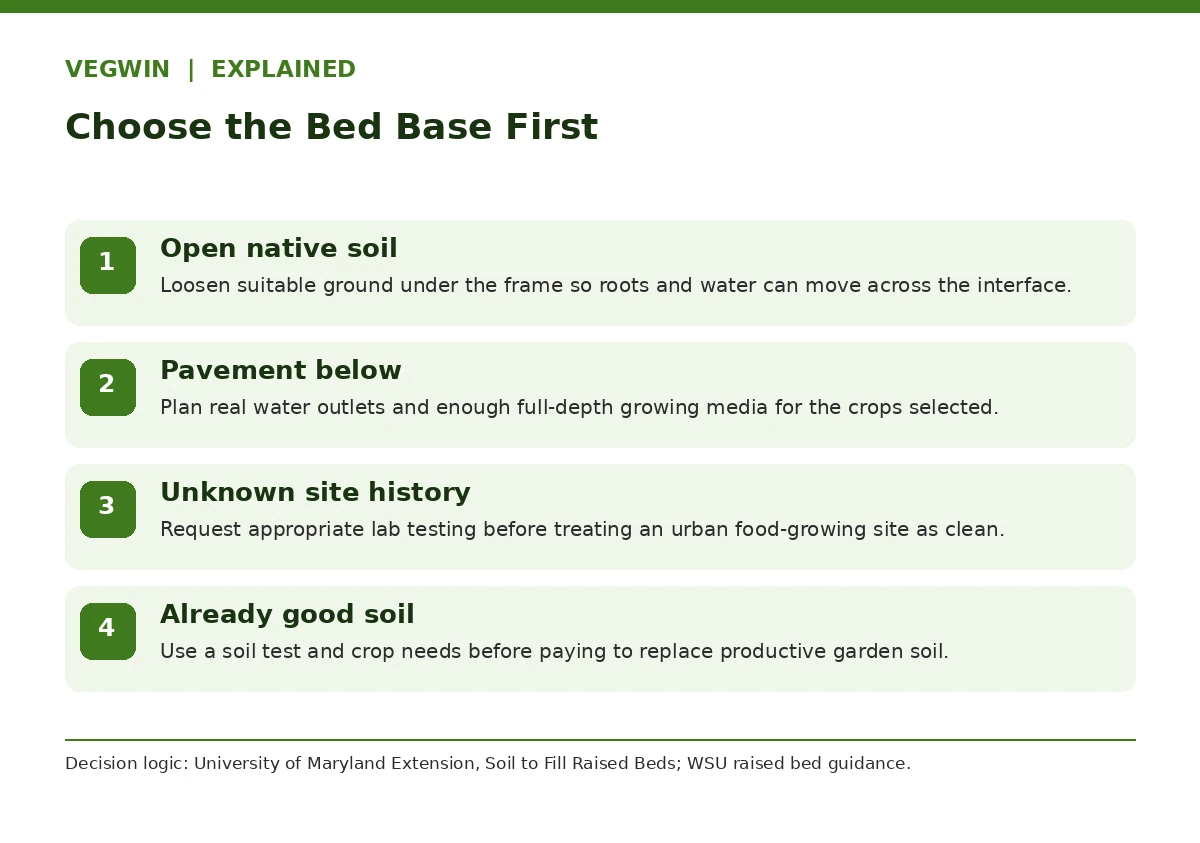
First inspect the base. On open ground, roots can often explore the soil underneath, provided that soil is not badly compacted. University of Maryland Extension recommends loosening the native ground beneath new vegetable beds, which helps roots and water cross the boundary. A bed over pavement cannot depend on that deeper root zone; the container depth, drainage outlet, and drying rate matter much more. A raised frame may improve access without fixing poor drainage beyond its footprint.
Look also for the history of the site. If it is a former parking area, painted-building perimeter, industrial plot, or unknown urban fill, do not assume that a layer of fresh compost resolves possible contamination. Ask a local soil laboratory which tests are appropriate for food gardening, including lead where relevant. A laboratory result, not the color or smell of soil, should guide decisions about contaminated ground.
Choose Soil Components for the Site
For most open-bottom vegetable beds, a soil-based mix with mineral topsoil and mature compost is a practical starting concept. Topsoil contributes structure and mineral particles; compost adds organic matter and can improve workability. Iowa State Extension presents both a topsoil-and-compost approach and other blends that include coarse sand. Maryland Extension offers several options, depending on the starting soil. Those are alternatives, not a reason to stack every ingredient in fixed layers.
Look for a reputable supplier who can describe the material. Ask whether the “topsoil” is screened, whether compost is finished, and what testing the supplier performs. Pure compost can settle, dry unevenly, or contain elevated salts; pure heavy clay soil can be hard to work. There is no guaranteed one-ratio-fits-all formula. If an existing bed already produces well and a soil test is satisfactory, routine additions of more rich material may be unnecessary.
Calculate Fill Before Ordering Soil
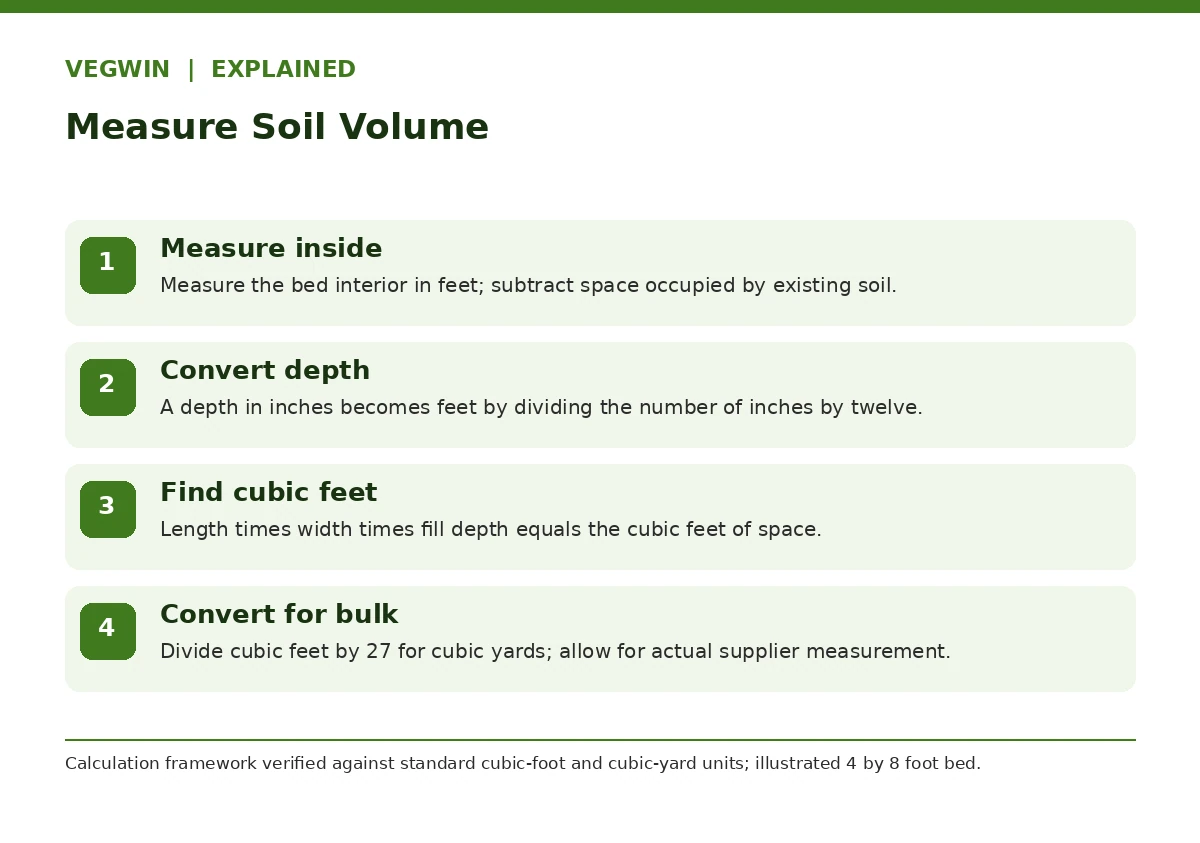
Measure inside the frame, not the outside of thick boards. Multiply the interior length by width and intended fill depth, all in feet, to estimate cubic feet. Divide cubic feet by 27 to obtain cubic yards. For example, a 4-foot by 8-foot bed filled 12 inches deep needs 4 × 8 × 1 = 32 cubic feet, or about 1.19 cubic yards before settling or any soil already present is deducted. The arithmetic estimates space, not the exact amount that a supplier will deliver.
If the bed already contains soil, measure the missing depth in several places and use that average. Account for any space intentionally reserved for mulch below the rim. For bags, compare the total cubic feet stated on the labels with your estimated cubic feet instead of trusting a bag count from a different bed size. Ask the bulk supplier how it sells material and how delivery volume is measured.
Avoid the False Drainage Layer
A common shortcut is to put coarse gravel or sticks beneath a thin layer of premium soil. That should not be sold as a universal drainage fix: abrupt differences in texture can interrupt rather than improve water movement. Iowa State and Washington State Extension explain why blending a little new fill with suitable underlying soil can reduce a sharp interface in open-ground beds. They do not recommend burying a poor site in disconnected layers and hoping roots will sort it out.
If the bed is on concrete, drainage must have a real path out, and a shallow box may restrict the root zone of large crops. If water stands on the ground after rain, check the site drainage before adding fill. If the soil dries rapidly, address mulch, watering practices, and root volume rather than automatically adding more sand. Good drainage means excess water can escape while useful moisture remains accessible.
Test Soil Before Adding Fertilizer
The correct amount of fertilizer, lime, or sulfur depends on a soil test and the crop, not on how many inches high the frame is. New commercial fills can already contain substantial nutrients. For a bed of garden soil, a laboratory report can indicate pH and nutrient status; repeat testing after the materials have had time to settle and interact, following local lab guidance. Keep a note of the mix, compost supplier, and amendments used.
Do not try to “balance” a weak plant by adding fertilizer without checking light, root health, soil moisture, and recent weather. Excess nutrients are as real a problem as deficiencies. If you are reusing a productive bed, focus on protecting the surface with suitable mulch and replacing organic matter according to need rather than resetting a recipe annually.
| Starting condition | Better first decision | Avoid assuming |
|---|---|---|
| Healthy open-ground soil | Test and loosen the underlying soil; amend only as needed | The frame requires a complete soil replacement |
| Bare open ground needing fill | Use reputable topsoil and mature compost suited to tests | A fixed ratio always fits |
| Paved or sealed base | Plan sufficient root depth and reliable drainage | Roots can use soil beneath the pavement |
| Unknown contamination history | Ask a lab about appropriate food-garden testing | New compost makes contamination irrelevant |
Troubleshoot Water and Settling Problems
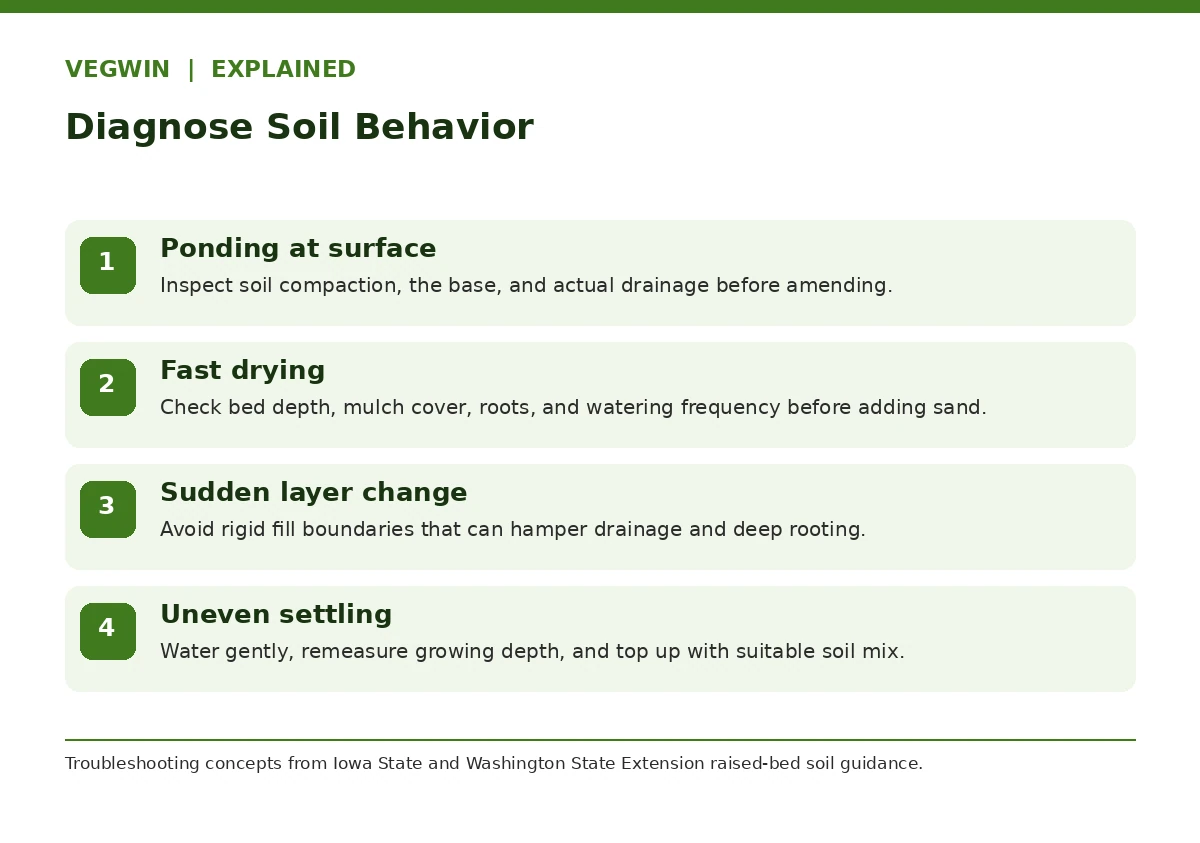
Water disappearing immediately does not necessarily mean the bed needs a plastic liner. Check whether the bed is shallow, the fill is unusually coarse, or newly added media has dried so completely that water runs around it. Conversely, if the surface stays saturated, check for low spots, a blocked outlet on hardscape, compaction underneath, or a strong boundary between fill and native soil. A small test watering and digging a few inches down is more informative than judging the top color alone.
Newly placed materials often settle. Mark a reference point on the frame, water gently, and reassess the level later. Add suitable mix to replace lost growing depth, leaving headroom for mulch. Avoid working wet soil because squeezing and digging it when saturated can worsen structure. Treat persistent ponding or odors as a drainage investigation, not a reason for a blanket fertilizer treatment.
Match the Finished Bed to Its Crops
Shallow-rooted greens and a large fruiting tomato do not make identical demands on usable root volume, sunlight, and support. Maryland Extension gives specific minimum bed considerations for situations where roots cannot reach the ground below. In an open-bottom frame, the loosened soil underneath is part of the effective root environment; above pavement, all useful rooting space is inside the container. Check crop-specific guidance before settling on a frame depth.
Before sowing, water the filled bed to check how the surface behaves, confirm that you can reach its center without stepping on soil, and sketch where tall crops may shade smaller ones. Put mulch on top after planting where appropriate, not buried as a substitute for soil. If you cannot explain where water exits and where roots will grow, the bed is not ready just because the frame looks full.
How We Research and What May Change
This guide compares public Cooperative Extension and university IPM recommendations, emphasizing the decisions a home grower can check in their own garden. The linked references were checked on October 19, 2026. No product testing, private cultivar trials, or site-specific soil analysis is claimed. Recommendations may change with climate, crop variety, local regulations, newly diagnosed disease, or revised Extension guidance; for a local decision, consult your state or county Extension office.
Sources reviewed: [1] University of Maryland Extension [2] Iowa State University Extension [3] Washington State University Extension [4] University of Maryland Extension
Disclosure: This article contains no sponsored recommendations and no affiliate links. See the designated VegWin affiliate disclosure page; its live availability must be confirmed by the site owner before publication.
Not as a default. Mature compost is useful, but a soil-based growing environment is generally more predictable; ask about the product composition and follow local Extension guidance.
Its interior volume is 32 cubic feet, which is about 1.19 cubic yards before allowing for existing soil, settlement, or space for mulch.
Do not assume gravel cures drainage. Investigate the outlet or native soil below and avoid abrupt texture layers that can interfere with water movement.
No. Existing nutrients, compost content, crop demand, and soil-test results determine whether more fertilizer is appropriate.
It depends on the contamination, exposure pathway, bed construction, and local soil test. Seek site-specific lab and Extension advice before growing food.