
An older catmint (Nepeta) can form a wide mound of lavender-blue flower spikes and small aromatic gray-green leaves, with young shoots around a woody or congested center. Division is useful when a healthy clump has outgrown its space or needs rejuvenation, but it must leave a living crown and fibrous roots on every new plant. The job is not the same as shearing off flower stems after bloom: cutting foliage alone creates no new independent plants. This guide shows when to lift a clump, how to identify a viable rooted piece, and why the drainage of the replanting site matters more than generous irrigation.
Confirm the Plant Is Nepeta Catmint
Garden catmints are species and hybrids of Nepeta, in the mint family, typically producing opposite, often gray-green leaves and many small tubular blossoms arranged along stems. True mint (Mentha) and catnip (Nepeta cataria) are related but are not identical to common low-growing ornamental catmint selections. Check the botanical label before dividing. Some compact cultivars grow as relatively small crowns and may not need division for years. One large green mound after flowering is not evidence that its underground structure is ready to split. Identify the crown at the soil surface and evaluate the actual root mass rather than dividing at arbitrary places between flower stems.
Choose Spring When New Shoots Are Visible
Iowa State Extension specifically lists spring as a suitable time to divide catmint. RHS explains that early spring or autumn are generally workable for summer-flowering clump-forming perennials when the ground is not waterlogged. Spring is often easier because small emerging shoots let you locate active crown sections before the plant expends energy on full bloom. In very hot, dry climates, choose a mild period and avoid working at peak heat. In cold regions, wait for workable soil rather than digging a frozen clump. A hardiness zone alone cannot tell you the right calendar date; local weather and actual plant growth are better guides.
Check Whether the Clump Really Needs Splitting
Catmint is a resilient perennial and does not require annual division. A previously compact plant with an open, unproductive middle, reduced flowering, or shoots crowded into neighboring plants may benefit. Poor performance can also result from shade, excessive fertilizer, drainage problems or a plant too young to have built reserves. RHS notes that catmint generally thrives in freely draining soil and can struggle with persistently wet roots. If the whole plant is rotting or clearly diseased, multiplying it into several beds could spread the problem. Select only healthy vigorous crowns; improve the site first if poor drainage is the underlying cause.
Water Lightly Before You Lift the Rootball
A slightly moist root zone is easier to lift without breaking dry soil away from fine roots. Water a day earlier if the ground is dusty and dry, but do not saturate clay. Use a garden fork rather than plunging a sharp spade through the crown without checking its extent. Work in a broad circle outside the shoots, loosening the soil gradually. Lift the clump onto a tarp or tray in shade. Keep the exposed roots from drying while you inspect them, particularly on windy spring days. If the clump is small, tease it apart gently; larger mature clumps may require a cleaned sharp knife.
Find Live Shoots Attached to Real Roots
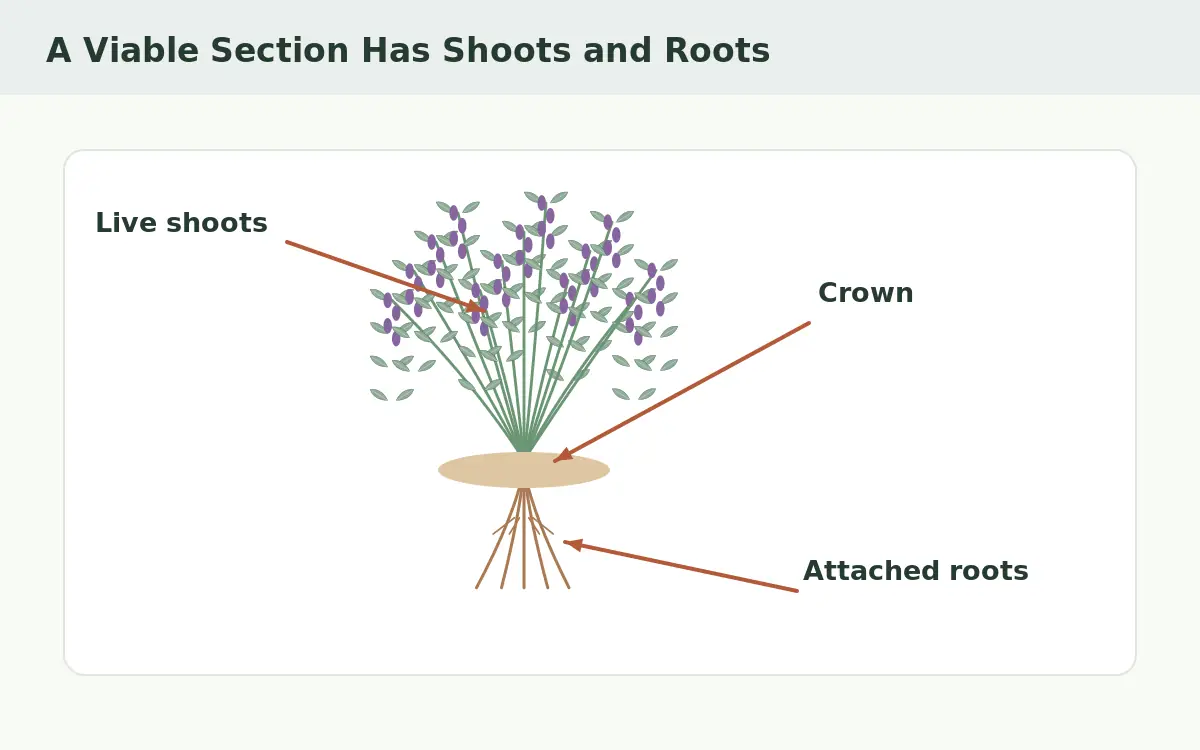
A successful division includes a section of the crown with living shoot buds or new shoots and enough attached fibrous roots to support them. Merely clipping a handful of flowering stems is not a division. Brush away excess soil and look for separations between groups of basal shoots. Healthy roots generally feel firm rather than slimy; old dead stem stubs may be brittle. Remove a lifeless, rotting center instead of planting it as if it were a viable piece. The botanical detail image labels crown, new shoot and fibrous root attachment so that the cut line does not pass through the only active bud on a small division.
Separate the Crown Into Useful Sections
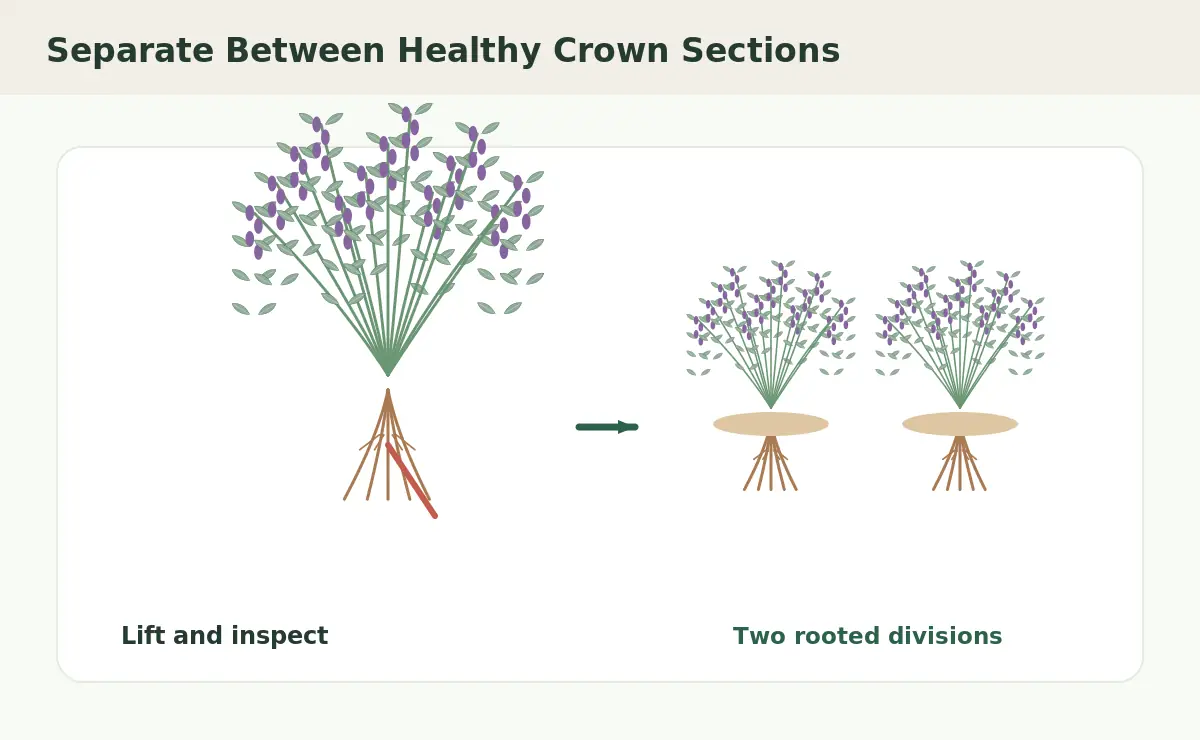
For a compact plant, hold two natural groups of rooted shoots and ease them apart with your fingers. If a dense crown must be cut, select a clean blade and cut between groups of shoots rather than through the middle of a single viable growing point. Make fewer robust divisions instead of many tiny scraps with almost no roots. Each piece should be independently rooted and easy to plant at the original soil line. Prune only damaged or excessive soft top growth if needed to reduce stress; do not remove every living shoot. Keep finished divisions shaded until they are replanted. Clean tools before working on another plant.
Replant at the Original Crown Level
Choose a sunny bed with free-draining soil. Place each division so its crown sits about where it grew previously, with emerging shoots above the surface. A buried crown in wet compost is vulnerable to rot, whereas roots left exposed will dry. Spread the fibrous roots rather than folding them into a tiny hole. Firm gently to remove large air gaps and water the soil to settle it. If garden conditions are unsuitable, pot a division into a free-draining mix until the planting site is ready. Give individual plants room to expand into mounds. Do not immediately mulch over live buds or the whole crown.
Protect Divisions While Roots Recover
A freshly divided catmint is not yet as drought-tolerant as an established perennial. Check moisture below the surface and water as needed during the first weeks, allowing the soil to drain between applications. A thick, persistently soggy mulch and daily sprinkling can suffocate recovering roots. Shelter new divisions from unusually intense afternoon sun or strong winds temporarily if leaves wilt, but do not keep this full-sun plant in deep shade indefinitely. Resume ordinary care when sustained new shoots and roots show it is established. Flowering can be lighter in the first season after substantial division; survival and root growth come first.
Distinguish Division From Cutting Back
Catmint flower stems can be trimmed after flowering to encourage a fresh neat mound, as RHS recommends, but this only changes the top growth of one plant. Division is the physical separation of the root-bearing crown into multiple plants. Stem-tip cuttings are a third method and follow a different handling technique. Do not use the same illustration or instructions for all three. If you only want a tidier border and the plant has a healthy center, seasonal trimming may be less disruptive than lifting it. Where a named hybrid must be kept true to type, division is a practical vegetative way to preserve the parent selection.

Avoid a Waterlogged or Overcrowded Restart
The major failures occur when divisions lack live buds, fibrous roots are left exposed, crowns are buried too deeply, or the planting bed remains wet for long periods. A tiny shard from the middle of a dead clump may not regrow. Replanting in the same poorly drained hollow without amending conditions simply reproduces the original problem. Crowding the divisions directly against each other also defeats the purpose of rejuvenation. Monitor each plant separately and remove obvious weeds before they compete with small roots. Avoid strong fertilizer on newly wounded roots; establish consistent moisture and good drainage first.
Adapt the Method to Cultivar and Climate
Most low-growing ornamental Nepeta plants share similar division principles, but sizes and cold tolerance vary. A compact container cultivar may separate into only two good sections, while a broad old landscape mound can yield several. RHS notes that some Nepeta species prefer more moisture or partial shade than typical dry-border catmints, so identify the plant and follow its specific requirements. In climates with wet winters, spring division is often safer than autumn planting into waterlogged soil. This article provides horticultural propagation guidance only, and it does not assume catmint leaves have the same culinary or veterinary uses as true mint.
Authoritative Sources and Further Reading
These primary horticultural references informed the identification, timing and procedure in this guide: yardandgarden.extension.iastate.edu reference (Iowa State Extension lists catmint among perennials to divide in spring and explains how to keep viable rooted crowns.). www.rhs.org.uk reference (RHS describes lifting clumps with a fork, dividing healthy roots, planting promptly and watering divisions.). www.rhs.org.uk reference (RHS identifies catmint as Nepeta with flower spikes and demands for freely draining soil.). plants.ces.ncsu.edu reference (NC State Extension confirms catmint as a clump-forming perennial that can be propagated by division.).
Related Guides
- How to Grow Catmint From Seed Without Confusing Sterile Hybrid Cultivars
- How to Divide Hostas Without Damaging Crowns or Planting Too Deep
- Dividing Tall Garden Phlox: When, Where to Cut, and How to Replant
- When to Divide Daylilies: Keep Healthy Fans and Replant Crowns Correctly
- When to Divide Ornamental Grasses and Remove a Dead Center
How We Research Plant-Care Instructions
We compared practical horticultural recommendations across the cited university Extension and RHS materials, reviewed critical growth points and common look-alike plants, and created the accompanying botanical teaching diagrams to match those instructions. Sources checked October 27, 2026. Our title comparison covered 155 accessible articles from B097–B127, but we cannot certify an exhaustive B001–B096 inventory; site-wide editorial review remains appropriate before publishing.
Climate, Safety and Independent Editorial Disclosures
Timing varies with species, local weather, growing conditions and cultivar, and USDA plant hardiness zones alone do not provide an annual sowing, pruning or disease calendar. Follow product labels and regional Extension guidance; there is no claim of a confirmed commercial partnership or special pesticide treatment. The illustrations are simplified educational diagrams, not photographs or a replacement for laboratory identification. For site policies see VegWin affiliate disclosure.
Spring as new growth begins is preferred by Iowa State Extension; choose workable soil and mild weather.
Division is less disruptive when the plant is not in full active flowering; choose spring or another mild suitable period.
Yes. Each independent crown piece needs live shoots or buds and a healthy attached root system.
Replant at approximately the original crown depth, leaving growing points above the soil line.
No. Cutting foliage is pruning; division must physically separate the rooted crown into viable plants.