
Flowering currant, particularly Ribes sanguineum, is prized for pendant clusters of pink, red or pale spring flowers. The mistake most likely to cost next year’s display is a blanket late-winter haircut that removes older shoots carrying developing flowers. RHS explains that these shrubs flower on growth made in the previous season, so pruning soon after flowering gives replacement wood time to mature. You do not need to cut every stem annually. The goal is to remove damaged growth, shorten spent flowering shoots to well-placed new growth, and gradually renew a crowded shrub without destroying its natural arching outline or early pollinator value.
Confirm You Have Ornamental Flowering Ribes
The genus Ribes includes edible currants and gooseberries as well as ornamental flowering currant. Ribes sanguineum generally has lobed leaves and clusters of showy spring flowers along its stems. Do not apply a blackcurrant-fruiting cane pruning schedule to every Ribes simply because the name contains “currant.” Check the label or botanical traits before selecting cuts. Ornamental plants may also be grown as informal hedges, but a clipped hedge is managed differently from a specimen intended for full spring bloom. Look at the shrub’s overall shape and flowering shoots from last season before making any irreversible changes with loppers or shears.
Understand Why the Timing Protects Flowers
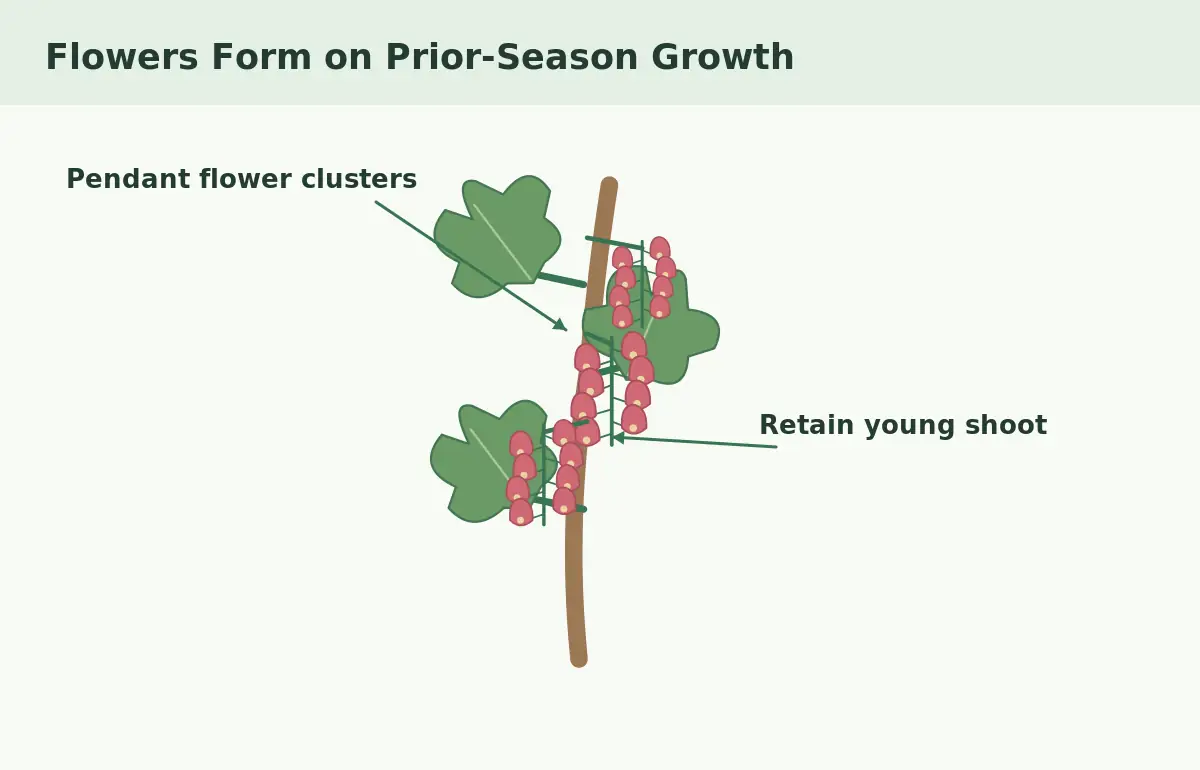
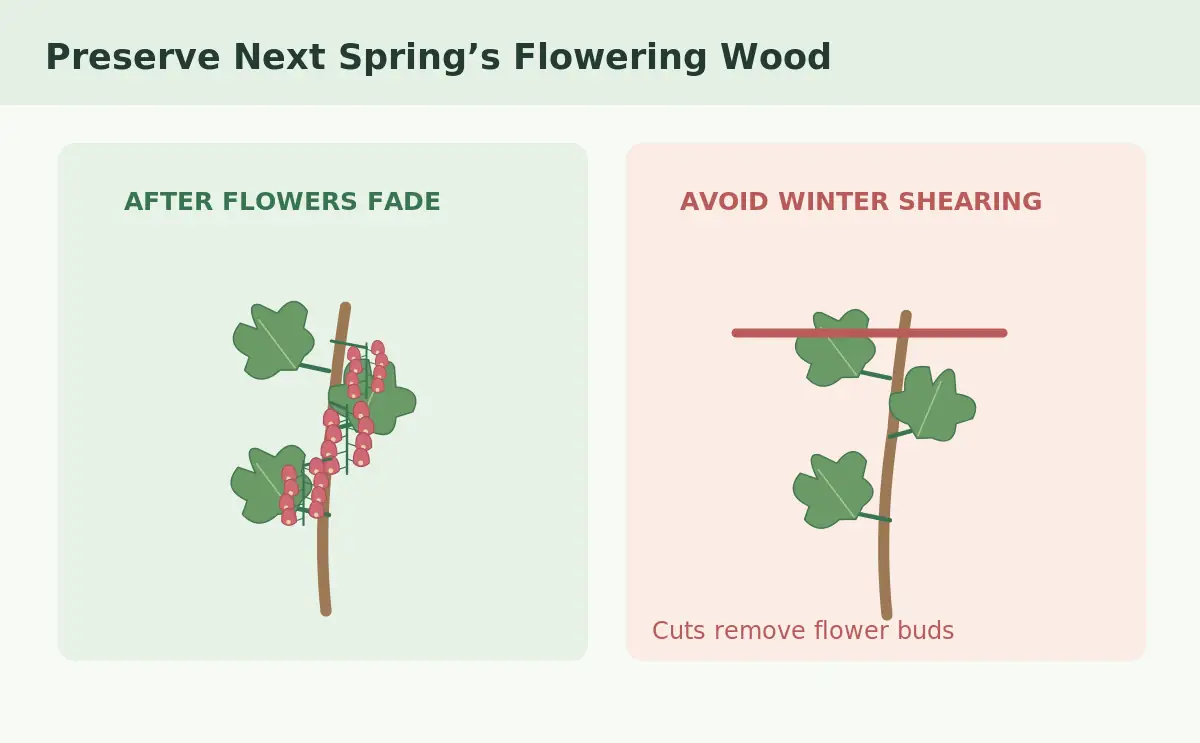
RHS says flowering Ribes carry flowers on growth formed the previous year. Buds developing along young wood can be removed if the shrub is heavily cut in winter or early spring. Waiting until the main flowering display finishes usually preserves this year’s bloom while allowing new stems to form during the growing season. In areas with late frosts, flowering can shift by weeks; work from the plant’s actual stage, not one fixed date. Do not mistake a few lingering flowers at the base of one branch for a reason to postpone all removal of clearly dead or storm-damaged stems. Sanitation can be done when necessary.
Inspect for Young Replacement Shoots First
Before cutting, trace a flowered branch to the place where a healthy side shoot or new basal cane emerges. That fresh shoot may become a useful flowering stem next year. Identify whether the branch is alive by looking for sound buds and pliable young wood, not solely by its bark color. An established flowering currant normally includes different stem ages; renewal works best when the gardener keeps some vigorous young stems instead of reducing the whole shrub to one height. Temporarily tie or mark the selected replacement shoot if the branch network is dense. A photograph before pruning helps confirm which wood was removed.
Shorten Spent Flowering Stems to Young Growth
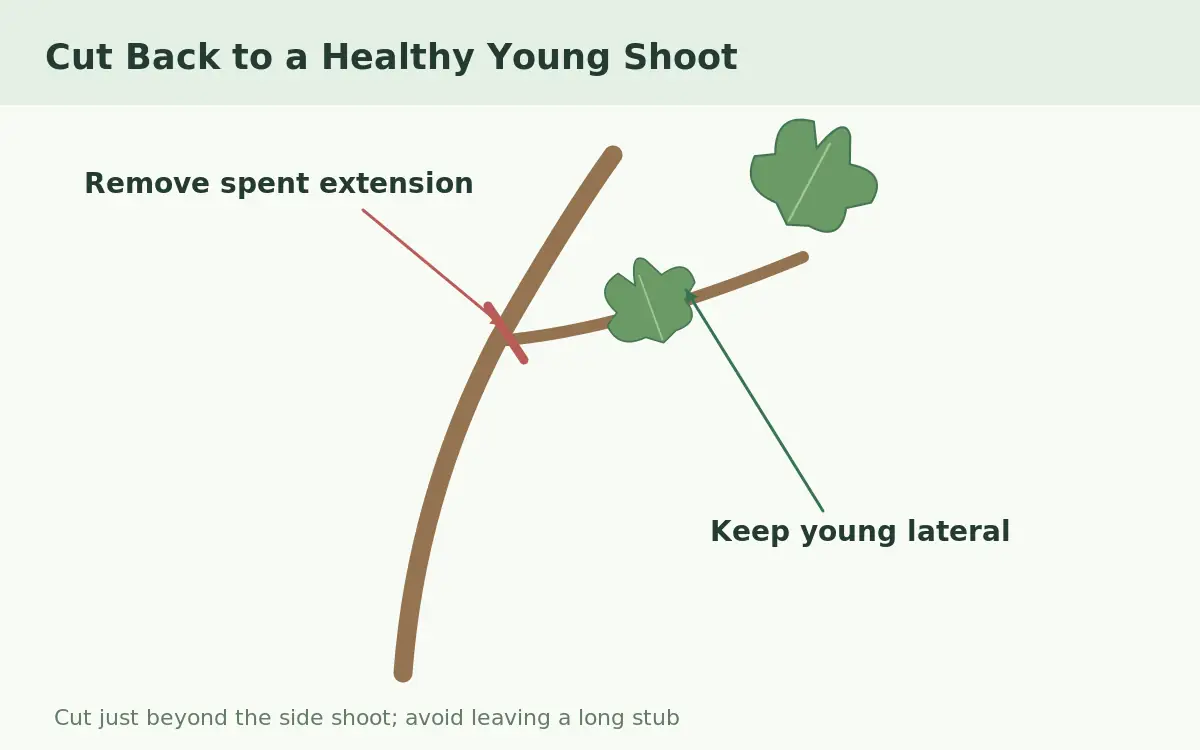
Where a flowered stem extends beyond the useful outline, follow it back to a sturdy young lateral shoot pointing in a good direction. Make a clean cut just above the junction without leaving a long dead stub or slicing through the retained lateral. RHS specifically recommends shortening the stems that flowered to strong young growth. Not every branch needs this cut; many may already be well placed and can remain intact. A flush shear across the shrub would ignore branch structure and remove developing replacement shoots indiscriminately. Step back after each few cuts so the natural open shape remains balanced from all sides.
Renew Older Stems Without Stripping the Shrub
A crowded mature shrub may have several dark, woody canes rising from near ground level. RHS suggests removing about one fifth of the oldest stems to the base each year as part of gradual renewal. Select truly unproductive or crossing old canes, then remove them close to their origin while avoiding injury to neighboring young growth. Removing every old cane at once may sacrifice much of the floral structure and create a large shock to the plant. Spread renewal over several seasons and compare the plant’s response. If the base is inaccessible, use appropriate hand loppers rather than making a high blind cut into the middle of the plant.
Prune Dead, Diseased and Crossing Growth Selectively
Dead shoots can generally be removed when identified, and branches rubbing against each other may need correction to avoid persistent wounds. Start by locating the actual origin of each problem stem. Make clean cuts on the unwanted branch without cutting into the branch collar or strong replacement stem. A thin crossing twig may only need shortening to a healthy outward bud; a large badly positioned cane may be better removed at the base. Sanitize cutting tools after suspected disease and dispose of affected material according to local guidance. Do not assume every sparse internal section requires aggressive cutting; natural shrubs can have open, shaded centers.
Keep Flowering Hedges on a Different Plan
An informal Ribes hedge may need some shaping to prevent it obstructing a path, but a clipped geometric outline usually offers less flexibility for preserving individual flowering stems. If spring flowers are the objective, trim immediately after the main bloom and retain varied shoot lengths where practical. Repeated late-season trimming can remove the wood that would carry the following year’s flowers. RHS notes that wall-trained or hedged plants may follow specific pruning groups, so check the intended form before adapting a specimen-shrub tutorial. Avoid doing all the pruning during a pollinator-rich flowering period if the goal is to preserve nectar for insects.
Support Recovery Without Excess Fertilizing
Once pruning is complete, spread suitable organic mulch over the rooting zone while keeping it off the base of the stems. Water deeply during prolonged dry spells rather than watering every day without checking soil moisture. Flowering currant does not automatically need a heavy fertilizer dose after every prune; RHS describes it as generally undemanding in moderately fertile soil. If the shrub shows poor vigor, assess light, compaction, root competition and drainage first. New shoots should have enough time to grow and mature before winter in your region. Avoid trying to force lush late growth with strong feeding just as the season is ending.
Distinguish Bud Loss From Naturally Lighter Bloom
A shrub may bloom less heavily because the wrong stems were removed, but weather, shade, plant age and recent stress may also affect bud formation. Compare where flowers appeared with where you cut the previous season. If all tips were sheared off late, the cause may be pruning time; if only one shaded side blooms weakly, review light distribution. Do not immediately repeat severe pruning in response to fewer flowers. Mark a few young shoots after the spring trim and inspect their buds the following season. This simple record helps reveal whether your replacement growth is actually contributing to bloom as intended.
Keep the Shrub Natural and Observe Next Spring
A well-pruned flowering currant still looks like a living shrub with long graceful stems, not a flat-topped bundle of stubs. Photograph it before and after pruning, note the month in which blooms actually faded and record how much old wood was removed. In very cold or drought-prone gardens, limit unnecessary wounds when the shrub is struggling. If an older plant has a badly decayed base or widespread dieback, routine thinning may not solve the underlying problem; consult local Extension or diagnostic resources. Review next spring’s flowering on the retained young growth before deciding whether to remove another share of old canes.
Authoritative Sources and Further Reading
The following sources support the plant identification, seasonal timing and practical actions in this guide: www.rhs.org.uk reference (RHS recommends pruning spring flowering Ribes after bloom, shortening spent flowered stems to vigorous young growth and thinning about one fifth of older wood annually.). www.rhs.org.uk reference (RHS confirms the botanical species, spring bloom and suitable pruning groups for flowering currant.).
Related Guides
- When to Prune Red-Flowering Currant Without Losing Spring Blossoms
- When to Prune Azaleas After Bloom Without Losing Next Spring’s Buds
- When to Prune Mock Orange After Bloom Without Losing Next Year’s Flowers
- When to Prune Bridal Wreath Spirea and Keep Its Arching Spring Flowers
- When to Prune Deutzia After Flowering and Thin Older Canes Correctly
How We Research Plant-Care Instructions
Our editorial process compared botanical identity, growth stage and recommended action with primary university Extension, RHS and IPM materials. Every diagram is a simplified teaching illustration, not a photograph, and was checked for correct placement of visible structures. Sources checked October 27, 2026. We screened the full available B097–B126 archive titles and performed a targeted public search, but the earlier B001–B096 historical inventory is incomplete; complete site-wide topic uniqueness is not guaranteed.
Climate, Safety and Editorial Disclosures
This is independent educational horticultural information rather than individualized medical, legal, pesticide or veterinary advice. Follow local crop and pesticide labels and seek regional Extension recommendations where conditions or risks differ. Regional seasons cannot be inferred from USDA hardiness zones alone. No paid relationship or partner URL is claimed. For site policy, read the VegWin affiliate disclosure.
RHS recommends pruning immediately after the spring flowering display is finished.
It generally flowers on growth produced the preceding season, so late pruning can remove next spring’s display.
On established shrubs, RHS describes thinning roughly one fifth of older stems to their bases per year.
Selective thinning and shortening to young shoots usually retain a more natural shape and flowering potential.
Dead or hazardous branches can be removed when identified; flower-preserving timing mainly concerns routine shaping of live growth.