
A large green caterpillar can hide remarkably well on tomato stems even after it has removed entire leaflets. Tomato hornworms and the closely related tobacco hornworms both eat tomato foliage; identifying the species exactly is less urgent than confirming the caterpillar and measuring real feeding damage. There is one crucial exception to the usual hand-pick response: caterpillars covered in little white rice-like cocoons are hosting developing beneficial parasitoid wasps. Those external cocoons are not eggs laid by the hornworm. This guide shows the striped body, tail horn, damaged leaves and parasitoid cocoons so you can respond selectively rather than killing natural enemies.
Search for Missing Leaflets and Dark Droppings First
Hornworms can strip tomato leaves until only coarse midribs remain, sometimes chewing green fruit as well. Look along branch tips and under large leaves for bare stems and dark pellet-like frass. A caterpillar may blend into foliage even when nearly as long as your finger. Check affected branches from several angles in the early morning or late afternoon, when shade makes the insect easier to notice. Do not assume leaf loss comes from hornworms merely because fruit is present; deer, beetles and other caterpillars also damage plants. Confirm a live chewing larva before assigning a species or treatment.
Recognize the Long Green Body and Rear Horn
A tomato-associated hornworm is a stout caterpillar with several prolegs, a smooth green body and a prominent tail horn on its rear end. The horn looks formidable but is not a stinger. Colorado State University distinguishes tomato hornworm (Manduca quinquemaculata) from tobacco hornworm (Manduca sexta) using body stripe shapes and horn colors. Several other sphinx-moth larvae share a similar outline, so check both the host plant and markings. Avoid touching unidentified spiny or hairy caterpillars as a general precaution; true tomato and tobacco hornworms can usually be inspected visually without handling them.
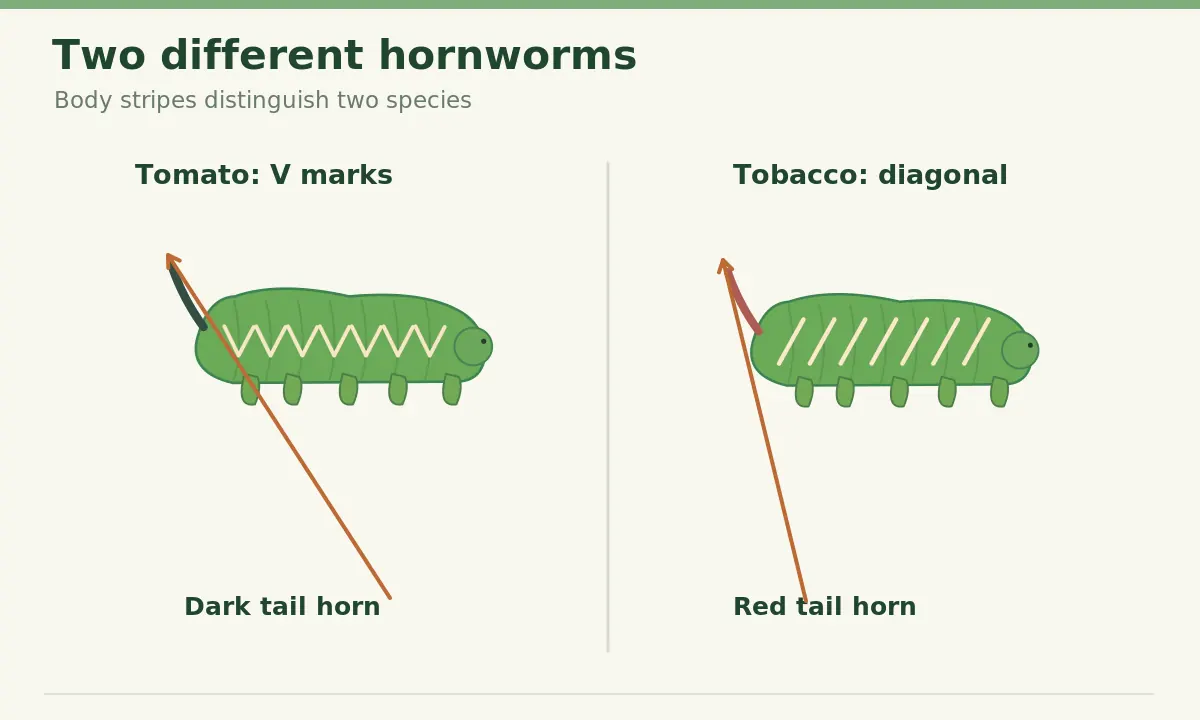
Separate Tomato V Marks From Tobacco Diagonal Stripes
Tomato hornworms typically show V-shaped pale markings along their sides and have a dark horn with blackish sides. Tobacco hornworms more commonly show oblique white dashes and a reddish horn. CSU Extension notes that tobacco hornworms may be the more frequent type on tomatoes in some regions despite their name. Neither green color nor the fact that it eats a tomato establishes species. For garden decisions, both feed on nightshade crops and are managed similarly. The identification diagram shows both patterns clearly instead of relying on two identical green caterpillars with different captions.
Inspect the Underside of Each Chewed Branch
Scan the stem supporting damaged leaflets, including the branch underside and nearby foliage. The hornworm often grips a main stem or petiole parallel to it, which makes the green body hard to spot. Search around fruit clusters if leaves are heavily chewed there, but avoid squeezing unripe tomatoes while moving foliage. Make a note of the number and sizes of caterpillars instead of removing every insect in frustration. Fresh small frass pellets and new missing leaflets indicate active feeding. Empty damaged branches with no current larvae may reflect feeding that ended or movement to a different part of the plant.
Look for White Rice-Like Cocoons Before Taking Action
University of Minnesota Extension advises leaving hornworms in place when white external parasitoid cocoons are visible. Small braconid wasps develop inside the hornworm and then form the white silken cocoons attached to its body. They are not the hornworm’s eggs and not an infectious white fungus to wipe off. The emerging adult wasps search for other caterpillars. Do not squash, spray, or brush off a parasitized hornworm just because it looks unusual. The action diagram labels the white structures as parasitoid cocoons and points to the actual living caterpillar underneath.
Hand-Pick Non-Parasitized Hornworms When Necessary
For a small home tomato patch, physical removal of a clearly identified hornworm without parasitoid cocoons is often effective, especially if feeding is severe. University of Minnesota describes handpicking as a useful control. Wear gloves if you prefer and place removed caterpillars into an appropriate container; keep children from handling crop treatments or distressed insects. Continue scouting neighboring tomatoes, peppers and potatoes since the insects may occur on related hosts. Do not strip intact leaves to hunt for a single hidden caterpillar. A few old bite marks without active defoliation may simply merit monitoring.

Keep Beneficial Wasps and Predators Working
Braconid wasps and general insect predators contribute to natural hornworm control. A parasitized caterpillar may continue moving briefly, but harming it destroys developing parasitoids that can suppress later larvae. Avoid broad-spectrum pesticides where spot removal would suffice. Other insects on tomato foliage may be harmless or beneficial, so identification matters. Small wasps seen around flowers are not automatically dangerous to the crop. The goal is a functioning garden food web while protecting productive tomato leaves. Leave hosts with unmistakable cocoons so adult wasps have a chance to emerge naturally.
Approach Bt and Other Products With Crop-Specific Care
Bacillus thuringiensis var. kurstaki, often called Bt, is one of the caterpillar-targeting options discussed by University of Minnesota for hornworms, but performance varies with larval age and conditions. Bt must be eaten to act and tends to be more effective on small larvae. Any actual pesticide use must follow a locally registered label for the specific crop and pest, including application precautions and harvest interval. Never invent a dose or use a spray intended for ornamentals on tomatoes. Products can also affect non-target caterpillars. Accurate scouting and selective handpicking often eliminate the need for spray in a small garden.
Know That Adult Sphinx Moths Are Not the Same Stage
The hornworm is the larval feeding stage of a sphinx or hawk moth, often called a hummingbird moth because adults can hover at flowers. Large adult moths do not produce the same chewing pattern as their larvae. CSU Extension explains their life cycle, including overwintering pupae in soil in many temperate regions. You may encounter multiple generations in warm areas. A hornworm with white cocoons is not about to lay eggs: the cocoons belong to another insect that parasitized it. This distinction helps explain why the right response differs between an uninfected damaging larva and a parasitized host.

Use a Three-Part Tomato Scouting Decision
First, locate genuine new chewing damage and confirm a green horned caterpillar. Second, note whether the body has V marks or diagonal dashes but treat both common tomato-feeding kinds as potential foliage pests. Third, check closely for white parasitoid cocoons. If there are cocoons, leave the host; if it is uninfected and causing significant damage, consider careful hand removal. Recheck plants after intervention and look for new feeding rather than old skeletonized leaves. Do not treat the entire garden for a caterpillar that may already have been controlled by beneficial wasps.
Related Guides
- Tomato Hornworm: Identify the Caterpillar and Choose an IPM Response
- Growing Tomatoes: A Step-by-Step Plan from Transplant to Harvest
- How to Identify Leaffooted Bugs on Tomatoes and Protect Developing Fruit
- Spider Mites on Tomato Plants: Confirm the Pest Before Taking Action
- How to Identify Whiteflies on Tomatoes and Reduce Their Damage
How We Research and Verify Plant Advice
Sources checked on 2026-10-26: extension.umn.edu; extension.colostate.edu. We reviewed each institution’s plant identification, correct growth stage and relevant cultural recommendations before adapting them into an independently written step-by-step guide. Where sources are region-specific, their calendar details are not applied universally. Pictures use simplified teaching shapes and should be compared with living specimens; they are not a substitute for laboratory disease diagnosis or local climate guidance. The relevant advice is paraphrased rather than reproduced.
Safety and Independent Editorial Disclosure
This independently prepared educational article does not claim sponsorship or affiliate approval. Our category reading links are informational, not product endorsements. See the VegWin affiliate disclosure. Clean sharp tools before cutting plants, protect hands from thorns and blades, and keep cut plant material away from children and pets where appropriate. Use only locally registered plant treatments labeled for the actual crop, and observe the product label. Do not rely on unsupervised home remedies or unverified harvest-safety promises.
Usually braconid parasitoid wasp cocoons, not hornworm eggs. Leave the parasitized caterpillar in place.
No. The tail horn is not a stinger, though unfamiliar larvae are best inspected without handling.
Tomato hornworms generally have V-shaped side marks and darker horns; tobacco hornworms have diagonal stripes and reddish horns.
Scout for fresh chewing, then hand-pick actively damaging larvae that lack parasitoid cocoons.
Usually not. Identify the larva and assess damage first; use crop-labeled options only when genuinely needed.