
Pyracantha, or firethorn, is valued for clusters of white spring flowers and red, orange, or yellow ornamental fruits that follow. A hedge trimmer can shape it quickly but may remove much of that display. The Royal Horticultural Society explains that flowering is mainly associated with shoots from the previous year and recommends protecting the framework and fruiting clusters when shortening new growth. This guide distinguishes the decisions for a free-standing shrub, wall-trained plant, and formal hedge. Before you start, put on sturdy gloves, eye protection, and thick sleeves: the thorns are sharp and can cause painful injuries.
Know What the Thorny Branches Are Producing
Pyracantha is a dense, often evergreen woody shrub with sharp thorns. Clusters of little white flowers can become showy ornamental fruits if pollination and growing conditions cooperate. The plant is not a cane fruit or a pruning-group hydrangea, so borrowing those rules is misleading. RHS advises that much of the blossom comes from shoots formed the previous year. A cut does more than change shape: it may also remove future flowers or ripening fruit clusters. Before pruning, locate the main permanent branches, flowering short shoots, young extensions, and any damaged or diseased sections. Marking a few examples helps make every cut deliberate.
Separate Free-Standing, Wall-Trained, and Hedge Goals
A free-standing firethorn may only need selective removal of damaged, crossing, or unwanted stems in mid-spring. A specimen against a wall or fence often requires short side shoots and ties to hold a horizontal or fan-shaped framework. A formal hedge is trimmed for a uniform outline, but repeated shearing has a real cost in berry display. Decide which feature matters: safety and access, natural flower clusters, training against masonry, or a crisp hedge. You cannot maximize every goal using one identical cut. The right pruning method is the smallest intervention that solves the actual space or health problem.

Avoid Removing All Last Year’s Flowering Growth
For strong spring flowers, retain as much productive two-year-old growth as practicable. Heavy shortening of every branch in winter or early spring can create a leafy shrub with fewer blossoms and thus fewer later berries. When there is no urgent obstruction, wait until you can see what portions flowered and which outward shoots truly need redirecting. Make a small, clean cut just above a suitable branching point rather than leaving long snagged stubs. A severe renovation may be necessary for an overgrown plant, but its temporary loss of fruit is an expected trade-off, not a mysterious failure of the plant.
Prune Wall-Trained Side Shoots Without Cutting Fruit Clusters
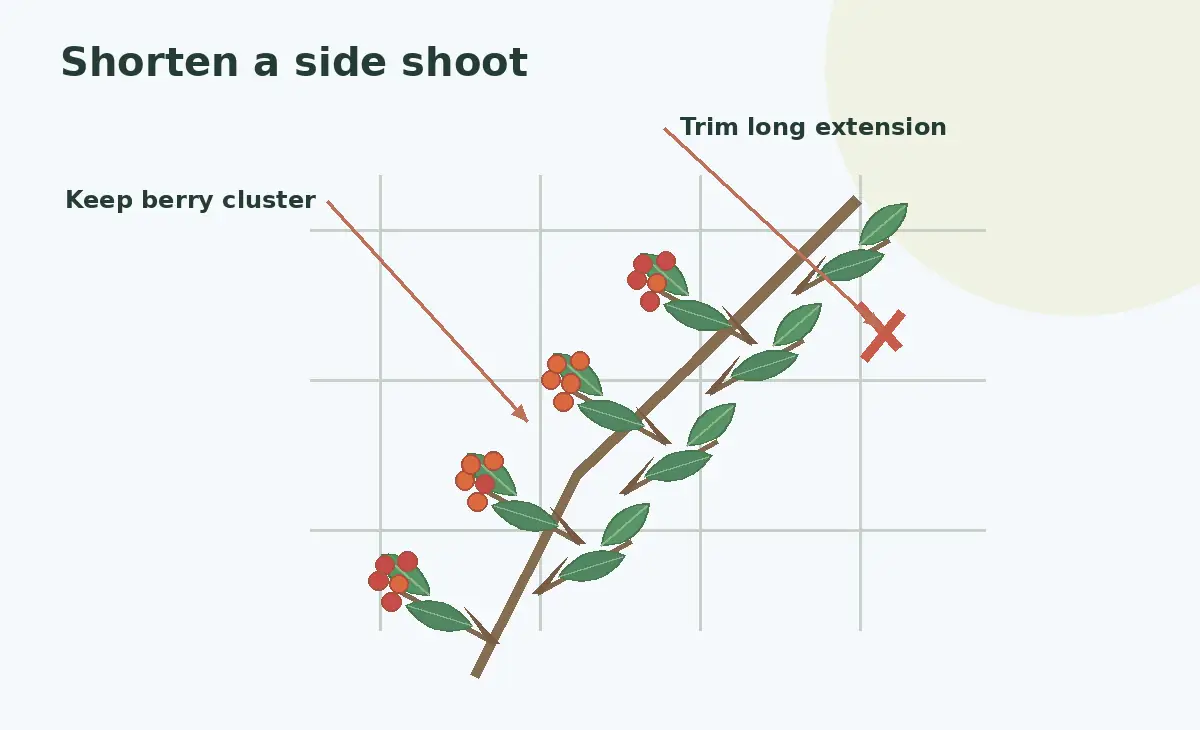
On a trained pyracantha, identify the permanent structural branches before touching the flexible current-season extensions. According to RHS, established wall-trained plants can have side shoots shortened in late summer to a few leaves beyond the base, staying clear of visible fruit clusters. The objective is to show the colored berries while keeping the plant narrow enough for its site. Tie in selected new shoots where a branch of the framework is missing; do not simply trim every extension off flush. Check ties for rubbing and allow room for stems to expand. Be careful near doors, sidewalks, and windows where thorns could injure passersby.
Time Informal Shrub Cleanup for Minimal Loss
For a naturally mounded plant, RHS suggests removing unwanted, unhealthy, or badly positioned growth in mid-spring. A very light trim can also be done after flowers where the gardener is willing to sacrifice some developing berries. During summer, inspect the clusters before using pruners: they may be tucked along short shoots and hidden behind leaves. Avoid a habit of cutting every bright new shoot simply to make a dense ball. When the shrub is well sited and flowering, leaving it mostly alone is often the best berry-preserving option. Annual cleanup should not automatically become annual hard renovation.
| Situation | What to do | Why |
|---|---|---|
| Free-standing plant blocks access | Remove selected offending shoots | Preserves much of the flower display |
| Wall-trained shrub has long side shoots | Shorten past visible fruit clusters | Keeps a narrow framework and berries |
| Mature hedge needs a tight outline | Accept that clipping costs berries | Balances shape against display |
Use Clean Cuts and Work Around Sharp Thorns
Sturdy leather gloves, eye protection, a long-sleeved top, and long-handled loppers make pyracantha safer to handle. Prune from a stable position without leaning into thorny branches or working on an unsteady ladder. Inspect the structure for deadwood before reaching through it. Remove each branch carefully to avoid springing thorny material back toward your face. Cut at the appropriate branch attachment without tearing bark. Clean tools between diseased plants and dispose of infected debris based on local guidance. Pyracantha can suffer from fire blight or scab; unusual blackening or cankers may warrant a plant-health diagnosis rather than routine cosmetic pruning.
Read the Difference Between Flowers and Berry Clusters
Spring flowers are typically grouped into small, pale clusters. After pollination, tiny developing fruits can occupy many of the same positions. Summer side-shoot trimming must avoid slicing straight through these clusters if winter color is the goal. If berries are sparse, first ask whether last year’s flower-bearing growth was repeatedly removed. Then investigate spring frost, poor pollinating weather, shade, drought near a wall, or disease. Do not assume more fertilizer will force abundant berry production. Excessively vigorous leafy growth can be the opposite of the desired display. Record pruning dates and photograph where fruit actually formed.
Renovate an Overgrown Firethorn in Stages
RHS notes that pyracantha can respond to heavy renovation, but severe cutting temporarily reduces the flowers and fruits. When a shrub has invaded a path or grown into a window, begin by identifying and removing dangerous or badly crossing branches. Preserve a useful framework if possible, and avoid stripping foliage from every side at once. Staged reduction is often easier on the structure and lets you watch how new growth develops. Very old or weakened plants may react differently from vigorous specimens. Work around bird nesting periods and check local wildlife laws before removing vegetation that could contain active nests.

Keep Berries Ornamental Rather Than Edible
The colorful red, yellow, or orange fruits are ornamental. Do not treat them as a garden harvest for people or pets. Inspect plants used near family walkways because spines remain a hazard even when there are no berries. Cleaning up fallen berries may be useful on slippery paved areas, though fruits are valuable to wildlife where left undisturbed. Avoid using an aggressive hedge clipper near planted groundcovers and tender shoots that are not part of the firethorn. If thorny cuttings are composted, handle the material so spines do not create future safety hazards during turning or spreading.
Build a Seasonal Inspection Routine
In spring, check branch damage and note where flowers appear. After bloom, decide whether any selective adjustment is needed. In late summer, shorten appropriate side shoots of trained plants while retaining visible fruit. In autumn and winter, enjoy the berries and assess whether the plant is blocking a walkway, not whether it conforms to a rigid geometric shape. The precise timing depends on when your particular plant flowers and ripens fruit. Winter cold hardiness does not tell you the exact week to prune. Use observations and local gardening guidance, especially when managing a hedge shared with a neighbor or growing against a building. For the basics, see our guide: When to Prune Holly Shrubs Without Cutting Off Their Winter Berries.
Related Guides
- When to Prune Ninebark Without Losing Next Spring’s Flowers
- When to Prune Bridal Wreath Spirea and Keep Its Arching Spring Flowers
- When to Prune Deutzia After Flowering and Thin Older Canes Correctly
- When to Prune Japanese Pieris Without Losing Next Spring’s Flowers
- How to Prune Flowering Quince After Bloom Without Losing Next Year’s Flowers
How We Research and Verify These Steps
We cross-checked the identification, timing, practical actions, and safety cautions against these authoritative resources on 2026-10-24: www.rhs.org.uk reference; www.rhs.org.uk reference; plants.ces.ncsu.edu reference. Guidance from RHS or university Extension may describe a particular climate, species, or planting system, so compare it with your actual growing conditions. We distinguish observations supported by those references from local decisions that must be adapted to a garden, cultivar, or weather pattern.
Disclosures and Regional Considerations
This is educational garden guidance, not a promise of a crop or flower outcome. No paid partnership or affiliate recommendation is claimed for this article; see VegWin affiliate disclosure. Weather, plant identity, garden location, and local regulations can change the safest procedure. For pesticides, use only products currently registered for the exact crop and pest and follow the label. Toxic ornamentals must be kept away from children and pets, and proper protective equipment should be used as described.
An established vigorous plant can often recover from renovation, but hard pruning removes flowering wood and can reduce berries for a time.
RHS states that most flowers are borne on shoots produced the previous year, so avoid routinely cutting off all older flowering growth.
RHS recommends late-summer shortening near berry clusters while preserving the permanent framework and developing fruit.
Berries form after flowering. Extensive trimming can eliminate flowers or young fruit clusters, leaving little winter display.
Treat them as ornamental rather than edible; use gloves and keep thorny stems away from paths and children.