
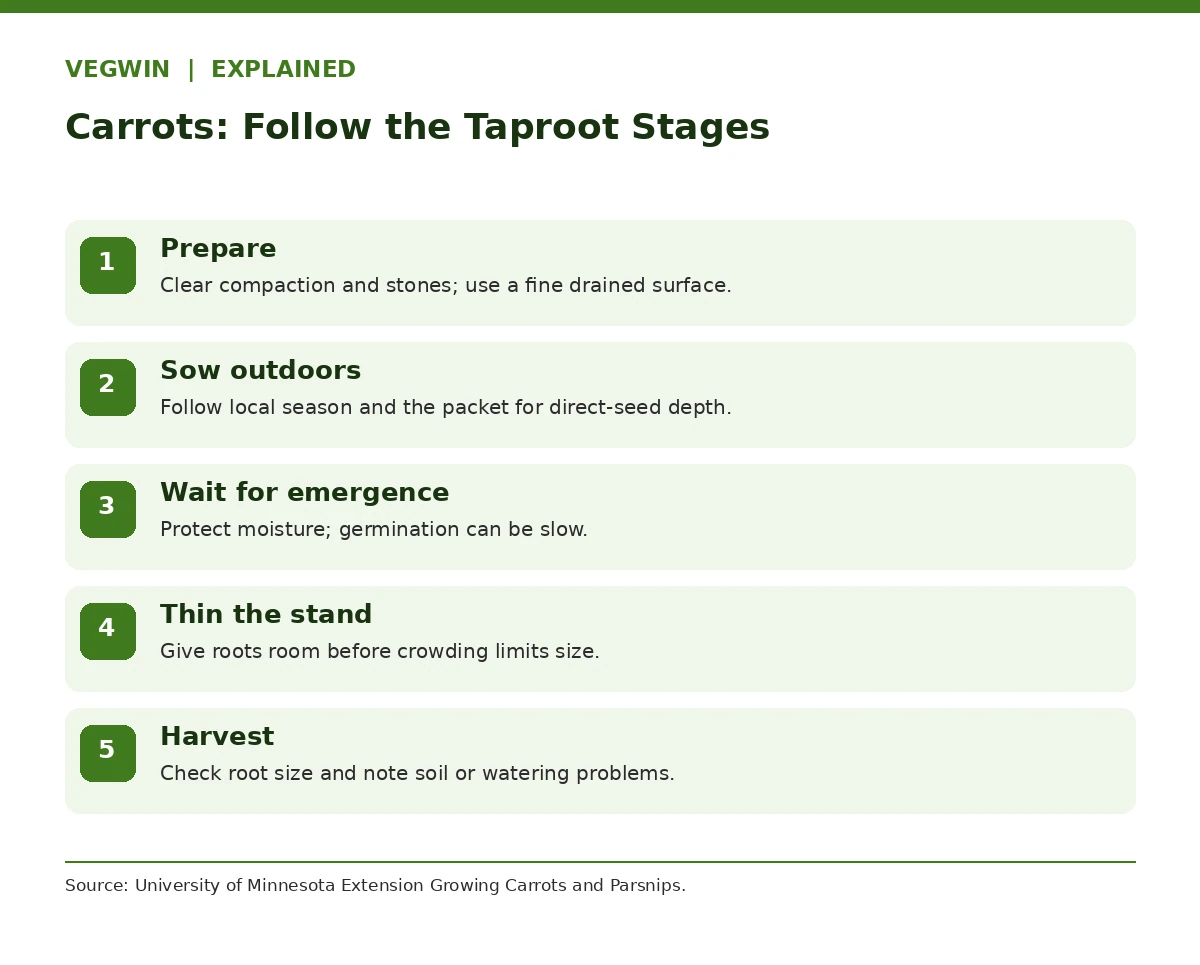
Carrots are made underground long before you see a sturdy top. Their taproots begin developing as tiny seedlings; a crusted surface, crowded stand or compacted layer can limit the harvest even when leaves look respectable. This guide follows carrots from choosing seed through digging and includes a symptom-to-stage diagnostic table. It is deliberately a direct-sowing guide, not an indoor transplant protocol. Disclosure: This is independent gardening information, not a paid product placement. Affiliate partnerships for this page are not verified; see the site affiliate disclosure.
Choose the Carrot Root Shape for Your Soil
Carrots vary in mature length and shape. In a deep, loose bed, long-rooted cultivars may develop well; a shallow or stony bed can favor a shorter type if other conditions are adequate. Check the seed packet description rather than assuming a named variety will perform identically in every soil. Minnesota Extension identifies a well-drained sandy loam as especially suited to straight roots, while noting that heavier soils can work if their structure and drainage are good. The goal is a penetrable rooting zone, not an unnecessarily expensive replacement of every shovel of garden soil.
Inspect the bed before seeding. Remove obvious rocks and compacted obstructions in the intended root zone, break up large clods, and assess drainage after rain. A crust-forming surface can prevent tiny seedlings from emerging, while heavy wet soil can be damaged by working it too early. If you garden in a container, choose a depth appropriate for the mature root and adequate drainage; do not transplant a carrot seedling merely because pots were used for another crop.
Direct-Sow at the Right Local Season
Minnesota Extension explicitly recommends direct seeding carrots, because transplanting can damage or redirect an early taproot. Consult local Extension sowing windows, actual soil conditions and the selected cultivar instead of relying on a USDA hardiness-zone number. Hardiness zones estimate perennial winter cold tolerance, not a universal spring or fall seeding date. Carrots generally favor cooler growing periods, but local heat and rainfall patterns change which sowing window is most reliable.
Make a fine, level seedbed without compressing it. Place tiny seeds according to packet depth and spacing directions, using pelleted seed or seed tape if easier to handle. Minnesota Extension notes that pelleted seed and tape may improve placement but cost more; they do not remove the need to keep the seedbed appropriately moist. Mark the row clearly so cultivation or weeding does not disrupt seedlings that have not appeared yet. Plan more than one sowing only if the local season and seed packet maturity time allow.
Keep the Surface Moist While Slow Seeds Emerge
Carrot seed can take up to three weeks to emerge in Minnesota Extension guidance; cool soil, age of seed, a dry top layer or crusting can complicate establishment. Avoid declaring a failure after just a few days. Inspect moisture near the seeding depth rather than judging the appearance of soil a few inches below it. Small gentle watering is useful when the surface is drying, but do not swamp or erode the seed row.
After a hard rain, look for a hard crust that seedlings struggle to break through. Minnesota Extension suggests moistening a crusted surface with a gentle spray. Digging through the row to “help” shoots often damages more seedlings than it saves. A fresh germination test on spare seed can distinguish a weak seed lot from a hostile outdoor seedbed, but remember that a home test measures potential viability under test conditions rather than every problem in the garden. Our walkthrough on how to grow parsnips from fresh seed through a sweet fall harvest sets out each step.
Thin Seedlings Before Roots Become Crowded
When young carrot plants are established, remove extra seedlings so individual roots have room to expand. Minnesota Extension suggests thinning plants when they are about three to four inches tall and leaving approximately two to four inches between plants, adjusted for variety. Do not turn those values into universal requirements for every specialty cultivar or seed tape; use the packet and local guidance for final spacing. Thinning matters because an apparently lush stand may form many skinny roots rather than a useful harvest.
Work when the soil is workable and take care not to disturb neighboring roots. Cut surplus seedlings at the surface if pulling would dislodge keepers. Weed while weeds are small so they do not compete for moisture and nutrients. Avoid deep cultivation next to developing carrot roots. If foliage looks sparse, identify whether the cause is low germination, insects, crusting or moisture stress before adding fertilizer. Fertilizer rates belong to a soil test and local recommendations, not to a blanket carrot recipe. If you are starting from scratch, read When and How to Thin Carrot Seedlings Without Disturbing Their Roots.
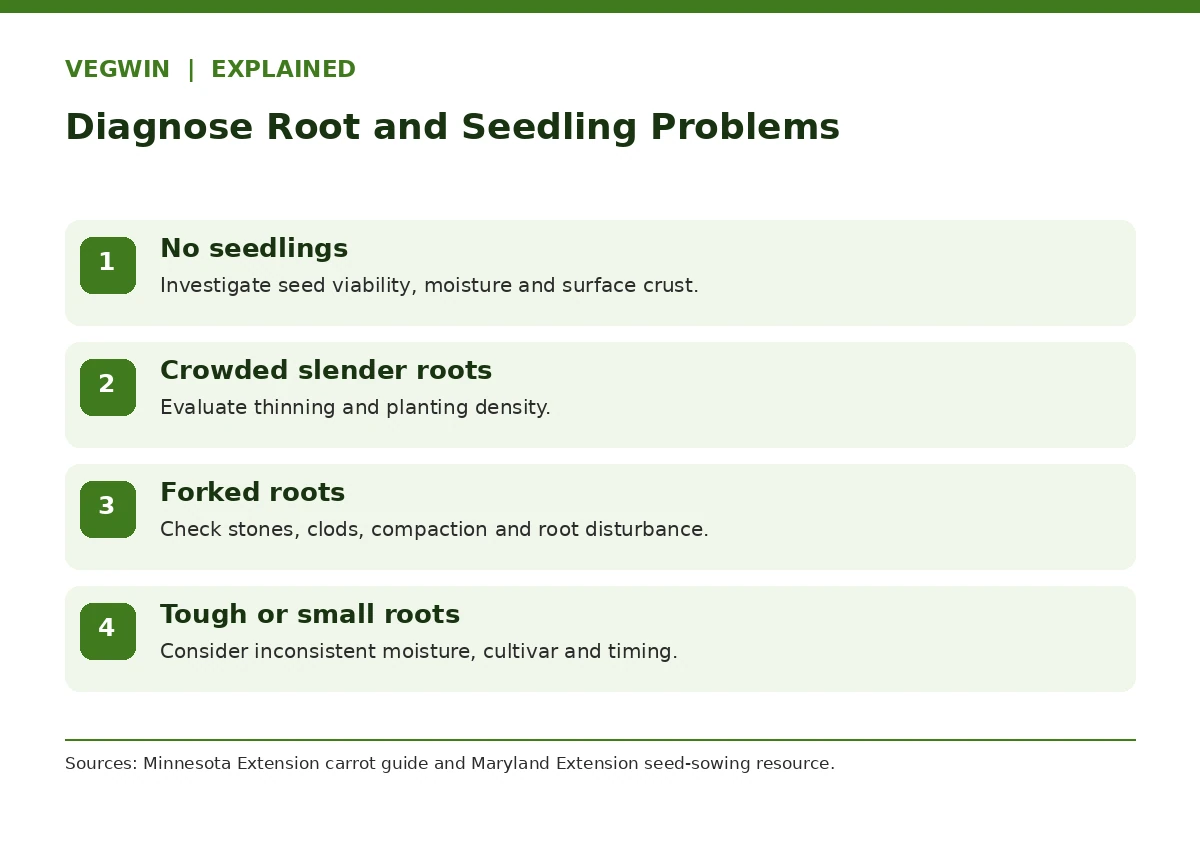
| What you see | First checks | Next action |
|---|---|---|
| Little or no emergence | Age of seed, dry or crusted seedbed | Check viability and surface moisture |
| Many skinny roots | Crowding and late thinning | Thin by crop and variety guidance |
| Forked or crooked roots | Rocks, clods, compaction, root injury | Improve next seedbed; inspect several roots |
| Tough or undersized roots | Moisture swings, soil texture, maturity | Track irrigation and cultivar timing |
| Leaf damage or suspicious lesions | Pest identity and disease symptoms | Seek local Extension diagnosis first |
Water the Root Zone Without Flooding the Bed
Even moisture supports steady carrot development. Minnesota Extension explains that inadequate water may produce tough, fibrous, misshapen or undersized roots. Observe both rainfall and soil texture: sandy soil may dry more quickly than a moisture-retentive loam, and a rain gauge helps distinguish brief wetting from meaningful infiltration. Mulching established rows with a suitable material can reduce evaporation and suppress weeds, but keep the mulch from burying newly emerging seedlings.
Overwatering can be harmful in poorly drained ground, where roots need oxygen. If carrots crack, branch or stall, review water swings and physical obstacles before attributing the problem to a single missing nutrient. Root shape is influenced by cultivar, soil structure, crowding, moisture and sometimes biotic injury. Make one measured change at a time, such as improving bed preparation or thinning sooner, and document which step affects the next sowing.
Harvest for Flavor, Size, and an Honest Diagnosis
Carrots can be pulled whenever the roots are large enough to use; the preferred size depends on cultivar and purpose. Brush soil gently from a sample shoulder or pull a representative root to assess development instead of relying only on leafy top growth. Loosen difficult ground before pulling so root tips are less likely to snap. Wash harvested vegetables with potable running water and handle them cleanly; long-term storage requirements belong to a separate crop-storage guide.
Inspect several harvested roots and sort problems by stage. No seedlings often points to seed or seedbed conditions; crowded small roots suggest thinning; forks or bends suggest obstructions, root injury or other site factors; tough or cracked roots raise questions about moisture and maturity. Do not diagnose a pathogen from shape alone. Record the chosen cultivar, local dates, soil observations and growing conditions. These records are far more useful for the next carrot crop than adding arbitrary fertilizer or deepening the seed row after the fact. If you want the full process, read how to start parsley from seed without giving up before it germinates.

Related Guides
- How to Direct-Sow Scarlet Nantes Carrots for Smooth Straight Roots
- How to Grow Purple Carrots From Seed Without Forked or Crowded Roots
- How to Tell When Carrots Are Ready to Harvest Without Breaking Roots
How We Research This Guide and Review Regional Exceptions
We checked current results for the precise reader question and read primary university Extension horticultural guidance on October 19, 2026. The VegWin.org article and category URLs could not be independently accessed during this research; consequently, we cannot confirm every live or unpublished WordPress URL, category route or ongoing site update. The editor must check competing posts and the live category in WordPress before manual publication. These recommendations reflect source-specific horticultural evidence and do not replace region-specific crop schedules, soil tests or product labels.
Sources checked October 19, 2026: University of Minnesota Extension: Growing Carrots and Parsnips; University of Maryland Extension: Sowing Vegetable Seeds Outdoors; University of Maryland Extension: Planning a Vegetable Garden; University of Minnesota Extension: Raised Bed Gardens. Each source supports the specific horticultural claim listed in the editorial record; the sources do not endorse VegWin. Statements about biological variety, planting readiness or garden pests are conditional on crop and local conditions. No pesticide mixture, fertilizer rate or commercial partnership is assumed. See our affiliate disclosure page for the general site policy.
Direct seeding is generally recommended because early taproots can be distorted by transplanting.
Minnesota Extension notes emergence can take as long as three weeks; weather, seed and surface moisture affect timing.
Compaction, rocks, injury, cultivar and other root-zone conditions can contribute. Inspect soil and multiple roots before diagnosing.
Usually yes when sown too densely. Final spacing depends on cultivar and the seed or Extension guidance.
Harvest when roots reach a useful size for the selected variety; check a sample rather than relying on foliage alone.