
Purple carrots need loose soil, gentle thinning, and even moisture. Learn why one cultivar has an orange core and another stays purple. This guide focuses on plant parts you can identify with your eyes, season-specific decisions, and how to correct the mistakes that matter most.
Choose Seed for the Color Inside the Root
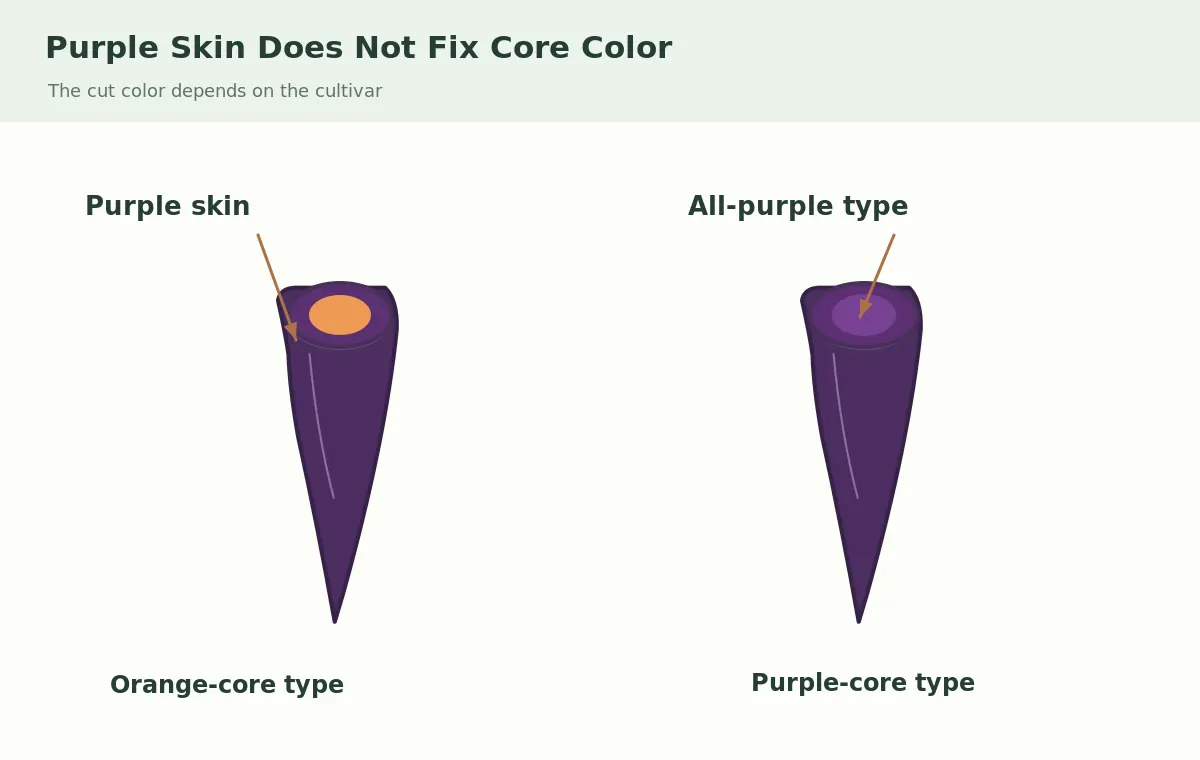
Purple carrots are selections of Daucus carota grown just like other garden carrots. Their outside color comes from anthocyanin pigments, but flesh coloration is cultivar dependent. West Virginia University Extension distinguishes Purple Haze, whose cross-section includes an orange center, from selections such as Deep Purple that color far further into the root. Buy seed with a clearly stated variety name and realistic photos of both whole roots and cut slices. An advertised purple carrot is not proof of a solid-purple core.
The fine, deeply divided tops can look like ordinary orange-carrot foliage even when a purple storage root is developing beneath. Do not judge cultivar by leaf color. The detail panel compares two legitimate purple-rooted types and places each cut section beside its exterior. Keep the variety label until harvest, and record what the seed supplier actually promised. If a packet is a mixture, expect variable shapes and interiors rather than a perfectly uniform collection.
Prepare a Deep, Crumbly Bed Before Seeding
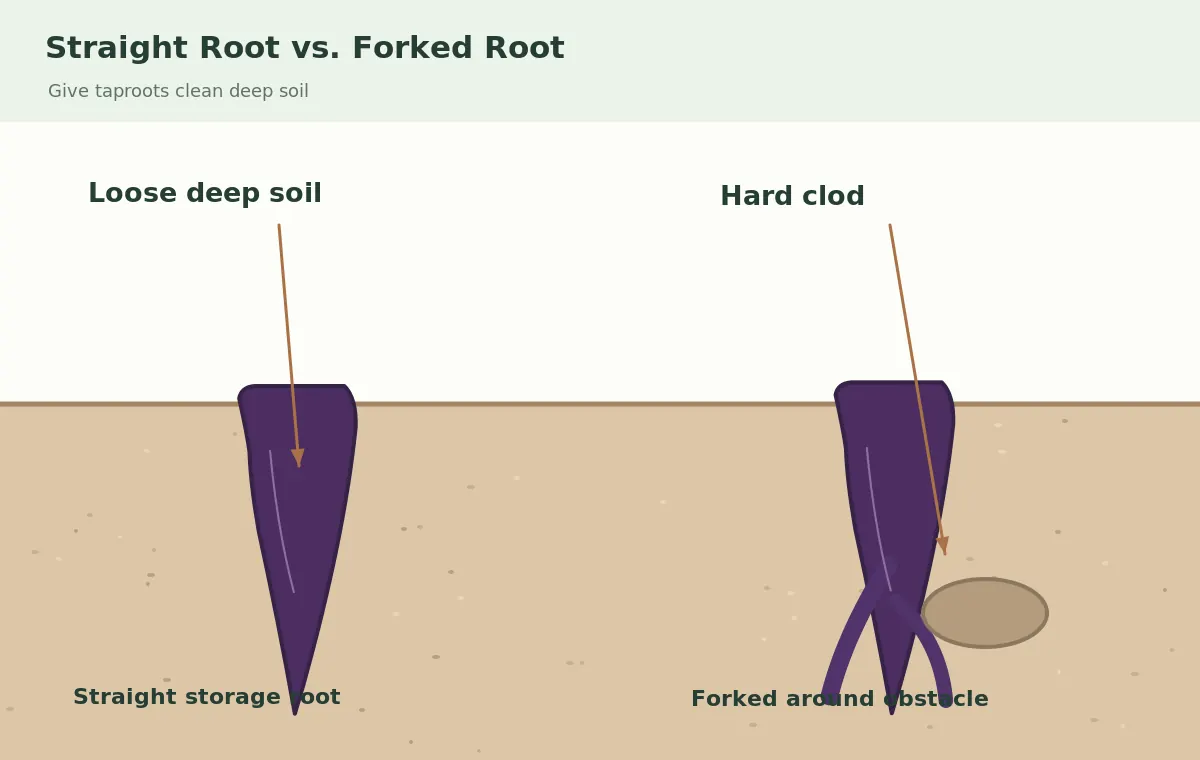
Carrots make a storage taproot early and dislike root disturbance. Choose a deep, well-drained bed or an adequately deep container filled with suitable friable medium. Remove large stones, compact clods and hard layers that can force the root to bend, fork or stop. Do not use a heavy fresh-manure layer directly in the row; use mature compost appropriately and follow a soil test where available. A narrow shallow planter is a poor home for a cultivar described as long-rooted.
Soil should hold moisture while allowing excess water to drain. In a raised bed, check that the soil underneath is not a solid barrier, since roots may reach the boundary sooner than expected. If your soil cannot be loosened deeply, select a shorter cultivar rather than demanding that long tapered roots stay straight in a shallow box. The action drawing shows a thin seed row over an unobstructed rooting zone, and the comparison panel shows how a hard clod can split a young descending root.
Direct-Sow Small Seeds and Prevent Surface Crusting
Direct-sow carrot seed where the crop will mature; transplanting disturbs the young taproot. The seeds are small and germination may be slow, sometimes approaching three weeks. Follow the packet for local sowing depth and spacing, apply a light even cover, and gently settle the surface. Avoid a deep trench that tiny shoots cannot traverse. Keep the seed layer consistently damp but never waterlogged, using a gentle spray that does not wash the row sideways.
Once rain or heavy watering forms a hard crust, seedlings may struggle to emerge. Protect the surface from pounding irrigation and break only a truly hard crust carefully without disturbing invisible shoots. A marker outside the row keeps you from hoeing over a slow-germinating crop. Purple carrot seed usually looks like normal carrot seed, not a tiny purple miniature root. Seed color is not an accurate promise of mature root color.

Thin Before Neighboring Roots Tangle
When seedlings are established, remove extras so the chosen carrots can expand. Minnesota Extension commonly suggests a final spacing around two to four inches apart depending on mature root size. Apply the packet requirements when they are more specific. In crowded stands, the leaves can appear luxuriant while the roots stay pencil-thin and twisted. Thin on a day when soil is slightly moist, and take care not to drag a neighboring seedling out with the unwanted one.
For a particularly tight cluster, snipping a small extra seedling at soil level can minimize pulling near the roots you want. Be cautious when using this technique where cut stumps might regrow: inspect and repeat as needed. The procedure image marks the keepers and the little plants to remove; its arrows never point into the surviving root. Continue gentle shallow weed control until foliage shades the row. Do not use a deep cultivator right beside the enlarging roots.
Keep Moisture Even as Purple Roots Enlarge
Uniform water helps produce roots that are firm rather than woody, cracked or misshapen. Feel the soil at root depth instead of responding automatically to a dry dusty surface. Prolonged drought followed by flooding can stress a rapidly enlarging carrot. Mulch may help conserve moisture after plants have established, but avoid piling it over tiny seedlings at emergence. Water sufficiently to reach the roots and then allow the bed to drain.
Leaves may fade or curl from insects, drought, heat or natural age; investigate conditions before attributing them to nutrient deficiency. Scouting for carrot-fly damage and other regional pests is useful, but do not recommend a blanket pesticide application based on a damaged leaf alone. Use insect netting or crop rotation when supported by local advice. Keep foliage healthy because it supplies carbohydrates for the storage root, yet avoid repeated cutting for carrot greens if the goal is full-size roots.
Compare Root Shoulders and Slice Color at Harvest
A mature carrot may show a small shoulder at the soil line, but color alone is not a reliable maturity gauge. Check the variety’s expected diameter and sample one root when reasonable. Oregon State advises looking for a usable shoulder width rather than relying strictly on elapsed days. Gently loosen soil beside the root with a fork when necessary; pulling hard in dry compacted ground can snap the tapered lower portion.
Wash harvested roots with clean water before eating. Cut one crosswise and examine the flesh: a pale orange center inside purple tissue may be entirely normal for a named cultivar. Deep Purple-type roots can have a very different interior. Do not call a healthy orange core a disease or a seed-packet failure unless the variety was specified as fully purple. Remove leafy tops for refrigerator storage to slow moisture loss, and discard roots that are rotten or otherwise unsafe.
Fix Forking and Poor Color for the Next Sowing
Forked roots often trace to stones, compacted soil, injury to an early taproot or other underground obstacles. Thin roots with huge leaves often trace to crowding, too much competition or harvest before sufficient time has passed. None of these observations alone proves a specific nutrient deficiency. A sample root and a small spadeful of soil around it can reveal more than photographs of foliage. Remove barriers before the next planting rather than trying to straighten established roots.
If colors vary, first inspect cultivar identity and whether the packet was a mixture. Pigment expression can vary among genotypes, and skin color is not always matched by flesh color. Record the seed source, sowing date, thinning stage and moisture pattern. A second small sowing under improved conditions is a more informative comparison than applying an untested fertilizer concoction. The illustrations separate observable root disorders from perfectly normal purple-carrot color variation.
Related Guides
- Direct Sowing Seeds Outdoors: A Crop-by-Crop Success Checklist
- How to Grow Carrots: Direct-Sow, Thin, Water, and Avoid Forked Roots
- When and How to Thin Carrot Seedlings Without Disturbing Their Roots
- How to Tell When Carrots Are Ready to Harvest Without Breaking Roots
- How to Direct-Sow Scarlet Nantes Carrots for Smooth Straight Roots
How We Research and Verify Botanical Details
Authoritative sources reviewed October 27, 2026: extension.umn.edu: Minnesota Extension recommends direct sowing, thin seedlings and even moisture for straight carrots. extension.wvu.edu: West Virginia Extension distinguishes orange-centered Purple Haze from dark-throughout purple varieties. www.rhs.org.uk: RHS describes carrot cultivars, deep stone-free soils and gentle harvest. extension.oregonstate.edu: Oregon State documents carrot varieties by color and harvesting by shoulder size. These practical illustrations simplify plant structures without implying exact scale or universal planting dates. Where cultivar, weather, locality or seed stock changes the result, follow local Extension and supplier guidance.
This independent educational guide contains no paid product placement. Read our affiliate disclosure. Check local regulations and registered product labels before any pesticide use; use integrated pest management and an accurate diagnosis first.
Direct sowing is best because damaged young taproots often become misshapen.
Some cultivars, including Purple Haze, normally have orange interiors.
Follow the cultivar packet; two to four inches is a common final range.
Compacted soil, stones or early taproot damage are common contributors.
No. The tops can look like those of standard orange carrots.