
Mock orange (Philadelphus) is valued for arching branches and fragrant white blossoms, usually concentrated in late spring or early summer. The most important pruning rule is about flowering wood: its display generally comes from growth made before the current bloom season. Cut too much at the wrong time and you can remove the stems that would carry next year’s flowers. For an established healthy shrub, inspect it after flowering, then take out a limited number of old or congested stems rather than uniformly clipping every branch into a flat ball.
Identify Mock Orange Before Choosing Cuts
Botanical mock orange belongs to the genus Philadelphus. Common cultivars have opposite, broadly oval leaves with visible veins, and white flowers often bearing four petals around yellow stamens; some forms are double-flowered. The shrub may have upright or arching canes depending on cultivar. Do not confuse it with Mexican mock orange (Choisya), an evergreen from a different group with different pruning behavior, or with true citrus orange trees. Make sure the plant identification matches the intended guidance. If a shrub has grown in a hedge with frequent shearing, its current silhouette may conceal its naturally arching form.
Wait Until the Fragrant Flower Display Has Finished
RHS advises pruning Philadelphus after flowering, usually in summer in climates where it blooms in late spring to early summer. Wait until the main flush has faded, but do not delay heavy maintenance until winter without understanding the consequences. Young shoots developing after bloom need time to mature before the next season. Light removal of clearly dead or damaged wood can be justified at other times for safety, yet pruning all green shoots in autumn or winter can sacrifice future flowers. Flowering dates vary with local climate and variety; use the actual finished bloom rather than a universal month.
Recognize Old Flowered Wood and Fresh Replacement Shoots
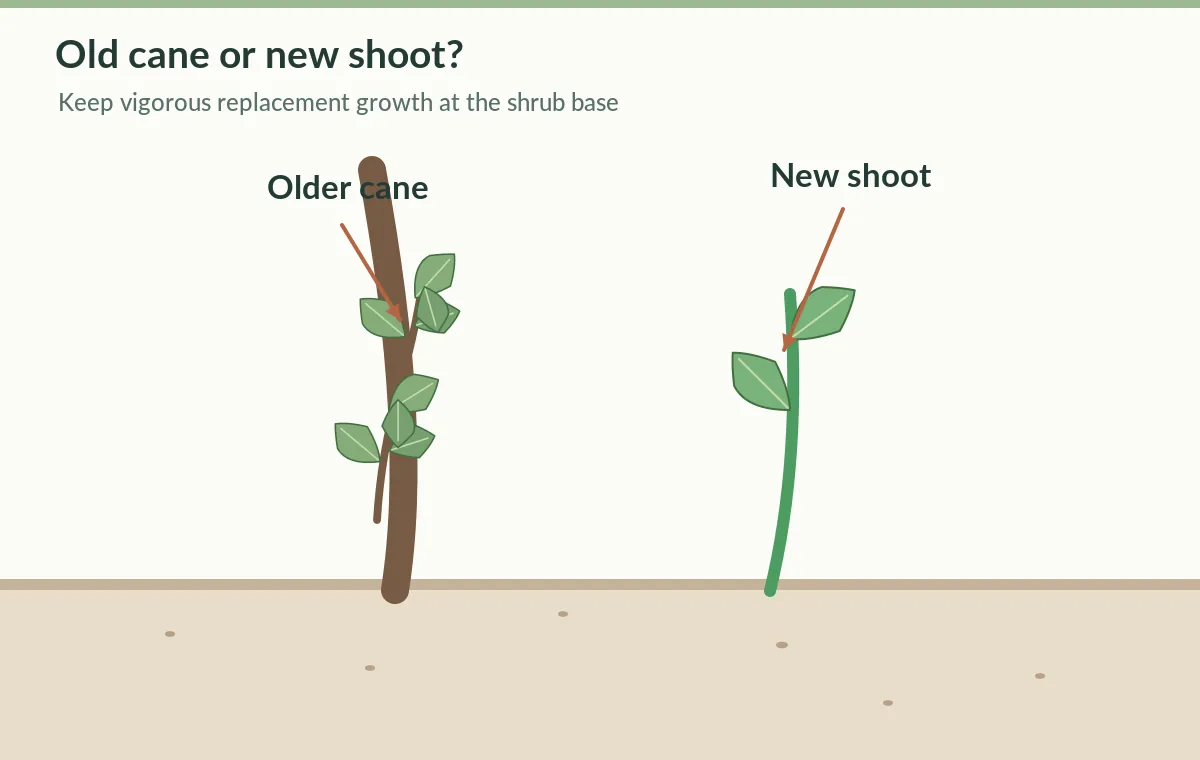
Stand back and trace the oldest thick, woody stems from the base toward their arching tips. Compare them with younger, straighter shoots emerging low in the plant. Old canes may flower less heavily and crowd the center, while vigorous young growth can become productive flowering wood. Do not assume the darkest stem is dead: scratch testing and the presence of live branches can help distinguish age from injury. Decide which cane to remove before touching the pruners. A clear view of the base matters more than counting every last faded flower at the tips.
Remove Dead and Crossing Branches First
Use clean bypass pruners on smaller branches and appropriate loppers or a saw for thicker stems. Remove dead, broken or rubbing wood back to its origin, leaving no long stub that obstructs other canes. Work carefully around nests and wildlife, following relevant local protections. If two branches cross, favor the one with a more open outward direction and sound attachment. These hygiene cuts may already improve the shape enough for a younger plant. Do not smear every cut with wound sealant by default; ordinary pruning cuts generally do not need decorative coatings or improvised treatments.
Thin Selected Older Canes Near the Base
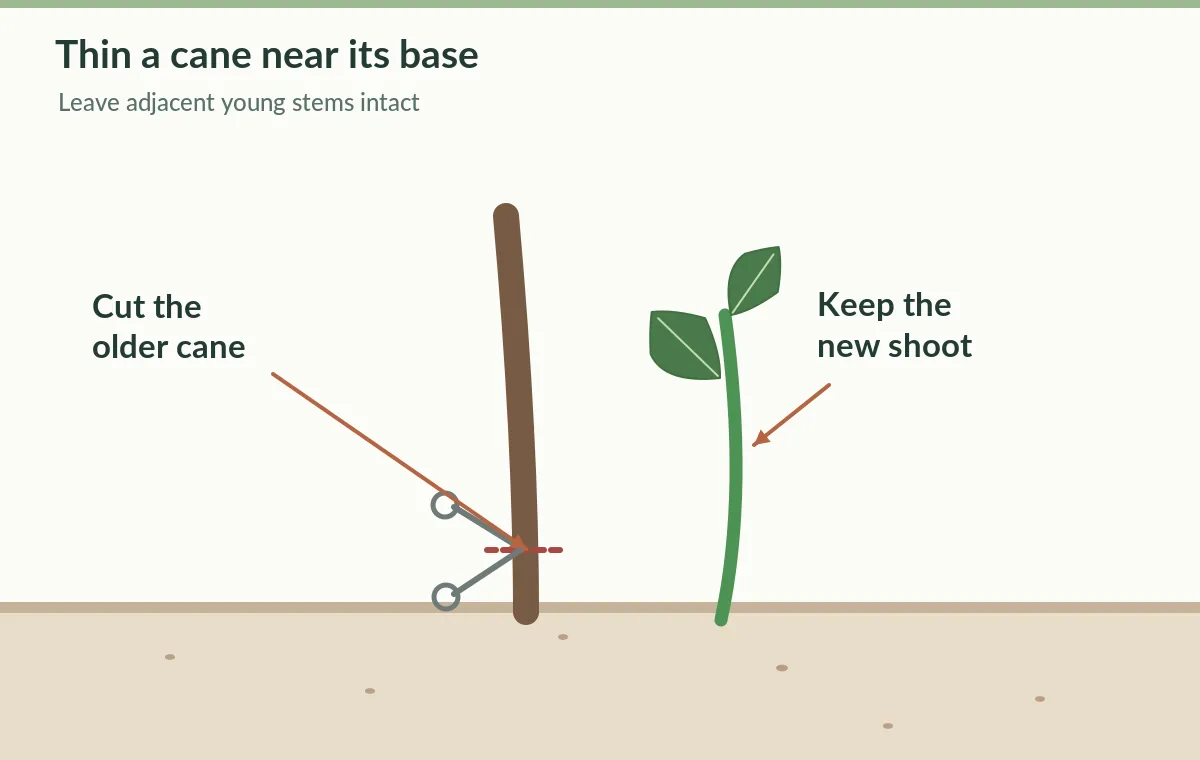
For a mature healthy mock orange, RHS suggests removing a limited number of the oldest stems from the base, around one in five each year, rather than drastically reducing the whole shrub at once. Select the least productive, most congested canes and cut cleanly near their point of emergence without injuring neighboring shoots. Keep vigorous replacement growth and enough mature flowering wood to support next season’s bloom. Stand back after each cut and reassess. Removing every old cane in a single summer may leave a weak-looking shrub and delay the return of a full flower display. For the basics, see our guide: When to Prune Mock Orange After Bloom Without Losing Next Year’s Flowers.
Shorten Finished Flowering Shoots to a Lower New Shoot
On branches that have just flowered, look for a strong healthy young lateral lower down. Cut the spent portion back to that branch rather than clipping every tip at the same height. This preserves a natural arching shape and leaves room for replacement flowering wood to mature. Do not cut into leafless old sections unless you intend a more severe renovation. A large shear across the exterior often encourages dense outer growth while leaving a dark congested center. The goal is to improve the structure of individual canes, not create a perfectly flat green hedge surface.
Handle an Overgrown Shrub as a Different Project
A badly neglected Philadelphus may need staged renewal rather than ordinary annual maintenance. University Extension describes late-winter or early-spring renovation of old flowering shrubs, but this can reduce or eliminate bloom for multiple seasons. Explain the trade-off before cutting: if the next flower display is your priority, spread major reduction across several years and make most structural decisions after bloom. If access, safety or structural decline matters more than immediate flowers, stronger restorative cuts may be reasonable. Inspect plant vigor first; very old, diseased or repeatedly stressed plants may recover more slowly than textbook examples.
Avoid Cutting All New Summer Growth in Fall
A shrub can look untidy by late summer, especially if new shoots have surged after pruning. Resist the urge to shear off the fresh extension growth without considering the next bloom. Philadelphus generally forms next season’s flower potential on the growth produced after the current flowers fade. Excessive autumn tidying may remove that future flowering wood. Tie back a branch temporarily if it obstructs a path, or selectively remove a true hazard rather than automatically shortening every new cane. Where annual maintenance is insufficient, plan a deliberate rejuvenation strategy with a known sacrifice in bloom.
Match Pruning Severity to Plant Health and Site
A healthy shrub in full sun or light shade and reasonable soil usually responds differently than one struggling in deep shade, waterlogged clay or drought. A weak mock orange that makes little new growth may need better root conditions, light or general care before structural pruning can help. Many cultivars reach several feet across; do not keep a large selection in a tiny gap by removing half its canopy each year. Check mature cultivar size and consider relocation or replacement if the space cannot support it. Site mismatch is not something a more elaborate pruning pattern can fully correct.
Read the Shape After Every Major Cut
Move several steps back and check whether air and light can move through the center without stripping the shrub bare. Keep a mix of younger and older stems, preserve the graceful arch and avoid a ring of flowers stranded only on top. Cutting one or two crowding canes can make a larger difference than snipping dozens of outer twigs. If you have already removed the agreed share of old stems, stop rather than continuing until the plant resembles a diagram. A natural-looking mock orange still has uneven branches; uniformity is not the measure of success. For the basics, see our guide: When to Prune Ninebark and Thin Old Canes Without Losing Flowers.

Use Flowering Next Spring as Feedback
Take a photo immediately after flowering and pruning, then compare it with the following year’s blooms. Note which shoots extended, where they flowered and whether a crowded zone became more open. If there are few flowers but plenty of leaves, review the timing of your cuts, the amount of light and whether strong new shoots were lost late in the season. A mild routine done regularly is easier on the plant than a repeated cycle of neglect followed by dramatic cutting. Keep labels for named cultivars so plant size and habit remain part of the decision. For the basics, see our guide: When to Prune Deutzia After Flowering and Thin Older Canes Correctly.
Related Guides
- When to Prune Ninebark Without Losing Next Spring’s Flowers
- How to Prune Flowering Quince After Bloom Without Losing Next Year’s Flowers
- How to Prune Weigela After Flowering Without Losing Next Spring’s Blooms
- When to Prune Azaleas After Bloom Without Losing Next Spring’s Buds
- When to Prune Bridal Wreath Spirea and Keep Its Arching Spring Flowers
How We Research and Verify Practical Advice
We compared university Cooperative Extension and established horticultural guidance for the specific plant and decision in this article, including seasonal differences, plant physiology, and limitations of each approach. Sources were reviewed on October 23, 2026. Outcomes still depend on local climate, cultivar, soils, weather, and plant condition. For an unusual symptom or legal restriction, use an appropriate local Extension resource.
Sources, Scope, and Editorial Disclosure
Sources checked: RHS Philadelphus growing guide (pruning established shrubs after flowering and thinning older canes, limited to about one in five annually). RHS early-flowering shrub pruning (last-season wood and pruning after flowering to protect next-year bud development). Iowa State Extension shrub pruning (distinction between light post-bloom maintenance and late-winter renovation sacrificing flowers).
Disclosure: We do not claim brand sponsorship, commercial endorsement, or a verified affiliate relationship in this guide. Read the VegWin affiliate disclosure. Diagrams are educational and show representative anatomy; the actual plant, label, and local conditions take precedence over a simplified drawing.
Winter pruning may remove flowering wood; major rejuvenation can be done then when sacrificing upcoming blooms is acceptable.
Many Philadelphus forms flower on previous-season growth, so shoots made after bloom matter for next year.
For a healthy mature shrub, RHS suggests thinning about one in five older canes annually rather than all at once.
Selective thinning and cutting back to young laterals better preserve its natural flowering habit.
Pruning at the wrong time, heavy renovation, weak growth or inadequate sunlight can all reduce the next bloom.