
A brown or nearly black patch on a developing pepper can be alarming, especially when the rest of the plant looks healthy. Blossom-end rot is usually a physiological problem in the fruit, not a contagious disease. Rapidly growing tissue at the blossom end receives too little calcium at a critical stage, often because water supply to the roots has fluctuated. Adding calcium indiscriminately may not help when the soil already contains enough. The best first steps are to examine the location of the damage, assess watering and drainage, and protect the next flush of fruit from repeated stress.
Locate the Damage on the Pepper
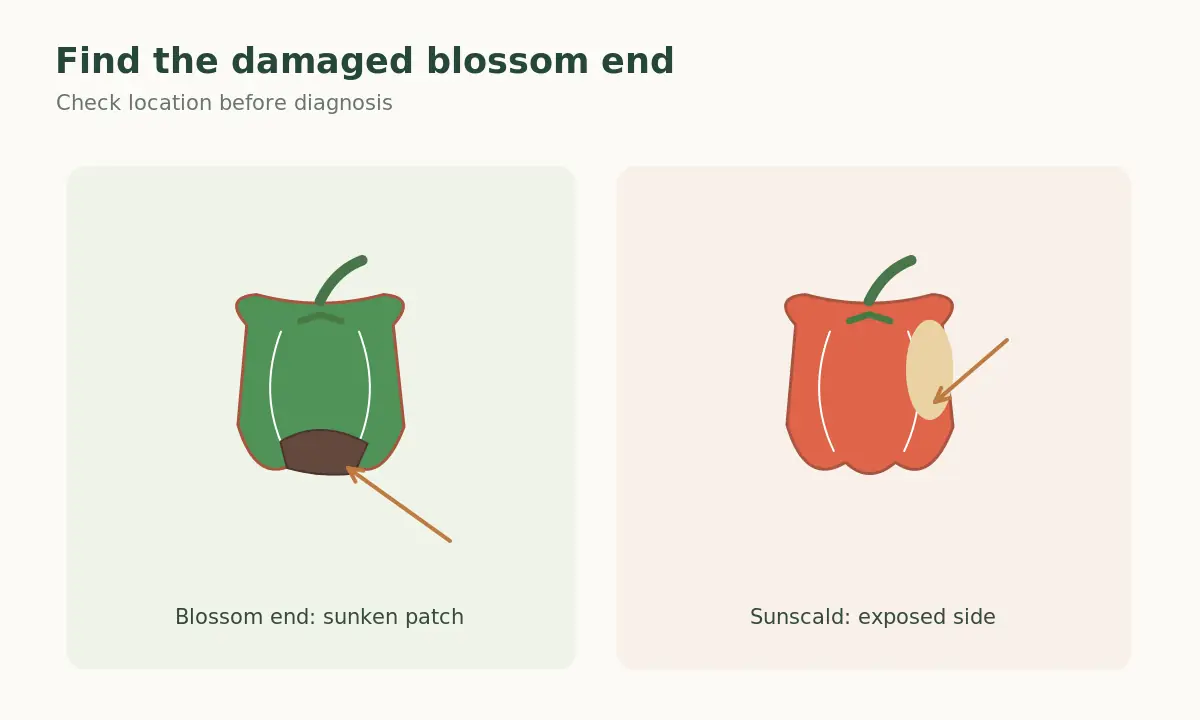
Blossom-end rot generally starts at or near the end opposite the fruit stem, which was once attached to the flower. The patch may appear tan or water-soaked, then darken into a sunken, leathery area. On a bell pepper the mark may extend up one side, so use the fruit’s orientation rather than expecting a perfect circle on the bottom. University of Maryland Extension shows the characteristic fruit symptoms. Severe lesions sometimes acquire secondary mold or bacterial decay; that later infection does not mean blossom-end rot began as an infectious disease. Check several fruits before concluding the whole crop has the same problem.
Distinguish Sunscald and Infectious Fruit Rots
Sunscald usually damages the side exposed to intense light and often begins as a pale, bleached or papery area rather than a typical blossom-end patch. Anthracnose and other fruit rots can produce different spots or spores, particularly on ripening fruit. Minnesota Extension diagnostic material separates these conditions. Look for a clear relationship between the damaged surface and sun exposure, the blossom end or signs of spread to leaves and stems. If plants are wilting or lesions occur throughout the canopy, seek a local Extension diagnosis rather than applying a generic calcium treatment to an unrelated problem.
Understand the Calcium Transport Problem
Calcium helps developing plant cells form stable tissues. The immediate issue in blossom-end rot is insufficient calcium reaching a fast-growing portion of the fruit, but soil deficiency is not always responsible. University of Florida IFAS explains that calcium movement depends on water moving through the plant and that foliar calcium is unlikely to correct the disorder in fruit. A garden can contain ample calcium while hot weather, damaged roots, excess salts or uneven watering still interrupt delivery. That distinction is why a symptom-based fertilizer purchase often disappoints.
Check Root-Zone Moisture, Not Just the Surface
Use a finger or a small trowel to assess soil below the top dry-looking layer, staying away from major roots. Water deeply enough to moisten the active root zone without leaving it saturated. Repeat based on real soil conditions, recent rain, bed drainage and plant size, not a universal every-day schedule. Minnesota Extension recommends consistent moisture for peppers and warns against light surface sprinkling that encourages shallow roots. Containers and raised beds often dry faster than in-ground beds, particularly in wind or heat. A moisture check at two spots helps avoid overreacting to one dry corner.
Use Mulch Without Smothering Pepper Stems
An appropriate organic mulch layer can buffer soil temperature, reduce surface evaporation and lower the swing between wet and dry days. Keep mulch away from the stem crown so it does not remain constantly damp there. Irrigate beneath mulch rather than assuming the soil is moist because its surface looks covered. Check the actual soil after a rainstorm; light showers sometimes wet only the mulch. The objective is a stable root environment, not standing water. Plants in compacted soil or in pots without drainage may suffer root stress even when the gardener waters regularly.
Use Soil Testing Before Adding Calcium
A soil test is the best starting point for suspected nutrient deficiencies or a pH problem. If a credible lab reports insufficient calcium or an unsuitable pH, follow locally tailored amendment recommendations. Do not add lime, gypsum, eggshells or calcium salts as a default response without knowing whether they address the limitation. Too much of an amendment can alter nutrient balance or salt conditions. Maryland Extension identifies low pH and low soil calcium as possible contributors, but University of Florida points out that many soils already supply ample calcium. In those gardens, the irrigation pattern can be a more productive target.

Avoid Excessive Nitrogen and Root Stress
Heavy nitrogen feeding can stimulate vigorous leafy growth and increase demand on a stressed plant without fixing mineral movement into its fruit. Apply fertilizers according to a soil test and crop requirements, not as an emergency treatment for visible black spots. Protect the root zone from deep hoeing, repeated drying, waterlogging and compaction. Where plants are under stress from extreme heat, adjust watering observations more often. The goal is to prevent repeated temporary disruptions during new fruit development, while recognizing that weather events can sometimes exceed what careful home gardeners can control.
Know What to Do With Already Damaged Fruit
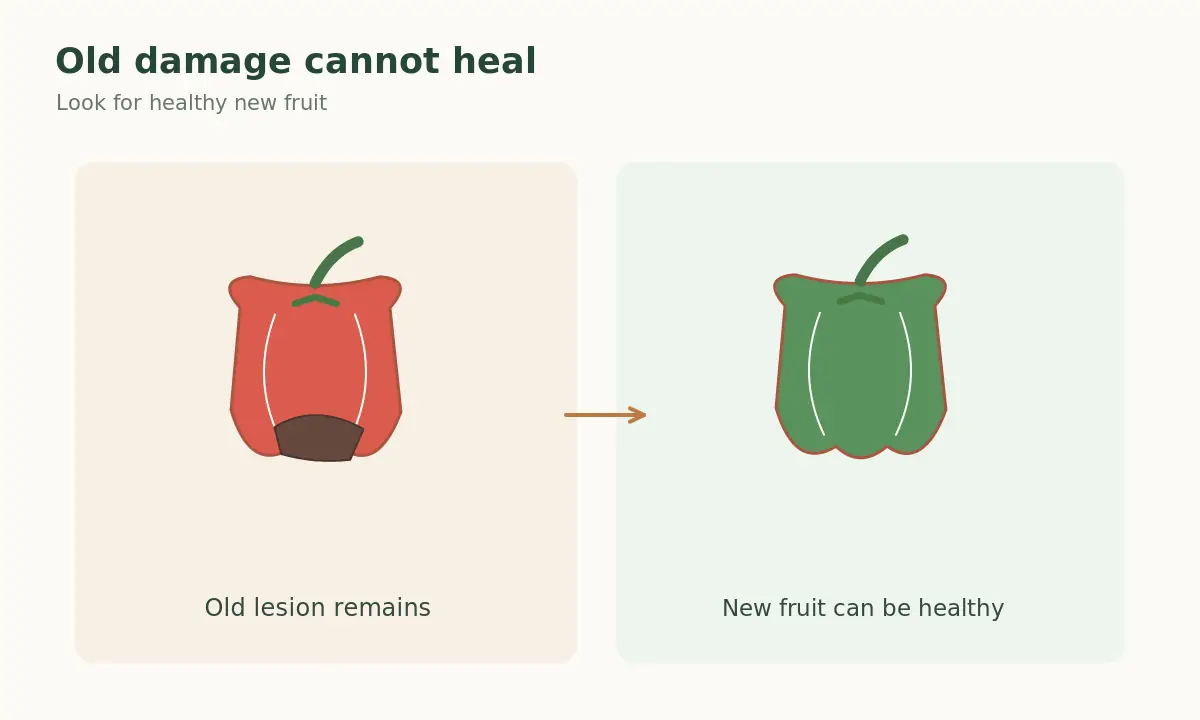
Once tissue at the blossom end has died, it will not turn back into healthy pepper wall. Removing severely affected fruit may help you focus on later developing peppers, although an isolated superficial mark does not automatically mean the entire plant is sick. Examine harvested fruit and discard anything moldy or rotten rather than advising a food-safety rescue. Do not spray all nearby plants simply because you see one damaged pepper. Continue checking new fruit over the following weeks to see whether steadier root moisture reduces the appearance of fresh symptoms.
Set Up More Reliable Watering for Containers
Potted peppers have a limited volume of potting medium, making fast drying and abrupt rewetting more likely. Check that drainage holes are open and that water actually reaches the root ball instead of running down a gap at the pot edge. A finger check below the surface or the weight of the container can help identify the right interval. Drip irrigation or a soaker system can improve consistency when it is installed and maintained appropriately. Adjust the program as plants grow; a watering schedule suitable for a small transplant may not meet the demand of a fruit-laden mature plant.
Evaluate the Next Fruits Before Changing Strategy
Watch fruits that develop after you improve the root environment rather than expecting old damaged areas to heal. If new peppers remain unaffected, continue the steady moisture routine. If symptoms persist despite uniform watering, test soil and investigate drainage, root health and salinity with a local Extension resource. Keep notes on heat waves, rapid drying and fertilizer applications so the pattern becomes apparent. Treat blossom-end rot as a diagnosis with several possible contributing factors, not a single-recipe deficiency that every gardener can correct with a spray bottle.
Related Guides
- How to Recognize Bacterial Spot on Pepper Leaves and Limit Splash Spread
- How to Identify Aphids on Pepper Shoots and Protect Beneficial Insects
- How to Overwinter Pepper Plants Indoors: Resting or Growing
- How to Harden Off and Transplant Pepper Seedlings at the Right Depth
- How to Grow Poblano Peppers and Recognize Green Pods Versus Red Anchos
How We Research and Check Gardening Advice
This guide was researched against university Cooperative Extension and other established horticultural references. We compared advice for the specific species and problem rather than treating all garden plants alike. Source recommendations were checked on October 23, 2026. Gardening seasons, cultivar behavior, soil conditions and local restrictions vary, so readers should consult their own regional Extension service for local timing and diagnosis.
Research Sources and Editorial Disclosure
References reviewed: extension.umd.edu — Symptom location, inconsistent watering and calcium-related fruit disorder. extension.umn.edu — Soil moisture and pepper quality including blossom-end rot. ask.ifas.ufl.edu — Physiology of calcium transport and limits of foliar calcium treatment. extension.uga.edu — Blossom-end rot as localized calcium transport disorder in bell peppers.
Disclosure: This educational guide contains no paid product recommendation or verified affiliate promotion. See the VegWin affiliate disclosure for the website’s disclosure policy. The diagrams illustrate concepts; adjust the actions to the plant and conditions in your own garden.
No. It begins as a physiological calcium-delivery disorder; microbes may later colonize dead fruit tissue.
No. Damaged tissue does not recover, and foliar calcium sprays generally do not correct the underlying fruit transport issue.
Not as an automatic cure. Check soil nutrients and pH, then correct any proven deficiency according to local soil-test advice.
Yes. Drying followed by heavy rewetting can disrupt calcium movement into rapidly developing fruit.
Often yes. New fruit may develop normally when moisture and root-zone conditions stabilize, even if earlier fruit was damaged.