
A poblano is a broad-shouldered chile, not the thin wrinkled shishito. Learn how to support its fruiting branches, recognize firm dark green pods, leave selected pods to redden, and understand when a fresh poblano becomes a dried ancho. This garden guide explains identification, setup, seasonal decisions and realistic limitations without assuming every climate behaves alike. Use named Extension references below to check species-specific details before acting.
Identify the broad-shouldered poblano fruit correctly
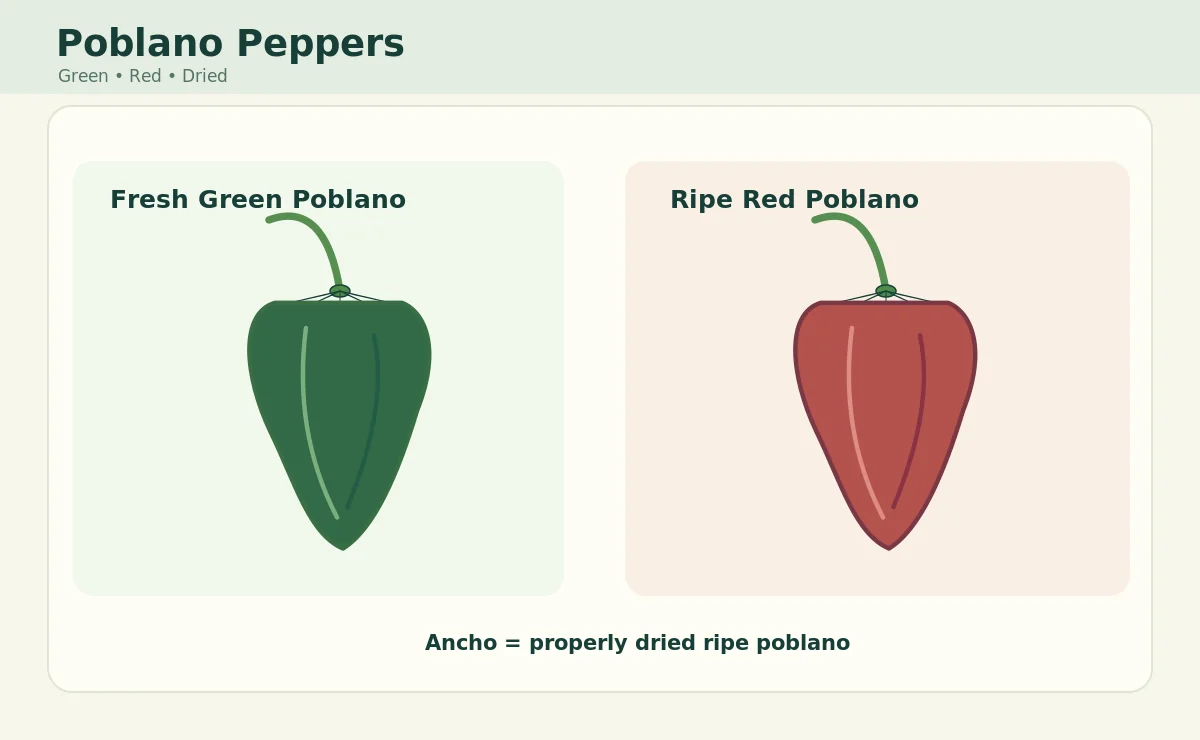
Poblano is a Capsicum annuum chile known for wide shoulders and a tapered, often heart-like outline. Its dark green immature fruit may look nearly black in shade, while ripe fruit usually becomes red or reddish brown, depending on cultivar. Oregon State Extension describes fresh poblanos as thick, broad pods rather than narrow, wrinkled shishitos. The term ancho generally means the dried ripe version of this pepper, not a different green pod on the plant. Keep the seed packet because regional markets sometimes use pepper names inconsistently, especially when comparing poblano, pasilla and chilaca.
Choose a warm growing window based on local weather
Start seed indoors for a head start if your growing season is short, using a clean, draining medium and consistent warmth according to the seed packet. Provide bright growing light after seedlings emerge; weak plants raised in dim windows can develop stretched stems. Harden off young peppers gradually before transplanting. Outdoors, protect them from cold snaps and soil that stays wet and chilly. A USDA hardiness-zone number describes average winter minimums; it does not specify the last frost or establish the safe transplant date for an annual chile. Look at the forecast and the temperatures experienced in your particular planting site.
Prepare full sun and soil that releases excess water
Set plants where they can develop a sturdy leafy framework and receive abundant sun. Drainage matters as much as fertility: wet compacted soil can injure roots, even when the top looks dry. Improve heavy ground ahead of planting with well-finished organic matter, or use a container with unobstructed drainage and enough volume for an adult pepper. Transplant without tearing roots and water thoroughly to remove air pockets. Do not crowd tall tomatoes or other vegetables over the pepper canopy; a pale pepper growing in constant shade may make fewer or smaller fruits.
Allow room for fruit weight and branch support
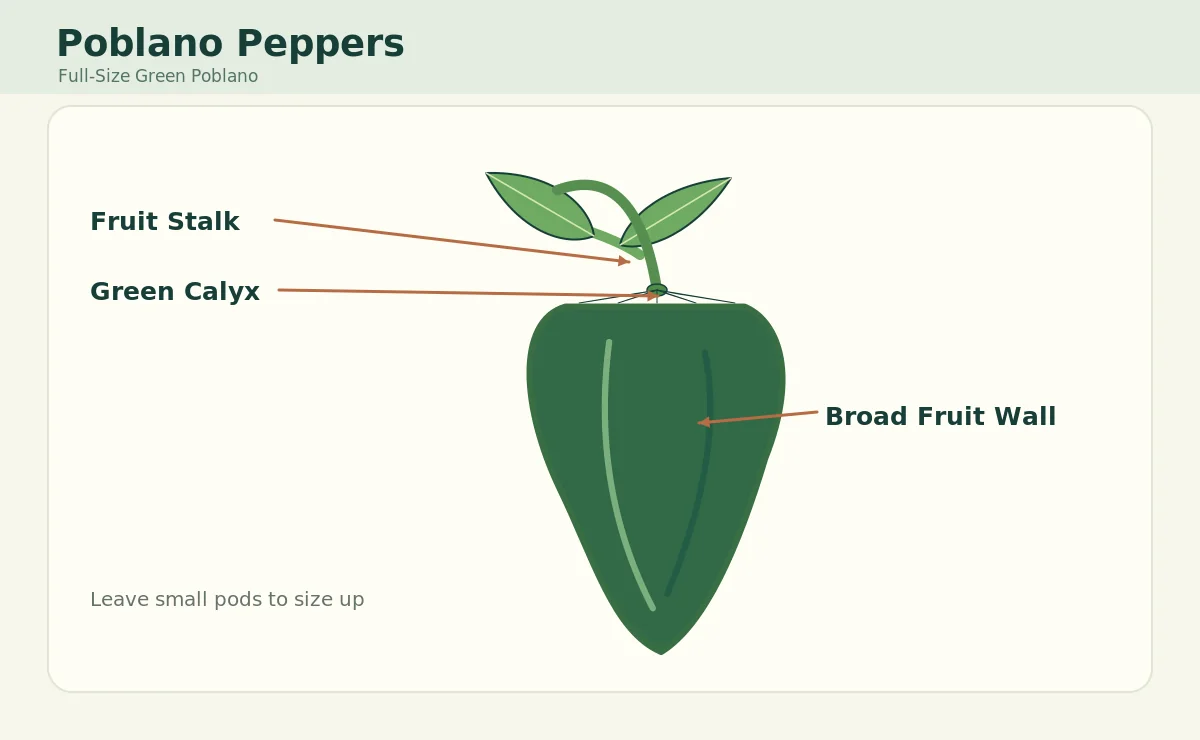
A mature poblano fruit is wider and heavier than a shishito. Its glossy green calyx sits at the top of a broad shoulder, where a slender pedicel attaches to a living branch. Use a stake, small cage or soft tie if the crop begins to pull branches down, checking frequently that support does not rub on developing fruits. Plants should be far enough apart for leaves to dry after rain and for a hand to reach a pod without snapping a twig. A little preventative support is simpler than trying to reconnect a broken loaded branch at harvest.
Water consistently and avoid guessing fertilizer needs
Even soil moisture supports pepper root activity, flowers and developing pods. Check below the mulch rather than watering only on a fixed schedule. Soak the root area, let drainage work, and keep water off foliage when practical to reduce unnecessary leaf wetness. Maryland Extension recommends uniform moisture and notes that dry stress can be linked with blossom drop and fruit disorders. A soil test can identify whether nutrients are actually low; adding repeated high-nitrogen feeds to an already lush plant is not a cure for cool weather or inadequate sun. Keep weeds down without cultivating deeply around established roots.
Know when a green poblano is ready to cut
Pick when a pod has developed the cultivar’s full broad shape, feels firm and has reached a dark green usable stage. It should not be a tiny narrow fruit that has only just formed from a flower. Oregon State Extension notes that poblanos may be harvested green or left to mature red. For green harvest, size and firmness are more dependable than counting exact days from sowing. Track the first few fruit on the plant and compare them with the packet description; fruit lengths vary by cultivar and conditions. A glossy dark green poblano is not automatically underripe for cooking.
Distinguish the red ripe chile from a dried ancho
A fresh pepper does not become an ancho merely by turning red. It is still a fresh, ripe poblano at that stage; the name ancho refers to the properly dried ripe pod. Do not describe a shriveled rotting pepper left on a bush as a safe dried product. Any home drying needs a tested drying method with complete dehydration, clean handling and appropriate storage conditions. This article covers growing and recognizing the fruit, not an unverified food-preservation recipe. For green-to-red comparisons, look at the same broad shoulders and tapered fruit outline, not two unrelated pepper species.
Cut the pedicel without tearing woody branches
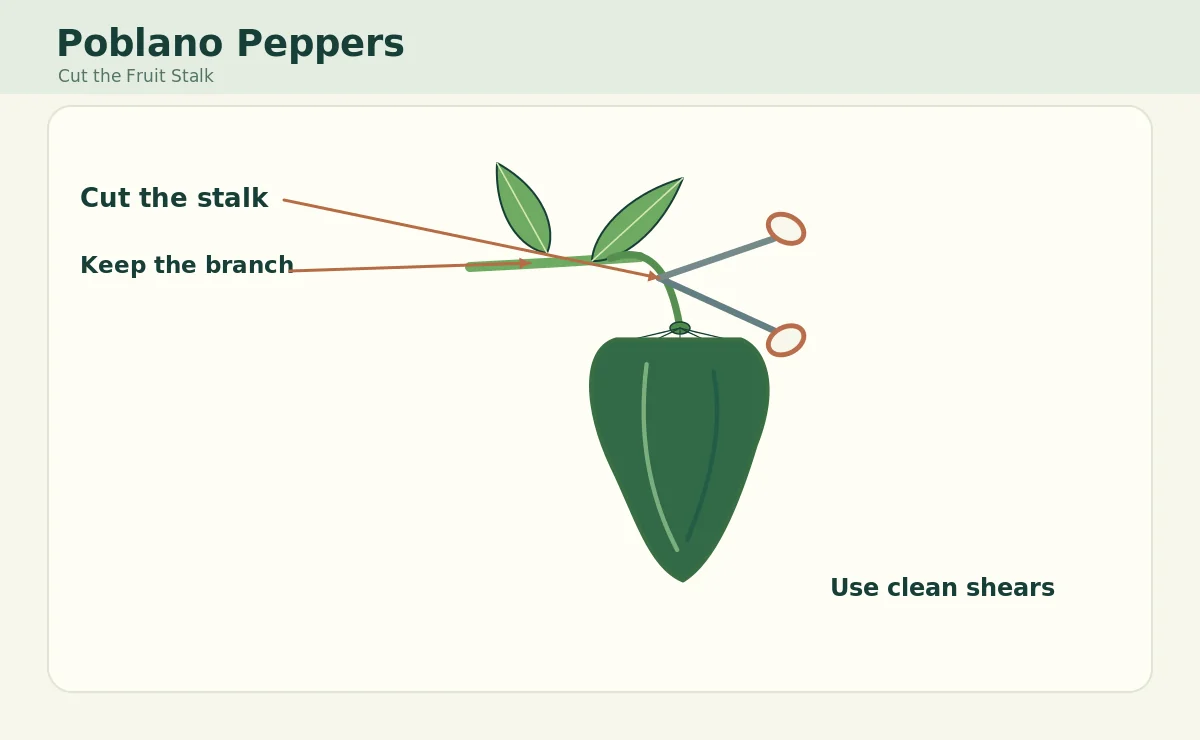
Support the fruit and use clean shears to snip the stem above the calyx. The cut belongs on the fruit’s pedicel, leaving the mother branch and neighboring flower buds intact. Clemson Extension points out how brittle pepper branches can be and favors cutting rather than pulling. Take extra care if several heavy poblanos hang from one fork. Place harvested fruit in a shallow basket rather than crushing them under a large pile. Discard fruit with soft rot or mold; a spot of brown drying tissue on one fruit is not enough information to diagnose the whole plant.
Troubleshoot stalled fruit without inventing a disease
If flowers drop, compare daily heat, cold nights, moisture swings and the plant’s nutrient regime before reaching for a spray. Exposed light or papery patches on fruit may suggest sun injury; sunken dark lesions on blossom ends can arise under water stress and nutrient uptake problems, but a photo alone is not definitive. Inspect whether damage spreads, whether it occurs on shaded sides and whether leaves share symptoms. A local extension service can help distinguish environmental injury from pests. Use sanitation, sensible water management and correct identification before considering any treatment.
Plan a harvest of green pods or mature red peppers
Your harvest strategy changes how long each fruit remains attached. If the goal is green poblano cooking, pick firm dark-green full-size pods regularly. If you want mature red peppers for a later drying project, leave selected healthy fruits to color fully while checking plants for damage and local frost risk. There is no universal deadline because sunlight, temperature and cultivar differ. Record which plants make the broadest pods, when the first fruit reached usable size, and whether red ripe fruit develops before the end of your season. Do not promise a dried ancho from every plant in a cool summer.
Related Guides
- How to Grow Shishito Peppers and Pick Thin Wrinkled Green Pods
- How to Start Jalapeño Pepper Seeds Indoors for Stocky Transplants
- When to Harvest Bell Peppers Green or Fully Colored and Where to Cut
- How to Grow Bell Peppers: A Warm-Soil to Harvest Decision Guide
- Growing Peppers in Pots: Container Setup and Fruit-Set Troubleshooting
How We Research and Check Practical Horticulture Advice
Research for this article was checked on October 30, 2026, using these primary university and Cooperative Extension resources: University Extension research; University Extension research; University Extension research. They support plant identification, growth stage and the care decisions discussed above. Exact planting dates, maturity and performance still vary with the cultivar, seed lot and regional season. Each illustration is a simplified educational botanical drawing, not a measurement-accurate taxonomic key or a substitute for local diagnosis.
VegWin publishes independent educational gardening information. None of the links or CTA buttons in this article is a paid affiliate recommendation. For the site policy read the affiliate disclosure. Before using any edible plant, verify its identity and use safe preparation practices. If symptoms or regional rules matter, consult a local Cooperative Extension service.
No. Poblanos are typically broader, with pronounced shoulders; shishitos are slim and wrinkled.
No. Firm full-size dark-green poblanos are a standard harvest stage.
No. An ancho is a ripe poblano that has been properly dried; a red fresh fruit is still fresh.
Cutting the fruit stalk avoids tearing a brittle branch carrying other flowers or pods.
Not automatically. Check weather, moisture and soil conditions before diagnosing a nutrient shortage.