
The most useful thing to know before lifting pruners is the species of hydrangea in front of you. Panicle hydrangea (Hydrangea paniculata) normally flowers on new growth produced in the coming growing season. That makes late winter or very early spring, before vigorous new growth, a sensible time to adjust its shape. The rule is not transferable to every hydrangea: many bigleaf and oakleaf hydrangeas carry flower buds on older stems. This guide explains how to recognize a panicle plant, choose between thinning and heading, and leave a balanced shrub rather than a set of accidental stubs.
Confirm You Have a Panicle Hydrangea
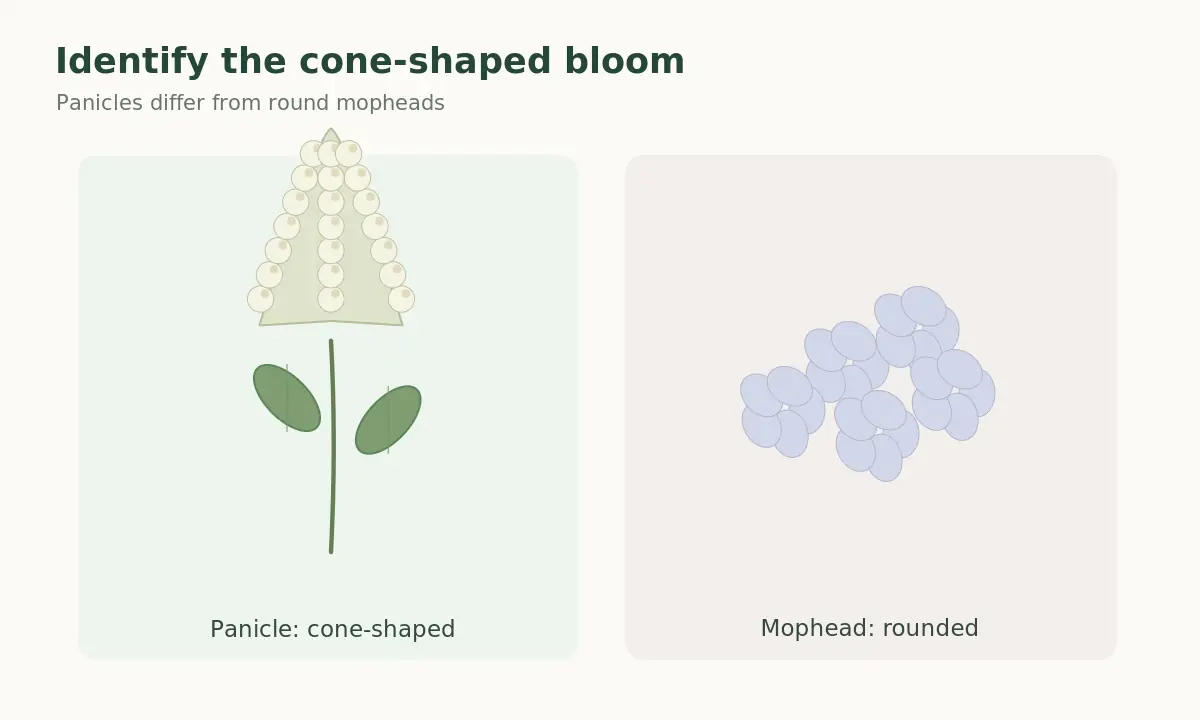
Panicle hydrangeas typically have elongated, cone-shaped flower clusters, often starting pale green or white and changing as they age. Compare flowers, habit and a trustworthy plant label instead of deciding by bloom color alone. A round mophead bloom may suggest another species with different pruning requirements. University of Minnesota Extension distinguishes panicle hydrangea from bigleaf and other types. If the plant identity remains uncertain, wait rather than giving an unknown hydrangea a severe winter cut. A poor guess could remove buds already formed for the next bloom season.
Understand Why New Wood Matters
A panicle hydrangea develops its flowering stems during the new season, so correctly timed dormant pruning generally does not remove a complete season of already-formed flower buds. Illinois Extension explains this new-wood pattern and contrasts it with old-wood hydrangeas that need another calendar. “Blooms on new wood” does not mean the plant benefits from unlimited yearly cutting or will flower vigorously under any conditions. Sun exposure, plant health, water and the cultivar still influence the display. Your purpose is to retain a vigorous framework, encourage sound new growth and fit the shrub to its space. For the basics, see our guide: When to Prune Hydrangeas.
Choose the Local Dormant Pruning Window
Aim for late winter or early spring before strong bud break, adjusting the calendar to local weather and the plant’s stage. Dried tan flower clusters can remain for winter interest before removal. University of Minnesota notes that heading cuts may be made in fall, late winter or spring, but dormant work also lets you inspect the framework. Do not use a fixed month for the entire United States; cold and warm regions advance at very different rates. If shoots have already begun elongating, use restraint and focus on damaged or crossing wood rather than imposing a severe reset.
Inspect the Framework Before Any Cut
Stand back and observe where the strongest permanent stems originate, where branches cross, and which shoots lean into walkways. Identify dead, broken or rubbing wood first. Remove a dead branch back to sound wood without tearing bark on adjacent stems. If several healthy stems compete in the center, decide which removal would create airflow without exposing a fragile skeleton. Do not assume every thick old cane must go or remove most of the plant solely for large blooms. Cut selection should leave balanced weight over a stable base.
Place Heading Cuts Above a Healthy Bud
To shorten a healthy shoot, find a sound pair of buds or a healthy outward-facing bud on the stem. Make a clean cut approximately one-quarter inch above it, without leaving a long dying stub or slicing through the bud itself. University of Minnesota Extension uses that bud-distance principle in its pruning guidance. New growth emerges below the cut, so choose the direction deliberately. A heading cut is different from a thinning cut: heading shortens a shoot but leaves its base, while thinning removes a branch at its origin. Both have uses, but they alter the outline in different ways.
Thin at the Branch Origin When Needed
A rubbing or badly placed shoot may be more effectively removed where it joins a larger branch than shortened halfway. Follow the shoot to its origin and make a tidy cut that respects the parent stem and branch collar. Avoid cutting flush into the trunk or leaving a conspicuous peg. Use bypass hand pruners for small stems and appropriately sized loppers for thicker wood; forcing small tools through oversized branches makes torn surfaces more likely. Step away every few cuts to check the silhouette. The goal is a well-spaced shrub, not a geometric cage of identical stubs.

Avoid Over-Pruning Established Shrubs
Severe annual reduction can produce a heavy flush of long, weak shoots and change the natural habit. Illinois Extension discusses removing a portion of the mass from new-wood types, but the amount is a management choice rather than an obligation. On a healthy panicle hydrangea that fits its location, selective removal of dead stems and modest shaping may suffice. An overgrown shrub can be renovated in stages if maintaining structure is important. If a plant repeatedly outgrows its spot, consider its mature cultivar size rather than relying on harsh pruning every year to force a large selection into a small bed.
Support Fresh Growth After Pruning
After pruning, maintain mulch over the root zone without banking it against the main stems. Water according to soil moisture and recent rain, especially for young shrubs developing roots. Do not automatically prescribe a heavy fertilizer dose to “replace” removed wood; unnecessary nitrogen can encourage vegetative growth at the expense of balanced performance. Keep an eye on crossing new shoots and broken branches as the season advances. If the new canopy becomes dense, note that for the next dormant-season thinning rather than constantly clipping every flower-bearing tip during active growth. If you are starting from scratch, read When to Prune Rose of Sharon for Summer Blooms Without Topping the Shrub.
Diagnose Missing Blooms More Carefully
A panicle shrub with poor bloom may be too shaded, recently transplanted, drought stressed, damaged, or simply immature. Pruning alone does not explain every disappointing summer. Verify the label again, because bigleaf and oakleaf plants have very different bud behavior. If winter or spring damage appears, examine healthy buds and stems before cutting all growth to the ground. A missed pruning window is not a reason to panic and perform random summer cuts. Compare the plant’s actual growth, light and vigor before changing the plan next season. For the basics, see our guide: When to Prune Oakleaf Hydrangea Without Removing Next Summer’s Flowers.

Use a Short, Repeatable Pruning Checklist
First confirm the cone-flowered panicle species, then wait for the appropriate dormant stage. Inspect for dead, crossing and inward-growing stems; remove the clearest problems first. Shorten the remaining selected shoots above healthy buds and preserve an open, stable shape. Clean tools as appropriate when moving between plants with suspected disease. Finally, remove debris and photograph the shrub from the same angle each year. This makes it easier to see whether your pruning produced balanced growth or excessive shoots and gives you useful evidence for refining next year’s approach. If you are starting from scratch, read When to Prune Panicle Hydrangeas Above Healthy Buds for New Flowers.
Related Guides
- When to Take Hydrangea Cuttings and How to Root Softwood Stems
- When to Prune Bigleaf Hydrangeas Without Cutting Off Next Year’s Buds
How We Research and Check Gardening Advice
This guide was researched against university Cooperative Extension and other established horticultural references. We compared advice for the specific species and problem rather than treating all garden plants alike. Source recommendations were checked on October 23, 2026. Gardening seasons, cultivar behavior, soil conditions and local restrictions vary, so readers should consult their own regional Extension service for local timing and diagnosis.
Research Sources and Editorial Disclosure
References reviewed: extension.umn.edu — Panicle hydrangea identification, dormant pruning and cutting above a fat bud. extension.illinois.edu — Old versus new wood flowering and late-winter cut timing. extension.umd.edu — Separate panicle pruning calendar from old-wood hydrangeas.
Disclosure: This educational guide contains no paid product recommendation or verified affiliate promotion. See the VegWin affiliate disclosure for the website’s disclosure policy. The diagrams illustrate concepts; adjust the actions to the plant and conditions in your own garden.
They generally bloom on new growth from the current season, unlike many bigleaf and oakleaf hydrangeas.
Some Extension guidance permits fall pruning, but late winter to early spring allows winter flower heads to remain and is a common practical choice.
A clean heading cut about one-quarter inch above a healthy bud is the extension-backed general guideline.
No. Routine maintenance often calls for selective cuts; severe renovation is a separate decision for neglected plants.
Identify it from its flowers, leaves and cultivar label before substantial pruning, because old-wood types can lose bloom buds.