
How to Recognize Bacterial Spot on Pepper Leaves and Limit Splash Spread starts with the living plant, not a one-size-fits-all calendar. Look for the exact stem, leaf, root or symptom before using scissors, moving soil or changing how you care for the crop. The practical checkpoints below draw on named University Extension, RHS and IPM resources as relevant. Weather, cultivar, stage of growth and regional conditions may require a different schedule; a clear observation is safer than an assumed date. Use the diagrams as learning aids and check the real growing points on your own plant.
Begin With the Crop and Whole Plant Pattern
Bacterial spot of pepper involves Xanthomonas bacteria that can infect foliage, stems and fruit. Pepper leaves are usually simple, smooth-edged and pointed, not deeply lobed like tomatoes. Start by photographing both sides of several symptomatic leaves and noting whether damage begins on lower foliage. University of Minnesota Extension explains that lesions can be small and brown and that later fruit injuries may look scabby. A few dark flecks alone cannot prove which pathogen is present; physical injury, fungal diseases and nutrient-related symptoms can resemble them. A careful gardener records the pattern before removing leaves or applying any treatment. Remember that peppers and tomatoes may show different details even when affected by related bacterial pathogens.
Examine Small Dark Spots Against the Leaf Veins
On peppers, bacterial spot can begin as tiny water-soaked or angular lesions that turn brown. UC IPM describes early lesions on leaf undersides, and Minnesota Extension notes that pepper lesions may lack the pronounced yellow halo often described on tomatoes. Check whether spots cluster along veins and whether many new spots develop after wet weather. Use a magnifier where needed. Do not invent a diagnostic rule that every circular brown spot is bacterial or that a halo must always exist. Leaf age and cultivar can change appearances. A photo beside a coin can help Extension specialists evaluate size, but do not share plant samples without following their submission instructions.

Look at Fruit as Well as Foliage
Bacterial spot can produce slightly raised brown, rough or corky lesions on pepper fruit, including near the stem end. Minnesota Extension notes that these spots may differ from lesions on tomato fruits. Sunscald often makes broader pale, sunken or bleached areas where fruit was exposed to intense sunlight, not a scatter of small rough bumps. Blossom-end rot affects the blossom end with an enlarging damaged area and is a separate disorder. If a pepper has widespread decay or soft secondary infection, discard it rather than trying to trim around a suspicious patch. A leaf diagnosis should not be based only on the fruit’s color, since normal ripening causes substantial changes in color.
Understand Why Wet Weather Raises Risk
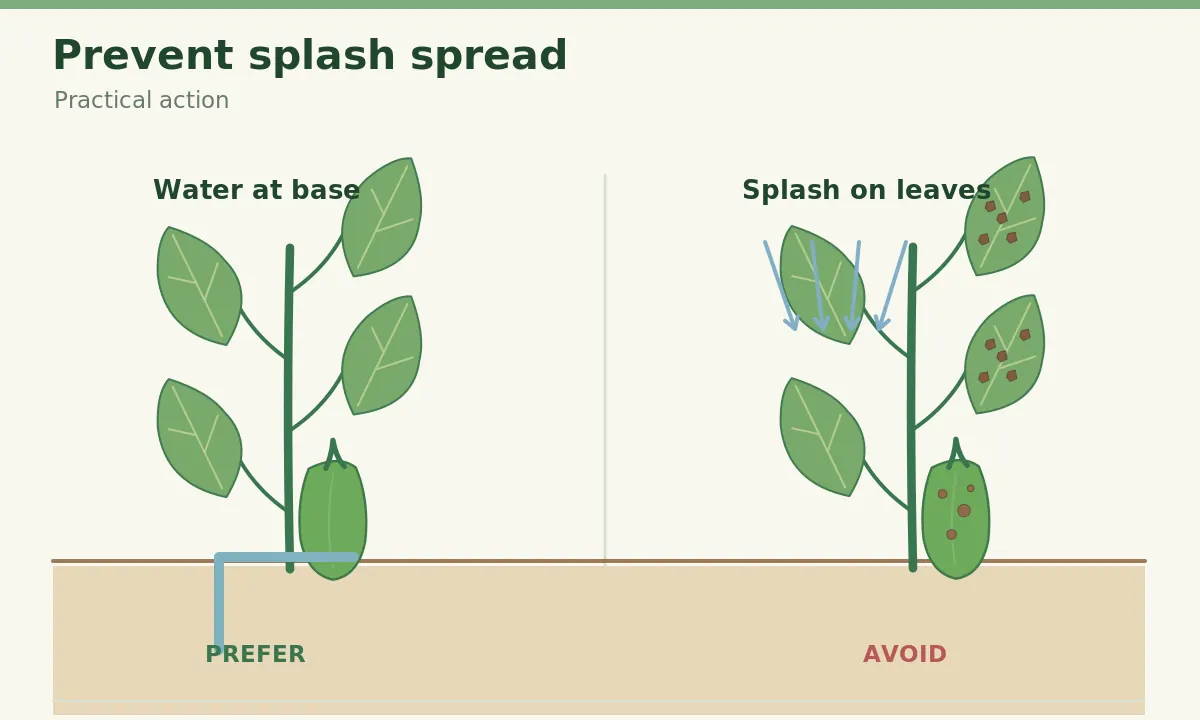
NC State Extension describes bacterial spot spreading through wind-driven rain, overhead irrigation droplets and the handling of wet plants. Warm humid weather favors outbreaks, so observe whether new lesions follow repeated rain or prolonged leaf wetness. Splash can carry bacteria between nearby peppers and tomatoes. It is easy to confuse correlation with proof: rain followed by spots is a reason to inspect further, not a laboratory confirmation. Avoid working plants while foliage is wet when practical, and plan routine tying, pruning or harvesting after it dries. Keeping leaf surfaces drier reduces one important route of spread but does not reverse an infection already inside a leaf.
Check Seed and Transplant Health Early
A clean transplant is easier to protect than one that arrives carrying a pathogen. NC State explains that infected seed and transplants are major ways bacterial spot enters a crop, sometimes before obvious lesions appear. Buy seed and starts from reputable suppliers, inspect leaves before purchasing, and keep trays and cutting tools clean. Do not save seed casually from heavily diseased plants. Some professional seed treatments are specialized procedures that can reduce germination if done incorrectly; do not give a home bleach or hot-water recipe without the exact crop-specific tested instructions. Clearly label suspect plants if you isolate them while seeking a reliable diagnosis.
Use Watering Methods That Avoid Splash
Irrigate at soil level with a soaker hose, drip line or careful directed watering rather than repeatedly wetting the canopy. Minnesota Extension and UC IPM favor lower-splash approaches. Water when the root zone actually needs moisture instead of withholding needed irrigation solely because you saw a spot. Mulch can reduce soil splash after planting, but avoid heaping wet mulch against stems. If overhead irrigation cannot be avoided, choose a timing that lets leaves dry in suitable conditions and follow water restrictions where relevant. Space plants for airflow according to cultivar and support system, without drastic defoliation that exposes peppers to sunscald.
Handle Suspect Leaves Without Spreading Material
Inspect the whole planting before deciding whether a few affected leaves can be removed without stripping the canopy. Minnesota Extension advises removing symptomatic foliage, but severe defoliation can stress peppers and expose fruit. Work on healthy plants first, then suspect plants; clean equipment and hands between groups. Bag and remove obviously infected leaves in accordance with local waste guidance rather than dropping them into neighboring beds. Never prune a soaking-wet canopy during an active outbreak. Follow up by inspecting leaves that emerged after the intervention. If new spots continue to appear, ask local Extension or a diagnostic laboratory to confirm the pathogen before considering any pesticide.
Do Not Treat Preventive Products as Guaranteed Cures
Bacterial infections are difficult to cure once established. NC State emphasizes preventive controls, and UC IPM notes that copper effectiveness can be limited where resistant bacterial populations exist. Do not recommend a homemade soap or random mixture, and do not assume a fungicide sold for fungal leaf spots automatically cures bacterial disease. Any pesticide used on peppers must be registered for the crop, disease and location, with all label directions followed. A biological or copper product can have limited preventive value in some settings but is not proof of eradication. Diagnosis, sanitation, watering and resistant cultivar choices remain the core of a responsible home-garden plan.
Rotate Crops and Manage Volunteers After Harvest
Xanthomonas can survive in infected crop residues for a period, and volunteer solanaceous plants may help maintain a source of infection. Minnesota Extension and NC State describe rotation, clean production areas and residue management as part of prevention. Avoid planting peppers repeatedly in the same spot after known outbreaks when another site is available, and remember that tomatoes and eggplants share some relevant disease-risk contexts. Remove diseased volunteer tomatoes or peppers and follow local guidance on infected debris. Rotation is not an instant cure where bacteria arrive on contaminated seed next year, but it reduces one important exposure route. A practical plan combines site sanitation, healthy plants and suitable irrigation.

Know When to Ask for a Confirmed Diagnosis
Many leaf diseases cannot be reliably identified from one illustration. Seek help when spots spread despite basic prevention, fruit develops rough lesions, or you are deciding whether to remove multiple plants. Provide photos of young and old lesions, both leaf surfaces, stems and whole plants, plus details about recent irrigation and weather. Note the cultivar and whether other nightshade plants show symptoms. A lab test may distinguish bacterial spot from look-alike fungal or environmental injury. Avoid promising that an online picture provides certainty. Follow up over one or two weeks to see whether new leaves remain clean and revise the season plan based on actual results, not product marketing.
Related Guides
- How to Prevent Blossom-End Rot on Peppers by Managing Soil Moisture
- How to Identify Aphids on Pepper Shoots and Protect Beneficial Insects
- How to Save Pepper Seeds Without Confusing Maturity and Crosses
- How to Overwinter Pepper Plants Indoors: Resting or Growing
- How to Harden Off and Transplant Pepper Seedlings at the Right Depth
How We Research and Verify Plant Advice
Sources checked on 2026-10-26: extension.umn.edu; content.ces.ncsu.edu; ipm.ucanr.edu. We reviewed each institution’s plant identification, correct growth stage and relevant cultural recommendations before adapting them into an independently written step-by-step guide. Where sources are region-specific, their calendar details are not applied universally. Pictures use simplified teaching shapes and should be compared with living specimens; they are not a substitute for laboratory disease diagnosis or local climate guidance. The relevant advice is paraphrased rather than reproduced.
Safety and Independent Editorial Disclosure
This independently prepared educational article does not claim sponsorship or affiliate approval. Our category reading links are informational, not product endorsements. See the VegWin affiliate disclosure. Clean sharp tools before cutting plants, protect hands from thorns and blades, and keep cut plant material away from children and pets where appropriate. Use only locally registered plant treatments labeled for the actual crop, and observe the product label. Do not rely on unsupervised home remedies or unverified harvest-safety promises.
No. Minnesota Extension notes that pepper leaf lesions may lack the yellow halos commonly described for tomatoes.
Yes. Splashing rain, overhead watering and handling wet plants can transfer bacteria.
No. Broad pale fruit injury may be sunscald, while bacterial fruit lesions often become smaller raised rough scabs.
Do not assume a cure. Management is mainly preventive, and product performance and legal labels vary by location.
Avoid saving seed from symptomatic plants without a validated disease-management protocol; choose reputable clean seed.